This post contains affiliate links. If you make a purchase through one of these links, I may make a commission at no additional charge to you. Thank you for supporting this blog!
I used to do micro book reviews of every book I read in a year. That worked great at first, but now that I’m reading 35-45 books in a year, it’s a little unwieldy and often simply doesn’t happen. So I’m revising my practices.
Here are my top five reads from the past year, as well as a simple list of the other books I read, mostly without comment. You can follow me on GoodReads to keep up with my book reviews and ratings as I write them throughout the year. Deal?
Top Five Books Read in 2024
Faithful Women and Their Extraordinary Godby Noel Piper. This was an incredibly encouraging and inspiring read. It’s good to hear of how the Lord has worked through saints who have come before us. And for women of God, it’s good to hear how He has worked particularly through His daughters. Highly recommended. Reviewed on GoodReads.
Leave It to Psmith–first Wodehouse I’ve shared with the boys! So fun! When life gets crazy, I first go to the Word of God. That is foundational. But I also try to work in some P. G. Wodehouse. Laughter is good medicine, and Wodehouse offers a healthy dose of it! Leave It to Psmith doesn’t have any really admirable characters. They’re all a mess. And yet it’s redeeming in a way to see such folly on display and to laugh at it. Wodehouse’s signiture creative word play is delightful, too.
Pride and Prejudice by Jane Austen—It was a joy to reread this long-time favorite along with the tweens and teens in our small homeschool co-op. What better way to enjoy Jane Austen than with tea, snacks, and good conversation?!? I read both Pride and Prejudice and Sense and Sensibility (first time!) this year, and while both get a five-star rating from me in GoodReads, I still come back to Pride and Prejudice as my favorite Jane Austen novel. The Dashwood sisters in Sense and Sensibility are fantastic characters and I loved the lessons learned. But Pride and Prejudice has similar character development—plus humor. The humor apparently makes the difference for me.
Leaf by Niggle by JRR Tolkien—a surprising, short, and sweet read for any creator/writer! Tolkien is known for hating allegory, but it turns out he has played with the genre. Leaf by Niggle is an allegory capturing the struggle of the creative process and the tension between working on your passion project, keeping up with life’s necessities, and giving of your time, energy, and resources to help your neighbor. It’s a delightful and thought-provoking read.
The US Constitution–so good to read and discuss during an election year. I led our co-op class through a reading of the Constitution. Yes, even an 11 year old read the Constitution this year! If he can do it, you can, too! I supplemented my reading with context from one of my college history books: Liberty, Order, and Justice, some of the lectures from the free Constitution 101 course from Hillsdale, and Kahn Academy’s discussion videos covering each article of the Constitution. I also read the Articles of Confederation and the Declaration of Independence and a few of the Federalist Papers. These ought to be read by every American citizen.
Here are the other books I read in 2024, with star ***** ratings.
The Art of War by Sun Tzu **** Listened to the audiobook.
12 Rules for Life: An Antidote to Chaos by Jordan Peterson **** Listened to the audiobook. Don’t go to Jordan Peterson for your theology. He doesn’t handle scripture well. But there are some very practical helps in this book. I can see why he’s a big deal. Sometimes the book droned on a bit, like JP was showing off his knowledge more than helping his reader. LOL
Know and Tell: The Art of Narration by Karen Glass *** This is admittedly a book on educational philosophy and practice, but that’s a kind of leadership, isn’t it? I honestly feel bad for not liking this book more than I do. I love Karen Glass, this is just not my favorite of her books. Review HERE
[Life is busy [track season, ongoing home remodel, etc], so I’m not giving every link possible on the following books. If you are interested in one of them, and you want to purchase it through one of my affiliate links to support this blog, please simply click on one of the Amazon links above and then search for the title in question. 🙂 Thank you for your support!]
Books I read on Government:
Are We Good Enough for Liberty? by Lawrence W. Reed ****
Thomas Sewell: Self-Made Man by Sean B. Dickson **** Read aloud to the boys, picture book.
The Law by Frederic Bastiat *****
The Declaration of Independence *****
The Constitution of the United States *****
The Articles of Confederation ***
Books I read on Biblical Studies/Counseling:
Prayer: The Church’s Great Need by Jesse Hamilton
The Fruit of Her Hands: Respect and the Christian Woman by Nancy Wilson ***** Listened to the audiobook.
Faithful Women and Their Extraordinary God by Noel Piper ***** Listened to the audiobook. Review HERE
The Enneagram and the Biblical Counselor by Rhenn Cherry *** Review HERE
Grace Is Free: One Woman’s Journey from Fundamentalism to Failure to Faith by Marci M. Preheim ** I don’t recommend this book. See my review on GoodReads where I explain why.
Mama Bear Apologetics: Empowering Your Kids to Challenge Cultural Lies by Hillary Morgan Ferrer **** Not bad, but it misses some very important things. Review HERE
Eve in Exile and the Restoration of Femininity by Rebekah Merkle ***** Excellent. This was my second time reading this book.
What’s the Difference? A Study of Important Biblical Distinctions by William MacDonald ***
The Marvelous Pigness of Pigs: Respecting and Caring for All God’s Creation by Joel Salatin ***** Listened to the audiobook. This could easily fall under “Home Management” with other homesteading books in that category, but this one is special–Joel looks at things from a biblical lens, writing to a more narrow audience than most of his other books: to his fellow Christian believers.
Becoming Free Indeed: My Story of Disentangling Faith from Fear by Jinger Dugger Vuolo **** Listened to the audiobook. This is a much better read than the Grace Is Free book listed above. Jinger untangles her past with a lot more biblical discernment and fidelity.
The Good Portion – Scripture: Delighting in the Doctrine of Scripture by Keri Folmar ****
Everyday Gospel Christmas Devotional by Paul David Tripp *** This was ok. Edifying but needed a better editor.
The Quest for Meekness and Quietness of Spirit by Matthew Henry **** Listened to the audiobook.
Literature/Fiction Books I read:
Leave It to Psmith by P. G. Wodehouse *****
Pride and Prejudice by Jane Austen *****
Joy in the Morning by P. G. Wodehouse *****
The Horse and His Boy by C. S. Lewis ****
Sense and Sensibility by Jane Austen *****
Der Struwwelpeter by Heinrich Hoffmann **** This is a classic German picture book that we found at an estate sale. My husband used AI to translate the German into English. The stories are funny, dated, and often a bit morbid.
Homestead Living I got this magazine for the year and have enjoyed a few issues. I cancelled going forward just because I have plenty to catch up on already without new magazines coming in the mailbox!
This post contains affiliate links. If you make a purchase through one of these links, I may make a commission at no additional cost to you. Thank you for supporting my blog.
This post wraps up the books I read in 2022. For my other micro book reviews from 2022, click here (homeschool reads) and here (theology and life management reads).
I’m spending a lot more words on this post than I usually do on my micro book reviews, but that’s because I think this subject matter deserves a lot of care. I don’t usually tout my credentials, but it may be useful for the reader to know that I have a degree in history. So handling it with care is not merely a platitude but a trained conviction.
Since 2020, American politics and public discussion has been a bit of a dumpster fire. I’ve paid attention where I could and ignored what I could for sanity’s sake. I’m not one to pick a fight on social media about these things, but these issues do matter. And so I did a bit of reading on two sides of a coin, you could say.
The Scholé Sisters hosted a seminar on Marxism last spring (accessible now through their Sophie Membership), with three books recommended for reading and careful consideration, which you will find listed first below. Concerns over Marxist-inspired ideology in our day are not unfounded. But they are not the only concerns that are valid.
As much as we need to be on our guard against such ideology, we also need to be aware of our own history–and the fact that some of that history has been ignored or kept from us. And so I also read books by black Christian authors on their experiences, history, and wrestlings with the current cultural climate. To focus on one side of this coin while ignoring the other is short-sighted at best and potentially damaging at worst–to our neighbors, to our nation, and to our witness for Christ in the world. See exhibit A below.
A protest against “the Little Rock Nine” at the Capitol in my home state of Arkansas, 1959.
If you are an American Christian who leans politically left, you owe it to yourself and to your neighbor to read up on these concerns about the influence of Marxist ideology and the current disturbing progression toward what Rod Dreher (see below) calls soft totalitarianism. There’s history there you may be missing. Also, hear from the black voices listed below–they hardly get ANY air time in the mainstream media–and especially not on the left.
If you are an American Christian on the political right, you owe it to yourself and to your neighbor to understand the political labels you throw around (“Marxism” likely among them), and to especially do some homework to understand WHY things like Critical Race Theory have appealed to so many. If people get excited about a bad proposed solution (CRT), it may be because there is or has been a legitimate problem (America’s tainted past). Never mind if the current Theorists don’t pinpoint that problem correctly–we shouldn’t ignore it just because others misdiagnose it. The books I’ve read this past year, as well as some other resources I’ll link to at the end of this post should prove helpful to that end.
Let the love of the brethren continue, and may the Lord be glorified in His people even as we dig-in to understand some of the issues that are currently tearing our nation–and sometimes our churches–apart.
Physical copies for this category–Marx and Plutarch can be read for free online.
Marxism, etc.
The first three books listed here are from Spring Training. The rest are books I chose to read to flesh out the topic a bit more, exploring the dangers of totalitarianism, whether Marxist or not.
The Communist Manifesto by Karl Marx and Friedrich Engles (I acknowledge both authors up front, but my review refers to Marx alone for simplicity’s sake.) I first read The Communist Manifesto during 2020—it seemed an appropriate time. It was good to listen and process it again. The Manifesto is divided into four parts.
Part One opens: “The history of all hitherto existing society is the history of class struggles.” Marx proceeds to explain this point with a narrative of history that has two key qualities. 1) It’s materialistic, and as such, it’s an incredibly narrow lens for interpretation. Material and economic factors are the only things that count. 2) It’s a new application of Hegelian Dialectic, which saw the clashing of ideas as what produces a new idea, moving collective human thought ever onward toward truth, led on by something Hegel called “Spirit.” This is the essential pattern of thought in all forms of progressivism. In Marx, the clashing of classes produces revolution and new social orders, moving ever forward toward the communist ideal, led on by “History.” What Marx demands to be done is, in his view, what will inevitably be.
In Parts Two and Three, respectively, Marx lays out the Communist battle plan in defiance of Bourgeois objections and then criticizes the socialist movements that are, in his view, not revolutionary enough to get things done.
In Part Four, there’s an inspiring call to action for Proletarians everywhere to join whatever political movement is likely to produce a revolution: “The Communists disdain to conceal their views and aims. They openly declare that their ends can be attained only by the forcible overthrow of all existing social conditions. … Working men of all countries, unite!”
I have to hand it to Marx, his prose is riveting. It’ll get you fired up in one way or another.
It’s important to understand that because of Marx’s historical materialism, immaterial things or concepts like God, love, freedom, family, religion, duty, and moral ideals of any kind are seen as mere instruments for oppression flowing from the current system of production.
No benefit of the doubt is given to people who believe in such principles–all is material, all is political, all is economic.
Inherent human sinfulness doesn’t factor into his equation. If God and moral ideals don’t exist, sin can’t either. The nature of human dignity as having been made in the image of God and the nature of human sinfulness due to the fall are both abolished. Marx refuses to see them, leaving a divine vacuum to be filled by the state (or the gospel-hope of a communist non-state) and a faulty, materialistic anthropology (view of man) to both explain and condition human behavior.
It is this anthropology that drives the desire to abolish private property and consolidate the means of production–because if you can control material outcomes and do away with class structures, everything will be great, right? Marx, seeing only what he allows himself to see, seems to think so.
I wish that reading The Communist Manifesto was only an academic exercise to marvel at the ideas held by a few crazy people sometime “back then”. But sadly, Marx’s ideas, in part if not in whole, are driving much insanity forward today. The narrow oppressor-oppressed lens of historical study is alive and well, and class warfare is being promoted in our day, make no mistake about it. The lines are simply drawn in different places.
That Hideous Strength: How the West was Lost by Melvin Tinker I thought this was a very helpful book for understanding the influence of ideas over the past 150 years, and especially how those ideas have crept into the church (Tinker was an Anglican minister). To assume that ideologies popped up in the 1970s or 2010s without any connection to past ideas is simply ignorant of the way the world works. There are connections and this book traces them.
Tinker does employ the term “cultural Marxism”, largely to define where those class warfare lines are drawn today, especially as they relate to the sexual revolution. I think it is important to understand that this term is used by opponents of Critical Theories and not by promoters of them. No one, to my knowledge, identifies as a “cultural Marxist.” And the origins of this term appear to be associated with anti-Semitism. Most people throwing the term around today, however, eagerly decry anti-Semitism. And the potential negative associations don’t make it an altogether bad descriptive term, because the words themselves highlight what part of Marxist theory has been brought forward: the cultural revolution part, and less so the emphasis on economic theory (though it may be waiting in the wings). All the same, I think it’s easy enough to use the word “Neo-Marxism” to describe the same phenomenon. So, rather than get in a huff over terminology (like our cancel culture loves to do), figure out if the concept being referred to is valid. And choose the term that you think is most appropriate to describe it.
One of the best contributions of Tinker’s book, aside from the fact that it is pretty well documented, is his discussion of “social imaginaries”–how the stories and images that we take in as a culture shape our understanding of the world. This is good food for thought and discussion around what kind of social imaginary we are cultivating in our homes with our children–a positive application that can be drawn from an otherwise exposé-focused book.
Agis and Cleomenes by Plutarch This was the last bit of assigned reading for the Scholé Sisters Spring Training, and it was an interesting dose of perspective. In this story from ancient Greece, it was the conservative movement that called for a repartitioning of the land and a move toward greater collectivism, hailing back to the good ol’ days of Lycurgus the lawgiver. I can’t say I understood or remember everything from this reading, though the discussion inside the Scholé Sistership was very helpful. The main takeaway is that it’s good to shake up our political boxes and assumptions–most political ideas have been around for along time, and they don’t always package themselves in the same way or have the same flavor over the centuries. Again, a good read for the sake of perspective.
Animal Farm by George Orwell I read Animal Farm in high school (or at least I think I did—I know I was supposed to). It was fun to read it this year alongside my oldest son. The animals throw off their oppressive farm master only to eventually find that some of their own animals are “more equal than others.” And the second oppression is just as bad—or arguably worse—than the first. It was interesting to me to find that George Orwell was a socialist. So while his book warns of the evils of communism and perhaps the ditch that socialism can fall into, it doesn’t mean he agrees with my free market, limited government principles. I marveled similarly when I read The Picture of Dorian Gray by Oscar Wilde. Though Wilde had a death-bed conversion to the Catholic faith, he was for most of his life a hedonist. Dorian Gray exposes the devilishness of that philosophy and the harsh conclusion that following it without restraint can bring.
Whether we’re talking about Orwell or Wilde, I think this is interesting and important to keep in mind: People don’t exist in only two ideological boxes—yours and the bad guy’s. The ideas that thoughtful individuals hold are usually more complex than that, and we do well to ask questions to understand before assuming. Unless, of course, someone is just screaming at you or throwing nothing but ad hominem arguments your way or threatening to cancel you–in that case, don’t waste your time. And don’t be that person, either.
That Hideous Strength by C. S. Lewis This is a sci-fi novel, but you can expect from Lewis that it communicates truth as much as his directly philosophical and apologetic works do. I’ve written briefly my reflections on this book before, so I’ll quote that here.
“…This third book of Lewis’ Space Trilogy confronts totalitarian scientism and many of the themes addressed in The Abolition of Man. … I’ve found it to be great food for thought. [On the subject of womanhood…] Elisabeth Elliottells about being a woman. Lewis shows it. His character Jane wrestles through it, and Lewis, as the author, lets her be a woman. … I’m finding it quite instructive and freeing, as I tend to have some of the same modern-woman hang-ups as Jane.”
There are a lot more spiritual, ethical, and political themes to consider in this book beyond what it means to be a woman, but I have especially appreciated that personal application in my own life. As I said in the quote above, this book shows the dangers of totalitarian scientism more than Marxism, but both are quite relevant to thoughtful discussions on politics, ethics, and science today.
Live Not by Lies by Rod Dreher If you want the perspective of recent history and political development through a broadly Christian lens, this book is a fantastic read. It’s both informative and edifying. Rod Dreher is a Catholic journalist. Drawing from the stories of survivors who lived under Soviet control, as well as other sources, Dreher discusses the social trends that set the stage for totalitarianism and also the social pressures that help to tighten its grip over a people. While this book traces much sad history and disturbing developments in China and the west, it also contains amazing stories of courage and determination to “live not by lies”–even when faced with imprisonment and death for speaking truth. Dreher also gives encouragement to Christians to build strong families and Christian community as the church has been intended to do from the beginning. This book can feel bleak at times, but it is not without hope. This makes it my favorite read in this category–the book I’m most likely to pick up again soon.
Black Christian Perspective
Each of these books is by a Christian author whom I have followed for a very long time in one way or another. I’ve read articles by Jasmine Holmes since she was a teenager blogging under her maiden name Jasmine Baucham. I’ve listened to her daddy, Voddie, and have read his articles from time to time. I’ve enjoyed music by Shai Linne and Lecrae since my college days (I’m kind of stuck on their oldies). And I grew up hearing Tony Evans on the radio–my mom loves him. So this isn’t some list of black voices selected at random to meet some “white guilt”-driven quota. >insert uproarious laughter here< These are my brothers and sister in Christ who have encouraged me in my walk long before these issues made it hip to elevate black voices.
So many audio books! These are the only two hard copies I have for this section.
Unashamedby Lecrae Moore Technically I finished this book at the tail end of 2021, but I’m including it here because it goes well with this discussion. This is Lecrae’s autobiography. He doesn’t address any political issues directly, but his personal testimony demonstrates the hardship that some young black men face in America. There are drugs, women, abortion…it’s a rough ride. Lecrae is quite vulnerable in sharing his Christian testimony–not only his conversion story but also the challenging and often-failing road of sanctification as a young believer who grew up with zero positive male examples in his life. This book will challenge and expand your capacity for compassion. I especially enjoyed listening to the audiobook from Christian Audio, as Lecrae reads his book himself; and when there are quotes from his rap songs, they are included as clips from his songs rather than merely reading the lyrics off the page.
Carved in Ebony by Jasmine Holmes This was a unique book. Jasmine tells stories of black women from American history with both evenness and heartfelt personal reflection. I deeply appreciate Jasmine’s stated approach to American history: her goal is to glorify God in telling these stories, not to glorify America nor to throw disgrace upon her. She’s filling in some gaps both in our traditional American history framework and in American church history—some of these women reminded me of Christian missionary Amy Carmichael and Christian educational philosopher Charlotte Mason. This brought me to ask, why have I not heard these stories before? In all my reading on heroes of the faith, I’m not sure I’ve ever read the life of a black Christian woman. Well, now I have. And I’m blessed by it. I plan to have my boys read this book in high school.
The New Reformation by Shai Linne Christian pastor and hip-hop artist Shai Linne addresses the issues of “racism” (his preferred, biblically-aligned term: “ethnic sin“) in four parts. In part one he shares his own story, which is of particular interest if you’ve followed his music. In part two, he deals with some backstory, wrestling honestly (and graciously) with some of the skeletons-in-the-closet of Reformed heroes like Jonathan Edwards and Martin Luther. In part three, he digs into theology, especially justification by faith alone, and its implications for the church. Finally, in part four, he concludes with a discussion of biblical unity and practical ways that Christians can walk that out.
Linne’s main point seems to be that we are on the verge of another reformation–instead of simply reclaiming doctrinal purity, this reformation is about applying it more fully: the Christ-alone, faith-alone, grace-alone gospel is available to all people from every tribe, tongue, and nation. And our churches ought to seek to reflect that when possible through genuine unity in Christ across any and all ethnic divisions–not just black and white. I so appreciate Shai Linne’s vulnerability and faithfulness to sound doctrine–not merely in verbally ascribing to it but in calling us to live out its life-changing implications by the power of the Holy Spirit. Highly recommend. This is a very good read to have in conversation with the next two books, also written by pastors.
Oneness Embraced by Dr. Tony Evans (A new edition of this book came out last year. My review is of the previous edition.) I listened to this book via Christian Audio. I appreciated Dr. Evans’ tour of black American history—and especially the peek into its spirituality and church history. This, like Jasmine Homes’ book above, fills in some important gaps. I couldn’t verify all of his citations and over-arching claims as I listened, but I think the perspective is valuable and it would be worth searching out some day when I have more time (and a physical copy in hand). It’s important to note that Dr. Evans is probably writing to the broadest demographic of any author in this category (aside, perhaps, from Lecrae). He’s an evangelical pastor whose readership will be varied in race, political affiliation, and theological leanings (Dr. Evans is not in the Reformed camp that the rest of these authors are in). With this in mind, it makes a little more sense that at the start of the book, he says some things that help him relate to people across racial and political lines.
There are, therefore, things that will make both Republicans and Democrats uncomfortable. For example, he uses the term “social justice” for most of the book—likely accommodating the popular use of the term–before he states in the last few chapters that he prefers the term “biblical justice,” and then proceeds to suggest what that ought to look like. These creative efforts to do justice biblically are where this book really shines, in my opinion, though you can’t dispense with the background knowledge that he gives to build up to that point (especially his evaluation of liberation theology’s appeal and shortcomings). I would like to own this book in print, which is to say, I liked it and think it’s important enough to own. That’s a pretty high recommendation.
Faultlines by Voddie Baucham This was an excellent book. Probably the best in this category. Again, I listened to it rather than had it in front of me. Interestingly, the reader was the same for this book as for Oneness Embraced, and I enjoyed the feeling that these books were connected—coming at some of the same issues from the same side of the fence, but with different emphases and perspectives and solutions—different, but both seeking to faithfully apply the scriptures. Both were incredibly valuable. But Voddie Baucham hits the nail on the head as he discusses the problems with the modern social justice movement. Unlike the other books on this list, Voddie is able to address the problematic ideology of progressivism and woke social justice head-on, providing a much-needed evaluation of the claims made by the media and by some within the church today. He even calls Shai Linne out for a weak statement he made. Sometimes I felt Baucham was a bit harsh in his call-outs of faithful, godly pastors and leaders. But I think I understand these to be warnings that even the good guys can get caught up in this stuff and say things that may lead people to accept ideas that are wrong. The warning is warranted at least for consideration, even if at times it feels a bit nit-picky. I think it is given in the spirit of love for the brethren, including those whom he calls out.
While this book was excellent, I think it would be VERY SAD if this is the only book in this category that you pick up. He’s going to say things that will resonate with what most white conservatives already believe. Which is fine if the things he says are true (and I believe they are). What he doesn’t do is challenge the same group of people to expand their understanding and compassion toward other believers to the extent that some of the other authors on this list do. If you’ve got the time, read all five of these books–they’re each an important piece of the puzzle.
TWO: On a related and very practical note, here is a discussion of living books as Mirrors and Windows (in the context of a Charlotte Mason education, largely considered to be under the classical umbrella). The main point is that kids need to read quality books that both reflect their ethnicity (mirrors) and give them a peek into the experiences of others (windows).
THREE: Both Baucham’s and Tinker’s books above provide a critique of Critical Theories while tracing their development. You can find similar information in this series by James Lindsay (an agnostic liberal who exposes the flaws of progressivism and the woke left). Lindsay has not only done extensive research, but he reads at-length directly from Marxist and Critical Theorist sources so you can hear it from the proverbial horse’s mouth. Heads up, there may be some strong language in his talks.
For some current-events commentary from James Lindsay, check out these recent interviews with Relatable host and Christian, Allie Beth Stuckey: Why Bud Light… (giving background for the crazy corporate and UN decisions being made lately) and …Debate Christian Nationalism (which discusses some concerns with the CN movement–from a conservative Christian and agnostic liberal perspective). These various topics do in fact tie in with the issues discussed in this post.
FOUR: Lecrae is probably the most sympathetic person on this list to Critical Race Theory and the books published espousing concepts from it. He’s walking a bit of a tight rope. Even so, I appreciate hearing from him as a believer who seeks to remain faithful to Christ but who desperately wants his brothers and sisters to understand what he’s been through and what he sees. This TEDx Talk from 2016 is a challenging message to that end. You don’t have to agree with every little thing he says–and this talk doesn’t say everything there is to say, even from Lecrae’s own vantage point as a Christian–but it is valuable to at least hear and consider the story he tells and the points he’s trying to make when working through these issues.
There you have it. Have I offended everyone yet? I hope I’ve at least given quality food for thought and inspiration for prayer and faithfulness. Real conversation on these issues is important. If you’ve got a thoughtful question or comment to share, please drop it below.
This post contains affiliate links. If you make a purchase through one of these links, I may make a commission at no additional cost to you. Thank you for supporting my blog.
Here’s another installment of my micro book reviews for 2022. In my last post, I shared the books I read for our homeschool. This time around, I’ve collected my 2022 reads on Christian Thought as well as Life Management (and a bonus category Just For Fun).
Christian Books on Theology, Practice, Philosophy, or Education
On Christian Teaching by Augustine This was probably the oldest work I read last year, aside from Plutarch and the Bible. Writing in the fourth century, Augustine lays out some important guidelines and considerations for teaching–with applications for education in general and for the study and teaching of the Scriptures. Augustine’s ordering of loves (ordo amoris) is incredibly edifying, explaining how all earthly loves can and ought to be turned into the stream of love that we have for God most of all. He also addresses some classical education practices and suggests how Christians ought to approach them. I found reading Augustine to be more approachable and edifying than I had anticipated. I can see why his writing has stood the test of time.
Let Me be a Woman by Elisabeth Elliot This was a re-read of a beloved book. Elisabeth Elliot is one of my all-time favorite authors. Given the crazy confusion of our time, it was good to be immersed in a book that celebrates being a woman—and being a godly woman at that. Let Me be a Woman is a collection of short chapters written to Elliot’s daughter, making her prose both warm and candid. Here’s a particularly poignant quote about worldly attitudes toward women:
Women’s work, particularly the task assigned by Creation exclusively to women, that of bearing and nurturing children, is regarded not only as of lesser value but even degrading and “animal-like.” This is a hideous distortion of the truth, and an attempt to judge women by the criteria of men, to force them into an alien mold, to rob them of the very gifts that make them what they were meant to be. To subject femininity to the criteria of masculinity is as foolish as it would be to judge meat by the standards of potatoes. Meat would fail every test. For women to assume an esatz [or artificial] masculinity means that they will always lose.
Let Me Be a Woman, P. 151
Turns out women also lose when men assume an “esatz” femininity. But I digress…
Christian Reflections (essays) by C. S. Lewis I have to say, Lewis is right up there with Elisabeth Elliot as one of my favorite authors. I bought this book initially for Lewis’ essay on “Historicism,” which I very much enjoyed. I’ve read many of his books: The Chronicles of Narnia(series), The Screwtape Letters, Mere Christianity, A Grief Observed, The Great Divorce, The Four Loves, The Abolition of Man, and That Hideous Strength. But this is my first read through a collection of his essays. Lewis has an incredible ability to evaluate the past and see where things are headed in days to come. I don’t always agree with his take on everything (his essay on “Church Music” being a good example), but he sure does make me think. Here are some of my favorite essays from this collection: “The Poison of Subjectivism,” “Historicism,” “The Psalms,” “The Language of Religion,” and “Modern Theology and Biblical Criticism.” So many of the problems we see today are the fall-out of ideas that Lewis confronted in his day. I think this makes his writing essential reading. Start with Narnia (at least The Lion, the Witch, and the Wardrobe) and Mere Christianity, especially if you need to strengthen your reading muscles. But do work your way “further up and further in.” You will be rewarded for doing so.
First Principles: Becoming a Disciple by Geoff Reed My husband and I hosted an outreach Bible study last year using this first book in the First Principles series. We covered the gospel, baptism, and the call to renew our minds in God’s truth, which stands in stark contrast to the ideas and values of the world. It was a great study, digging into one Bible passage for each lesson, as well as offering discussion questions and commentary. One thing that sets this book apart from other Bible studies is the heavy emphasis on both discussion and follow-through. The questions make you think and examine the Scriptures without feeling like an exercise out of an academic textbook. There is ample room for taking your own notes and recording your own questions to bring to discussion. And the sixth and final lesson in the book asks you to look back over the first five lessons to restate what you’ve learned, ground it in the Scriptures, pick a verse or passage to memorize, and set some goal or intention for your life going forward. A lot of studies have little assignments with each lesson and then just plow ahead. This one makes you sit with what you’ve covered a bit more–and challenges you to really apply it before moving on. Because simply gaining academic knowledge of God’s word isn’t what we’re after–we want to respond to it properly, applying it to our lives with the help of the Holy Spirit and in fellowship with other believers who can hold us accountable.
The Essential Means of Grace by Paul Washer I have appreciated the teaching of Paul Washer since my college days, but this is the first book I’ve read by him. It was a short but meaty and refreshing read, covering our relationship to God through the Scriptures, prayer, repentance and confession, and the local church. Highly recommended. Only 71 pages.
Messiah: Prophecies Fulfilled by D. James Kennedy My husband read this to us in December as our Advent devotional. It was a good overview of Old Testament prophecies about Jesus Christ, the Son of God. My boys are in 7th and 5th grade, and it was a good fit for our family, though there was a reference to infant baptism, which we do not practice, so we simply and briefly discussed that with our kids. (Links are to a newer version of the book than we own.)
Life Skills/Management
Do More Better by Tim Challies I started 2022 off listening to this audiobook. Challies has some good principles for productivity that were helpful to me, and for a season I tried his process for managing tasks in ToDoist. I fell off of that specific application, but together with the books listed below, I think this has been a help to my focus and life management this past year.
Essentialism by Gregg McKeown This was recommended by a friend last spring and I snagged it on Audible. I wish I had a hard copy, because I think there are some diagrams that would be helpful, especially to review. At any rate, I loved this book. It urges you to really ask the important questions—what matters most? What is most essential? And then it challenges you to live by that. It’s not a Christian book, but it is Christian-friendly.
Effortless by Gregg McKeown This is the follow-up book to Essentialism. I’m not sure “effortless” is really what you get out of it, but the author does help you think through applying the principles of essentialism more thoroughly to your life. It was a good listen (again, audiobook). I will probably revisit both of these books sometime soon—maybe even this year. I think they’ve helped me a lot.
Cozy Minimalist Home by Myquillyn Smith I found this delightful book at an “extras” bookstore on our long drive home from a trip to Florida. Why have I never read a book on decorating before? I’ve been a homemaker for fifteen years, for crying out loud! Anyway, I’m glad I read this and glad to have some principles and guidelines for making décor decisions for my home. Cozy + minimalist is really a great combination, putting people above stuff, but also not putting bare minimalism over people. The author is apparently a Christian, so the decorating advice is well-ordered and not at all about putting on a show or keeping up with the Joneses.
Don’t Overthink It by Anne Bogel This was a fairly helpful book. As I listened to the audiobook, I kept finding myself wishing that the author would have dealt with the spiritual side of worry/overthinking. Instead all she did was give positive tips and tricks. All of which are helpful, but it’s just not the complete picture, and I had hoped for better from an author who is a professing Christian. Tips and tricks don’t fix my trust-in-God issues. All that to say, this was a profitable listen, but not nearly so much as it could have been. This is a your-best-life-now kind of book, and needs to be balanced by biblical truth.
Ploductivity by Doug Wilson Speaking of biblical truth, there’s a lot of it in this little book (again, for me, audiobook). I was surprised to find a lot of discussion on technology—even a theology of technology. This book was far less about tips and tricks and processes and far more about our assumptions and beliefs about technology, work, etc. A very good read, especially after having finished Don’t Overthink It and finding it wanting in the theological department. That said, I don’t share Doug Wilson’s Presbyterian eschatology, which does come out in the book; but that is a small part of the whole, and it was interesting and edifying to listen to nonetheless.
Just for Fun
The Inimitable Jeeves by P. G. Wodehouse This was my second-ever Wodehouse read. I liked The Code of the Woosters better, but this book was fun, too. I read it at the beginning of 2022 and can hardly remember what happened in the story…Bertie gets himself in trouble and Jeeves has to help him out of it, but some of that trouble is caused this time by his even-more-pathetic friend, Bingo. This one is more serial while all of Code of the Woosters unfolds from Bertie’s accidental pinching of a cow creamer. It’s hard to beat a cow creamer for ridiculous and memorable comedy. So if you want to enjoy some good laughs and British humor, you know which one I’d recommend.
That’s a wrap for today! What are your favorite Christian theology or Christian living books? What books have helped you to manage life well? I don’t seem to make much space for fun, comedic reading, but I find it refreshing when I do–what about you?
For more Books Read in 2022: For Homeschooling On Marxism and Black Christian Perspective (coming soon!)
This post contains affiliate links. If you make a purchase through one of these links, I may make a commission at no additional cost to you. Thank you for supporting my blog.
I read 35 books last year! So I’m releasing my micro book reviews in manageable chunks. Here are the books I read while homeschooling or in support of my role as a home educator in 2022.
Books Read for Homeschool
Grimm’s Fairy Tales These were sometimes delightful, sometimes familiar, and sometimes utterly absurd. I pre-read this collection of 55 tales in order to select the best for my son to read for school this year. Here are the ones I chose for their cultural importance and/or entertainment value: The Cat and Mouse in Partnership, The Frog Prince, Briar Rose, The Fisherman and His Wife, Rumpelstiltskin, Rapunzel, Cinderella, Snow White and the Seven Dwarfs, The Elves and the Shoemaker, The Water of Life, The Golden Goose, The Table, the Ass, and the Stick, Red Riding Hood, Tom Thumb, Frederick and Catherine, Snow White and Red Rose, The Four Accomplished Brothers, The Giant with the Three Golden Hairs, Hansel and Gretel
Sir Gawain and the Green Knight (My copy translated by Marie Borroff) This is probably the first epic poem I’ve ever read all the way through. What does that say about the education I received from Kindergarten through college?!?!? I pre-read this before having my 13-year-old read it this year. It’s a little bazar but also fun. The alliterative style of poetry was new to me, but I enjoyed it. Here’s a passage that highlightss the story’s themes of Providence, courage, and integrity, as Sir Gawain tells how he cannot turn back from meeting the enemy:
Fair fortune befall you for your friendly words! And conceal this day’s deed I doubt not you would, But though you never told the tale, if I turned back now, Forsook this place for fear, and fled, as you say, I were a caitiff coward; I could not be excused. But I must to the Chapel to chance my luck And say to that same man such words as I please, Befall what may befall through Fortune’s will or whim. Though he be a quarrelsome knave With a cudgel great and grim, The Lord is strong to save: His servants trust in Him.
Lines 2118-2139
Trial and Triumph by Richard Hannula (read aloud) This is a years-long read-aloud project that we finally finished this past summer, reading it alongside our history book (see next). I highly recommend Trial and Triumph as a good survey of individuals whose stories inspire our faith and play an important role in church history. I dare you to read it aloud to your kids without crying.
The Story of the World, Volume 4: Modern Times by Susan Wise Bauer (read aloud) This has been an incredibly enjoyable journey through all four volumes of The Story of the World. This one on Modern Times was a really great read at ages 12 and 10. My boys were old enough to handle the challenging level of violence that makes up modern history. Bauer traces patterns and events well, helping the reader to see how events connect chronologically, geographically, and in parallel.
The Fallacy Detective by The Bluedorns (read aloud) This was an incredibly fun read—my boys would constantly ask for it, or ask for me to read more when it was time to stop. Fallacies may not be the most ideal way to get acquainted with logic for the first time (it’s generally recommended for any discipline that you learn the rules before you learn how they are broken), but this was so accessible and fun (not to mention I won a copy as a door prize at a local homeschool event) that I couldn’t resist. The boys love to identify errors in thinking: in the news, each other…. We have urged them, though, that they don’t actually know logic yet, so take it easy. These are tools to help us evaluate arguments and propaganda, not for us to tear others down.
Whatever Happened to Penny Candy? by Richard J. Maybury I pre-read this book for my 7th grader this year. I don’t remember having any early and gentle introduction to economics before being thrown into it in high school—having to read a large portion of Adam Smith’s The Wealth of Nations over the summer and take a test over that tome on the first day of class. I wish I had learned a little bit along the way and in the context of history. Whatever Happened to Penny Candy? supplies this need quite well, covering topics like money, inflation, boom and bust cycles, the role of government, and more in short, well-explained chapters—err, uh, letters, from Uncle Eric to his nephew. This would NOT make for a complete economics course for high schoolers, however. Just like The Fallacy Detective is not a comprehensive study of logic, Penny Candy is not a comprehensive study of economics–but both books can whet the appetite for further study.
Gather by Pam Barnhill and Heather Tully This was less for school and more about it. Gather is about what many homeschool moms refer to as Morning Time–a time in the school day when most everyone in the family is together for shared learning or activities, ranging from worship and singing to reading, making, and exploration. This book is full of inspirational and practical essays and full-color photographs from a handful of homeschool families in various stages and of various sizes. It’s a pretty great day-in-the-life kind of encouragement for homeschool moms. I enjoyed it.
These are the issues of CommonPlace Quarterly that I read cover-to-cover last year: Lonely Places, Way of the Will, Balance, Method, and Ordo Amoris.
I have read every issue from the first year of publication. It is a little pricey, but the content is very encouraging in the faith, in loving and educating my kids well, and in growing in my own education toward what is true and good and beautiful. About a year ago I was thinking super-frugally and canceled my subscription, and my husband questioned me on it, saying I’d probably regret that. And he was right. 🙂 This makes for excellent bedtime reading when I’m too tired to read a stiff book. If you are into Charlotte Mason homeschooling, this is a resource worth checking out.
This post contains affiliate links. If you make a purchase through one of these links, I may receive a commission at no additional cost to you.
Here it is! The long-awaited (Maybe? Humor me?) continuation of my micro book reviews for 2018! These are the books I read mostly for my own growth and enjoyment. You can find my 2018 Theology Reads here. Coming soon: 2018 Family Culture Reads. Photo contains some of both lists.
Mother Culture
The Lord of the Rings: The Two Towers was the first book I finished in 2018, and The Return of the King was the last, making for a nice set of Tolkien book-ends for the year. For some reason I could not read these books quickly. They were delightful but slow reads. I especially enjoyed the pictures of spiritual battle in these books, first with Theoden in The Two Towers, and then with Denethor in The Return of the King. Perhaps I’ll write about this in the future. 😉 I certainly intend to return to Middle Earth again soon—starting with The Hobbit this year with my kiddos!
This is a long quote, but Tolkien’s words from The Two Towers (about the voice of Saruman) are oh so insightful.
Suddenly another voice spoke, low and melodious, its very sound an enchantment. Those who listened unwarily to that voice could seldom report the words that they heard; and if they did, they wondered, for little power remained in them. Mostly they remembered only that it was a delight to hear the voice speaking, all that it said seemed wise and reasonable, and desire awoke in them by swift agreement to seem wise themselves. When others spoke they seemed harsh and uncouth by contrast; and if they gainsaid the voice, anger was kindled in the hearts of those under the spell. For some the spell lasted only while the voices spoke to them, and when it spoke to another they smiled, as men do who see through a juggler’s trick while others gape at it. For many the sound of the voice alone was enough to hold them enthralled; but for those whom it conquered the spell endured when they were far away, and ever they heard that soft voice whispering and urging them. But none were unmoved; none rejected its pleas and its commands without an effort of mind and will, so long as its master had control of it.
True Grit by Charles Portis I’ve continued reading and listening along with the Close Reads Podcast when I am able. I couldn’t resist picking up this book when I found out it takes place in Arkansas and Oklahoma—pretty much in my backyard. That geographical connection really had to be there to convince me to touch a western. But my first taste of the genre has been a good one! Portis takes on the voice of a fifty-something old-maid banker telling the story of how she hunted down her father’s killer at the tender (or should I say stubborn?) age of fourteen. Mattie Ross takes herself quite seriously, and Portis makes great use of this (and her matter-of-fact delivery) to imbue a rather intense story line with a lot of dry humor (my favorite kind).
I so thoroughly enjoyed this book that I made a point of walking down Mattie’s journey a bit myself, from Dardanelle, Arkansas to Ft. Smith, and yes, even to McAlister, Oklahoma and the Winding Stair Mountains of eastern Oklahoma (where my family did a backpacking trip last year as I was reading this book!).
It was a way to immerse myself in the scenery of the story (and critique the movie depictions of these places, cough, cough). Not to mention it was a fantastic opportunity to learn my local geography—something I hadn’t, as a native Texan, really taken a lot of interest in before (aside from finding hiking trails). Arkansas is a pretty great place to get to know. Local literature is a great way to learn local geography!
The Code of the Woosters by P. G. Wodehouse This was another Close Reads suggestion. It seems I’ve gravitated to the comedy offerings in 2018. British humor places high on my list next to dry humor.
Bertrand “Bertie” Wooster is a young aristocrat who regularly lands himself in a pickle of some sort. In this story, he manages to accidentally lift a precious cow creamer, causing enormous amounts of trouble for himself and for his friends. His faithful butler, Jeeves, must come to the rescue again and again with sage tactics and straight-man comic relief.
Taking in the story through Bertie’s eyes, the descriptions of other characters come to us as unfiltered critiques, much like Emperor Kuzco in The Emperor’s New Groove. Bertie’s delivery is a bit more blatantly humorous than that of Mattie Ross in True Grit, but they both employ a voice and attitude (and lack of self-awareness) that make for a lot of good laughs!
Much Ado About Nothing and King Lear by William Shakespeare In 2018 the folks at Close Reads launched another podcast called The Play’s the Thing, exclusively covering the entirety of Shakespeare’s plays, one after another. I have to admit that while I thoroughly enjoyed both of these plays, I’m finding that it’s difficult to remember them in detail a year later. Much Ado is a comedy, and King Lear is a tragedy. They are both worth your time. I think the best thing I came away with after reading them one right after the other is that even though they are different genres, Shakespeare manages to weave a bit of humor into even the darkest tragedy, and likewise a bit of tragedy into his comedy. Both plays also wrestle with several of the same motifs: prideful assumptions, character assassination, willful deception, and the nature of true love.
We (my husband and I) had a trial of Amazon Prime and watched the Amazon Original film adaptation of King Lear. It was a very interesting presentation of Shakespearean English in modern attire and setting. I thought it hinted at the timelessness of human nature. Anachronistic, to be sure, but I enjoyed it.
Twelve Ways Your Phone is Changing You by Tony Reinke I think every Christian who uses the internet ought to read this book. Reinke covers all kinds of angles of our modern “connected” lives: FOMO (fear of missing out), social media, true social connection, the need to read and think deeply, purity, and Christian maturity and community, to name a few. Reinke calls for godly wisdom and careful consideration—not just for how we engage in our digital culture, but if and why–neither taking an “anti” stance nor a heedless dive in to all things digital with a rally cry of “good motives”. I think it’s about time for me to revisit this one. Check out this list of quotes from the book over at The Gospel Coalition.
The Life-Giving Home by Sally and Sarah Clarkson I picked up this book in an effort to give more attention to the seasons and building traditions in our home. I have long appreciated Sally Clarkson’s books and articles on motherhood. She is probably my near opposite in terms of personality, and while I’m totally fine with doing things in a way that suits my personality, I have found Sally’s relational and inspirational tone to be quite an example and challenge to my often-direct and efficient approach to family life. This book has two sections: one that explores the concept of home and another that serves as a month-by-month guide to implementing traditions that build up faith and family throughout the year. As such, you can read the book straight through or pick a month to get ideas for the upcoming season or holidays. We don’t copy and paste from this book, but I have enjoyed the ideas and inspiration. Highly recommend.
The Busy Homeschool Mom’s Guide to Romance by Heidi St. John I think I found this book for about a quarter at a thrift store. At first I was going to pass it up, thinking, “We’re good.” But then I hesitated. Maybe my husband would appreciate me reading a book like this. So I picked it up. I’m glad I did. It was a good read for 25 cents. There’s a lot of biblical wisdom and consideration—especially when it comes to the unique distractions inherent to the homeschool life.
One of the key images used in the book, however, is “that girl”—as in, the girl your husband married. There’s a bit of an encouragement to be “that girl,” to be the more adventurous, smitten “you” that you were when you were first married. When discussing this concept with my husband, he flat out rejected it. “I don’t need you to be ‘that girl’. I’m not ‘that boy’. We’ve both grown and changed and it’s good. Be adventurous and fun, sure, but don’t feel like you need to go back to something in the past.” This is one of the reasons I like having him around. 😊 Do I recommend this book? No, not necessarily. If you need ideas to build up the romance in your marriage, this might be helpful. If you’re in a pretty good place with your man, there may be other books that would challenge you to go deeper.
A Grief Observed by C. S. Lewis My grandfather died in May of 2018 at the age of 95. I sought out Lewis’s reflections at my local library as I processed the loss. Perhaps the greatest value in reading this book was as a model for writing out my own “grief observed” in my journal. Lewis’s experience in losing his wife is very different than mine in losing my grandfather. But there were, for either situation, still some of the same questions that plague and truths that comfort. It was a good read.
Walking from East to West: God in the Shadowsby Ravi Zacharias (an autobiography) As the subtitle suggests, this is one of those memoirs that seeks to show God’s hand at work all along way, but there is nothing trite about Ravi’s life nor his storytelling. My husband and I listened to this book on audio on several road trips in 2018. Ravi chronicles with thoughtful storytelling his long and full life—a life rich with personal highs and lows, with clashes of cultures and worldviews—and with the Lord in constant pursuit. I appreciated learning a bit of Indian history amidst the riveting drama of hard circumstances, strained relationships, internal battles, and tough questions. I imagine this would be a good read for any believer, but it is especially meaningful if you have been blessed by Ravi’s intelligent and warm apologetics ministry. I hope to revisit this book again in the future.
Top Pick
So what’s my top pick from this list? Well, I loved so many of these books, but I’d have to say that True Grit captured my imagination and worked its way into my schedule more than any other in 2018. Geographically immersing myself in the story was an adventure all its own—both enhancing my experience of the story and my experience of the world around me. Your mileage may vary. 😉
This post contains affiliate links. If you make a purchase through one of these links, I may receive a commission at no additional cost to you.
For several years now I have aimed to read at least one book a month and in most recent years I raised my annual goal to at least twenty. Each year my list of “books read” becomes a blog post with what I like to call “micro book reviews.”
Well, in 2018 I finished thirty books, far surpassing years past. So instead of asking you, my dear readers, to trudge through all thirty micro book reviews in one post, I have decided to break them up.
Since I have read more and headier theological works this year than usual, and because my reviews on these works are more detailed due to the importance of the subject matter, this first installment covers just four books on theology. Lord willing, next week I’ll share other Mother Culture reads (books I’m reading for my own education and enjoyment rather than just for my children’s), and by the end of the month will also publish what I call Family Culture reads (books read with the boys for school or books we’ve read aloud as a family). I hope you’ll check back in for each one!
Theology reads of 2018
For most of the past year I followed a Bible reading plan for my personal devotions. It’s been wonderful to read larger sections of scripture this year, but I have also appreciated the “catch-up days” afforded in the schedule. These have mostly been taken as “off days”—and an opportunity to read from the books I’ve listed below. None of these should be elevated to the place of scripture, but they have been worthwhile to chew on about one morning a week. Maybe you’d enjoy them in such a manner, as well.
The Attributes of God by A. W. Pink (1886-1952) We acquired this book when we purchased Shai Linne’s album by the same title (containing theologically rich and deeply encouraging rap music). I read slowly through Pink’s book, often looking up scriptures referenced, for my personal quiet time last spring.
Each of nineteen chapters covers a different attribute of God and concludes with an application or encouragement to worship, trust, and adore God rather than merely chock up mental assent. These nuggets of application were some of my favorite and most quotable sections of the book. Here is a sampling:
He foresaw my every fall, my every sin, my every backsliding; yet, nevertheless, fixed His heart upon me. Oh, how the realization of this should bow me in wonder and worship before Him!
When we trustfully resign ourselves, and all our affairs into God’s hands, fully persuaded of His love and faithfulness, the sooner shall we be satisfied with His providences and realize that ‘He doeth all things well.’
Gratitude is the return justly required from the objects of His beneficence; yet is it often withheld from our great Benefactor simply because His goodness is so constant and abundant.
A personal aim of mine in reading this book was to examine and solidify my own views. I tested not only the words on the page, evaluating to what extent they were true or false (finding only minor disagreement and largely in argumentation rather than substance), but I also tested my own heart as it reacted to these descriptions of God. Am I willing to let God be God? Or do I have a still-sinful attitude that is uncomfortable with His rule and providence? Meditating on God’s attributes, with this or another such book (and an open Bible!), is a wonderful opportunity to clarify to oneself the truth about God and honestly assess the soul’s response to it.
The Ology by Marty Machowski, Illustrated by Andy McGuire I was thrilled to find this book at my local library after seeing it recommended by many friends. I list it here rather than with family reads because I pre-read it this year and haven’t read it with the kids yet. We now have our own copy (thanks, Mom!) and intend to go through it this year.
The Ology seeks to explain “ancient truths ever new” in a simple yet beautiful format so that kids can learn and understand the basics of Christian theology. Scriptures are included on nearly every page spread and a glossary and list of discussion questions for each section are included at the back of the book. In terms of theological particulars, this is a kind of reformed theology for kids. The issue of baptism, however, is explained with care so that those who practice infant baptism and those that wait for their children to trust in Christ before being baptized can read and enjoy this book.
There’s also a CD to accompany the book: The Ology by Sovereign Grace Kids. Encouraging songs and stylistic variety. I love it!
The Reasonableness of Christianity by John Locke I must have stumbled upon this little gem at a used book store before later finding it on my bookshelf and making it a part of my devotional reading. John Locke (1632-1704), better known for his political theory based on natural rights and characterized by limited government, argues in less than 100 pages that Christian belief (particularly that Jesus is the Messiah) is in fact reasonable. The charge he must have been responding to was this: “Is it really reasonable to embrace Jesus as the Messiah, the Son of God, when he didn’t speak often or very explicitly about this in the gospels?” The other less contentious question Locke seeks to answer seems to be: “If salvation is by faith and not by works, what is it that must be believed?”
While I don’t necessarily agree with Locke on every point of theology (his opening remarks about original sin are…interesting, for example, and there is some debate as to whether he held to an orthodox view of the Trinity, though that is not in view in this book) I thoroughly enjoyed following him through the Gospels and Acts as he makes his case—that everything points to the need for people to believe in Jesus as the Messiah as the central tenet of Christianity and the essential element of saving faith. Especially interesting is how Locke explains the wisdom of Jesus’ reservedness during his ministry and trial:
But he [Jesus] would not be seized for anything that might make him a criminal to the government: and therefore he avoided giving those, who, in the division that was about him, inclined towards him, occasion of tumult for his sake: or to the Jews, his enemies, matter of just accusation, against him, out of his own mouth, by professing himself to be the Messiah, the King of Israel, in direct words.
… This preserved him from being condemned as a malefactor; and procured him a testimony from the Roman governor, his judge, that he was an innocent man, sacrificed to the envy of the Jewish nation.
To sum up, The Reasonableness of Christianity is, as I see it, two things: 1) an explanation of Jesus’ rationale for not clearly stating who He is, and 2) a kind “mere Christianity” summed up in the words: “Jesus Christ is the Messiah, the Son of God” and therefore (and reasonably) to be believed and obeyed.
Where modern American Evangelicalism might reduce the gospel to a process or the Roman’s Road, Locke is “reducing” it to a Person and a call to personal faith and allegiance. While there are other important truths to mine in Scripture (and Locke affirms this), Locke does an excellent job of pointing to the main thing, the main Person: Jesus Christ Himself.
The 17th century English, complete with Roman Numerals used for scripture references in the text, make this a challenging yet rewarding read. If you’re interested, give it a go!
Future Grace by John Piper (link is to a revised edition–my copy is the first edition)
I bought this book when on a trip to Boston in my early twenties and regretfully didn’t get past the introduction at that time. Over a decade later I picked it up and have thoroughly enjoyed it (using my old plane ticket as a bookmark! Ha!). This book has 31 chapters and is intended to be read through in a month, but you could easily enjoy it at a slower pace like I did, fitting it in where my Bible reading plan allowed and completing it over the course of a few months.
The Purifying Power of Living by Faith in Future Grace, as its longer title suggests, isn’t just a theology book. Piper seeks to demonstrate the powerful, sin-forsaking effect that faith in God’s future grace has on the life of the believer–and to encourage you, the reader, to live by such faith.
This is an empowering read. Not in a “you can do it” sort of way, but in a “look to Christ” sort of way.
I loved on this book quite a bit…pencil, pencil everywhere.
Each section contains a few chapters defending, defining, and discussing the nature of faith in future grace and concludes with one chapter to “apply the purifying power” to a particular sin or disposition. The practical application chapters cover anxiety, pride, misplaced shame, impatience, covetousness, bitterness, despondency, and lust. Piper’s aim is the heart, and the way he deals with such deep-seated struggles and sins in these chapters reminds me a lot of Jerry Bridges’ excellent book Respectable Sins.
On touchy subjects like anxiety, depression (despondency), and shame, Piper speaks biblical truth with much personal understanding and gentleness. This is not a book to beat you up for your mental and emotional problems, rather it seeks to see them clearly (and see Christ clearly) so that they can be dealt with rightly and with hope.
With the last chapter finishing up on page 399, Future Grace is a commitment, but the return on investment is high. I’ll let Piper’s own words take us out.
Unbelief is a turning away from God and his Son in order to seek satisfaction in other things. Pride is a turning away from God specifically to take satisfaction in self. So pride is one specific form of unbelief.
…covetousness is turning away from God, usually to find satisfaction in things. …lust is turning away from God to find satisfaction in sex. …bitterness is turning away from God to find satisfaction in revenge. Impatience is turning away from God to find satisfaction in your own uninterrupted plan of action…. Anxiety, misplaced shame, and despondency are various conditions of the heart when these efforts of unbelief miscarry.
…Every turning from God–for anything–presumes a kind of autonomy or independence that is the essence of pride. …pride is not so much the root as it is the essence of unbelief, and its remedy is faith in future grace.
Wait! New Feature!
What’s my top pick from this stack? I have to say Future Grace by John Piper. I’ll be revisiting this one for sure, and who knows? It may join the ranks of my “re-read every few years until I die” list along with Keep a Quiet Heart by Elisabeth Elliot and Knowing God by J I Packer.
Have you read any good theology books this past year? What’s your favorite?
Want more book reviews? Please consider subscribing. And check out these posts from past years: 2017 2016 2015-2016 2014-2015
This post contains affiliate links. If you make a purchase through one of these links, I may receive a commission at no additional cost to you.
I’m a little late to the party with this post, what with major blog changes last month and major life changes this month, but I hope you’ll nevertheless enjoy these micro book reviews as much this year as in past years when I have been more prompt.
New for this year, I’ve divided up my list into two categories–things I’ve read for my own benefit or interest (what could be called “Mother Culture“) and others which have directly involved my children (sometimes for school and other times for what I suppose you could call our “Family Culture”).
Happy reading!
Personal Reading or Mother Culture
Teaching From Rest by Sarah Mackenzie I’ve had many friends in the homeschooling world read and recommend this book, so I thought I’d check it out. Teaching from Rest certainly lives up to its praise and its name. If homeschooling has become a chore or you feel caught in the educational rat-race, this book will be a game-changer. Sarah offers a gentle challenge to homeschool moms to re-evaluate our perspective and our curriculum so we can start from a place of resting in the Lord, see our children for who they are, simplify our to-do lists, and focus on what really matters. This is a book I’m quite likely to revisit.
Knowing God by J. I. Packer This book is on my reread-it-every-few-years-until-I-die list. Packer manages to lead the reader on a tour de theology without getting weighed down by heartless intellectualism. Quite the opposite, every turn along the path is a new opportunity to have your heart encouraged to adore, worship, and live for our great God. Highly recommend, as usual.
The Lord of the Rings: The Fellowship of the Ring by J. R. R. Tolkien Can’t go wrong with a little Tolkien on the list, now can we, precious? I think my favorite theme in this book is that of friendship. As Frodo prepares to leave the Shire and the only world that he has ever known, he discovers that his closest friends are better to him than he had ever anticipated.
You can trust us to stick to you through thick and thin–to the bitter end. And you can trust us to keep any secret of yours–closer than you keep it yourself. But you cannot trust us to let you face trouble alone, and go off without a word. We are your friends, Frodo.
The fact that the book is essentially a story of one great, big backpacking trip is not lost on me either. I’m just glad I don’t have to worry about Orcs when our family hits the trails!
Inheritance of Tears: Trusting the Lord of Life when Death Visits the Womb by Jessalyn Hutto I met Jessalyn when she started attending the church I went to during our college years, and I got to know her better through fellowship, a missions trip, and many games of Ultimate Frisbee. I’ve followed her writing over the years and was quite excited to finally get my hands on her book. I have never experienced a miscarriage, but I have stared down the very real threat of stillbirth before my second child was thankfully born alive. Many times over I’ve wondered how different things would be had he not made it. On that level, I found this book incredibly, biblically encouraging.
Despite my own experience, however, I really can’t identify with the pain that my sisters bear who have suffered a miscarriage or stillbirth. That’s the other reason I was drawn to Inheritance of Tears. Jessalyn shares not only truth-based encouragement, but also her own heart and experience through two miscarriages of her own—giving a window for others into the world of a suffering mother. If you have lost a child or know someone who has, I encourage you to check out Jessalyn’s offering of tenderness and truth.
Led by the Spirit by Jim Elliff My husband read this short book this year and suggested I do the same. How do we make decisions in our lives as Christians? We know we are to submit them to the Lord, to let Him lead, but how does that work? Led by the Spirit seeks to answer this question. If you’ve ever slogged through Decision Making and the Will of God, it might help to know that this book has much the same premise—proposing what Jim Elliff calls “sanctified reason”—but Led by the Spirit is far more succinct! And along with greater brevity comes, I believe, a greater balance between reasonable, scripture-based decision making and humble, prayerful dependence upon the Lord (if only for the way the subjects are proportioned).
The hazards of becoming a mere rationalist are obvious. You must be as vigilant to avoid running aground on that sandbar as you are of being swept over the waterfall of mysticism. The guided believer recognizes the decided value of appropriately relating to Christ and not just assuming, in a casual way, the blessing of God on his thinking. You need God.
For the Children’s Sake by Susan Schaeffer Macaulay I read this book 2016 (and thus wrote a micro book review last year) and then again in 2017 with my local Schole Sisters group. For a great full-length review of For the Children’s Sake, check out this article by my friend Jessalyn (yes, the same one mentioned above).
Humility: The Beauty of Holiness by Andrew Murray Mystie Winckler recommended this book while I was taking a run through of her Art of Homeschooling course. Humility was free for Kindle (and still is!), so I jumped right in. Murray is a bit mystical at times and apparently really likes the word “secret” (which makes for a few statements that seem a bit over-the-top), but it would be a shame to allow those rather minor differences in word choice and emphasis to overshadow Murray’s incredibly edifying–and truly humbling–message. I loved reading this highly-quotable book and will likely come back to revisit it again in the future. Here’s just one quote that I find particularly poignant at this time in my life:
He prays for humility, at times very seriously; but in his secret heart, he prays more, if not in word, then in wish, to be kept from the very things that will make him humble.
Yep. That’s me all too often.
Twelfth Night, or What You Will, by William Shakespeare When I’m able to keep up, or when it aligns with the direction my reading ought to be going anyway, I have loved reading along with and listening to the Circe Institute’s Close Reads podcast. I wish I could join in on every book, but alas, in 2017 Twelfth Night was the only “close read” on my list.
I listened to this dramatic reading available on Librivox (the voices were all fairly well done, with the exception of one character’s voice seeming a bit out of place). Duke Orsino thinks he loves Olivia, who thinks she needs to mourn her brother’s death for the next seven years (a task which leaves no room for romance, says she). While these two sink deeper in their own delusions, other characters weave their way into the web of romance (or lack thereof)—and some of them in disguise! While I loved the language and the humor of the social and romantic twists and turns of the play, the podcast really brought so much more to light for me, including the significance of the upside-down ridiculousness that features so strongly throughout. Some of my favorite lines from the play came from the rather witty fool:
Wit, an’t be thy will, put me into good fooling!
Those wits, that think they have thee, do very oft
prove fools; and I, that am sure I lack thee, may
pass for a wise man: for what says Quinapalus?
‘Better a witty fool, than a foolish wit.’
I suppose I could nearly add The Taming of the Shrew to my list since we saw the play at an open-air performance this summer. It was our boys’ first experience with Shakespeare, and boy was it memorable—from the popcorn, balloon animals, and face painting before the show, to the live cracking of a whip on stage. But…you tell me. Does watching a Shakespeare play count on my reading list???
If I be waspish, best beware my sting!
With the Kids, or Family Culture
Ben Hur: A Tale of the Christ by Lew Wallace My family and I listened to a Librivox recording of this book on a road trip in early 2017. Ben Hur is a tale of historical fiction in the time of Christ. Lew Wallace put a lot of research into his descriptions of places, beliefs, and customs of the time, and this shines through his narrative. Part one provides an in-depth introduction to three desert travelers following a star. Finally in part two we meet the title character and begin to follow his life story as it weaves in and (more of the time) out of the biblical accounts of the life of Christ. While there is a bias toward a fair-skinned, light-haired Madonna and Messiah, much of the historical world-building is an incredible help for those eager to get a sense of the cultural climate that Jesus entered into. It’s also an incredibly moving and faith-building story, though I will leave it at that so as to avoid any spoilers. Suffice it to say, the recent movie rendition, though it was fun to watch, didn’t do it justice.
Five Little Peppers and How They Grew by Margaret Sidney This was another lovely road trip listen-through. I never read about the Pepper family growing up, so this was my first introduction to the joy-filled but impoverished home of Mrs. Pepper and her five children. There’s work to be done, fun and adventures to be had, and trials to overcome. My kids really enjoyed this story (and so did I).
The Boxcar Children by Gertrude Chandler Warner Road trip listening strikes again. I DO remember reading this as a kid, so it was fun to experience it again with my boys. Four as-good-as-orphaned children are trying to get away from what they suspect to be a bad situation when they find an abandoned boxcar in the woods and decide to make it their home. This book was a good introductory survival story, despite the fact that every subsequent book in the series falls in the mystery genre (but my eight-year-old has no complaints!).
Heidiby Johanna Spyri Yep, we listened to this one in the van, too. Seeing a pattern? We did a fair amount of traveling with my husband for work this year. Heidi is the classic story of the impact a cheerful little girl can have, both to soften hard hearts and strengthen the weak. While there are some explicit lessons on learning to trust God will answer prayers in His time and for the best, which contributed to good discussion with our children, there is also in the background an immersive experience of the Alps in all their beauty, grandeur, and health-inducing fresh, open air. The story of Heidi refreshes the soul with cheerfulness, hope in God, and the mesmerizing beauty of His creation.
Flowers are made to bloom in the sun and not to be shut up in an apron.
The Great Big Treasury of Beatrix Potter Finally, here’s one I read aloud to the kids (for probably the third time). Most people are familiar with The Tale of Peter Rabbit (though don’t count on modern video interpretations to give you the original story). Have you heard of simple-minded Jemima Puddle-Duck? Of cunning and conniving Mr. Tod? Rude Squirrel Nutkin? Tom Kitten? Timmy Tiptoes? The stories and their characters are a lot of fun, and Beatrix Potter’s illustrations are lovely.
Arkansas Autumnby Tim Ernst This fall I gathered a grand collection of seasonal books from our local library, including this gem. Tim Ernst is an avid hiker and the foremost nature photographer in Arkansas. We enjoyed gawking at all of his beautiful fall pictures, reading about where and how they were taken, and guessing at the types of leaves featured close-up throughout the book (answers were in the back of the book).
As an added bonus, we got to meet Mr. Ernst at a presentation he gave this fall.
If you love nature photography in general, and if you love outdoor adventures in Arkansas in particular, you ought to check out the many photography collections and guidebooks Tim Ernst has published. Our family loves them.
The Best Christmas Pageant Ever by Barbara Robinson Christmastime calls for its own kind of reading. I’m pretty sure I watched the movie based on this book as a kid, but this was, to my knowledge, the first time I’d read it for myself (and out loud to the boys). I bawled my eyes out through the entire last chapter. This is a beautiful story of the hardest of childhood hearts being softened by an honest encounter with Jesus. We’ll be adding it to our read-every-Christmas list for sure.
A Christmas Carol by Charles Dickens Here’s another classic Christmas book that will stay in the rotation for many years to come. I’m sorry to say that I had never read Dickens’ ghostly Christmas tale before this year, either! I didn’t care much for Dickens when I was in school, but I came to appreciate his humor and style in A Christmas Carol and hope to give his other works another try. I think I’ll be able to “get” them now.
It is a fair, even-handed, noble adjustment of things, that while there is infection in disease and sorrow, there is nothing in the world so irresistibly contagious as laughter and good humour.
We also watched the Muppet Christmas Carol to, you know, make sure we had a well-rounded experience with Mr. Scrouge. 😉
Hallelujah: A Journey Through Advent with Handel’s Messiahedited by Cindy Rollins I snatched up this Advent guide with birthday money I received in November. Our family doesn’t have many long-established Christmas traditions of our own, and our kids are old enough now that it seemed like a good time to explore some different options. I never grew up celebrating Advent, so Hallelujah provided both a focused tradition (listening to and meditating on Handel’s Messiah and the scriptures it was based upon) and some background information on the season from several different perspectives. Our family does not feel compelled to follow any church calendar and we do not attend a liturgical church, but still we found great value and encouragement in these pages for making more of the Christmas season than we have in the past.
While we unfortunately were unable to keep up with the devotions toward the end of the season due to a bout with the flu, we have this resource and some experience now in making much of Christ in our anticipation of His coming, and I think these will serve us well in years to come.
A Tree in the Trailby Holling C. Holling This was me trying to keep up with at least a small amount of my eight-year-old’s reading. We have read Holling’s Paddle to the Sea several times over as an enjoyable way to learn about the Great Lakes. A Tree in the Trail traces the history and ways of life on the Santa Fe Trail by following the life, death, and re-purposing of one special tree. Native American mysticism is present in the story, but it’s a good opportunity to discuss what other people believe. I enjoyed having a window into a part of the country and a time in US history with which I am less familiar.
There are many other books that I read this past year, but these are the ones I actually finished… Sometimes I think I start more books than is good for me. At any rate, I’ve got a good start for 2018.
What did you read in 2017? What are you reading now? I’d love to hear about it!
This post contains affiliate links. If you make a purchase through one of these links, I may receive a commission at no additional cost to you.
In past years I have shared the books I’ve read based on an academic calendar, because when I started recording what I was reading I was using a planner that followed that format. I’ve since decided it makes more sense to post my micro book reviews as a round up of all the books I’ve read in a calendar year.
Which brings me to this post. The transition had to happen sometime, and it’s happening now. So, without further adieu, I give you the books I’ve read in the latter half of 2016. If you’d like to see the eight other books I read in 2016, they are at the bottom of my 2015-2016 post.
Pride and Prejudice by Jane Austin I made the mistake, dare I say, of picking up this novel around 4 o’clock one afternoon when I heard that it would soon be discussed on the Circe Institute’s Close Reads podcast; and, since my husband was traveling and would not be home that evening, had the opportunity (and by compulsion took it) to read the entire thing in one night. Once upon a time five or more years ago I had tried to read Pride and Prejudice, but found it to be nothing more than the screenplay of the A&E film version of the story, so I didn’t make it more than a few chapters before I felt there was no need of reading it. Having not seen the movie adaptation in several years, when I picked it up this time the banter and character development of the film which was even more prevalent in the book drew me in at once. As Miss Elizabeth Bennet learned, so have I: some things, upon second evaluation, are found to have much more merit than we may judge them to have at the first. Plainly stated: I very much enjoyed this book and regretted having not read it in its entirety much sooner. (The article that provoked my reading was “Don’t Follow Your Heart”. I highly recommend it and the podcast discussion of the novel. It was great fun!)
Courtesy in Christ: An Ettiquette Handbook for Christian Teens by Diane Pickup I found this on our shelf one day and my curiosity got the best of me. I have little boys, so training them in courtesy is on my bucket list for them. I enjoyed how the author tied acts of courtesy and consideration to scriptural attitudes and commands to put the needs of others before our own.
The Wind in the Willows by Kenneth Grahame Listening to the Close Reads podcast also led me to this interesting read. It’s a children’s story, but not just a children’s story. Some of the vocabulary is very challenging for a children’s book (or for the adult reader, if I’m honest). But I enjoyed the challenge of figuring out new words as I followed the wanderings of Mole and Ratty and the mischievous escapades of their foolish friend Toad. The discussion on Close Reads explored similarities between The Wind in the Willows and The Hobbit, The Illiad, and even Shakespeare. Grahame’s skill in writing and thematic depth make this a thoughtful book for adults, and maybe especially young adults ready to leave home for the first time but who find themselves longing for it once they’re gone. I do have a major caveat, however: chapter seven “The Piper at the Gates of Dawn” involves Mole and Rat finding a lost little friend with the pagan deity Pan—and they worship him. While I think some generalized lessons can be drawn from this chapter with its wonder and awe, and while I think that it’s placement by Grahame in the center of the book is perhaps significant, the rest of the story line can be enjoyed without it. My husband and I agree that there is so much wealth of children’s literature out there that we don’t feel any urgent need for our children to read The Wind in the Willows. If we do read it out loud as a family while our children are young, we will skip chapter seven. Most likely, however, we may save this as a fun return to childish anthropomorphism when our boys are in their late teens, where the themes may be particularly meaningful and when our boys could take on chapter seven as an exercise in practicing discernment.
Pinocchio by Carlo Collodi On a much lighter note, we listened to the audio version of this classic on a road trip this year. Our boys, 4 and 6 at the time, gobbled it up! What does it mean to be a real boy? What are the consequences of having your own way and ignoring those who give you wise counsel? These questions are addressed in a very outrageously funny, though sometimes violent story. I highly recommend this story, though parents should consider the age-appropriateness of some of the darker elements (Pinocchio kills the cricket, a cat’s paw is bitten off, Pinocchio is hung by his neck from a tree, etc). For our kids, these were effectively shocking—they grabbed the attention—without causing any bad dreams or inspiring violent play.
Little House on the Prairie by Laura Ingalls Wilder We read Little House in the Big Woods in the first half of 2016, so naturally we moved on to the next in the series. We enjoyed following Laura’s family as they traveled to Kansas and set up their home and everything they needed from scratch. We all gained some perspective from imagining a life in which all of your family’s belongings fit on a simple covered wagon. And since we live in the country, there have been ample connections for us to make—they set up a garden, and we started our first garden last year; they had to dig a trench in order to protect their home from a prairie fire, and we have discussed fire safety measures like that as well. All in all, this is a series that no child should miss.
What was your favorite read from 2016? What’s on your list for this year?
This post contains affiliate links. If you make a purchase through one of these links, I may receive a commission at no additional cost to you.
I’m a little late in posting this, but here are the books I’ve enjoyed over the past year (June to July). I hope you’ll enjoy some of them, too.
Embracing Obscurity by Anonymous No, this isn’t a book written by the infamous group Anonymous, it’s a book written by a Christian author who decided to practice what they preach. I found this to be a great read, challenging the pride and selfish ambition that I wrestle with from time to time. A great read for any disciple of Jesus, but perhaps especially for those in or pursuing some form of leadership. I heartily recommend it.
Own Your Life by Sally Clarkson Do not come to this book expecting a Bible Study. It is most definitely a self-help book. If you come expecting something along the lines of John MacArthur, you will be disappointed. If you come expecting the fluff and gospel-neglect of Joel Osteen, you will be very, very pleasantly surprised by the God-glorifying, scripture-filled content that Sally brings. I don’t mean this as criticism, but since many of my friends are in Christian circles that prefer books that read like bible studies and may have an aversion to self-help books, I’m trying to give you a perspective from which to approach this book and really appreciate it for what it is. Sally makes many assertions that are more philosophical than they are directly backed up by scripture. She herself writes much more like a philosopher than like a Bible teacher. She borrows a lot of language from the current self-care trend. This may be a bother to some, even a concern, but the central message of the book and its emphasis on taking responsibility while simultaneously trusting everything to the Lord is indeed a rock-solid exhortation. So, if you need the encouragement and inspiration, this is a great book. Just don’t treat it like scripture (not that you should treat any work by fallen man as such). I feel blessed to have happened to enjoy this book while simultaneously reading Embracing Obscurity, reviewed above, which I believe balances the message of this book quite well. In fact, I would recommend that you read them together so that you can hold in tension Sally’s idea of “dreaming dreams for the glory of God” with Embracing Obscurity’s challenge to make sure we are building God’s kingdom and not our own. Really, reading these two books together is a win-win situation, in my opinion.
Unbroken: A World War II Story of Survival, Resilience, and Redemption by Laura Hillenbrand When I attended my ten year high school reunion a few years ago, one of my former classmates recommended this book to me. I wasn’t disappointed. This riveting true story follows Louis Zamperini from his troublesome youth, to the 1936 Olympic Games in Germany, to a fateful flight over the Pacific in WWII. As a Japanese POW Louie is completely broken—or is he? Read this book. If you think you know the story because you watched the movie, you really have missed so much. Read this book. It will move you to the core.
Paddle to the Sea by Holling C. Holling This was on several homeschool booklists, so it caught my attention. Paddle is a picture book following the adventures of a boy’s wood-carved model canoe as it journeys through the Great Lakes and out to sea. My boys loved it and picked up quite a bit of geography.
Assistant Coach’s Manual by Susan Bek I’ve had the privilege of attending two births as a doula in the past eighteen months, and Lord willing I will get to attend another within the week. I benefited greatly from taking classes in the Bradley Method of Natural Childbirth to prepare for the birth of my two sons. I found the training and support invaluable. One day I may pursue certification as a class instructor and doula, but for now I’m staying up on the subject through reading and supporting some of my friends as they welcome their children into the world. Thus, this book. It is a great resource for those coming alongside a woman and her husband who are using the Bradley Method. It is an “assistant coach’s” manual because the husband is to be his wife’s primary coach.
Farmer Boy by Laura Ingalls Wilder In my listening to podcasts from the Circe Institute, I jotted down a mental note when David Kern recommended introducing little boys to the Little House series with Farmer Boy because it follows the boyhood story of Almanzo Wilder and is replete with descriptions of rich, enticing farm food. Hat tip to Mr. Kern for the excellent recommendation. My boys were sucked into the whole series after we listened to Farmer Boy on audio from our library.
Keep a Quiet Heart by Elisabeth Elliot I have come back to this book again and again for refreshment and encouragement–and let’s face it, tough love. Elisabeth Elliot brings timeless wisdom to the struggles women face. Timeless, of course, because her thoughts are so saturated by the word of God.
CS Lewis on Joy This wasn’t a book written by CS Lewis as much as it was a collection of excerpts from several of his works, all relating to the subject of joy, and all packaged neatly into a coffee-table-ready little book complete with classical artwork. Can’t say I’d recommend it, because all it really did was make me want to read more of Lewis’s works in their entirety, but I did enjoy it. Not bad for a quarter at a garage sale anyway.
For the Children’s Sake by Susan Shcaeffer Macaulay It’s no secret on this blog that our family homeschools, and it’s no secret in the world of Charlotte Mason homeschooling that For the Children’s Sake is a classic. I think my mother-in-law read it when my husband was little. My mom gave it to me for Christmas this year since it was on my wish list, so I gave it a read for the first time this winter. So much of it clicked with me. I even started up a Schole Sisters group with a few local homeschool moms this spring, and Macaulay’s book is the first one we’re reading together (which means I’m reading it for a second time now). A friend of mine has already written an excellent review here.
The Hunger Games, Catching Fire, and Mockingjay by Suzanne Collins This was my second pass through this trilogy, and I did it in a week. I didn’t have quite the same sense of PTSD at the end of Mockingjay that I did the first time I read it (that entire novel in one night). This story and its characters and themes stick with me. And for good reason—these are themes and characters that have compelled human interest for millennia. This is not just another young adult series. I think these books will stand the test of time. If you’ve read them before but missed the rich historical and literary allusions, why not pick them up again and see them with new eyes?
Little House in the Big Woods by Laura Ingalls Wilder I think I read this back in third grade, but this year I read it aloud to my boys. A fun read and a great way for kids to imagine life in the latter half of the 19th century. My seven-year-old just picked it up to read it for himself this fall.
My Utmost for His Highest by Oswald Chambers and The Valley of Vision: A Collection of Puritan Prayers and Devotions edited by Arthur Bennett These two books were my daily companions over the past year. Chamber’s classic devotional was often times very edifying and sometimes simply something I read. Many of his exhortations were challenging—to pray, to surrender completely to Christ, to love Him supremely. Overall a great read, though some entries were simply a little too disconnected with the face value meaning of scripture for me to really “get” them. On those days, I simply read and moved on. One thing is for sure, by the time I finished a year of reading Chambers everyday, I was eager to simply read the Scriptures for myself. I don’t mean this as a fault to Chambers—in fact it should be more to his credit for whetting my appetite for more of God’s word. After all, man shall not live on devotionals alone, but on the very word of God. In addition to Utmost, The Valley of Vision was a very encouraging guide in personal prayer and worship. Many times I find I don’t have the words. These puritan prayers helped me in the discipline of praising and depending upon the Lord, even when my flesh was weak and my mind would rather wander. I will probably revisit this book in the future.
The Story of the World, Volume One: Ancient Times by Susan Wise Bauer This is another gem from our homeschool reading. Our whole family has enjoyed this overview of ancient history written for elementary aged students. We are reading through the four-volume series together, and then the plan is for our boys to read it a second time for themselves. There are activity books available to flesh this out into a very full history curriculum, but for now we are simply enjoying them together and looking up the places we read about on our inflatable globe (the best kind of globe as far as little boys are concerned).
What have you been reading lately? Have any recommendations for me?
It’s my goal each year to read at least twelve books. I’ve met this goal for the past several years, logging twenty this go-round, and I want to track and briefly review the books I’ve read for each year. Some books are great, some are not so great, but still were worth a read for me personally. I hope you’ll benefit from these micro-reviews. Choosing Gratitude by Nancy Leigh DeMoss Many friends of mine had read One Thousand Gifts by Ann Voskamp over the past couple years. I can’t speak for or against that book, as I have not read it for myself, but it seemed to me that Choosing Gratitude was an attempt to produce a “more solid” alternative to Voskamp’s book on thankfulness. Nancy Leigh DeMoss’s book was encouraging and scripture-based to be sure, but I did not find it to be mind-blowingly challenging. There’s nothing wrong with that, and if you’re looking for an easy-to-read study on thankfulness this is a great book for you. However, having just read Knowing God by JI Packer before picking this book up, I might have had my taste buds trained for more meat. The Abolition of Man by C S Lewis This was an incredible read (or listen, rather—we have the audiobook). Lewis examines a concept of universal morality and then reasons from it to the existence of God, while also examining the effect on humanity when we reject these things and analyze and deconstruct everything in our view. Highly, highly recommended. The Great Divorce by C S Lewis Packaged together in the same audiobook was this work of allegory. It’s a bit strange, and its setting is not intended to be taken as theological truth, though by use of its setting it certainly dabbles in it. This is an imaginative examination of people’s rejection of Christ and all that heaven offers. As with The Screwtape Letters, this book is a gem more for its insight into human nature than for its apparent theology—much license is taken in that regard. Winnie the Pooh and The House at Pooh Corner by A. A. Milne These two books come together in our Complete Collection of Winnie the Pooh, along with the collections of poems: When We Were Young and Now We Are Six. I’ve read these stories and poems to my children three times already, and we’ve actually just started through it all once more. Milne captures the wonder, imagination, and reasoning of a child beautifully on every page. Our family pretty much adores these stories. Jesus Calling by Sarah Young Some will be surprised to see this on my list, but it was recommended to me by a friend during a very low point of struggle with chronic illness and depression. So at the time, it provided some needed encouragement, and I can see how many claim to have benefited from it. We need loving, encouraging words, and exhortations to trust in the Lord through our trials, but there is, sadly, great danger in the format. Putting words in Jesus’ mouth is nothing new, of course—even hymns have done this, even the Jesus Storybook Bible does this to some extent. But this is an entire book penned in Divine First Person. It may indeed provide some level of encouragement, but as far as being recommendable, I’d say no. You’d do much better with Keep a Quiet Heart by Elizabeth Elliott. (For a more thorough review of Jesus Calling, check out this one at Challies.com.) The Paleo Approach by Sarah Ballentyne And here I must now admit to my little paleo food detour. Having an autoimmune disease, I was excited to read this tome (seriously, all 400-or-so textbook-sized pages of it), because it dealt directly with the problem of autoimmunity, providing both understanding and suggestions for improving the condition with diet and lifestyle changes (The Autoimmune Protocol, or AIP). The elimination diet it proposes is extremely strict and limiting, and I know this by experience… The Paleo Approach Cookbook by Sarah Ballentyne This is the cookbook that accompanies the more science-y text listed above. I’ve found it interesting, and I’ve certainly gained some new recipes from this book, but I would recommend steering clear of the “Hidden Liver Meatloaf”—yeah, the liver isn’t so hidden after all. The Autoimmune Paleo Cookbook by Mickey Trescott This is another recipe book that falls in line with the Autoimmune Protocol (AIP) outlined in The Paleo Approach. I think I actually use this cookbook more than the other. Each of them provide decent recipes with the very limited selection of foods that are on plan. I still use a handful of these recipes despite having thrown the AIP to the roadside because they are, indeed, very healthy, whole food recipes.
*Just a quick summary of my experience: The AIP didn’t reveal anything for me that a Whole30 hadn’t previously. I lost weight, some skin issues cleared up. But this time my bowels were in pain, far worse than before I did the AIP. I found things got way better after I reintroduced things like beans, and even grains. Being that my disease is in remission, it was difficult to say that the diet had any real effect on it specifically, so if you’re not currently facing the onslaught of your autoimmune disease, this may not be for you. If you do deal with daily debilitating pain or other continuous complications due to your autoimmune disease, it may be much more worth your while (maybe). My takeaway is that variety is a good thing. I may have some sensitivities, and I’ll watch for those as I move forward, but for now I’m enjoying all the food God has given me without major issues. I’d say the lifestyle factors of the AIP are more important for me than the dietary guidelines (though junk food is still clearly not helpful!). Don’t Make Me Count to Three by Ginger Hubbard This is a wonderful book that makes a biblical case for both discipline and instruction. I love that it encourages using scriptural language as we correct our children, helping them to think biblically about their sin. Great read for Christian parents. Diet Recovery by Matt Stone This was me rebounding from The Paleo Approach. This was a free e-book, and an interesting read. The main function in view here is restoring your metabolism after wrecking it on restrictive diets (especially calorie- and carb-restricted ones). I don’t think I wrecked my metabolism on the AIP, but I was looking for ammo against it as it had made my life pretty miserable (restricting a foodie is like taunting a pack of lions with fresh, raw meat—you will make them angry–strike that–hangry). The basic premise: EAT THE FOOD! Oh, and get LOTS of sleep. A Faith to Grow On by John MacArthur I read this with my boys. It’s a good overview of the faith for youngsters, organized by theological topics. There are activity suggestions, but we didn’t do those as my kiddos are quite young. This is probably aimed more at kids from age seven to about twelve, so I will likely have my boys go through it independently when they are more established independent readers. The Hobbit by JRR Tolkien Can I just bask for a moment in the thought of this book? I remember my dad reading The Hobbit to me as a child of probably eight years. Riddles in the Dark was my favorite chapter then, as I loved the clever riddles exchanged between Bilbo and Gollum. I can’t believe I had never read this classic tale for myself until this year! Shopping for Time (How to Do It All and Not be Overwhelmed) by Carolyn Mahaney, Nicole Whitacre, Kristin Chesemore, and Janelle Bradshaw This was a decent book on time management. The title still makes me laugh, though—in part because I am not a “shopper” and in part because the promise of not being overwhelmed is a bit audacious! All in all, this was a good, short read, though I found that it didn’t have much new content in it for me, just a reminder to do what I already know to do (that is the hardest part, now isn’t it?). Hope in God: A Bible Study on Depression by Kristie Gant If you struggle with depression or anxiety, or someone you love does, ignore everything else on this list and get this study!!! It is formatted to be used independently, or in counseling or a group setting, with options for a “quick study” through each section’s content or going deep and hitting all of the material in each lesson, whichever you are currently capable of doing. Each section covers what the scripture has to say on a particular topic, such as depression, anxiety, bitterness, and suffering loss, as well as one of the names of God, highlighting who He is and how we can hope in Him despite our circumstances. There is also plenty of soul-searching, in which God’s word was made to apply to the particular wrestlings of my heart. In my own struggle with depression, this has been one of the best tools for helping me to think biblically and rest my hope in the right place. The Enemy Within by Kris Lundgaard This book was recommended to me along with the Hope in God study. It is an adaptation of two of John Owen’s works, Indwelling Sin and The Mortification of Sin. Indeed, thinking rightly about the sin in our own hearts is important to aligning our hearts with God’s word and finding the peace we long for in Christ our Savior. I found this a very helpful book, though most of its examples applied more readily to men than to me as a stay-at-home mom. I don’t fault the author for writing what he knows, and I still found it an incredibly useful book, making me want to read Owen for myself, but it has also sparked an idea in me of someday writing something in the same vein that applies more directly to the sins women struggle with most. Educating the WholeHearted Child by Clay and Sally Clarkson This homeschooling resource has been around for something like 25 years. I have the updated version and have found it to be a huge help in fleshing out what homeschooling will look like in our home. I have read it through for myself and have been reading it through with my husband so that we can discuss it. Since Nathaniel was homeschooled with a very similar philosophy as what is presented in this book (discipleship focused, living books, etc), most of it gets a “Yeah, of course” response out of him, as if to say, “Why do we even need this book?” He probably doesn’t need it! But I do. And he sees that. Since I am coming at homeschooling without any experience with it, this book has been an invaluable inspiration and guide, and a great tool for discussing with my husband the holes in my understanding that I didn’t know existed! The Happy Housewife’s Guide to Dealing with Picky Eaters by Toni Anderson I came across this ebook in one of those big bundles I purchased a while back. I found it a short, helpful read given our own experience with picky eaters. Expert Lifemanship by Warren Wiersbe This was given to me by a friend who has struggled with disease and depression much like I have. She found it to be encouraging, and so have I. A lot of scriptural imagery is used both in the written encouragement and in the beautiful, full-page photographs. It seems a bit like a professional inspirational or self-help book of some sort, or at least like it is being sold as such, and then, surprise! It’s actually full of Bible. The Heart of Anger by Lou Priolo This was a much-needed book on parenting. The primary focus is on biblically dealing with anger in children, but it of course rightly identifies common parenting mistakes that can lead to anger in children, and this is where I found its application so personally applicable. Praise God I have pretty normal little sinners, and nothing too out-of-control as of yet, but I can see my own sins and shortcomings could cause problems in the future. Thus, The Heart of Anger is good whether you’re in the thick of it with an angry child, or as a preemptive consideration for young parents like me. I imagine this is one I will be revisiting for its clear application of biblical truth to the hearts of parents and children alike. Loving the Little Years by Rachel Jankovic This has to be the most frequently revisited parenting book I own. I can’t tell you how many times I’ve read it! The chapters are short, so it makes for a great bathroom book (you know, for when mommy needs to escape for just a few minutes). And each chapter, while humorous and encouraging, also works like a scalpel on my heart, helping me make sure I am doing rightly, loving fully, and seeing my children for who they are. LOVE this book!
How about you? Have you read any of these titles? What books have you found interesting in the past year? Any that you’d like to recommend to me?

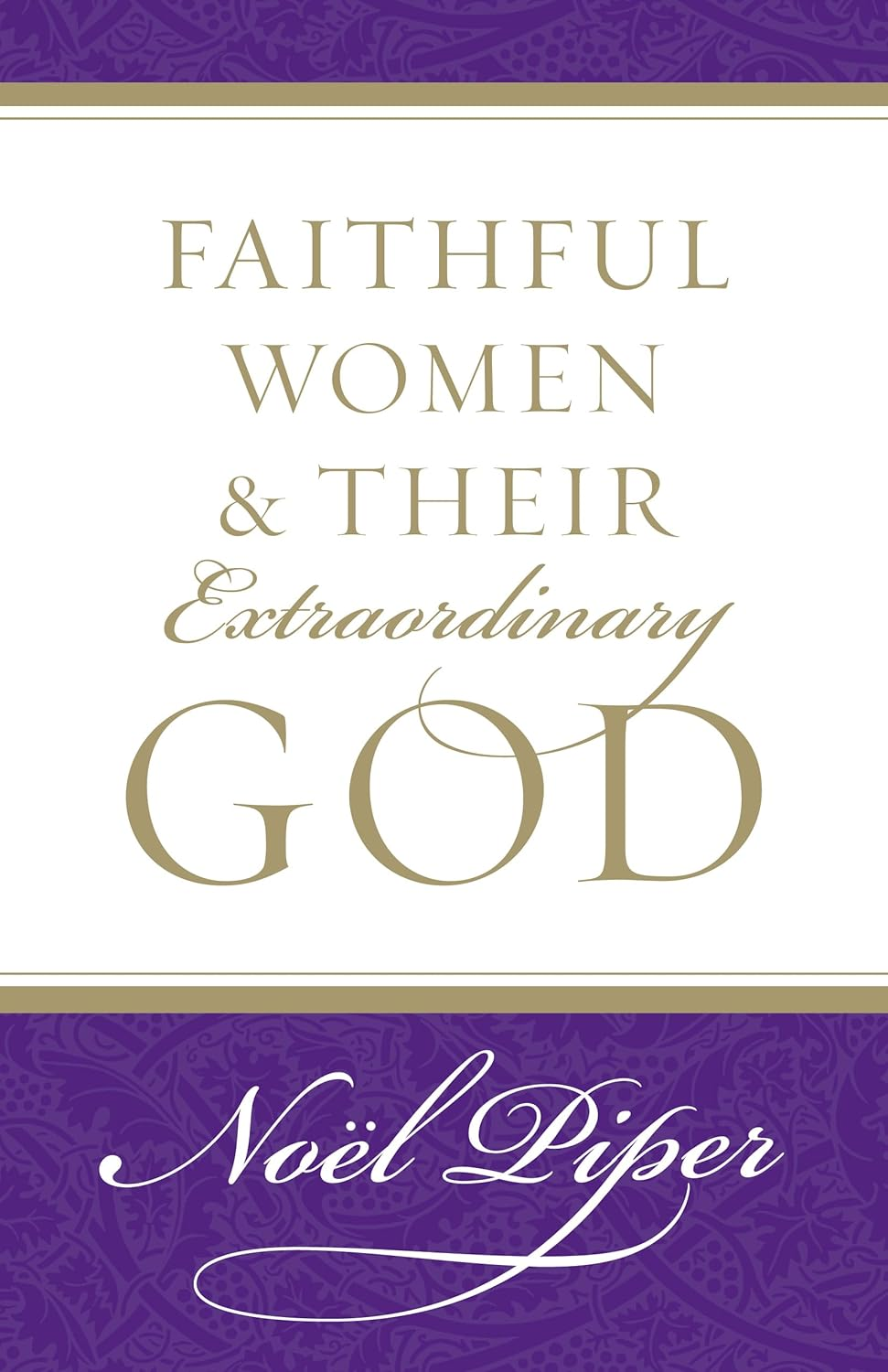


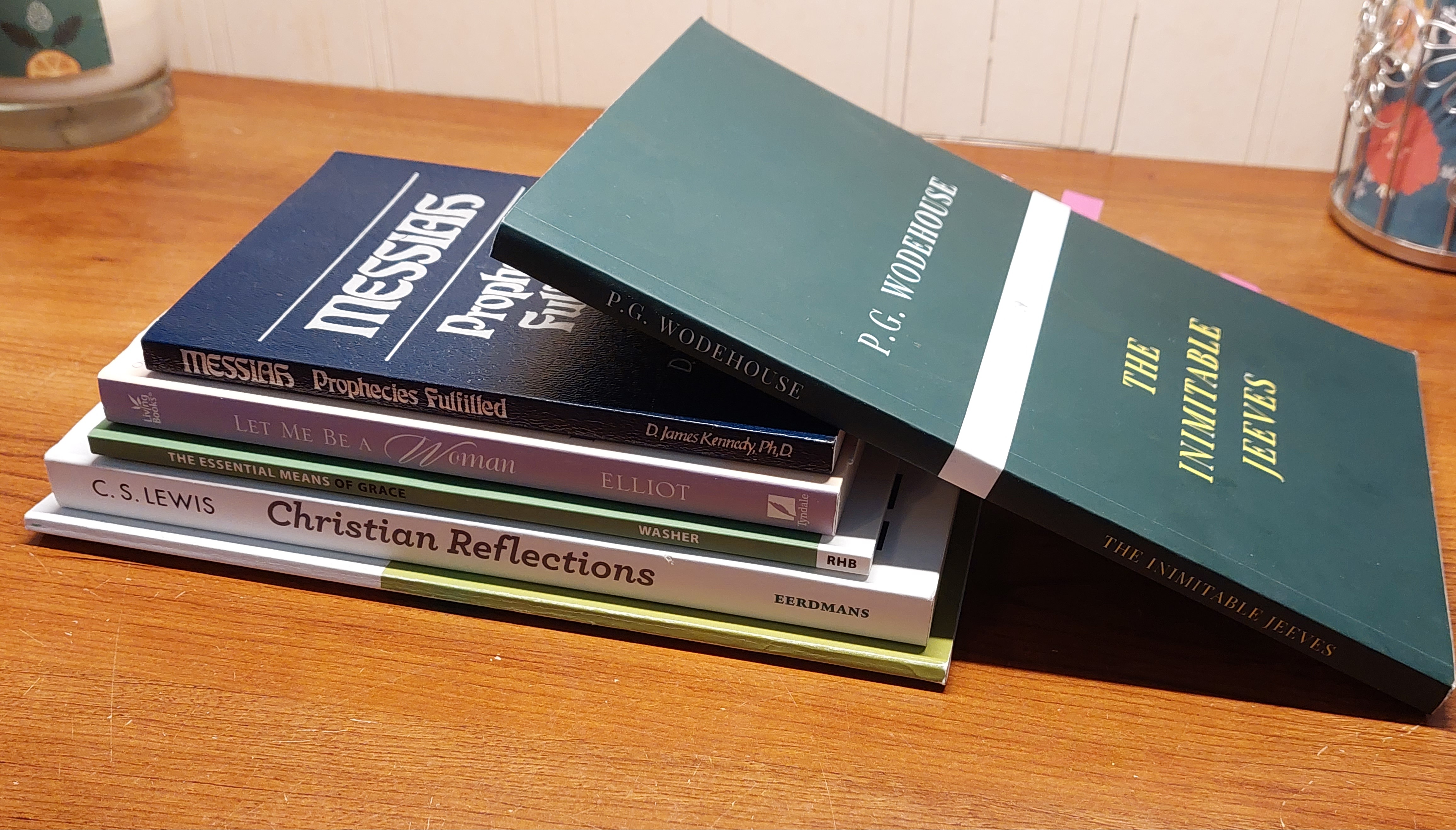


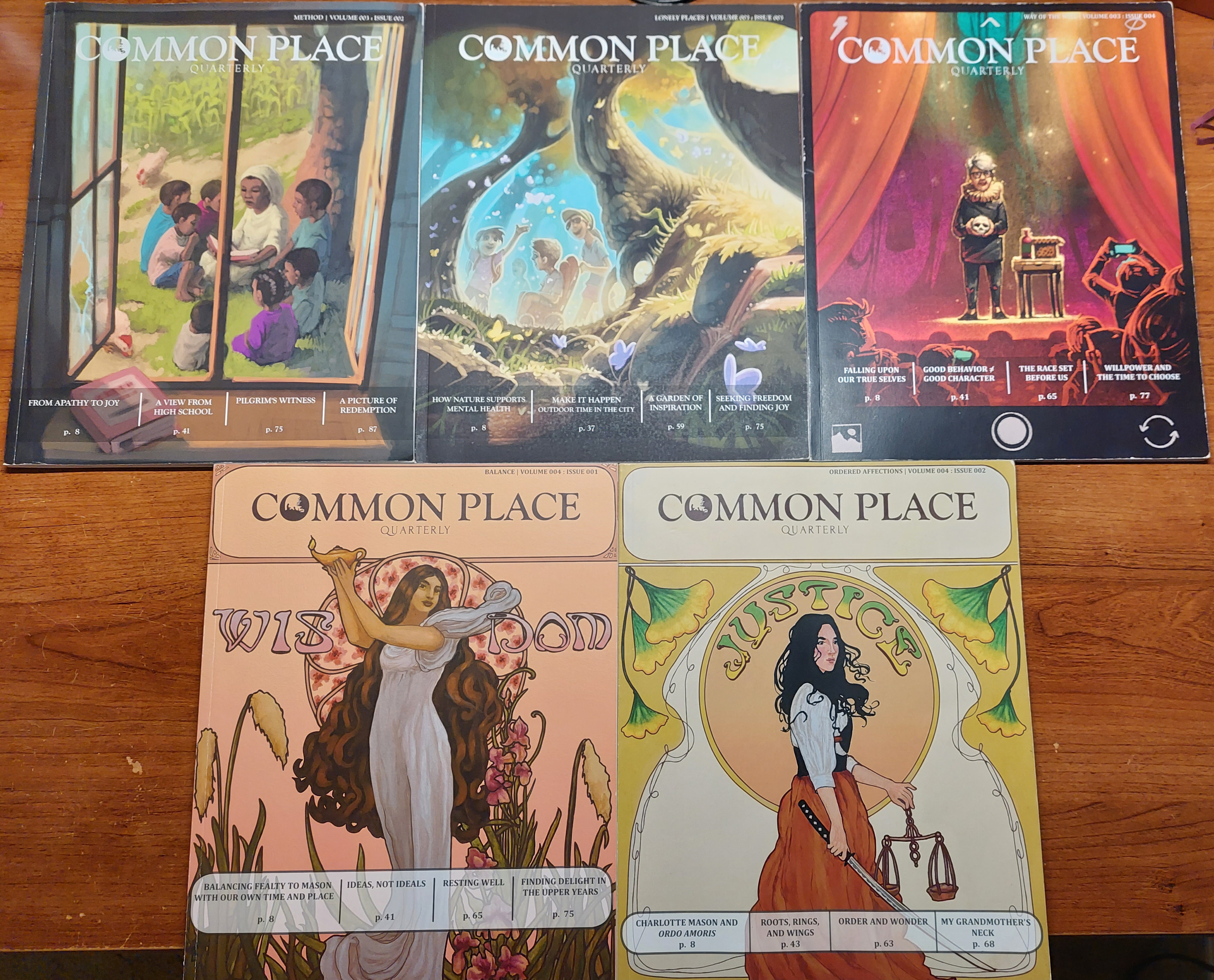

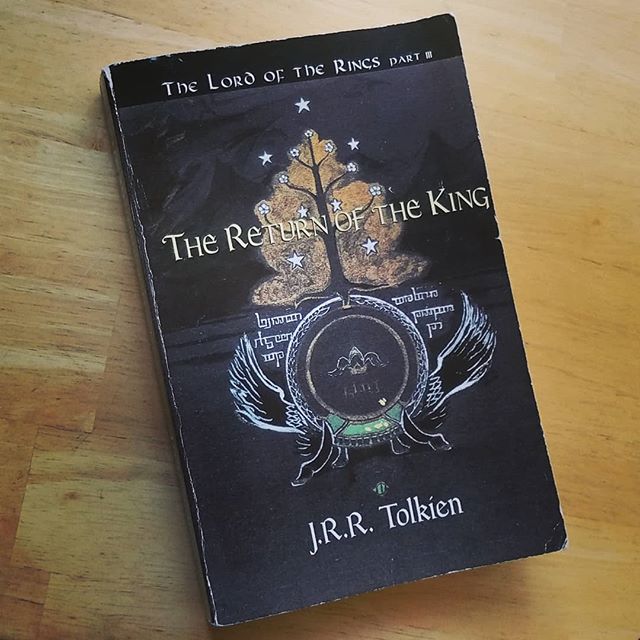


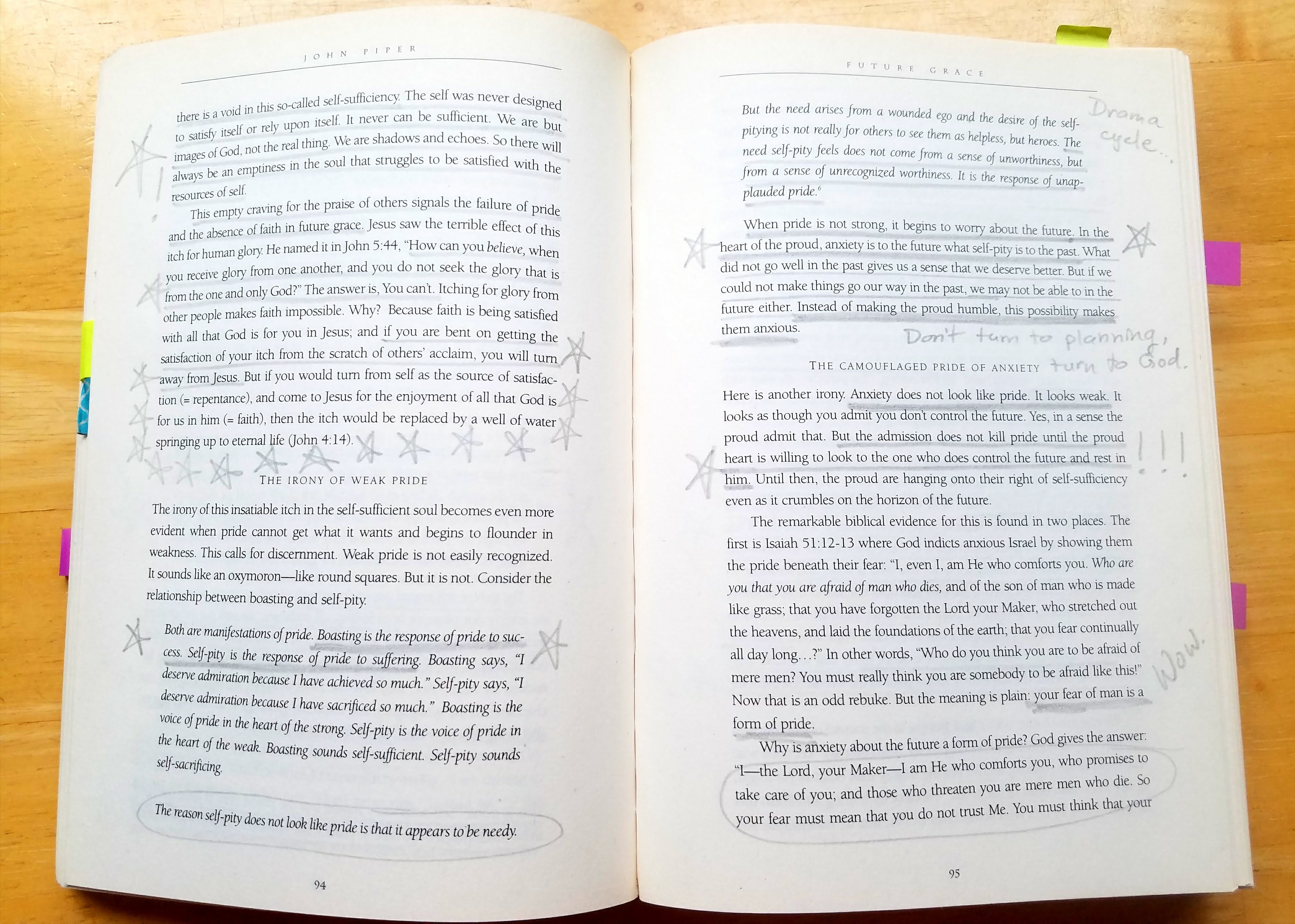
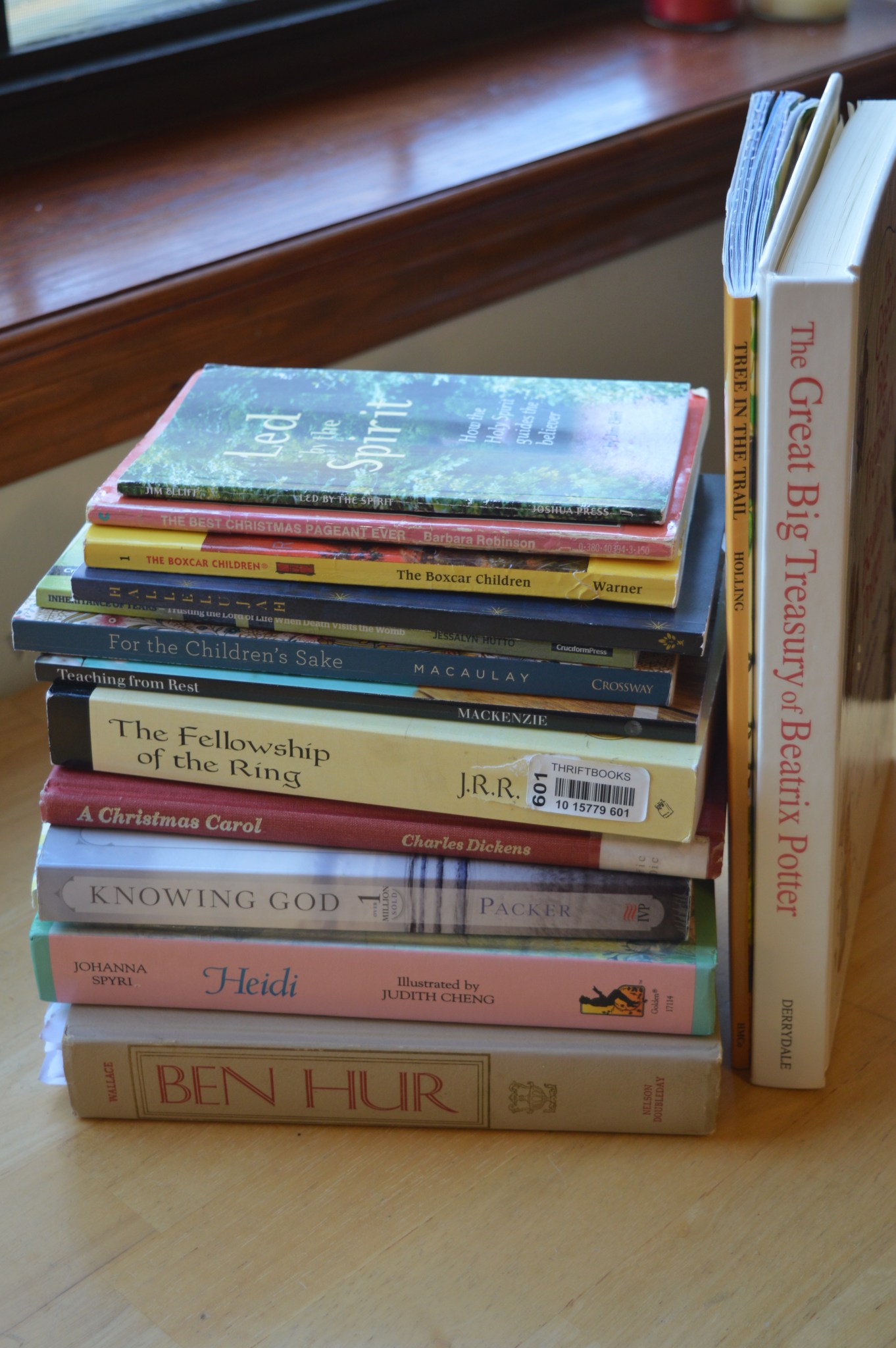 I’m a little late to the party with this post, what with major blog changes last month and major life changes this month, but I hope you’ll nevertheless enjoy these micro book reviews as much this year as in past years when I have been more prompt.


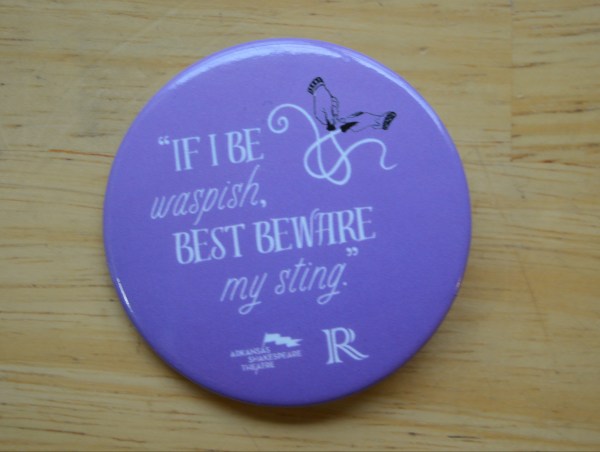
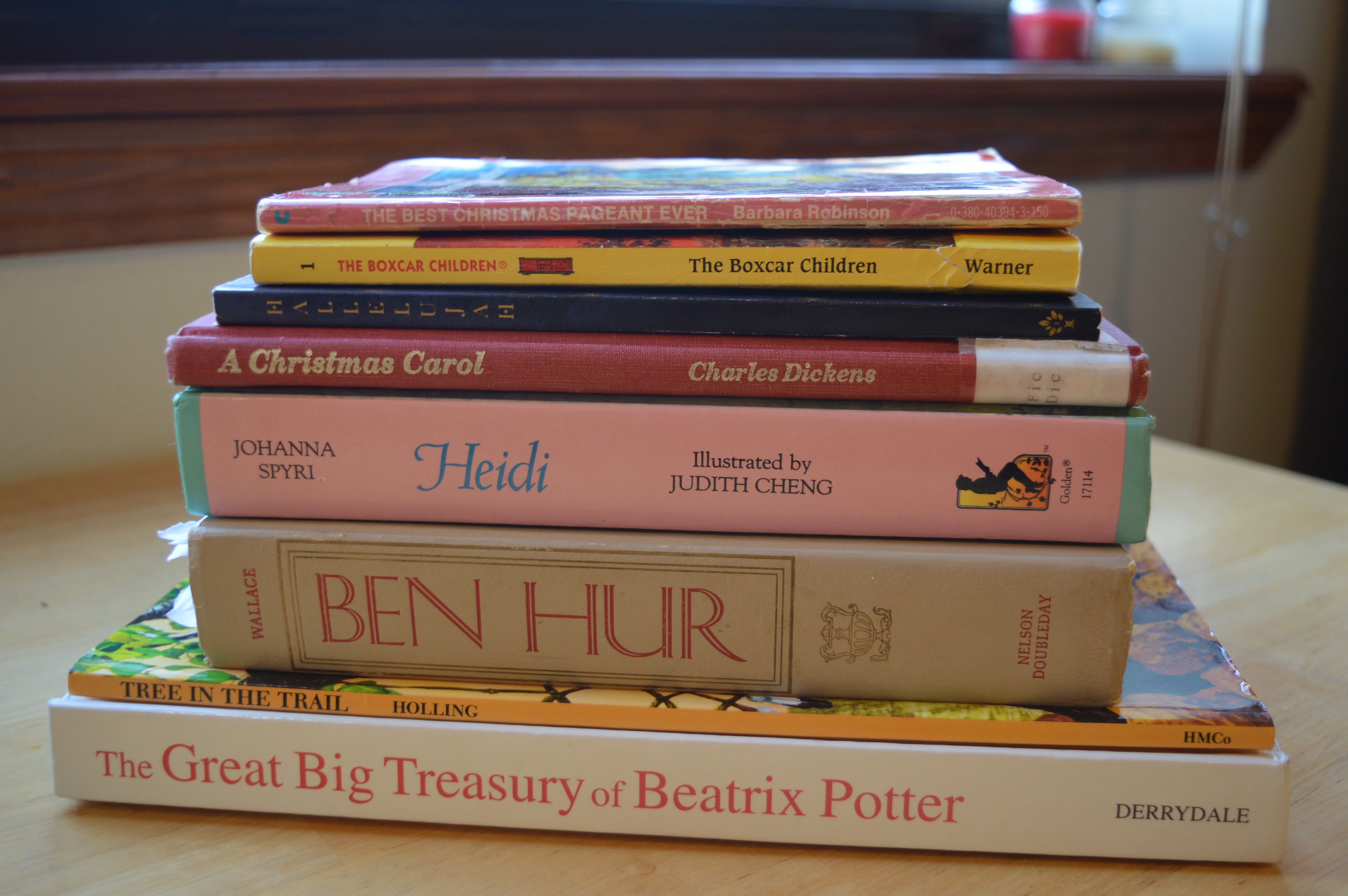


 Kept and Keeping