• Home
  • About
  • Living Faith
  • Home and Family
  • Home Education
  • Books
  • Recommended Resources
  • Media

Kept and Keeping

~ Rest in Grace, Labor in Love

Kept and Keeping

Tag Archives: Books

Reflections on The Iliad, Part 4: Glory, Honor, Immortality, and the Folly of the Gospel

12 Monday Aug 2024

Posted by Lauren Scott in Books, Guest Posts, Home and Family, Home Education

≈ Leave a comment

Tags

Books, Christian Classical Education, Christian Classical Homeschool, Classical Education, Classical Homeschool, Home Education, Homer, homeschooling, reading the classics, The Iliad

This post contains affiliate links. If you make a purchase through one of these links, I may make a commission at no additional cost to you. Thank you for supporting my blog!

This is a guest post from my good friend, Tabitha Alloway. We both have high schoolers this year, and they’re both going to read some Homer. While I’ve read The Iliad and The Odyssey recently so that I can be in conversation with my son about what he is reading, Tabitha has gone a step further and actually written out her thoughts, which I have found both interesting and helpful! I hope you will, too. Check out Part 1, Part 2, and Part 3 if you haven’t already. Here’s Tabitha with Part 4:

iliad greek epic glory homer homeschool

“The Greeks seek after wisdom: But we preach Christ crucified… unto the Greeks foolishness” (see 1
Corinthians 1:17-31
).

The Greeks had no shortage of bizarre and outlandish tales about their gods.
But Christ astonished them.

He died for mankind.
Their gods could not die—and certainly wouldn’t for anything so insignificant as a mortal.

He forgave man’s sins.
Their gods were quick to mete out justice and retribution, but slower to show mercy. Forgiveness was not a well-developed concept in Greek culture.

He conquered death.
A general resurrection of the dead? This was an outrageous thought—something beyond the Greeks’
wildest dreams. It just couldn’t be.

It was the teaching of the resurrection that divided the Greeks who heard Paul preach at Mars Hill. Some mocked. Others were willing to hear him again. A few believed.

To most, the gospel appeared weak and foolish. Their heroes smashed their enemies—they didn’t die for them! The Greeks could not understand a God who would suffer for mortals, just as the Jews, who were looking for a mighty conqueror to save them, did not recognize their humble Messiah who came to serve, rather than be served. And perhaps more than anything, the Greeks couldn’t fathom eternal life in immortal bodies—something they could only envy the gods for possessing. Or else, like Plato, found ridiculous and even undesirable.

Early Church Father Justin Martyr appealed to the Greeks’ understanding of the gods’ immortality to
explain the resurrection: “And when we say also that…Jesus Christ, our Teacher, was crucified and
died, and rose again, and ascended into heaven, we propound nothing different from what you believe
regarding those whom you esteem sons of Jupiter [Zeus]” (1 Apol. 21).

The gospel was the power of God to salvation for everyone who believed, and God added both Jew and
Greek to his church, washing away strife, envy, wrath, and hatred through the Lamb who conquered sin, death, and the grave.

Christ is not only the Lamb of God. He is also the Lion of the Tribe of Judah. He did not suffer for suffering’s own sake; he did it for the joy set before him. He came to rescue a people for himself. He earned a name above every name. Glory. Honor.

In contrast to the Greeks, many today may be more comfortable with a God who is kind, forgiving, suffers without returning insult for insult, and mingles with the lowly, yet struggle with aspects of his justice that might not have been so difficult for the Greeks to understand.

A Servant who girds himself to wash his disciples’ feet is a comforting picture. Is he equally accepted as a King who will return to require worship—and destroy those who do not give it (Psalm 2)? A Lord who will rule with a rod of iron and smash his enemies to pieces (Revelation 2:27, 19:11-16)? A Lawgiver who will break the teeth of the wicked (Psalm 3:7/58:6-8)? An Avenger who “reserveth wrath for his enemies”
(Nahum 1:2) and is “angry with the wicked every day” (Psalm 7:11)? A God who tramples the wicked in fury until their blood is splattered all over his garments, and feeds their carcasses to the animals (see Isaiah 63:1-10, Revelation 19:11-18)?

“Kiss the son [signifying worship], lest he be angry, and ye perish from the way, when his wrath is kindled but a little. Blessed are all they that put their trust in him” (Psalm 2:12).

This picture of God may be a far less comfortable one for modern sensibilities, but it puts the cross into perspective. It tells us just how offensive we are to a righteous Sovereign.

Mercy only means something in the presence of true justice.

Christ came to reconcile us to God and deliver us from his anger. But the day of mercy will not last forever. When the door of the ark closes, only those found in Christ will be able to safely ride out the flood of
God’s wrath. Unlike the Greeks and their petty gods, God’s wrath is holy and justified.

The cross was not the end, but a means to an end: to redeem a people for God’s own glory and possession.
Both divine justice and mercy were displayed at the cross. God has linked our good and his glory together.

The God of the Bible is not about foregoing glory. We may be less comfortable with the concept of seeking personal glory (while in the pursuit of God’s glory) than the biblical writers are.

But Paul puts the idea of seeking glory, honor, and immortality for oneself in a good light (the full
context of Romans 1-5, of course, is an argument against trusting in works for salvation, and the need
to find it—this glory, honor, and immortality—by faith in the finished work of Christ). He motivates believers with the promise of glory, praise, and reward awaiting them, and warns them not to look for this from man on earth. (See John 5:44, Matthew 25:21, 23, 1 Corinthians 4:5, 2 Corinthians 10:17-18, Romans 2:6-7, 29, 8:16-17, 30, 2 Thessalonians 1:11-12, Galatians 1:10, Matthew 6:1-6 Colossians 3:23-24, James 1:12, Matthew 5:11-12, Ephesians 6:8, Hebrews 11:6, Revelation 22:12, 1 Corinthians 3:8-15, etc, etc.)

The question is not whether it is a moral thing to seek glory, honor, and immortality for oneself. That is
a given in Scripture. It is moral for God to seek his own glory, and it is moral for us to seek both his and our own (these are tied together for the Christian). But how and where are we looking to find it? Vainglory is empty, vapid, invaluable. It is the kind of glory most men seek, and it falls far short of the glory awaiting the believer.

C. S. Lewis wrote in The Weight of Glory,

“When I began to look into this matter I was shocked to find such different Christians…taking heavenly
glory quite frankly in the sense of fame or good report. But not fame conferred by our fellow creatures
—fame with God or (I might say) ‘appreciation’ by God. And then, when I had thought it over, I saw that this view was scriptural; nothing can eliminate from the parable the divine accolade, ‘Well done, thou good and faithful servant’.”

Striving for reward is a concept that would have been very familiar to the Greeks. In fact, Paul uses the
picture of running for a prize or competing in athletic games to illustrate the Christian life (1 Corinthians 9:24-27, Hebrews 12:1-3, Philippians 3:13-14, 2 Timothy 4:7-8). Earning prizes and glory is something his Gentile audience would have easily understood.

So there are aspects of our God that the Greeks probably could have understood, to some degree, even better than we might today. And yet, he was still so different from their own gods, from anything they had conceived in their own minds.

They may have been able to appreciate God’s demand for worship and his promise of personal glory and reward for his followers. But the idea of taking up one’s cross and being willing to relinquish temporal life to save one’s eternal soul (Matthew 16:24-25) might have been less tasteful.

They might have been able to identify with Christ as a conquering King and hero. But His life as a suffering Servant to mortals would have been more difficult to understand.

They may have been able to recognize a God of justice. But a God of mercy and forgiveness who reached out in love to those who were his enemies would have been harder to comprehend.

“Among the gods there is none like unto thee, O Lord, neither are there any works like unto thy works… thou art God alone” (Psalm 86:8, 10).

The Greeks valued glory, honor, wisdom, and longingly wished for immortality, a resurrection of the body. Those among them who believed found all these things in Christ—and more. They were freed from wrath, pride, envy, and the sins that so easily beset men. Finding peace with God, they experienced it with their fellow man and strife was “able to die”—a thing Achilles fruitlessly sighed for. They became heirs of a lively hope, an inheritance incorruptible and undefiled. They enjoyed the hospitality and fellowship of the house of God.

While the gospel appeared foolish to the rest of their countrymen, to those who believed, Christ was
made the wisdom and power of God… a power not even their greatest heroes could boast.

More in this series:

Reflections on The Iliad, Part 1: “Rage”

Reflections on The Iliad, Part 2: Humanity and Hospitality

Reflections on The Iliad, Part 3: Some Thoughts on Greek Thought

Other posts with Tabitha:
No Story is the Same, No Pain Ever Wasted
Introducing the Living Books Consortium

Reflections on The Iliad, Part 3: Some Thoughts on Greek Thought

09 Friday Aug 2024

Posted by Lauren Scott in Books, Guest Posts, Home and Family, Home Education

≈ 2 Comments

Tags

Books, Christian Classical Education, Christian Classical Homeschool, Classical Education, Classical Homeschool, Home Education, Homer, homeschooling, reading the classics, The Iliad

This post contains affiliate links. If you make a purchase through one of these links, I may make a commission at no additional cost to you. Thank you for supporting my blog!

This is a guest post from my good friend, Tabitha Alloway. We both have high schoolers this year, and they’re both going to read some Homer. While I’ve read The Iliad and The Odyssey recently so that I can be in conversation with my son about what he is reading, Tabitha has gone a step further and actually written out her thoughts, which I have found both interesting and helpful! I hope you will, too. Check out Part 1 and Part 2 if you haven’t already. Here’s Tabitha with Part 3:

Unless both of your parents were gods, you could expect a rather bleak and meaningless existence
after death.

The Underworld, ruled by the god Hades, was split into three parts: Tartarus (where the evil went), Asphodel meadows (essentially purgatory for all the souls of those who were not particularly good, evil, or noteworthy—this is where Achilles descends to), and the Elysium fields (for good men and great warriors/leaders). The Greeks had a sturdy sense of their own mortality. As Achilles acknowledges, “The grave…hugs the
strongest man alive.”

Radcliffe Edmonds III writes,

“The Homeric epics present a mixed picture of what happens to an individual after death… [The] bleak
vision of death and afterlife is fundamental to the Homeric idea of the hero’s choice – only in life is
there any meaningful existence, so the hero is the one who, like Achilles, chooses to do glorious deeds.
Since death is inevitable, Sarpedon points out, the hero should not try to avoid it but go out into the front of battle and win honor and glory. Such glory is the only thing that really is imperishable, the only meaningful form of immortality, since the persistence of the soul after death is so unappealing.
“As powerful as this grim vision of the afterlife is in the Homeric epics, commentators since antiquity have noticed that this uniformly dreary life for the senseless, strengthless dead is not the only vision of
afterlife presented in the Homeric poems.”
(A Lively Afterlife and Beyond: The Soul in Plato, Homer, and the Orphica)

There are times in Homer’s works in which the dead experience feelings and emotions and have memories of their former lives. Sometimes they even interfere in the world of human affairs.

But for the most part, Homer presents an existence in the House of Hades as empty, mindless, meaningless. When Odysseus speaks to the spirit of dead Achilles in The Odyssey, Achilles moans,

“By god, I’d rather slave on earth for another man—
some dirt-poor tenant farmer who scrapes to keep alive
than rule down here over all the breathless dead.”

There was little hope of joy in the afterlife. No general resurrection of the dead. This was reserved for only a small handful of privileged individuals—perhaps a mortal whose parentage included at least one god or goddess and who had done great deeds (such as Hercules, who was promoted to immortality). Or a man or woman who was very great and good might possibly be reincarnated up to three times, after which the soul could travel to the Blessed Isles and enjoy a happy existence.

The desire for a happier ending in the afterlife led some Greeks to turn to Middle Eastern mystery
religions. The Eleusis mysteries promised that those who lived a virtuous life and performed certain
religious rituals would experience a blessed afterlife. The Orphic cult assured followers that through special rites and initiation into secret knowledge they could escape the fate of most men and find the path to a better place in the afterlife. Members were buried with esoteric inscriptions on thin gold sheets that would guide the deceased through the Underworld.

Greek culture focused on glory. Eternity would probably be bleak, but if you could win a name for yourself, you would at least be remembered and praised after your death. Feats of courage and strength were applauded; cowardice and weakness, despised. This created a highly competitive culture that, arguably, was responsible for much of the country’s rise in the world.

Leaving behind great deeds was a way of becoming immortal, in a sense: the Greeks could not be reunited with their bodies, but they could be memorialized.

Avoiding bodily decay after death was a big deal: if a warrior did not receive a proper burial, his spirit was doomed to forever wander along the riverbank Styx. It could not properly rest in the house of the dead. This is why Achilles is desperate to recover the body of his friend Patroclus and see it gets an honorable burial—and to desecrate the body of Hector, his enemy.

While the Greeks valued life—the physical body and the material world—Plato would later (about 300 years after Homer’s time) present a different conception of life and death, meaning and purpose. He saw the body as something to one day happily put off, so that one’s soul might be set free from a prison that prevents a person from reaching true knowledge, True Being—the Beatific Vision. The physical and material were inferior to the spiritual and mystical. The body was a tomb to be cast off in order that one might become “other-worldly.” Plato spurned the idea of resurrection—for anyone. The Gnostics drew from his teachings.

True immortality for the Greeks meant the body must be resurrected and eternally united with the soul. All the immortal gods engaged in physical activities—eating, drinking, sleeping, having marital relations. Unless you were of the Platonian persuasion, it was a state much to be desired, but one which few, even among their best, could ever hope to attain.

The light of the Christian resurrection would one day pierce the darkness of this fear of death—and divide the Greeks at Mars Hill…

Lauren’s Note:

In reading The Republic, it’s so interesting to me that Plato didn’t want people to read/listen to Homer (though he acknowledges that Homer was pretty much the source of philosophical education for the Greeks in his day). Plato wanted gods that were far better examples than they were in Homer’s telling. He idealized and wanted a truly just and honorable God, and the truly just man according to Plato would be just even when not recognized as such, even when treated as though he were unjust, even to the point of …wait for it… crucifixion! What Plato longed for in a God, in a just man…he didn’t find it in Homer. But he was on to something.

Plato also didn’t like poetry. 😆 He was a “give it to me straight” kind of guy.

More in the series:

Reflections on The Iliad, Part 1: “Rage”

Reflections on The Iliad, Part 2: Humanity and Hospitality

Reflections on The Iliad, Part 4: Glory, Honor, Immortality, and the Folly of the Gospel

Other posts with Tabitha:
No Story is the Same, No Pain Ever Wasted
Introducing the Living Books Consortium

April Foolishness ~ New Living Books Consortium Video Chat!

01 Wednesday Apr 2020

Posted by Lauren Scott in Books, Home Education, Media

≈ Leave a comment

Tags

April Fool's Day, April Fools, Books, Charlotte Mason, Christian Homeschool, Classical Education, faith, Home Education, homeschooling, Living Books, Living Books Consortium, Mother Culture, video

This post contains affiliate links. If you make a purchase through one of these links, I may receive a commission at no additional cost to you. 

Join us as we indulge in a little foolishness!

living books april fools homeschool literature

What kind of foolishness do we find in living books? And what role does it play in our favorite stories? In this chat we take a tour of literary folly: starting with the childish charm of Frog and Toad; to the growth away from foolishness in coming-of-age novels like Anne and Little Britches (and the lack of such growth in Tom Sawyer); and finally to the full-grown foolishness that wields its destructive power in Austen and Shakespeare.

Growth from foolishness to maturity often comes by way of trial–in literature and in our own lives. As we consider the characters in the stories we read, we find insight and inspiration for navigating the crises we face with wisdom and courage.

When it comes to fleeing danger, where’s the line between wisdom and selfishness? In facing danger head-on, what’s the difference between courage and foolhardy recklessness? We hope you’ll join us and find encouragement–both for your family’s literary adventures and for the real challenges you face in these trying times.

For Easy Navigation: 

00:00 – 00:54    Introduction
00:54 – 03:48    Charming, Childish Foolishness
03:48 – 04:52    Foolishness Grows Up a Bit
04:52 – 14:53    Foolishness to Maturity in Coming-of-Age Novels
14:53 – 27:46    Manifestations of Folly in Austen and Shakespeare
27:46 – 37:20    Facing our Current Crisis with Wisdom and Courage
37:20 –  End     Wrap Up

Books Mentioned

The Bible, especially the book of Proverbs 🙂

Winnie the Pooh by A. A. Milne

Paddington Bear by Michael Bond

The Wind in the Willows by Kenneth Graham

Frog and Toad by Arnold Lobel

The Adventures of Tom Sawyer by Mark Twain

Anne of Green Gables by Lucy Maud Montgomery

Little Britches by Ralph Moody (audiobook linked below)

Little House Books by Laura Ingalls Wilder

Little Women by Louisa May Alcott

Where the Red Fern Grows by Wilson Rawls

To Kill a Mockingbird by Harper Lee

The Bronze Bow by Elizabeth George Speare

Johnny Tremain by Esther Forbes

Jane Austen:

Pride and Prejudice

Sense and Sensibility

Emma

The Daughter of Time by Josephine Tey

King Lear by William Shakespeare


Check out our past episodes:
Chat #1  Introducing the Living Books Consortium
Chat #2  Living Books Meet Real Life–Letting the Magic Happen
Chat #3  Living Books in the Large Family–with Amy Roberts


Books Read in 2018: Mother Culture Edition

13 Monday Jan 2020

Posted by Lauren Scott in Books

≈ 2 Comments

Tags

Books, Books, micro book reviews, Mother Culture, Reading List

This post contains affiliate links. If you make a purchase through one of these links, I may receive a commission at no additional cost to you. 

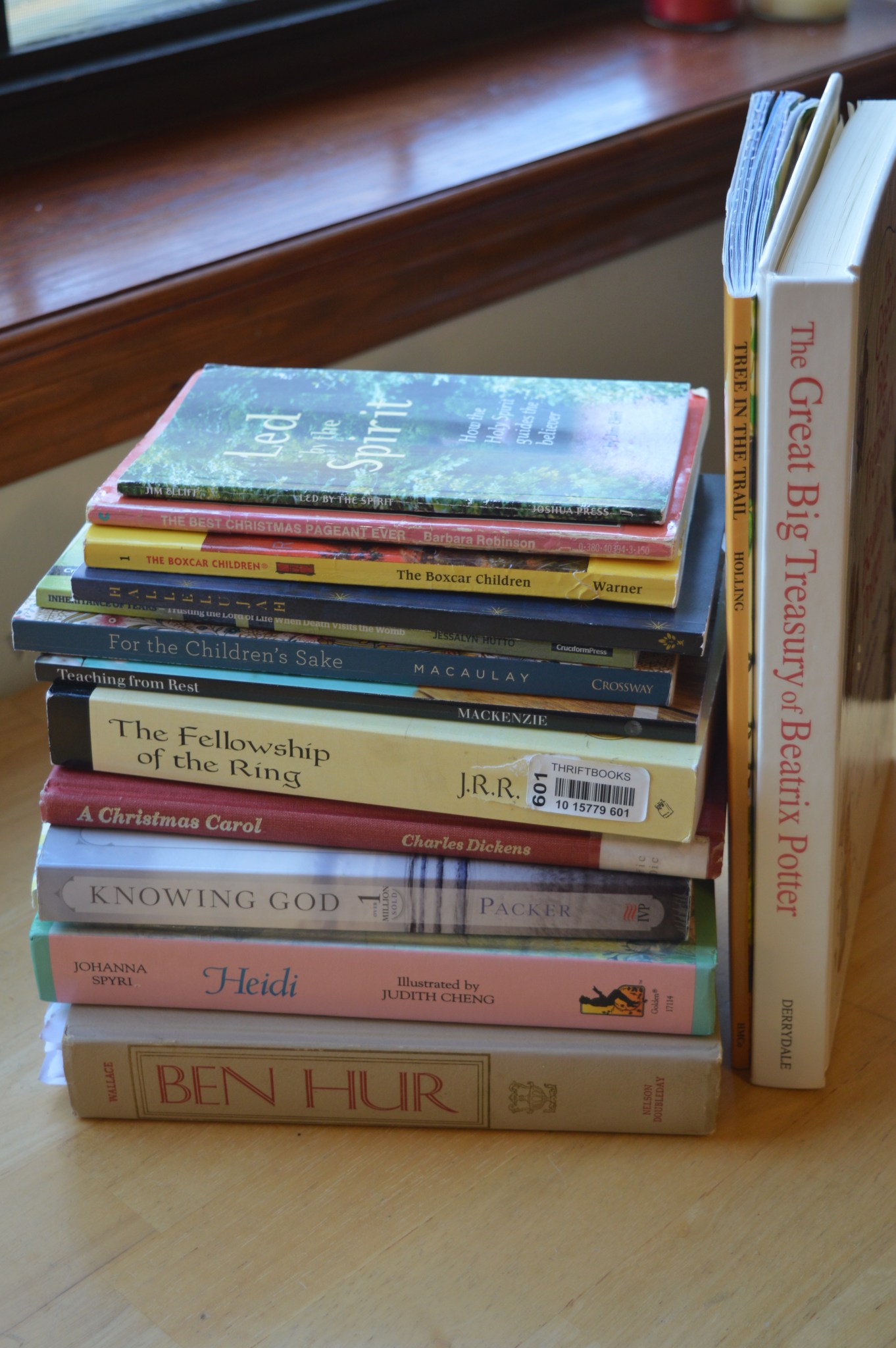
Here it is! The long-awaited (Maybe? Humor me?) continuation of my micro book reviews for 2018! These are the books I read mostly for my own growth and enjoyment. You can find my 2018 Theology Reads here. Coming soon: 2018 Family Culture Reads. Photo contains some of both lists.

20190101_193336

Mother Culture 

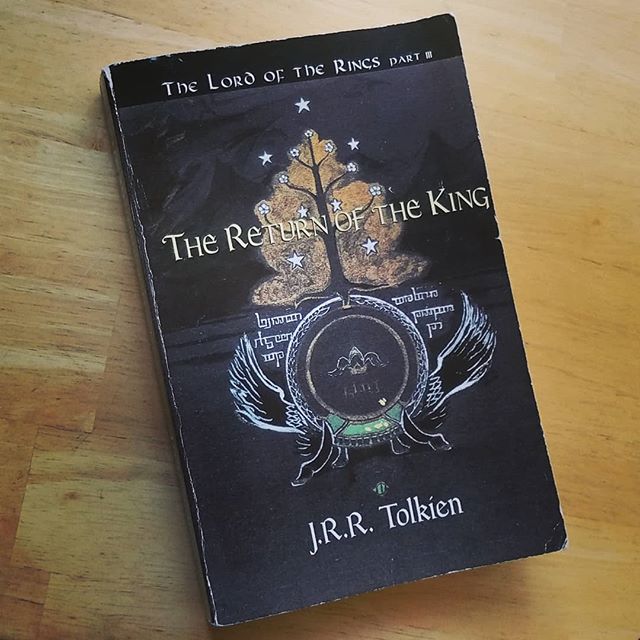
The Lord of the Rings: The Two Towers was the first book I finished in 2018, and The Return of the King was the last, making for a nice set of Tolkien book-ends for the year. For some reason I could not read these books quickly. They were delightful but slow reads. I especially enjoyed the pictures of spiritual battle in these books, first with Theoden in The Two Towers, and then with Denethor in The Return of the King. Perhaps I’ll write about this in the future. 😉 I certainly intend to return to Middle Earth again soon—starting with The Hobbit this year with my kiddos!

30079458_442200119570564_4624932234439163904_n

This is a long quote, but Tolkien’s words from The Two Towers (about the voice of Saruman) are oh so insightful.

Suddenly another voice spoke, low and melodious, its very sound an enchantment. Those who listened unwarily to that voice could seldom report the words that they heard; and if they did, they wondered, for little power remained in them. Mostly they remembered only that it was a delight to hear the voice speaking, all that it said seemed wise and reasonable, and desire awoke in them by swift agreement to seem wise themselves. When others spoke they seemed harsh and uncouth by contrast; and if they gainsaid the voice, anger was kindled in the hearts of those under the spell. For some the spell lasted only while the voices spoke to them, and when it spoke to another they smiled, as men do who see through a juggler’s trick while others gape at it. For many the sound of the voice alone was enough to hold them enthralled; but for those whom it conquered the spell endured when they were far away, and ever they heard that soft voice whispering and urging them. But none were unmoved; none rejected its pleas and its commands without an effort of mind and will, so long as its master had control of it.

True Grit by Charles Portis  I’ve continued reading and listening along with the Close Reads Podcast when I am able. I couldn’t resist picking up this book when I found out it takes place in Arkansas and Oklahoma—pretty much in my backyard. That geographical connection really had to be there to convince me to touch a western. But my first taste of the genre has been a good one! Portis takes on the voice of a fifty-something old-maid banker telling the story of how she hunted down her father’s killer at the tender (or should I say stubborn?) age of fourteen. Mattie Ross takes herself quite seriously, and Portis makes great use of this (and her matter-of-fact delivery) to imbue a rather intense story line with a lot of dry humor (my favorite kind).

I so thoroughly enjoyed this book that I made a point of walking down Mattie’s journey a bit myself, from Dardanelle, Arkansas to Ft. Smith, and yes, even to McAlister, Oklahoma and the Winding Stair Mountains of eastern Oklahoma (where my family did a backpacking trip last year as I was reading this book!).

29087628_448712148880511_8407841593695928320_n
29093494_575258356166353_2942482618475610112_n

It was a way to immerse myself in the scenery of the story (and critique the movie depictions of these places, cough, cough). Not to mention it was a fantastic opportunity to learn my local geography—something I hadn’t, as a native Texan, really taken a lot of interest in before (aside from finding hiking trails). Arkansas is a pretty great place to get to know. Local literature is a great way to learn local geography!

The Code of the Woosters by P. G. Wodehouse  This was another Close Reads suggestion. It seems I’ve gravitated to the comedy offerings in 2018. British humor places high on my list next to dry humor.

Bertrand “Bertie” Wooster is a young aristocrat who regularly lands himself in a pickle of some sort. In this story, he manages to accidentally lift a precious cow creamer, causing enormous amounts of trouble for himself and for his friends. His faithful butler, Jeeves, must come to the rescue again and again with sage tactics and straight-man comic relief.

Taking in the story through Bertie’s eyes, the descriptions of other characters come to us as unfiltered critiques, much like Emperor Kuzco in The Emperor’s New Groove. Bertie’s delivery is a bit more blatantly humorous than that of Mattie Ross in True Grit, but they both employ a voice and attitude (and lack of self-awareness) that make for a lot of good laughs!

Much Ado About Nothing and King Lear by William Shakespeare In 2018 the folks at Close Reads launched another podcast called The Play’s the Thing, exclusively covering the entirety of Shakespeare’s plays, one after another. I have to admit that while I thoroughly enjoyed both of these plays, I’m finding that it’s difficult to remember them in detail a year later. Much Ado is a comedy, and King Lear is a tragedy. They are both worth your time. I think the best thing I came away with after reading them one right after the other is that even though they are different genres, Shakespeare manages to weave a bit of humor into even the darkest tragedy, and likewise a bit of tragedy into his comedy. Both plays also wrestle with several of the same motifs: prideful assumptions, character assassination, willful deception, and the nature of true love.

We (my husband and I) had a trial of Amazon Prime and watched the Amazon Original film adaptation of King Lear. It was a very interesting presentation of Shakespearean English in modern attire and setting. I thought it hinted at the timelessness of human nature. Anachronistic, to be sure, but I enjoyed it.

Twelve Ways Your Phone is Changing You by Tony Reinke  I think every Christian who uses the internet ought to read this book. Reinke covers all kinds of angles of our modern “connected” lives: FOMO (fear of missing out), social media, true social connection, the need to read and think deeply, purity, and Christian maturity and community, to name a few.  Reinke calls for godly wisdom and careful consideration—not just for how we engage in our digital culture, but if and why–neither taking an “anti” stance nor a heedless dive in to all things digital with a rally cry of “good motives”. I think it’s about time for me to revisit this one. Check out this list of quotes from the book over at The Gospel Coalition. 

The Life-Giving Home by Sally and Sarah Clarkson  I picked up this book in an effort to give more attention to the seasons and building traditions in our home. I have long appreciated Sally Clarkson’s books and articles on motherhood. She is probably my near opposite in terms of personality, and while I’m totally fine with doing things in a way that suits my personality, I have found Sally’s relational and inspirational tone to be quite an example and challenge to my often-direct and efficient approach to family life. This book has two sections: one that explores the concept of home and another that serves as a month-by-month guide to implementing traditions that build up faith and family throughout the year. As such, you can read the book straight through or pick a month to get ideas for the upcoming season or holidays. We don’t copy and paste from this book, but I have enjoyed the ideas and inspiration. Highly recommend.

The Busy Homeschool Mom’s Guide to Romance by Heidi St. John  I think I found this book for about a quarter at a thrift store. At first I was going to pass it up, thinking, “We’re good.” But then I hesitated. Maybe my husband would appreciate me reading a book like this. So I picked it up. I’m glad I did. It was a good read for 25 cents. There’s a lot of biblical wisdom and consideration—especially when it comes to the unique distractions inherent to the homeschool life.

One of the key images used in the book, however, is “that girl”—as in, the girl your husband married. There’s a bit of an encouragement to be “that girl,” to be the more adventurous, smitten “you” that you were when you were first married. When discussing this concept with my husband, he flat out rejected it. “I don’t need you to be ‘that girl’. I’m not ‘that boy’. We’ve both grown and changed and it’s good. Be adventurous and fun, sure, but don’t feel like you need to go back to something in the past.” This is one of the reasons I like having him around. 😊  Do I recommend this book? No, not necessarily. If you need ideas to build up the romance in your marriage, this might be helpful. If you’re in a pretty good place with your man, there may be other books that would challenge you to go deeper.

A Grief Observed by C. S. Lewis  My grandfather died in May of 2018 at the age of 95. I sought out Lewis’s reflections at my local library as I processed the loss. Perhaps the greatest value in reading this book was as a model for writing out my own “grief observed” in my journal. Lewis’s experience in losing his wife is very different than mine in losing my grandfather. But there were, for either situation, still some of the same questions that plague and truths that comfort. It was a good read.

Walking from East to West: God in the Shadows by Ravi Zacharias (an autobiography)  As the subtitle suggests, this is one of those memoirs that seeks to show God’s hand at work all along way, but there is nothing trite about Ravi’s life nor his storytelling. My husband and I listened to this book on audio on several road trips in 2018. Ravi chronicles with thoughtful storytelling his long and full life—a life rich with personal highs and lows, with clashes of cultures and worldviews—and with the Lord in constant pursuit. I appreciated learning a bit of Indian history amidst the riveting drama of hard circumstances, strained relationships, internal battles, and tough questions. I imagine this would be a good read for any believer, but it is especially meaningful if you have been blessed by Ravi’s intelligent and warm apologetics ministry. I hope to revisit this book again in the future.

Top Pick

So what’s my top pick from this list? Well, I loved so many of these books, but I’d have to say that True Grit captured my imagination and worked its way into my schedule more than any other in 2018. Geographically immersing myself in the story was an adventure all its own—both enhancing my experience of the story and my experience of the world around me. Your mileage may vary. 😉


Want more book reviews? Please consider subscribing. And check out these posts from past years:
2018 Theology Reads
2017
2016
2015-2016
2014-2015

Living Books in the Large Family: A Chat with Amy Roberts

12 Thursday Sep 2019

Posted by Lauren Scott in Books, Home Education, Media

≈ Leave a comment

Tags

Books, Home Education, homeschooling, Large Family, Living Books, Living Books Consortium, Reading

This post contains affiliate links. If you make a purchase through one of these links, I may receive a commission at no additional cost to you. 

It’s time for another Living Books Consortium video, this time with special guest Amy Roberts! Tabitha and I have had the pleasure of knowing Amy in real life in addition to gleaning tips and inspiration from her blog RaisingArrows.net over the years. We were thrilled to have her join us and to get to catch up a bit.  🙂  We hope you’ll join us for a few laughs and be blessed to hear from Amy about how she has incorporated living books into her family’s homeschool from the beginning, seeking to encourage a love of reading and learning in her kids at every age and stage.

Enjoy!

For easy navigating: 

00:00 – 02:53  Intro and Inspiration
02:53 – 04:24  Curriculum and Living Books
04:24 – 12:02  Wide Range of Ages and Fitting in Read Aloud Time
12:02 – 13:44  What the Big Kids have Taken with Them
13:44 – 19:30  Tips for Enticing Young Readers and Keeping Voracious Readers in Books
19:30 – 31:55  Potpourri: Hard Books for…Babies?!? Science, History, Messes, and Gaps
31:52 –  End   Where to Find Amy Online

Be sure to check out Amy’s latest post on How to Choose Read-Alouds.

Books Mentioned: 

Wind in the Willows

Watership Down

Paradise Lost

Basic Economics

Sinners in the Hands of an Angry God

Curriculum Mentioned: 

Tapestry of Grace

Peaceful Press: The Precious People and The Peaceful Preschool

Mystery of History

Story of the World

Ambleside Online

Apologia Science

Introducing the Living Books Consortium (and a Video with Tabitha Alloway)!

27 Monday May 2019

Posted by Lauren Scott in Books, Home Education, Media

≈ 3 Comments

Tags

Books, Charlotte Mason, Home Education, Living Books, Living Books Consortium

This post contains affiliate links. If you make a purchase through one of these links, I may receive a commission at no additional cost to you. 

Friends, I am so excited to share this with you! About six months ago my friend Tabitha Alloway (of Pursuing Logos) started a community on Facebook dedicated to living books–discussing the books we find, asking for recommendations, sharing reviews, and yes, even sharing some hilarious book memes. Sifting through all the books out there is a big job. But it’s a little easier (and more fun) if we do it together!

What is a living book? Well, that’s what we sought to address in this first video chat (below!) where we discuss the motivation behind the Facebook group, our own relationship with books, what living books are, and how we go about choosing them for our families.

Want to chime in? Request to join the Living Books Consortium group on Facebook.  Here’s the group description:

Welcome to the Living Books Consortium! We share a passion for books here–but not just any books. We’re interested in good books; books that fire the imagination, stir the soul, and challenge the mind and spirit. As John Milton said, “A good book is the precious lifeblood of a master spirit.”

Charlotte Mason was the nineteenth century British educator who coined the phrase “living books.” To her, a book was a living book (as opposed to dull and lifeless “twaddle”) if its text was engaging, its literary elements fine, its teaching qualities commendable, and its truths timeless.

She wrote, “As for literature – to introduce children to literature is to install them in a very rich and glorious kingdom, to bring a continual holiday to their doors, to lay before them a feast exquisitely served. But they must learn to know literature by being familiar with it from the very first. A child’s intercourse must always be with good books, the best that we can find.”

Here in this group we share with one another “the best that we can find.” This page is meant to be a tool and resource for those in search of good literature as we share reviews and exchange recommendations with one another: be it a children’s picture book, a classic, or a fine work of non-fiction, etc.

So whether contributing to this page or just browsing it, enjoy your time here and be inspired to pursue the treasure and pleasure that good literature holds–in the company of fellow book enthusiasts. Ultimately, whether we “eat,” “drink,” or “read books,” we desire to do all to the glory of God. 🙂

We’ll be releasing a new video chat each month in the group. We hope you’ll join us!

Show Notes Below!

For easy navigating:
00:00 – 09:44 — Group History and Introduction
09:44 – 24:00 — Discussion of Some of OUR Favorite Books
24:00 – 33:00 — What is a Living Book? How Do We Choose Them?
33:00 – 35:04 — Handling Questionable Content
35:04 – 40:35 — Resources We’ve Used
40:35 –  End  — Preview Next Month and Wrap-Up

Books Mentioned:

How to be Romantic

A Gospel Primer

Trusting God

Sherlock Holmes

The Scarlet Pimpernel

A Tale of Two Cities

The Count of Monte Cristo

Les Miserables

Sense and Sensibility (Check out Close Reads podcast on this book now!)

Close Reads is covering Sense and Sensibility right now!

The Ultimate Living Book: The Bible
May we suggest this Bible Reading Plan?

Knowing God

Keep a Quiet Heart

Pride and Prejudice

The Hunger Games Trilogy

Resources Mentioned:

Lithographs (Sherlock shirt, Pride and Prejudice bag)

Ambleside Online (Much more than a book list, but a great reference for the book list it contains)

Honey for a Child’s Heart (Great list of children’s books by age)

Robinson Curriculum Book List (Actual curriculum website HERE)

Educating the WholeHearted Child (Excellent and thorough resource for Christian homeschooling, including a recommended books list)

Librivox.org  (Free audiobooks! Yay!)


Books Read in 2018: Theology Edition

15 Tuesday Jan 2019

Posted by Lauren Scott in Books, Living Faith

≈ Leave a comment

Tags

Books, Books, micro book reviews, Mother Culture, theology

This post contains affiliate links. If you make a purchase through one of these links, I may receive a commission at no additional cost to you. 

For several years now I have aimed to read at least one book a month and in most recent years I raised my annual goal to at least twenty. Each year my list of “books read” becomes a blog post with what I like to call “micro book reviews.”

Well, in 2018 I finished thirty books, far surpassing years past. So instead of asking you, my dear readers, to trudge through all thirty micro book reviews in one post, I have decided to break them up.

theology christian books reviews

Since I have read more and headier theological works this year than usual, and because my reviews on these works are more detailed due to the importance of the subject matter, this first installment covers just four books on theology. Lord willing, next week I’ll share other Mother Culture reads (books I’m reading for my own education and enjoyment rather than just for my children’s), and by the end of the month will also publish what I call Family Culture reads (books read with the boys for school or books we’ve read aloud as a family). I hope you’ll check back in for each one!

Theology reads of 2018

For most of the past year I followed a Bible reading plan for my personal devotions. It’s been wonderful to read larger sections of scripture this year, but I have also appreciated the “catch-up days” afforded in the schedule. These have mostly been taken as “off days”—and an opportunity to read from the books I’ve listed below. None of these should be elevated to the place of scripture, but they have been worthwhile to chew on about one morning a week. Maybe you’d enjoy them in such a manner, as well.

The Attributes of God by A. W. Pink (1886-1952)  We acquired this book when we purchased Shai Linne’s album by the same title (containing theologically rich and deeply encouraging rap music). I read slowly through Pink’s book, often looking up scriptures referenced, for my personal quiet time last spring.

20190115_094250

Each of nineteen chapters covers a different attribute of God and concludes with an application or encouragement to worship, trust, and adore God rather than merely chock up mental assent. These nuggets of application were some of my favorite and most quotable sections of the book. Here is a sampling:

He foresaw my every fall, my every sin, my every backsliding; yet, nevertheless, fixed His heart upon me. Oh, how the realization of this should bow me in wonder and worship before Him!

When we trustfully resign ourselves, and all our affairs into God’s hands, fully persuaded of His love and faithfulness, the sooner shall we be satisfied with His providences and realize that ‘He doeth all things well.’

Gratitude is the return justly required from the objects of His beneficence; yet is it often withheld from our great Benefactor simply because His goodness is so constant and abundant.

A personal aim of mine in reading this book was to examine and solidify my own views. I tested not only the words on the page, evaluating to what extent they were true or false (finding only minor disagreement and largely in argumentation rather than substance), but I also tested my own heart as it reacted to these descriptions of God. Am I willing to let God be God? Or do I have a still-sinful attitude that is uncomfortable with His rule and providence? Meditating on God’s attributes, with this or another such book (and an open Bible!), is a wonderful opportunity to clarify to oneself the truth about God and honestly assess the soul’s response to it.

The Ology by Marty Machowski, Illustrated by Andy McGuire  I was thrilled to find this book at my local library after seeing it recommended by many friends. I list it here rather than with family reads because I pre-read it this year and haven’t read it with the kids yet. We now have our own copy (thanks, Mom!) and intend to go through it this year.

20190115_091214

The Ology seeks to explain “ancient truths ever new” in a simple yet beautiful format so that kids can learn and understand the basics of Christian theology. Scriptures are included on nearly every page spread and a glossary and list of discussion questions for each section are included at the back of the book. In terms of theological particulars, this is a kind of reformed theology for kids. The issue of baptism, however, is explained with care so that those who practice infant baptism and those that wait for their children to trust in Christ before being baptized can read and enjoy this book.

There’s also a CD to accompany the book: The Ology by Sovereign Grace Kids. Encouraging songs and stylistic variety. I love it!

The Reasonableness of Christianity by John Locke  I must have stumbled upon this little gem at a used book store before later finding it on my bookshelf and making it a part of my devotional reading. John Locke (1632-1704), better known for his political theory based on natural rights and characterized by limited government, argues in less than 100 pages that Christian belief (particularly that Jesus is the Messiah) is in fact reasonable. The charge he must have been responding to was this: “Is it really reasonable to embrace Jesus as the Messiah, the Son of God, when he didn’t speak often or very explicitly about this in the gospels?” The other less contentious question Locke seeks to answer seems to be: “If salvation is by faith and not by works, what is it that must be believed?”

reasonableness of christianity review john locke

While I don’t necessarily agree with Locke on every point of theology (his opening remarks about original sin are…interesting, for example, and there is some debate as to whether he held to an orthodox view of the Trinity, though that is not in view in this book) I thoroughly enjoyed following him through the Gospels and Acts as he makes his case—that everything points to the need for people to believe in Jesus as the Messiah as the central tenet of Christianity and the essential element of saving faith. Especially interesting is how Locke explains the wisdom of Jesus’ reservedness during his ministry and trial:

But he [Jesus] would not be seized for anything that might make him a criminal to the government: and therefore he avoided giving those, who, in the division that was about him, inclined towards him, occasion of tumult for his sake: or to the Jews, his enemies, matter of just accusation, against him, out of his own mouth, by professing himself to be the Messiah, the King of Israel, in direct words.
… This preserved him from being condemned as a malefactor; and procured him a testimony from the Roman governor, his judge, that he was an innocent man, sacrificed to the envy of the Jewish nation.

To sum up, The Reasonableness of Christianity is, as I see it, two things: 1) an explanation of Jesus’ rationale for not clearly stating who He is, and 2) a kind “mere Christianity” summed up in the words: “Jesus Christ is the Messiah, the Son of God” and therefore (and reasonably) to be believed and obeyed.

Where modern American Evangelicalism might reduce the gospel to a process or the Roman’s Road, Locke is “reducing” it to a Person and a call to personal faith and allegiance. While there are other important truths to mine in Scripture (and Locke affirms this), Locke does an excellent job of pointing to the main thing, the main Person: Jesus Christ Himself.

The 17th century English, complete with Roman Numerals used for scripture references in the text, make this a challenging yet rewarding read. If you’re interested, give it a go!

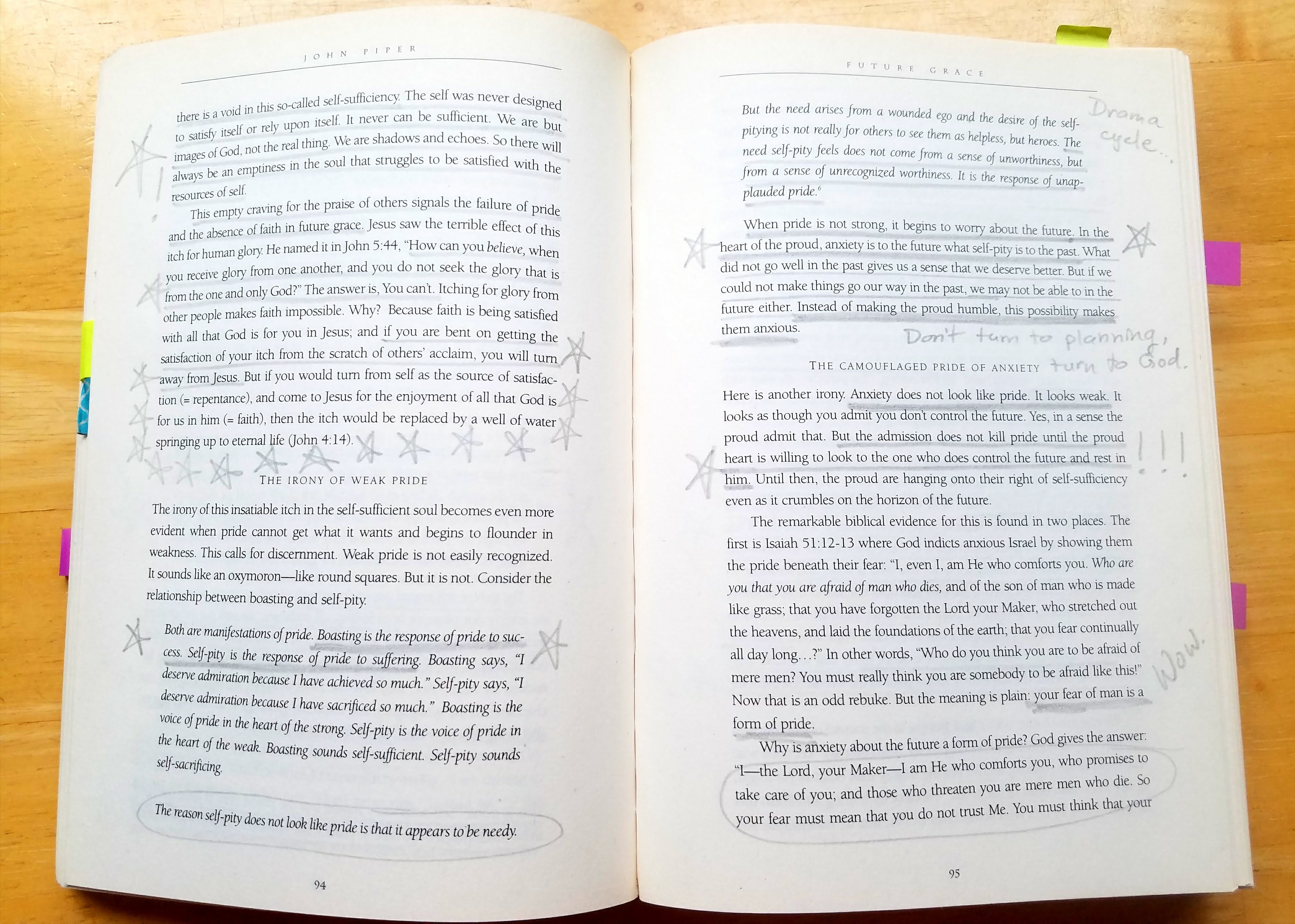
Future Grace by John Piper (link is to a revised edition–my copy is the first edition)
I bought this book when on a trip to Boston in my early twenties and regretfully didn’t get past the introduction at that time. Over a decade later I picked it up and have thoroughly enjoyed it (using my old plane ticket as a bookmark! Ha!). This book has 31 chapters and is intended to be read through in a month, but you could easily enjoy it at a slower pace like I did, fitting it in where my Bible reading plan allowed and completing it over the course of a few months.

The Purifying Power of Living by Faith in Future Grace, as its longer title suggests, isn’t just a theology book. Piper seeks to demonstrate the powerful, sin-forsaking effect that faith in God’s future grace has on the life of the believer–and to encourage you, the reader, to live by such faith.

This is an empowering read. Not in a “you can do it” sort of way, but in a “look to Christ” sort of way.

20190115_092402

I loved on this book quite a bit…pencil, pencil everywhere.

Each section contains a few chapters defending, defining, and discussing the nature of faith in future grace and concludes with one chapter to “apply the purifying power” to a particular sin or disposition. The practical application chapters cover anxiety, pride, misplaced shame, impatience, covetousness, bitterness, despondency, and lust. Piper’s aim is the heart, and the way he deals with such deep-seated struggles and sins in these chapters reminds me a lot of Jerry Bridges’ excellent book Respectable Sins.

On touchy subjects like anxiety, depression (despondency), and shame, Piper speaks biblical truth with much personal understanding and gentleness. This is not a book to beat you up for your mental and emotional problems, rather it seeks to see them clearly (and see Christ clearly) so that they can be dealt with rightly and with hope. 

With the last chapter finishing up on page 399, Future Grace is a commitment, but the return on investment is high. I’ll let Piper’s own words take us out.

Unbelief is a turning away from God and his Son in order to seek satisfaction in other things. Pride is a turning away from God specifically to take satisfaction in self. So pride is one specific form of unbelief.
…covetousness is turning away from God, usually to find satisfaction in things. …lust is turning away from God to find satisfaction in sex. …bitterness is turning away from God to find satisfaction in revenge. Impatience is turning away from God to find satisfaction in your own uninterrupted plan of action…. Anxiety, misplaced shame, and despondency are various conditions of the heart when these efforts of unbelief miscarry.
…Every turning from God–for anything–presumes a kind of autonomy or independence that is the essence of pride. …pride is not so much the root as it is the essence of unbelief, and its remedy is faith in future grace.


Wait! New Feature!

What’s my top pick from this stack? I have to say Future Grace by John Piper. I’ll be revisiting this one for sure, and who knows? It may join the ranks of my “re-read every few years until I die” list along with Keep a Quiet Heart by Elisabeth Elliot and Knowing God by J I Packer.

Have you read any good theology books this past year? What’s your favorite?


Want more book reviews? Please consider subscribing. And check out these posts from past years:
2017
2016
2015-2016
2014-2015

Books Read in 2017

18 Sunday Feb 2018

Posted by Lauren Scott in Books

≈ 2 Comments

Tags

Books, Family Culture, great literature, Home Education, humility, micro book reviews, miscarriage, Mother Culture, quotes, Reading List, Shakespeare

This post contains affiliate links. If you make a purchase through one of these links, I may receive a commission at no additional cost to you. 

DSC_0010I’m a little late to the party with this post, what with major blog changes last month and major life changes this month, but I hope you’ll nevertheless enjoy these micro book reviews as much this year as in past years when I have been more prompt.

New for this year, I’ve divided up my list into two categories–things I’ve read for my own benefit or interest (what could be called “Mother Culture“) and others which have directly involved my children (sometimes for school and other times for what I suppose you could call our “Family Culture”).

Happy reading!

Personal Reading or Mother Culture

DSC_0017
Teaching From Rest by Sarah Mackenzie  I’ve had many friends in the homeschooling world read and recommend this book, so I thought I’d check it out. Teaching from Rest certainly lives up to its praise and its name. If homeschooling has become a chore or you feel caught in the educational rat-race, this book will be a game-changer. Sarah offers a gentle challenge to homeschool moms to re-evaluate our perspective and our curriculum so we can start from a place of resting in the Lord, see our children for who they are, simplify our to-do lists, and focus on what really matters. This is a book I’m quite likely to revisit.

Knowing God by J. I. Packer  This book is on my reread-it-every-few-years-until-I-die list. Packer manages to lead the reader on a tour de theology without getting weighed down by heartless intellectualism.  Quite the opposite, every turn along the path is a new opportunity to have your heart encouraged to adore, worship, and live for our great God.  Highly recommend, as usual.

The Lord of the Rings:  The Fellowship of the Ring by J. R. R. Tolkien Can’t go wrong with a little Tolkien on the list, now can we, precious? I think my favorite theme in this book is that of friendship.  As Frodo prepares to leave the Shire and the only world that he has ever known, he discovers that his closest friends are better to him than he had ever anticipated.

You can trust us to stick to you through thick and thin–to the bitter end. And you can trust us to keep any secret of yours–closer than you keep it yourself. But you cannot trust us to let you face trouble alone, and go off without a word. We are your friends, Frodo.

The fact that the book is essentially a story of one great, big backpacking trip is not lost on me either.  I’m just glad I don’t have to worry about Orcs when our family hits the trails!

Inheritance of Tears: Trusting the Lord of Life when Death Visits the Womb by Jessalyn Hutto  I met Jessalyn when she started attending the church I went to during our college years, and I got to know her better through fellowship, a missions trip, and many games of Ultimate Frisbee. I’ve followed her writing over the years and was quite excited to finally get my hands on her book. I have never experienced a miscarriage, but I have stared down the very real threat of stillbirth before my second child was thankfully born alive. Many times over I’ve wondered how different things would be had he not made it. On that level, I found this book incredibly, biblically encouraging.  

Despite my own experience, however, I really can’t identify with the pain that my sisters bear who have suffered a miscarriage or stillbirth. That’s the other reason I was drawn to Inheritance of Tears. Jessalyn shares not only truth-based encouragement, but also her own heart and experience through two miscarriages of her own—giving a window for others into the world of a suffering mother. If you have lost a child or know someone who has, I encourage you to check out Jessalyn’s offering of tenderness and truth.

Led by the Spirit by Jim Elliff  My husband read this short book this year and suggested I do the same.  How do we make decisions in our lives as Christians? We know we are to submit them to the Lord, to let Him lead, but how does that work? Led by the Spirit seeks to answer this question. If you’ve ever slogged through Decision Making and the Will of God, it might help to know that this book has much the same premise—proposing what Jim Elliff calls “sanctified reason”—but Led by the Spirit is far more succinct! And along with greater brevity comes, I believe, a greater balance between reasonable, scripture-based decision making and humble, prayerful dependence upon the Lord (if only for the way the subjects are proportioned).

The hazards of becoming a mere rationalist are obvious. You must be as vigilant to avoid running aground on that sandbar as you are of being swept over the waterfall of mysticism. The guided believer recognizes the decided value of appropriately relating to Christ and not just assuming, in a casual way, the blessing of God on his thinking. You need God.

For the Children’s Sake by Susan Schaeffer Macaulay  I read this book 2016 (and thus wrote a micro book review last year) and then again in 2017 with my local Schole Sisters group. For a great full-length review of For the Children’s Sake, check out this article by my friend Jessalyn (yes, the same one mentioned above).

Humility: The Beauty of Holiness by Andrew Murray  Mystie Winckler recommended this book while I was taking a run through of her Art of Homeschooling course. Humility was free for Kindle (and still is!), so I jumped right in. Murray is a bit mystical at times and apparently really likes the word “secret” (which makes for a few statements that seem a bit over-the-top), but it would be a shame to allow those rather minor differences in word choice and emphasis to overshadow Murray’s incredibly edifying–and truly humbling–message.  I loved reading this highly-quotable book and will likely come back to revisit it again in the future.  Here’s just one quote that I find particularly poignant at this time in my life:

He prays for humility, at times very seriously; but in his secret heart, he prays more, if not in word, then in wish, to be kept from the very things that will make him humble.

Yep.  That’s me all too often.

Twelfth Night, or What You Will, by William Shakespeare When I’m able to keep up, or when it aligns with the direction my reading ought to be going anyway, I have loved reading along with and listening to the Circe Institute’s Close Reads podcast. I wish I could join in on every book, but alas, in 2017 Twelfth Night was the only “close read” on my list.
I listened to this dramatic reading available on Librivox (the voices were all fairly well done, with the exception of one character’s voice seeming a bit out of place). Duke Orsino thinks he loves Olivia, who thinks she needs to mourn her brother’s death for the next seven years (a task which leaves no room for romance, says she). While these two sink deeper in their own delusions, other characters weave their way into the web of romance (or lack thereof)—and some of them in disguise! While I loved the language and the humor of the social and romantic twists and turns of the play, the podcast really brought so much more to light for me, including the significance of the upside-down ridiculousness that features so strongly throughout. Some of my favorite lines from the play came from the rather witty fool:

Wit, an’t be thy will, put me into good fooling!
Those wits, that think they have thee, do very oft
prove fools; and I, that am sure I lack thee, may
pass for a wise man: for what says Quinapalus?
‘Better a witty fool, than a foolish wit.’

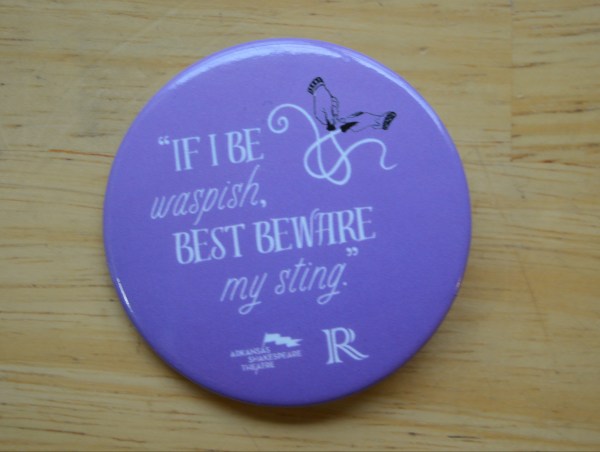
I suppose I could nearly add The Taming of the Shrew to my list since we saw the play at an open-air performance this summer. It was our boys’ first experience with Shakespeare, and boy was it memorable—from the popcorn, balloon animals, and face painting before the show, to the live cracking of a whip on stage. But…you tell me. Does watching a Shakespeare play count on my reading list???

DSC_0182

If I be waspish, best beware my sting!

With the Kids, or Family Culture

DSC_0016
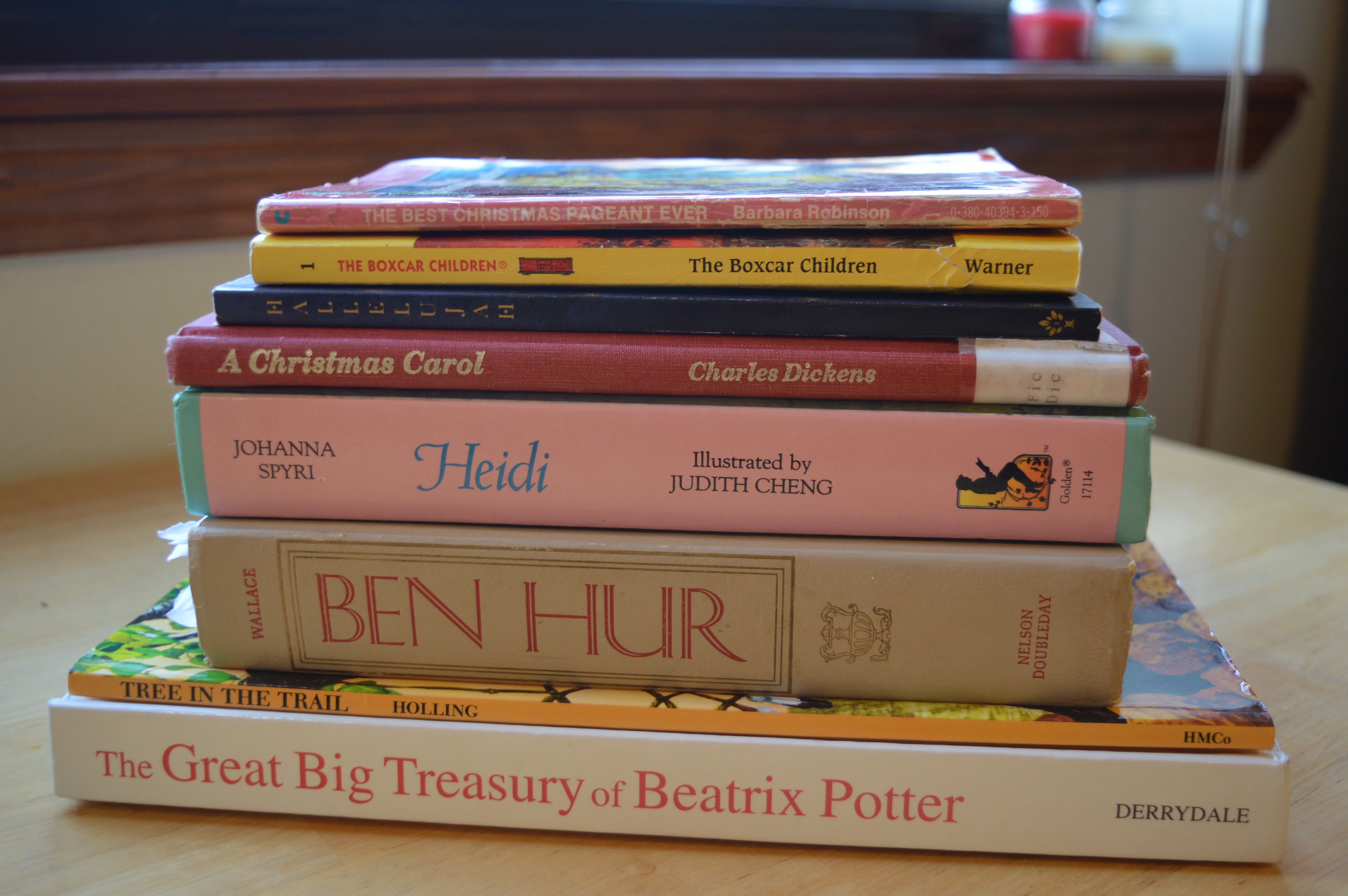
Ben Hur: A Tale of the Christ by Lew Wallace  My family and I listened to a Librivox recording of this book on a road trip in early 2017. Ben Hur is a tale of historical fiction in the time of Christ. Lew Wallace put a lot of research into his descriptions of places, beliefs, and customs of the time, and this shines through his narrative. Part one provides an in-depth introduction to three desert travelers following a star. Finally in part two we meet the title character and begin to follow his life story as it weaves in and (more of the time) out of the biblical accounts of the life of Christ. While there is a bias toward a fair-skinned, light-haired Madonna and Messiah, much of the historical world-building is an incredible help for those eager to get a sense of the cultural climate that Jesus entered into. It’s also an incredibly moving and faith-building story, though I will leave it at that so as to avoid any spoilers. Suffice it to say, the recent movie rendition, though it was fun to watch, didn’t do it justice.

Five Little Peppers and How They Grew by Margaret Sidney  This was another lovely road trip listen-through. I never read about the Pepper family growing up, so this was my first introduction to the joy-filled but impoverished home of Mrs. Pepper and her five children.  There’s work to be done, fun and adventures to be had, and trials to overcome.  My kids really enjoyed this story (and so did I).

The Boxcar Children by Gertrude Chandler Warner  Road trip listening strikes again.  I DO remember reading this as a kid, so it was fun to experience it again with my boys.  Four as-good-as-orphaned children are trying to get away from what they suspect to be a bad situation when they find an abandoned boxcar in the woods and decide to make it their home.  This book was a good introductory survival story, despite the fact that every subsequent book in the series falls in the mystery genre (but my eight-year-old has no complaints!).

Heidi by Johanna Spyri  Yep, we listened to this one in the van, too. Seeing a pattern?  We did a fair amount of traveling with my husband for work this year.  Heidi is the classic story of the impact a cheerful little girl can have, both to soften hard hearts and strengthen the weak.  While there are some explicit lessons on learning to trust God will answer prayers in His time and for the best, which contributed to good discussion with our children, there is also in the background an immersive experience of the Alps in all their beauty, grandeur, and health-inducing fresh, open air.  The story of Heidi refreshes the soul with cheerfulness, hope in God, and the mesmerizing beauty of His creation.

Flowers are made to bloom in the sun and not to be shut up in an apron.

The Great Big Treasury of Beatrix Potter  Finally, here’s one I read aloud to the kids (for probably the third time).  Most people are familiar with The Tale of Peter Rabbit (though don’t count on modern video interpretations to give you the original story).  Have you heard of simple-minded Jemima Puddle-Duck?  Of cunning and conniving Mr. Tod?  Rude Squirrel Nutkin?  Tom Kitten?  Timmy Tiptoes?  The stories and their characters are a lot of fun, and Beatrix Potter’s illustrations are lovely.

Arkansas Autumn by Tim Ernst  This fall I gathered a grand collection of seasonal books from our local library, including this gem. Tim Ernst is an avid hiker and the foremost nature photographer in Arkansas.  We enjoyed gawking at all of his beautiful fall pictures, reading about where and how they were taken, and guessing at the types of leaves featured close-up throughout the book (answers were in the back of the book).
As an added bonus, we got to meet Mr. Ernst at a presentation he gave this fall.

IMG_20171214_185637319.jpg
If you love nature photography in general, and if you love outdoor adventures in Arkansas in particular, you ought to check out the many photography collections and guidebooks Tim Ernst has published.  Our family loves them.

The Best Christmas Pageant Ever by Barbara Robinson  Christmastime calls for its own kind of reading.  I’m pretty sure I watched the movie based on this book as a kid, but this was, to my knowledge, the first time I’d read it for myself (and out loud to the boys).  I bawled my eyes out through the entire last chapter.  This is a beautiful story of the hardest of childhood hearts being softened by an honest encounter with Jesus.  We’ll be adding it to our read-every-Christmas list for sure.

A Christmas Carol by Charles Dickens  Here’s another classic Christmas book that will stay in the rotation for many years to come. I’m sorry to say that I had never read Dickens’ ghostly Christmas tale before this year, either!  I didn’t care much for Dickens when I was in school, but I came to appreciate his humor and style in A Christmas Carol and hope to give his other works another try.  I think I’ll be able to “get” them now.

It is a fair, even-handed, noble adjustment of things, that while there is infection in disease and sorrow, there is nothing in the world so irresistibly contagious as laughter and good humour.

We also watched the Muppet Christmas Carol to, you know, make sure we had a well-rounded experience with Mr. Scrouge.  😉

Hallelujah: A Journey Through Advent with Handel’s Messiah edited by Cindy Rollins  I snatched up this Advent guide with birthday money I received in November. Our family doesn’t have many long-established Christmas traditions of our own, and our kids are old enough now that it seemed like a good time to explore some different options.  I never grew up celebrating Advent, so Hallelujah provided both a focused tradition (listening to and meditating on Handel’s Messiah and the scriptures it was based upon) and some background information on the season from several different perspectives.  Our family does not feel compelled to follow any church calendar and we do not attend a liturgical church, but still we found great value and encouragement in these pages for making more of the Christmas season than we have in the past.
While we unfortunately were unable to keep up with the devotions toward the end of the season due to a bout with the flu, we have this resource and some experience now in making much of Christ in our anticipation of His coming, and I think these will serve us well in years to come.

A Tree in the Trail by Holling C. Holling This was me trying to keep up with at least a small amount of my eight-year-old’s reading.  We have read Holling’s Paddle to the Sea several times over as an enjoyable way to learn about the Great Lakes.  A Tree in the Trail traces the history and ways of life on the Santa Fe Trail by following the life, death, and re-purposing of one special tree.  Native American mysticism is present in the story, but it’s a good opportunity to discuss what other people believe.  I enjoyed having a window into a part of the country and a time in US history with which I am less familiar.

There are many other books that I read this past year, but these are the ones I actually finished… Sometimes I think I start more books than is good for me.  At any rate, I’ve got a good start for 2018.

What did you read in 2017?  What are you reading now?  I’d love to hear about it!

Finding Cheap or FREE Resources for Bird Nature Study

25 Tuesday Jul 2017

Posted by Lauren Scott in Books, Home Education

≈ 5 Comments

Tags

Ambleside Online, Arkansas Birds, Birds, Books, Burgess Bird Book, children, Creation, education, Free Nature Study Resources, Handbook of Nature Study, homeschooling, Nature, Nature Studies

Amazon links are affiliate links, meaning that if you make a purchase through that link, I will earn a few pennies, nickels, and dimes.  I only link to products I would happily recommend even if no compensation were possible.  🙂 

DSC_0003 (2)

Our family doesn’t completely follow the Ambleside Online (AO) free curriculum, but we pull heavily from it for our book list, among many other things.

One of those other things is their Nature Study schedule.  If I want to pick a particular topic of nature study for us to focus on for a while, why not start with their suggested schedule and tweak it along the way, if need be?  This way there is less choice-fatigue for me and I can find some community around what we are studying, whether with other AO families I know in real life, on the AO forums, or on the Facebook group.

DSC_0005 (2)

This summer and fall is for the birds, so I’ve been doing a bit of research and collecting materials that will prepare me to assist and inform my children in their own observation and enjoyment of our feathered friends over the next several months.

I’ve seen a lot of materials for purchase on the interwebs, and many of them were quite tempting, but I wanted to see what was available to me for free before punching in credit card numbers.

First, I searched my own shelves. 

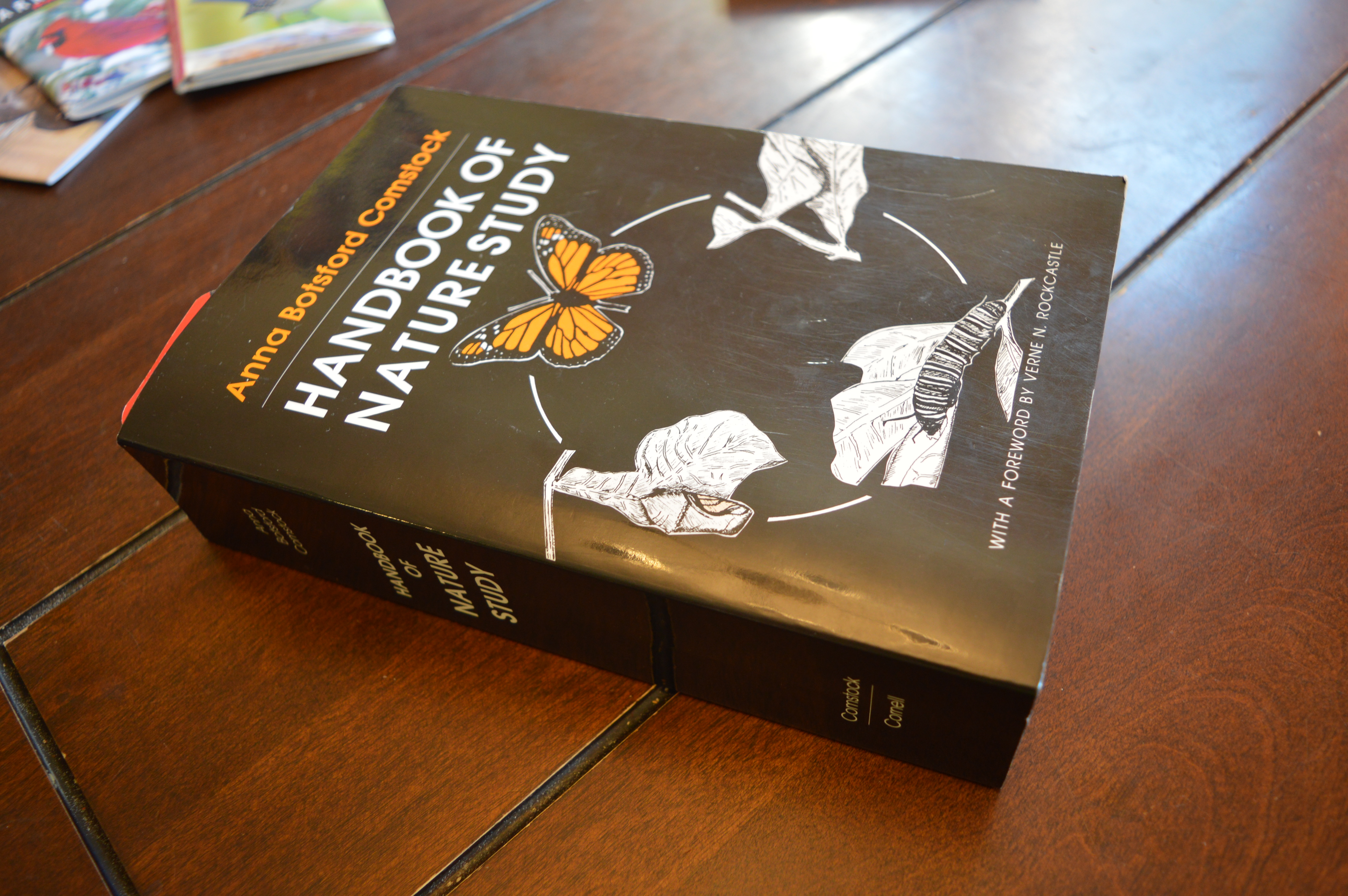
We already own the Handbook of Nature Study, which will serve us for many years and topics to come, making the purchase price slim over the long haul.

DSC_0008 (2)

Birds are covered on pages 27-143.  The pictures are not the most impressive, but this book is chock full of information so that you, the parent, can be a literally walking resource for you children on the trail.  Types of birds, parts of birds, migration of birds, lessons with suggested questions, pictures, diagrams, and even related poetry are included.  I plan to read this section for my own knowledge and make a few notes on particular questions or topics to raise while I’m out with the kids.

Remember, the purpose of Nature Study is to get the child in touch with the world and creatures God has made and to enjoy it.  The Handbook of Nature Study is NOT a textbook of information you have to cram into your precious children’s little heads.  It’s a tool to aid the work of observation that the kids ought to be doing and delighting in on their own.

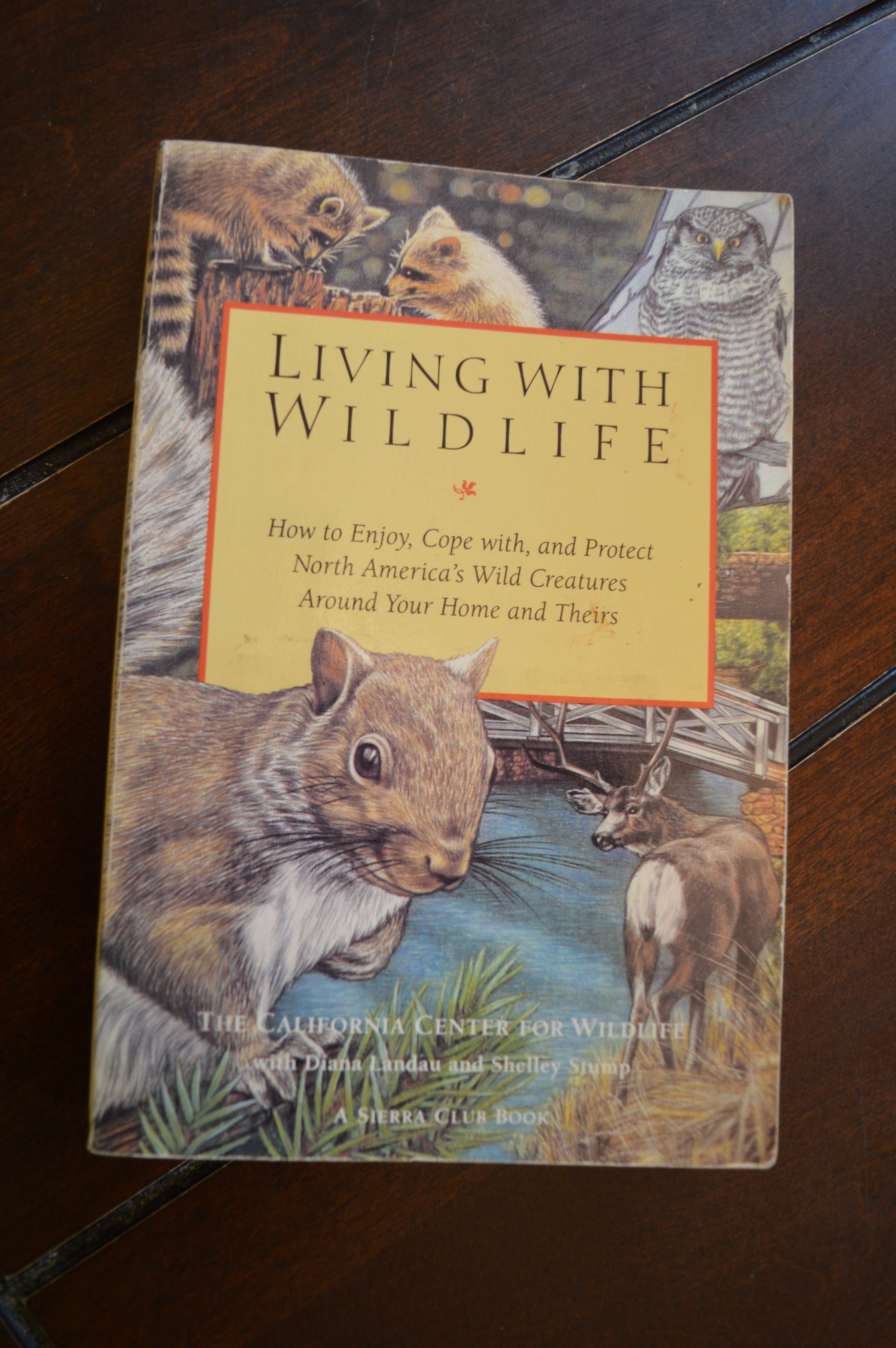
I found another volume that I may reference over the next few months:  Living with Wildlife: How to Enjoy, Cope with, and Protect North America’s Wild Creatures Around Your Home and Theirs.  I don’t think there’s much to say about this book now since the title is so descriptive!  We found this gem at a library cast-off sale for probably about 50 cents.

DSC_0013 (2)

The point here isn’t so much that any of you need THIS book, but that if you keep your eyes open, you may find something similar.  If I didn’t have the Handbook of Nature Study, this book (or some other like it) would suffice quite nicely.  Birds are covered on pages 180-252, if any of you by chance come across this guide or find it at your library.  There aren’t so many pictures or diagrams, and it’s not aimed at teachers or parents to instruct their children, but the information is valuable and would do the trick of providing a parent with both a general and some specific knowledge of birds.

My oldest has read many chapters in The Burgess Bird Book for Children, one of the great selections found on the AO booklist.

DSC_0010 (2)

It’s a narrative introduction to all kinds of birds, with animals talking and acting consistent with their particular habits and personalities.  Each chapter covers a different bird, and we may just read one here and there for fun if we’re interested.

My mom gave us a laminated Pocket Naturalist Guide of Arkansas Birds for Christmas several years ago.  This guide isn’t particularly detailed, but it does provide color pictures of a variety of birds, including their Latin names, size, and an occasional special note.  Listed on the back are bird viewing areas and sanctuaries, as well as a state regional map.

DSC_0014 (2)
DSC_0015 (2)

For very young children, a laminated field guide is almost a necessity!  Even when they can’t read, they love feeling like real explorers with a guide in their pack that they can pull out at will.  And you as the parent love feeling like it won’t be destroyed on the first expedition!  If you don’t live in Arkansas, you can look up the Pocket Naturalist field guide for birds in your state.

Even just one or two of the above resources is more than enough to get started with nature study.  Actually, all you really need to do to get started is step outside and pay attention, and maybe take along a notebook and a pencil!  But we’ve been at this for several years now and I wanted to add to our resource collection (and convince myself that I didn’t need to buy anything new or shiny in order to do so).

So…where did I go for new FREE resources? 

I went online.

Many of the paid resources I’ve seen lately were all ebooks and video courses anyway, so I thought I’d search in the same format–starting with websites specific to my home state of Arkansas.

The Audubon Society of Arkansas and the Arkansas Game and Fish Commission have a wealth of free resources for studying birds, among many other kinds of wildlife!  There’s a searchable database where you can find pictures, details, and songs of birds when you search by color, size, habitat, and more.  The Game and Fish Commission provides free printable brochures on birds and so much more, but they will also send you a hard copy for free if you send them your mailing address!

DSC_0016 (2)
DSC_0017 (2)

If you’re outside of Arkansas, check out the corresponding organizations for your state.

DSC_0019

All I asked for was the Arkansas Backyard Birds booklet, but they sent the other three as well!  I suppose they figured someone like me would eventually ask for more booklets and they could save on shipping by sending them all at once.

There are two more ways I’d like to complement our focus on birds, and both can be achieved without spending a dime.

I’d like us to improve our artistic abilities in the area of drawing birds, so that our nature journal entries can better represent what we see out in the field.  Enter YouTube.  There are TONS of FREE video tutorials to help us hone our skills.  I think we’ll get a start with watercolor painting a saucy little wren like the ones we see every day around our house.

Finally, one of the greatest gifts I can imagine giving my children when it comes to nature study is to tie God’s truth to what they see.  The heavens are declaring the glory of God, and I want them to see it.  I just read the Sermon on the Mount this morning, and I think we’ll incorporate Matthew 6:26 into our memory work as we observe the winged creatures around us:

Look at the birds of the air, that they do not sow, nor reap nor gather into barns, and yet your heavenly Father feeds them. Are you not worth much more than they?

I hope this has been helpful to you, my friends.

Do you have any other super awesome free resources for bird nature study?  If you’ve studied birds already with your kids, what did your family enjoy most?

Books Read in 2016–The Wrap-up

31 Tuesday Jan 2017

Posted by Lauren Scott in Books

≈ 1 Comment

Tags

Books, children, education, homeschooling, micro book reviews, Reading List

This post contains affiliate links. If you make a purchase through one of these links, I may receive a commission at no additional cost to you. 

wp-1485921038498.jpg

In past years I have shared the books I’ve read based on an academic calendar, because when I started recording what I was reading I was using a planner that followed that format.  I’ve since decided it makes more sense to post my micro book reviews as a round up of all the books I’ve read in a calendar year.

Which brings me to this post.  The transition had to happen sometime, and it’s happening now.  So, without further adieu, I give you the books I’ve read in the latter half of 2016.  If you’d like to see the eight other books I read in 2016, they are at the bottom of my 2015-2016 post.

Pride and Prejudice by Jane Austin  I made the mistake, dare I say, of picking up this novel around 4 o’clock one afternoon when I heard that it would soon be discussed on the Circe Institute’s Close Reads podcast; and, since my husband was traveling and would not be home that evening, had the opportunity (and by compulsion took it) to read the entire thing in one night.  Once upon a time five or more years ago I had tried to read Pride and Prejudice, but found it to be nothing more than the screenplay of the A&E film version of the story, so I didn’t make it more than a few chapters before I felt there was no need of reading it.  Having not seen the movie adaptation in several years, when I picked it up this time the banter and character development of the film which was even more prevalent in the book drew me in at once.  As Miss Elizabeth Bennet learned, so have I:  some things, upon second evaluation, are found to have much more merit than we may judge them to have at the first.  Plainly stated:  I very much enjoyed this book and regretted having not read it in its entirety much sooner.  (The article that provoked my reading was “Don’t Follow Your Heart”.  I highly recommend it and the podcast discussion of the novel.  It was great fun!)

Courtesy in Christ: An Ettiquette Handbook for Christian Teens by Diane Pickup  I found this on our shelf one day and my curiosity got the best of me.  I have little boys, so training them in courtesy is on my bucket list for them.  I enjoyed how the author tied acts of courtesy and consideration to scriptural attitudes and commands to put the needs of others before our own.

The Wind in the Willows by Kenneth Grahame Listening to the Close Reads podcast also led me to this interesting read.  It’s a children’s story, but not just a children’s story.  Some of the vocabulary is very challenging for a children’s book (or for the adult reader, if I’m honest).  But I enjoyed the challenge of figuring out new words as I followed the wanderings of Mole and Ratty and the mischievous escapades of their foolish friend Toad.  The discussion on Close Reads explored similarities between The Wind in the Willows and The Hobbit, The Illiad, and even Shakespeare.  Grahame’s skill in writing and thematic depth make this a thoughtful book for adults, and maybe especially young adults ready to leave home for the first time but who find themselves longing for it once they’re gone.  I do have a major caveat, however:  chapter seven “The Piper at the Gates of Dawn” involves Mole and Rat finding a lost little friend with the pagan deity Pan—and they worship him.  While I think some generalized lessons can be drawn from this chapter with its wonder and awe, and while I think that it’s placement by Grahame in the center of the book is perhaps significant, the rest of the story line can be enjoyed without it.  My husband and I agree that there is so much wealth of children’s literature out there that we don’t feel any urgent need for our children to read The Wind in the Willows.  If we do read it out loud as a family while our children are young, we will skip chapter seven.  Most likely, however, we may save this as a fun return to childish anthropomorphism when our boys are in their late teens, where the themes may be particularly meaningful and when our boys could take on chapter seven as an exercise in practicing discernment.

Pinocchio by Carlo Collodi  On a much lighter note, we listened to the audio version of this classic on a road trip this year.  Our boys, 4 and 6 at the time, gobbled it up!  What does it mean to be a real boy?  What are the consequences of having your own way and ignoring those who give you wise counsel?  These questions are addressed in a very outrageously funny, though sometimes violent story.  I highly recommend this story, though parents should consider the age-appropriateness of some of the darker elements (Pinocchio kills the cricket, a cat’s paw is bitten off, Pinocchio is hung by his neck from a tree, etc).  For our kids, these were effectively shocking—they grabbed the attention—without causing any bad dreams or inspiring violent play.

Little House on the Prairie by Laura Ingalls Wilder  We read Little House in the Big Woods in the first half of 2016, so naturally we moved on to the next in the series.  We enjoyed following Laura’s family as they traveled to Kansas and set up their home and everything they needed from scratch.  We all gained some perspective from imagining a life in which all of your family’s belongings fit on a simple covered wagon.  And since we live in the country, there have been ample connections for us to make—they set up a garden, and we started our first garden last year; they had to dig a trench in order to protect their home from a prairie fire, and we have discussed fire safety measures like that as well. All in all, this is a series that no child should miss.

What was your favorite read from 2016?  What’s on your list for this year? 

← Older posts
  • View KeptandKeeping’s profile on Facebook
  • View lauren.keptandkeeping’s profile on Instagram
  • View keptandkeeping’s profile on Pinterest
  • View @laurenscott.keptandkeeping’s profile on YouTube
Lauren Scott

Lauren Scott

Christian. Wife. Mother. Homemaker. Home Educator. Blogger. Book Addict. Outdoorist.

View Full Profile →

Enter your email address to follow Life Meets Jesus and receive notifications of new posts by email.

Affiliate Disclosure

We are a participant in the Amazon Services LLC Associates Program, an affiliate advertising program designed to provide a means for us to earn fees by linking to Amazon.com and affiliated sites.

Hands-on Math Curriculum

RightStart™ Mathematics

Check Out Prodigies Music Curriculum!

music curriculum sale

Quality Video Curriculum

Top Posts & Pages

  • Five Refreshing Scriptures for Finishing Strong when You Feel Weak and Weary
    Five Refreshing Scriptures for Finishing Strong when You Feel Weak and Weary
  • Versatile Basic Biscotti Recipe (Gluten Free / Dairy Free Option)
    Versatile Basic Biscotti Recipe (Gluten Free / Dairy Free Option)
  • Wisdom in the Book of James
    Wisdom in the Book of James

Advent April Fool's Day April Fools Book Review Books Books Charlotte Mason Charlotte Mason Homeschool children Christian Classical Education Christian Classical Homeschool Christian Homeschool Christian life Christian mom Christian Parenting Christian Women Christmas Classical Education Classical Homeschool devotional education faith Guest Post Home and Family Home Education Homemaking homeschool encouragement homeschooling Jesus Living Books love marriage meditations micro book reviews motherhood Nature Nature Studies parenting poems poetry Practical Atheism Reading List Reflections Relationships trials

A WordPress.com Website.

  • Subscribe Subscribed
    • Kept and Keeping
    • Join 172 other subscribers
    • Already have a WordPress.com account? Log in now.
    • Kept and Keeping
    • Subscribe Subscribed
    • Sign up
    • Log in
    • Report this content
    • View site in Reader
    • Manage subscriptions
    • Collapse this bar
 

Loading Comments...