• Home
  • About
  • Living Faith
  • Home and Family
  • Home Education
  • Books
  • Recommended Resources
  • Media

Kept and Keeping

~ Rest in Grace, Labor in Love

Kept and Keeping

Tag Archives: Home Education

The Afternoon Checklist — A Homeschool (or After School!) Life Hack

31 Tuesday Jul 2018

Posted by Lauren Scott in Home Education

≈ 2 Comments

Tags

After School, Afternoon Checklist, back to school, Home Education, Homeschool Hacks, INTJ Homeschool Mom, INTJ Mommy, MBTI

This post contains affiliate links. If you purchase something through one of these links, I may receive a commission at no extra charge to you.

Do your kids have a favorite activity they default to in their free time? Do you wish they would spend at least some of their time on other enriching activities? Music practice? Other games or toys? Homework? Playing outside?

Do you also want to teach your children to be a bit more self-directed? And maybe give yourself some space to tackle a project with minimal (or at least less than constant) interruptions?

As an INTJ homeschool mom who highly values focused work time, I sure do.

Maybe you can relate to what I used to face every day after lunch (just replace “Legos” with your child’s current obsession):

“Mama, can we play with Legos?”

lego bricks toys after school play


“Is your room clean?”

…

“Mama, can we play with Legos now?”

“Hmm…have you even finished your school work?”

…

“Can we NOW??”

“Just a minute, I’m [cleaning something, on the phone, solving a problem in our budget, in the middle of cooking or writing, etc] … Uh…sure?”

Then shouts of jubilation trail behind the eager engineers as they scurry off to their Lego corner.

And about thirty minutes later I realize there were at least two other things I would have liked for them to do first.

Sigh.

Now, my kids are not ruined because I didn’t have a nice, neat list for them ready at hand (and neither are yours, to be honest), but my own sanity and ideals sure do take a beating when I allow this scenario to become our default routine.

While I might buy myself some uninterrupted time by just giving in to the kids’ repeated pleas, regret inevitably sinks in later when I realize the house is a mess, school supplies are still out, or they haven’t been outside at all on a beautiful day.

I began to realize a little forethought could make a big difference.

My kids love their Legos, and I do, too! But I know they need more than just Legos in their lives. So at the beginning of the summer I created an Afternoon Checklist for each of my boys.

afternoon checklist homeschool after school

I thought through the daily responsibilities I wanted them to fulfill and put those at the top. These must all be completed.

Then, I added two more sections, one focusing on creative or mind-building activities that could be done inside, and one listing some productive or nature-study related activities to be done outside (weather permitting). They are required to choose one from each section.

homeschool afternoon checklist kids

We value things like handicrafts, nature study, life skills, art, and science in the education we’re trying to give our children, but I’m a bit of a low-energy mom and I have found it difficult to always be the one to make these things happen. Now, I know we’re getting to them consistently without a lot of effort from me.

It’s a win for everyone.

The particular activities listed usually don’t require my help to initiate, but sometimes they do. Whether or not an activity is approved may depend upon my project workload that afternoon, but I try to say “yes” most of the time.

This does two things for us: it gives my boys boundaries within which they (usually) have freedom to choose whatever they like, and it still gives me some veto or redirection power with a list of options right there in front of me (no more decision fatigue!).

I also put one activity on their lists that DOES require me. I can’t just check-out all afternoon, only interacting with my kids on a utilitarian basis (a mode which I find all-too-easy to fall into). So I built a little bit of accountability for ME into these cards as well. Both my boys appreciate this, but I know my particularly sociable one (likely an ESFJ) absolutely needs it.

While both of my boys enjoy the predictability of their afternoon checklists (hey, it’s nice to know what’s required of you!), my six-year-old particularly loves his, calling it his “Ticket to ride the fun train!”

And no, I did not feed him that line! That’s all him!

afternoon checklist laminated homeschool

I used regular index cards and these nifty laminating pouches. 🙂

It may not be Legos in your home. Maybe it’s soccer. Or screen time. Or playing dress-up. Or even something so wonderful as reading! Whatever it is, it’s good in it’s proper place, but a “good” part can crowd out the “better” whole of a well-rounded childhood.

Of course, my oldest has a birthday this week and his one request (with the day off from school and his Papa home from work) is to spend the entire day playing Legos.

We’ll indulge him on his special day.  Because a well-rounded childhood can include that sort of thing, too.  😉


The Homeschool Review: Summer 2018

01 Sunday Jul 2018

Posted by Lauren Scott in Home Education

≈ 5 Comments

Tags

Books, Home Education, homeschool encouragement, Homeschool Review

This post contains affiliate links. If you purchase something through one of these links, I may receive a commission at no extra charge to you.

It’s time for another homeschool review post in which I give you a peak into what homeschooling looks like in our very real day-to-day life.

Springing into Summer

Summer is officially here now, though we’ve been relishing summertime activities for a good month-and-a-half already.  You might as well when you live in the south, right?

This is our third year of gardening, and it’s our best yet. We decided not to start seedlings indoors this year, since we neither have room for this nor success in hardening plants. That’s made for a much easier time just planting cucumber, lettuce, spinach, carrot, and green bean seeds directly in the soil.

lettuce garden homeschool review summer

We’ve also put in tomato plants and sweet potato slips. The boys helped with the process and we’ve all enjoyed harvesting the lettuce and spinach before it died off or got eaten by deer.


We now have cucumbers and tomatoes aplenty and anticipate we’ll be learning to can this summer!

DSC_0214
20180630_132028


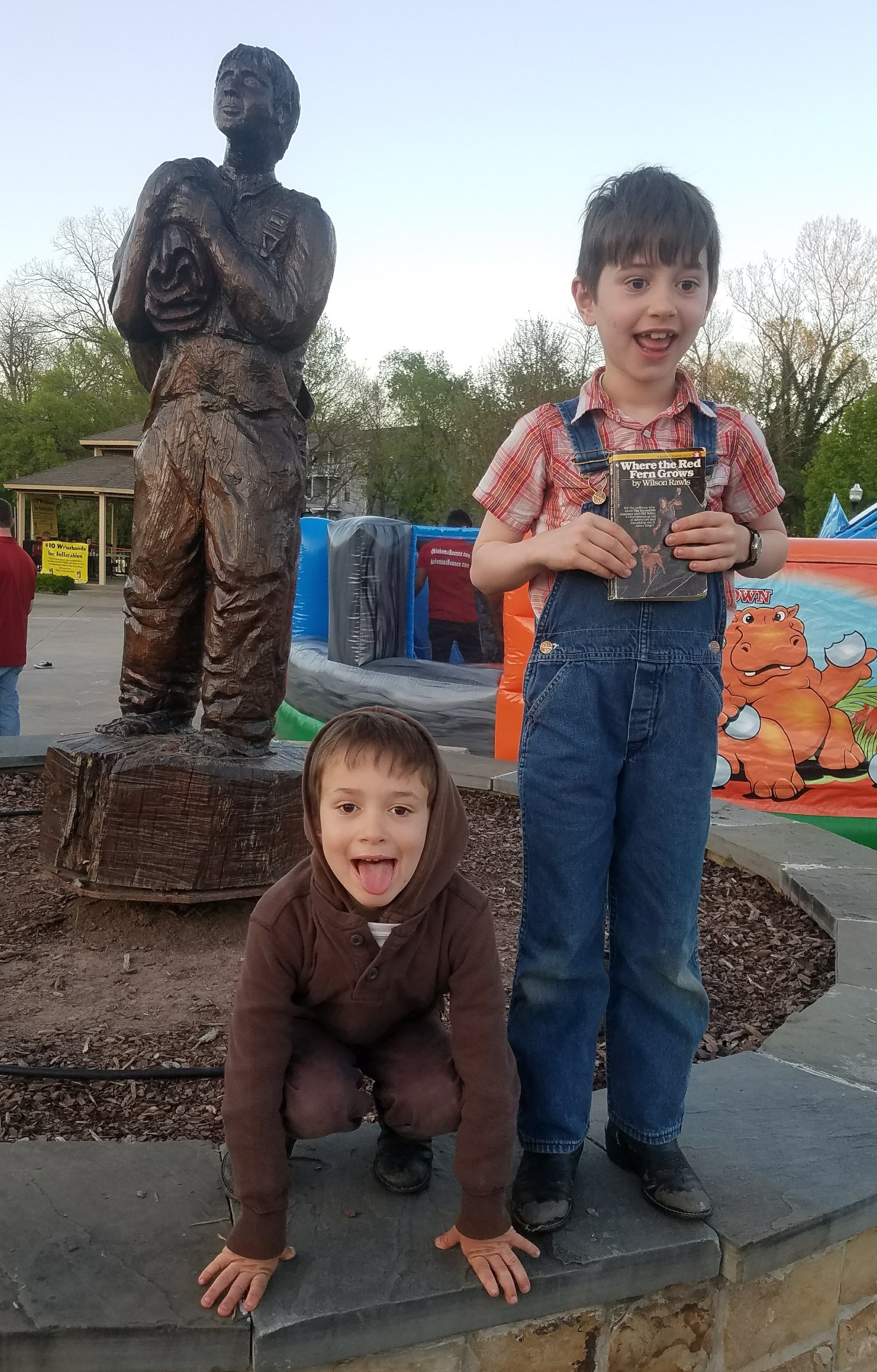
Along with regular work outside and chores inside we kept at schooling consistently through all of April and half of May. Activities always tend to pick up in the late spring, and this year has been no exception. We attended the Red Fern Festival in Tahlequah, OK;

homeschool review summer spring red fern festival

the kids and I started attending a once-a-month Archaeology and Plant-Use History class an hour from home;

This slideshow requires JavaScript.

our Schole Sisters group continued meeting once a month—twice at a park and once for swimming this quarter; there was our homeschool group’s curriculum share, where I got to take a peak at other people’s favorite curriculum and win a few items to use next year; I helped coach a group of little girls at a local running clinic, which culminated with a 5K in mid-May; and Nathaniel and I were once again in charge of our homeschool group’s Field Day event, which also took place in mid-May, meaning the time leading up to it (basically this whole period I’m reflecting on) had its fair share of planning and delegating going on.

20180517_1725121
20180517_173756
20180517_1743350
20180517_163330

After Field Day, I needed a break!

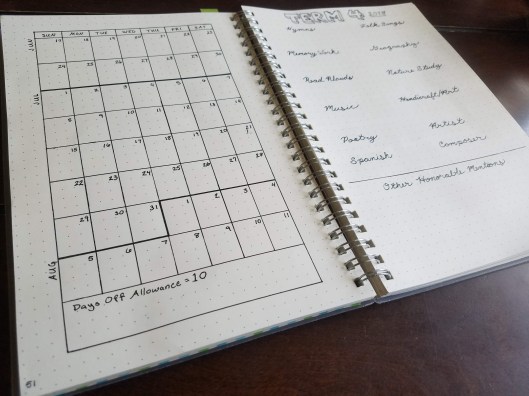
I tried crunching numbers to see what kind of break I could justify while at the same time wondering about scheduling and planning for the coming year. After working over several ideas I’d seen on interval planning, my husband suggested we start counting out weeks from January (to keep things simple), and then I can take off a certain amount of time every eight-week period. Doing the math that way, I could see that we’d been pretty faithful through the beginning of 2018, despite quite a bit of sickness. Based on the paradigm we came up with I had 14 days to play around with!

I immediately took ten days off at the end of May. 😊

We kicked off schooling again in June with a morning of blueberry picking and an afternoon of easing back into our regular lessons. The next day we decided to throw Vacation Bible School in the mix! It is summer, after all. 😉

20180604_101342
20180604_105943

Along with the paradigm shift my husband and I came to, we also firmly decided that we would now school year-round. The schedule we’re working from will give ample time off on a regular basis, and the eight-week terms are fixed on the calendar, so that I can plan material for us to cover in that definite chunk of time. Having had a very unpredictable schedule in the past, this is such a relief to me! I’ll share more about how we’ve got this set up in another post…soon!

20180615_130747

For now we’re continuing on in Right Start Math Levels B and C, First Language Lessons 1 and 2, McGuffey readers, Story of the World volume 2, and lots of good books. I have also introduced a new way to narrate—the boys have been retelling what they’ve read with their Lego minifigures. Suffice it to say, this is a big hit.

20180628_123044

Christopher Robin (the astronaut) is up in a tree looking down at Pooh and saying, “Silly old bear!”

We recently finished reading Pilgrim’s Progress in Morning Time and have now moved on to Archimedes and the Door of Science.  Admittedly, this is a bit beyond my kids, but they were interested, so we’re giving it a go. We’ve also started going through a Health text book that I snagged for free at a curriculum sale. It’s been a good springboard for discussing a topic that we haven’t directly addressed at all yet—and it’s been a good, simple refresher for me on the basics of healthy food and exercise habits.

Over the past few months of family bedtime read-alouds we finished both Swiss Family Robinson and The Phantom Tollbooth. The latter was definitely our favorite of the two. We just began reading The Lion, the Witch, and the Wardrobe, thus arriving at a major childhood milestone: entering into Narnia for the first time.

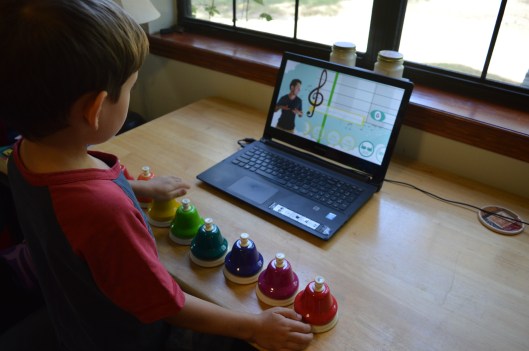
Our Prodigies Music lessons are back in the afternoon again, especially since this season we’re needing more time outside in the mornings given the heat we encounter later in the day. In addition to the progression of music lessons with singing and bells, we’re now also starting Recorder Prodigies!

Where we’ve sometimes struggled to get to these wonderful lessons (among other lovely things like art and nature study) after lunch, I recently set up afternoon activity checklists for my kids so that they don’t ask me 4 billion times a day if they can play with Legos yet. Now they have to make sure they’ve done several other activities first.

homeschool afternoon checklist kids

This has been a win on so many levels.

They still love their Legos, but they’re also enjoying a broader variety of fun things now that I don’t let them just automatically default to their favorite interlocking brick system when I can’t think of what else to tell them to do. I’ll post more on this little sanity-saving tweak again soon!

Some of the other activities we’ve enjoyed this quarter have been watching a variety of flowers come up in our wildflower patch, dog sitting, building swings, watching a string quartet concert and a magic show, canoeing and kayaking, keeping track of the different birds we see each season, attending several other live music events in our community, and most recently swimming lessons.

20180515_191404
20180515_183455
20180525_2031040
20180526_211734
20180519_190917
20180523_130052
20180523_130511
20180530_065544
20180629_170826

We also caught a luna moth caterpillar last week and it promptly hid itself away in a lettuce leaf and began spinning its silken sleeping bag. We’re eagerly awaiting the change.

Shadows in the Sun

While we’ve had many bright, fun outings and adventures in the past few months, there’s also been a shadow cast upon our days: a shadow of grief.

I wrote last time about how we gave our dog away to friends in February and dealt with sickness and an impending job change in March. Those were trying times in their own right, but things have gotten a bit heavier since.  In April, my in-laws’ dog Freckles, regarded by all in the family as the best dog in the world, died. As we told the boys and all shared tears, they remarked that this was worse than giving Luther away.  At least they knew there was a possibility of seeing Luther again. They understood that Freckles was gone.

Fast forward to the end of May, and we received news that my grandfather, my PopPop, died at home in his recliner. He was 95 years old and his heart just stopped. It was his time. The boys were precious as they tried to take this in, each in their own way. One burst into tears immediately, the other sat quietly as his lip began to quiver. They loved playing games with their Great PopPop. And they knew this was a bigger deal than a dog dying. They knew it would hurt for longer.

And it has. Partly due to the nature of losing a loved one, and partly due to the fact that the Celebration of Life and military burial were scheduled to occur three weeks later, in mid-June. 20180619_144041

Grief is compounded when it is shared. Not in a bad way, it just is. Especially when you finally get to mourn with those who are most deeply affected by the loss. And so we grieved in our own way for three weeks as we waited for our trip down to Texas.

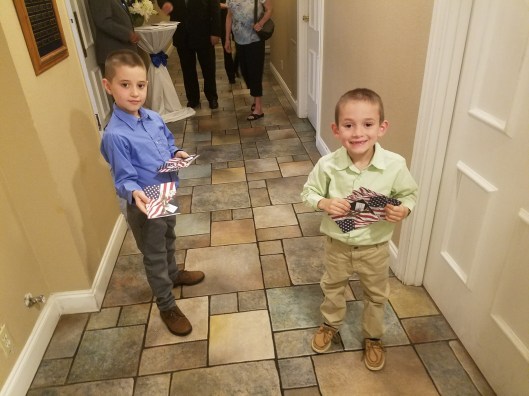
When we finally arrived it was a joy to be with so much of my family—it truly was a good time. But we also grieved together, and that was good, too, but hard. The boys got to pass out programs at the Celebration of Life, looking simultaneously like little gentlemen and silly boys. I know they prompted a lot of smiles as guests arrived.

20180619_130438


What does any of this have to do with homeschooling?

Well, everything.

And no, I’m not referring to the “learning experience” of getting to see a National Cemetery and witnessing the giving of military honors, as though I’d try to reduce something so momentous to the level of a field trip.

If the goal of education is character formation and ordering the affections–learning to care about what is worthy of our care–these times of growing and grieving together are at the core of the curriculum. A curriculum we didn’t choose, mind you, but one we follow nonetheless.

I can see God’s hand in our lives preparing my boys for the new and difficult experiences they have faced so far in 2018. And I can see how He has been building us up as parents so that we can gently lead our children through hard times.

I marveled that the boys were wrestling with the loss of dogs in Old Yeller and Where the Red Fern Grows prior to experiencing those same emotions in real life. And the loss of beloved animals paved the way for grasping and bearing the loss of a dearly-loved great-grandfather. All the while, Nathaniel and I have gotten lots of practice not only at grieving ourselves, but of walking with others through grief—and especially with our children. It’s new territory for us, as well.

This has everything to do with homeschooling because our schooling has everything to do with living out this life together with our children until we launch them into whatever may come when they are grown. The literature they read isn’t just for practicing literacy. It’s helping their little hearts and minds prepare for real-world challenges. The time at home with us isn’t just so that we can shield them from harm or bad influences. It’s an opportunity for us to walk with them in these formative years, guiding them and encouraging them as they learn to navigate the sometimes turbulent waters of life.

It’s easy to get lost in the seemingly endless number of lessons we have scheduled. A man plans his way, but the Lord directs his steps. We get to spend our days in God’s classroom with the children He has given us and with the freedom to respond to the lessons He chooses.

What’s He teaching in your homeschool lately?

The Homeschool Review: Spring 2018

31 Saturday Mar 2018

Posted by Lauren Scott in Home Education

≈ 2 Comments

Tags

Books, Charlotte Mason, education, Home Education, homeschooling, math, Music Education, Nature Study, Right Start Math

This post contains affiliate links. If you purchase something through one of these links, I may receive a commission at no extra charge to you.

Ever wondered what homeschooling looks like in our family? Here’s a peak into what we’ve been up to since ringing in the New Year.  Since this is the first post of its kind, I’ll include a bit more detail about our usual daily routine.  Just make sure you scroll to the end to find out about some of our more exciting learning adventures since they don’t quite fit into a “usual day”.  😉

A Graceful Start

This semester began much like fall of 2017–with me landing on my rear.  Literally.  There’s just something about that first day back to school that makes me miss my step, aparently.  Or maybe it has something to do with fuzzy socks on a carpeted staircase at dark-thirty in the morning.  At least I wear shoes to go down my stairs now.

At any rate, once I’ve picked myself up off of the floor at the bottom of the staircase and limped into the kitchen to make coffee, our day moves along fairly smoothly:  from quiet time for the parents, to breakfast and Proverbs as a family, then to chores and personal Bible time for the kiddos (while Mama gets her homeschool game face on).

My boys have enjoyed listening to The Jesus Storybook Bible and the free dramatized audio bible available from Faith Comes by Hearing.  In the past few months, C-age-8 has begun to read about a chapter a day from the New Testament in his own bible, so the transition from bible listening to bible reading is going pretty smoothly so far!

Then there’s this lovely thing called Morning Time.  A dear local mommy friend who’s a little further down the road of motherhood than I am turned me onto this idea several years ago.

“Do things together as a family first!  Then split up to do independent work.  That way you’re not having to corral everyone back together multiple times throughout the day and you can start with things you value and enjoy most.  Like prayer, music, poetry, a fun read-aloud…”


I latched on to this idea and went searching the interwebs, eventually finding further inspiration from Pam Barnhill’s Your Morning Basket podcast and resources (and she has a new book available on the topic if you’re interested!).

homeschool morning time books

That groundwork having been laid and tested over the past couple of years, we usually start out our school day with lighting a candle, going over our calendar and plans for the day, prayer, singing a hymn, reciting from our memory work binder, poetry reading, and currently reading aloud from Story of the World Volume 2 and a children’s adaptation of Pilgrim’s Progress.

This week, I’ve also re-attached our Preschool Prodigies Music lessons as well as 5-10 minutes of Spanish to our Morning Time routine.  I tried to shorten Morning Time by moving these things to the afternoon, but found that they simply didn’t get done!

music lessons homeschool

Confession: there have been many days in the past quarter that I have skipped Morning Time to dive right into math because we were just short on time, but I have been finding lately that when life has gotten heavy and my energy reserves are running thin, starting the day with Morning Time ministers to my soul, helping me to take a deep breath, enjoy the time with my kids, and humbly move forward with my heart more focused on the Lord.

Turns out biblical truth and delightful learning are a great way to start the day.

The Three R’s

Moving on to math, D-age-6 finished Right Start Math Level B in February and has moved on to Level C after a well-earned week of playing math games.

homeschool math games right start

My older son, C-age-8, is half way through Level D, currently working on mastering multiplication facts and applying them to solving area problems.

homeschool right start math area

As for me, I’m learning to read ahead in our math books and plan our lessons accordingly.  This subject has been the hardest for me to keep to short lessons.  Partly because my kids just take longer than expected, and partly because the lessons sometimes require two days rather than the one day suggested by the book (or more realistically speaking, the one day expected by their mother).

I started out last semester working with a timer, keeping our math lessons to 20-30 minutes.  That worked well until I stopped using the timer (oops).  This quarter, I still haven’t been using the timer so much, but I am learning to repent of the pride that drives me to want to push my kids further and faster.

I’m teaching my kids, not a lesson.  This is not a race.  Our math curriculum itself is built upon understanding and enjoying math, not racing through to the next thing.  Embrace the time it takes to grow.

When I keep things in perspective, it’s a lot easier to see how much work is reasonable for a given day (it’s a lot less than what I used to think!).

For language arts, we’re continuing to work through First Language Lessons levels 1 and 2. My oldest could have been into level 3 by now, but I wasn’t sure what I wanted to do after level 1, so we stalled out for a year.  That means his brother is only one book behind him.  Oh, well!  They’re both learning and enjoying their lessons on basic grammar, poetry, story and art narration, copywork, and dictation for my oldest now in level 2.  I love that this curriculum has been a gentle introduction for me to these classical methods of teaching.

homeschool language arts mcguffey first language lessons

We also have enjoyed these free copywork resources from Simply Charlotte Mason this quarter.  They include scripture, poems, and hymns.

Overlapping a bit of reading and language arts, C-age-8 reads aloud to me from McGuffey’s second reader about once a week, narrates the story to me, and then says and spells the words listed at the end of the lesson.  D-age-6 is reading aloud to me almost daily from McGuffey’s pictorial primer in order to continue progressively practicing his budding reading skills (we used Teach Your Child to Read in 100 Easy Lessons to start the process).  I use these readers because they’re progressive, they use older English so that we’re starting out in the direction of classic literature, and because they were hand-me-downs (read: free).

Living Books

Any further discussion of reading blends into everything else we’re learning:  history, literature, nature/science.  C-age-8 has recently finished The Tale of Desperaux, The Secret Garden (with some guided discussion on the ideologies presented), Old Yeller, Where the Red Fern Grows, The Great Brain, Julie of the Wolves, The Little Prince, Because of Winn Dixie, and The Burgess Animal Book, among most of the books in the Boxcar Children series (these are free reads).  I can hardly keep up for record-keeping purposes!  Nathaniel decided to give him a more challenging read to slow things down a bit:  G. A. Henty’s For the Temple, historical fiction covering the Roman sacking of the Jerusalem temple in 70 AD.  We just covered this event and the diaspora in Story of the World, so he’s got some points of connection with it already.  He’s also reading a chapter a day in Seabird by Holling C. Holling for geography and natural history.  I ask for him to narrate, or tell back in his own words, what he has read on days when I’m paying attention.  Admittedly, there have been several days (weeks perhaps?) in the past quarter that I have been too busy to ask for a narration for every bit of school reading!

D-age-6 has recently enjoyed moving from Frog and Toad readers to The Boxcar Children and Amelia Bedelia books.  He’s enjoying reading more fluently for himself, but soon I think he’ll be ready for more assigned books.  I think Whinnie the Pooh is in order next.  We’ve read it aloud many times over, so I think he’ll be delighted to read it for himself!

Learning from Life

This section could be a post all its own, so I’ll try to let pictures do most of the talking with a few extra words here and there for things not pictured.

We enjoyed a Little House book club party with a local Charlotte Mason group.

IMG_20180122_122951970.jpg

Exploring historic Ft. Smith after mama read True Grit.


ft. smith picture
DSC_0148


risk battleship game
IMG_20180101_211151691.jpg

New strategy games: Risk, Battleship, Ticket to Ride

We took in a stray German Shepherd dog that followed me home last fall–right after the 500th anniversary of Luther posting of his 95 theses, so naturally we named him Luther.  C-age-8 had almost full responsibility for feeding him each day.  There was plenty of character development in caring for a dog, and even more when we decided he needed a family who could care for him even better.  It was hard to let go of Luther since he had been a part of our family for three months and had in that time doubled in size and made it through the coldest winter we’ve had in years.  It was hard to let go, but we all learned a lot and are thankful for the part we had to play as a doggy foster family.

german shepherd dog boys

Hiking in 20 degree weather to see this 95 foot waterfall when it was mostly frozen.  Petit Jean State Park.

petit jean cedar creek falls frozen

Bird poster and Calendar of Firsts helping us to learn to pay attention and take note!


homeschool calendar of firsts bird poster
IMG_20180117_091112504.jpg

Gardening, listening to classical music, watching the ants in our ant farm.

Our four-day backpacking trip on a 24-mile section of the Ouachita Trail in the Winding Stair Mountains of eastern Oklahoma.


This slideshow requires JavaScript.

Field trips to animal shelters and to learn about hippotherapy (that’s with horses).

20180315_133230.jpg

Ice and roller skating and get-togethers with our Schole Sisters group–watercolors, poetry and tea, fish feeding and nature walk.

IMG_20180102_133910405.jpg

Homeschooling through Chaos

The past two months have been a bit crazy.  There were many times I said to my husband, “I just don’t think we can do school next week with all we have going on.”  He gently encouraged me to try.  And we did.  We kept going through sickness (though we did take a week off when it was really bad), a job change and consequent change of insurance and all other such things, two grandmothers in the hospital, a car wreck, among other things.  I think I would have given up somewhere along the way, so I’m thankful for my husband’s gentle encouragement to just keep going.  Like I said above, our scripture and praise-filled Morning Times were a balm to my soul during a such a hectic season.

Up Next

I suppose in terms of the average school year, we should be wrapping things up in about two months.  We plan to keep going with our current routine, and we’ve got some fun activities planned with our homeschool group, including Field Day which my husband and I coordinate.  Should be a fun spring!

How about you?  What’s up in your homeschool world?

Books Read in 2017

18 Sunday Feb 2018

Posted by Lauren Scott in Books

≈ 2 Comments

Tags

Books, Family Culture, great literature, Home Education, humility, micro book reviews, miscarriage, Mother Culture, quotes, Reading List, Shakespeare

This post contains affiliate links. If you make a purchase through one of these links, I may receive a commission at no additional cost to you. 
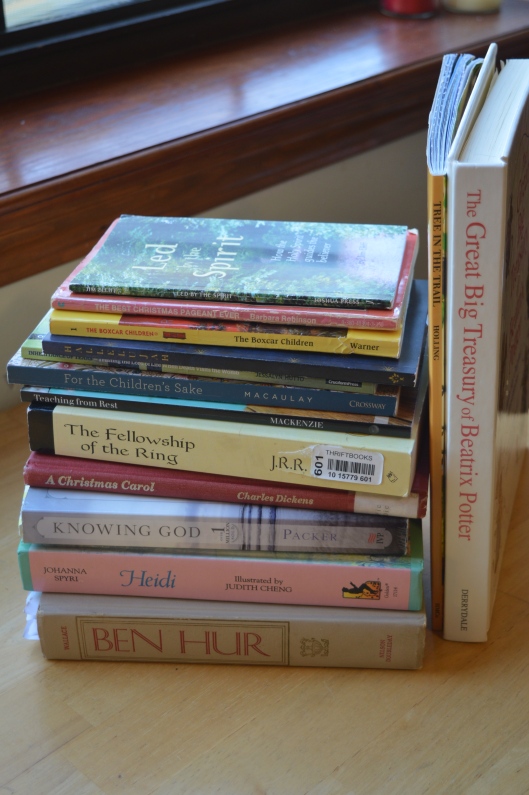
DSC_0010I’m a little late to the party with this post, what with major blog changes last month and major life changes this month, but I hope you’ll nevertheless enjoy these micro book reviews as much this year as in past years when I have been more prompt.

New for this year, I’ve divided up my list into two categories–things I’ve read for my own benefit or interest (what could be called “Mother Culture“) and others which have directly involved my children (sometimes for school and other times for what I suppose you could call our “Family Culture”).

Happy reading!

Personal Reading or Mother Culture
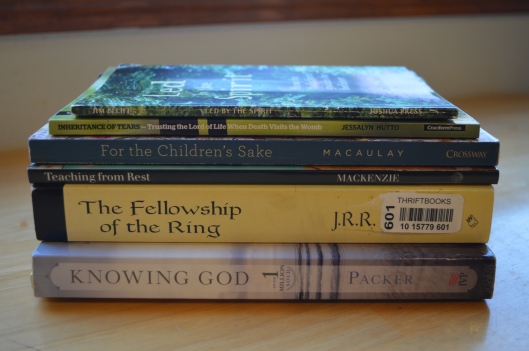
DSC_0017
Teaching From Rest by Sarah Mackenzie  I’ve had many friends in the homeschooling world read and recommend this book, so I thought I’d check it out. Teaching from Rest certainly lives up to its praise and its name. If homeschooling has become a chore or you feel caught in the educational rat-race, this book will be a game-changer. Sarah offers a gentle challenge to homeschool moms to re-evaluate our perspective and our curriculum so we can start from a place of resting in the Lord, see our children for who they are, simplify our to-do lists, and focus on what really matters. This is a book I’m quite likely to revisit.

Knowing God by J. I. Packer  This book is on my reread-it-every-few-years-until-I-die list. Packer manages to lead the reader on a tour de theology without getting weighed down by heartless intellectualism.  Quite the opposite, every turn along the path is a new opportunity to have your heart encouraged to adore, worship, and live for our great God.  Highly recommend, as usual.

The Lord of the Rings:  The Fellowship of the Ring by J. R. R. Tolkien Can’t go wrong with a little Tolkien on the list, now can we, precious? I think my favorite theme in this book is that of friendship.  As Frodo prepares to leave the Shire and the only world that he has ever known, he discovers that his closest friends are better to him than he had ever anticipated.

You can trust us to stick to you through thick and thin–to the bitter end. And you can trust us to keep any secret of yours–closer than you keep it yourself. But you cannot trust us to let you face trouble alone, and go off without a word. We are your friends, Frodo.

The fact that the book is essentially a story of one great, big backpacking trip is not lost on me either.  I’m just glad I don’t have to worry about Orcs when our family hits the trails!

Inheritance of Tears: Trusting the Lord of Life when Death Visits the Womb by Jessalyn Hutto  I met Jessalyn when she started attending the church I went to during our college years, and I got to know her better through fellowship, a missions trip, and many games of Ultimate Frisbee. I’ve followed her writing over the years and was quite excited to finally get my hands on her book. I have never experienced a miscarriage, but I have stared down the very real threat of stillbirth before my second child was thankfully born alive. Many times over I’ve wondered how different things would be had he not made it. On that level, I found this book incredibly, biblically encouraging.  

Despite my own experience, however, I really can’t identify with the pain that my sisters bear who have suffered a miscarriage or stillbirth. That’s the other reason I was drawn to Inheritance of Tears. Jessalyn shares not only truth-based encouragement, but also her own heart and experience through two miscarriages of her own—giving a window for others into the world of a suffering mother. If you have lost a child or know someone who has, I encourage you to check out Jessalyn’s offering of tenderness and truth.

Led by the Spirit by Jim Elliff  My husband read this short book this year and suggested I do the same.  How do we make decisions in our lives as Christians? We know we are to submit them to the Lord, to let Him lead, but how does that work? Led by the Spirit seeks to answer this question. If you’ve ever slogged through Decision Making and the Will of God, it might help to know that this book has much the same premise—proposing what Jim Elliff calls “sanctified reason”—but Led by the Spirit is far more succinct! And along with greater brevity comes, I believe, a greater balance between reasonable, scripture-based decision making and humble, prayerful dependence upon the Lord (if only for the way the subjects are proportioned).

The hazards of becoming a mere rationalist are obvious. You must be as vigilant to avoid running aground on that sandbar as you are of being swept over the waterfall of mysticism. The guided believer recognizes the decided value of appropriately relating to Christ and not just assuming, in a casual way, the blessing of God on his thinking. You need God.

For the Children’s Sake by Susan Schaeffer Macaulay  I read this book 2016 (and thus wrote a micro book review last year) and then again in 2017 with my local Schole Sisters group. For a great full-length review of For the Children’s Sake, check out this article by my friend Jessalyn (yes, the same one mentioned above).

Humility: The Beauty of Holiness by Andrew Murray  Mystie Winckler recommended this book while I was taking a run through of her Art of Homeschooling course. Humility was free for Kindle (and still is!), so I jumped right in. Murray is a bit mystical at times and apparently really likes the word “secret” (which makes for a few statements that seem a bit over-the-top), but it would be a shame to allow those rather minor differences in word choice and emphasis to overshadow Murray’s incredibly edifying–and truly humbling–message.  I loved reading this highly-quotable book and will likely come back to revisit it again in the future.  Here’s just one quote that I find particularly poignant at this time in my life:

He prays for humility, at times very seriously; but in his secret heart, he prays more, if not in word, then in wish, to be kept from the very things that will make him humble.

Yep.  That’s me all too often.

Twelfth Night, or What You Will, by William Shakespeare When I’m able to keep up, or when it aligns with the direction my reading ought to be going anyway, I have loved reading along with and listening to the Circe Institute’s Close Reads podcast. I wish I could join in on every book, but alas, in 2017 Twelfth Night was the only “close read” on my list.
I listened to this dramatic reading available on Librivox (the voices were all fairly well done, with the exception of one character’s voice seeming a bit out of place). Duke Orsino thinks he loves Olivia, who thinks she needs to mourn her brother’s death for the next seven years (a task which leaves no room for romance, says she). While these two sink deeper in their own delusions, other characters weave their way into the web of romance (or lack thereof)—and some of them in disguise! While I loved the language and the humor of the social and romantic twists and turns of the play, the podcast really brought so much more to light for me, including the significance of the upside-down ridiculousness that features so strongly throughout. Some of my favorite lines from the play came from the rather witty fool:

Wit, an’t be thy will, put me into good fooling!
Those wits, that think they have thee, do very oft
prove fools; and I, that am sure I lack thee, may
pass for a wise man: for what says Quinapalus?
‘Better a witty fool, than a foolish wit.’

I suppose I could nearly add The Taming of the Shrew to my list since we saw the play at an open-air performance this summer. It was our boys’ first experience with Shakespeare, and boy was it memorable—from the popcorn, balloon animals, and face painting before the show, to the live cracking of a whip on stage. But…you tell me. Does watching a Shakespeare play count on my reading list???
DSC_0182

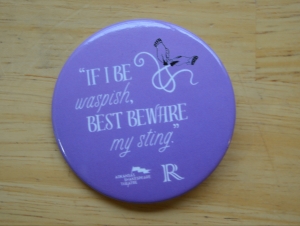
If I be waspish, best beware my sting!

With the Kids, or Family Culture
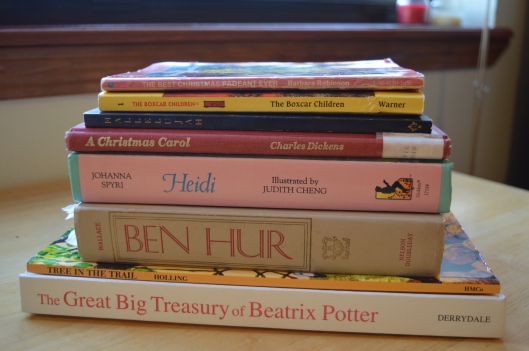
DSC_0016
Ben Hur: A Tale of the Christ by Lew Wallace  My family and I listened to a Librivox recording of this book on a road trip in early 2017. Ben Hur is a tale of historical fiction in the time of Christ. Lew Wallace put a lot of research into his descriptions of places, beliefs, and customs of the time, and this shines through his narrative. Part one provides an in-depth introduction to three desert travelers following a star. Finally in part two we meet the title character and begin to follow his life story as it weaves in and (more of the time) out of the biblical accounts of the life of Christ. While there is a bias toward a fair-skinned, light-haired Madonna and Messiah, much of the historical world-building is an incredible help for those eager to get a sense of the cultural climate that Jesus entered into. It’s also an incredibly moving and faith-building story, though I will leave it at that so as to avoid any spoilers. Suffice it to say, the recent movie rendition, though it was fun to watch, didn’t do it justice.

Five Little Peppers and How They Grew by Margaret Sidney  This was another lovely road trip listen-through. I never read about the Pepper family growing up, so this was my first introduction to the joy-filled but impoverished home of Mrs. Pepper and her five children.  There’s work to be done, fun and adventures to be had, and trials to overcome.  My kids really enjoyed this story (and so did I).

The Boxcar Children by Gertrude Chandler Warner  Road trip listening strikes again.  I DO remember reading this as a kid, so it was fun to experience it again with my boys.  Four as-good-as-orphaned children are trying to get away from what they suspect to be a bad situation when they find an abandoned boxcar in the woods and decide to make it their home.  This book was a good introductory survival story, despite the fact that every subsequent book in the series falls in the mystery genre (but my eight-year-old has no complaints!).

Heidi by Johanna Spyri  Yep, we listened to this one in the van, too. Seeing a pattern?  We did a fair amount of traveling with my husband for work this year.  Heidi is the classic story of the impact a cheerful little girl can have, both to soften hard hearts and strengthen the weak.  While there are some explicit lessons on learning to trust God will answer prayers in His time and for the best, which contributed to good discussion with our children, there is also in the background an immersive experience of the Alps in all their beauty, grandeur, and health-inducing fresh, open air.  The story of Heidi refreshes the soul with cheerfulness, hope in God, and the mesmerizing beauty of His creation.

Flowers are made to bloom in the sun and not to be shut up in an apron.

The Great Big Treasury of Beatrix Potter  Finally, here’s one I read aloud to the kids (for probably the third time).  Most people are familiar with The Tale of Peter Rabbit (though don’t count on modern video interpretations to give you the original story).  Have you heard of simple-minded Jemima Puddle-Duck?  Of cunning and conniving Mr. Tod?  Rude Squirrel Nutkin?  Tom Kitten?  Timmy Tiptoes?  The stories and their characters are a lot of fun, and Beatrix Potter’s illustrations are lovely.

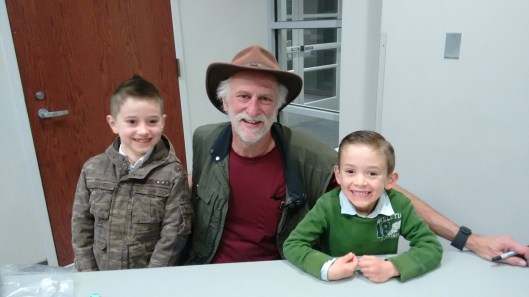
Arkansas Autumn by Tim Ernst  This fall I gathered a grand collection of seasonal books from our local library, including this gem. Tim Ernst is an avid hiker and the foremost nature photographer in Arkansas.  We enjoyed gawking at all of his beautiful fall pictures, reading about where and how they were taken, and guessing at the types of leaves featured close-up throughout the book (answers were in the back of the book).
As an added bonus, we got to meet Mr. Ernst at a presentation he gave this fall.
IMG_20171214_185637319.jpg
If you love nature photography in general, and if you love outdoor adventures in Arkansas in particular, you ought to check out the many photography collections and guidebooks Tim Ernst has published.  Our family loves them.

The Best Christmas Pageant Ever by Barbara Robinson  Christmastime calls for its own kind of reading.  I’m pretty sure I watched the movie based on this book as a kid, but this was, to my knowledge, the first time I’d read it for myself (and out loud to the boys).  I bawled my eyes out through the entire last chapter.  This is a beautiful story of the hardest of childhood hearts being softened by an honest encounter with Jesus.  We’ll be adding it to our read-every-Christmas list for sure.

A Christmas Carol by Charles Dickens  Here’s another classic Christmas book that will stay in the rotation for many years to come. I’m sorry to say that I had never read Dickens’ ghostly Christmas tale before this year, either!  I didn’t care much for Dickens when I was in school, but I came to appreciate his humor and style in A Christmas Carol and hope to give his other works another try.  I think I’ll be able to “get” them now.

It is a fair, even-handed, noble adjustment of things, that while there is infection in disease and sorrow, there is nothing in the world so irresistibly contagious as laughter and good humour.

We also watched the Muppet Christmas Carol to, you know, make sure we had a well-rounded experience with Mr. Scrouge.  😉

Hallelujah: A Journey Through Advent with Handel’s Messiah edited by Cindy Rollins  I snatched up this Advent guide with birthday money I received in November. Our family doesn’t have many long-established Christmas traditions of our own, and our kids are old enough now that it seemed like a good time to explore some different options.  I never grew up celebrating Advent, so Hallelujah provided both a focused tradition (listening to and meditating on Handel’s Messiah and the scriptures it was based upon) and some background information on the season from several different perspectives.  Our family does not feel compelled to follow any church calendar and we do not attend a liturgical church, but still we found great value and encouragement in these pages for making more of the Christmas season than we have in the past.
While we unfortunately were unable to keep up with the devotions toward the end of the season due to a bout with the flu, we have this resource and some experience now in making much of Christ in our anticipation of His coming, and I think these will serve us well in years to come.

A Tree in the Trail by Holling C. Holling This was me trying to keep up with at least a small amount of my eight-year-old’s reading.  We have read Holling’s Paddle to the Sea several times over as an enjoyable way to learn about the Great Lakes.  A Tree in the Trail traces the history and ways of life on the Santa Fe Trail by following the life, death, and re-purposing of one special tree.  Native American mysticism is present in the story, but it’s a good opportunity to discuss what other people believe.  I enjoyed having a window into a part of the country and a time in US history with which I am less familiar.

There are many other books that I read this past year, but these are the ones I actually finished… Sometimes I think I start more books than is good for me.  At any rate, I’ve got a good start for 2018.

What did you read in 2017?  What are you reading now?  I’d love to hear about it!

Reformation Reflections 2017

31 Tuesday Oct 2017

Posted by Lauren Scott in Home Education, Living Faith

≈ Leave a comment

Tags

Church History, education, History, Home Education, Martin Luther, Reflections, Reformation 2017

October 31st is usually just another day for our family.  At times, when we lived in a city neighborhood, we’ve passed out candy and gospel tracts to costume-clad visitors at our door, and other times we have happily forgotten the sugar-coma-inducing festivities of the day all together.

We’ve also not necessarily done much in the past with the notable historical event that took place on this day.  We’ve recognized it as Reformation Day, and perhaps shared a “Nailed it” meme for laughs, but we’ve never, you know, dressed our two boys up as Luther and Calvin.

But today, October 31, 2017, marks the 500th anniversary of the day Martin Luther famously drove the nail that cracked Europe—and mainstream church history—forever.

This seems to call for more than just the usual nod.  Cosplay may not be necessary, but a deeper consideration of its importance certainly is.

As a history major in college, I took particular interest in two very world-changing narratives:  the World War II era and church history.  Having studied the Reformation in some depth over ten years ago (ahem, yes, it’s been a while!) and consequently having forgotten many of the details, now has seemed as appropriate a time as ever to refresh myself on the subject, especially as I have considered how to teach my children about it and determine what celebrating the Reformation looks like in our family.

As I’ve dusted off a few of my college texts, done some reading online, and discussed the subject with my husband, I’ve refined my thoughts and priorities when it comes to understanding the Reformation and passing on that understanding and perspective to my children.

IMG_20171031_071947758

Guiding Principles of our Discussion of the Reformation

Most of us know that the first three rules of buying a house are “Location, Location, Location”.  Similarly, the first three rules in rightly understanding history, the Scriptures, or anything we learn by written language are “Context, Context, Context”–both textual or historical.  The Protestant Reformation was in no way a stand-alone event.  One of my college texts is called Europe and Its Reformations, plural, because it seeks to demonstrate the continuum of social, political, and religious “reformations” surrounding the events of Luther’s life.  Despite the obvious fact that Luther’s actions and teachings set off a figurative bomb that changed the landscape of Europe forever, neither church nor political history were homogeneous, unchanged, or unchallenged before 1517.   And as we are probably more aware, neither did they remain so after the fact.  There have been throughout history pockets of believers, often persecuted, holding to the true gospel before the posted paper at Wittenberg, just as there were other movements from within the Catholic Church seeking to reform it, as well.  I believe it’s important that my children understand from the beginning that Luther’s Ninety-Five Theses and the Reformation they sparked didn’t take off in a vacuum.  Rather, in God’s providence and by His grace, Luther was at the right place at the right time to shed light on prevalent errors and bring the gospel of salvation by grace alone through faith alone into mainstream discussion.

Connected to this idea of context, it’s important to remember that Catholicism isn’t the same today as it was in Luther’s day.  Seeing the reformation sparked by Luther’s Theses as one of many efforts to reform the Catholic Church and/or Christianity and discussing this fact with my children will (I hope) help them to grasp that ideas, institutions, and people change over time.  I want them to be able to have meaningful conversations with their Catholic friends because they have some understanding of what Catholicism is today.  In the United States of America.  To this end, we watched a video covering the main differences between Catholicism and Protestantism.  It was mostly over my kids’ heads, since they are only 8- and 6-years-old, but we paused the video when necessary to discuss and understand along the way.  I hope I can instill in them a desire to ask questions to get to know what others believe and not merely spout off what they think they understand from one video they watched and a handful of discussions they had with their parents.  I have a hunch this will be a long process…

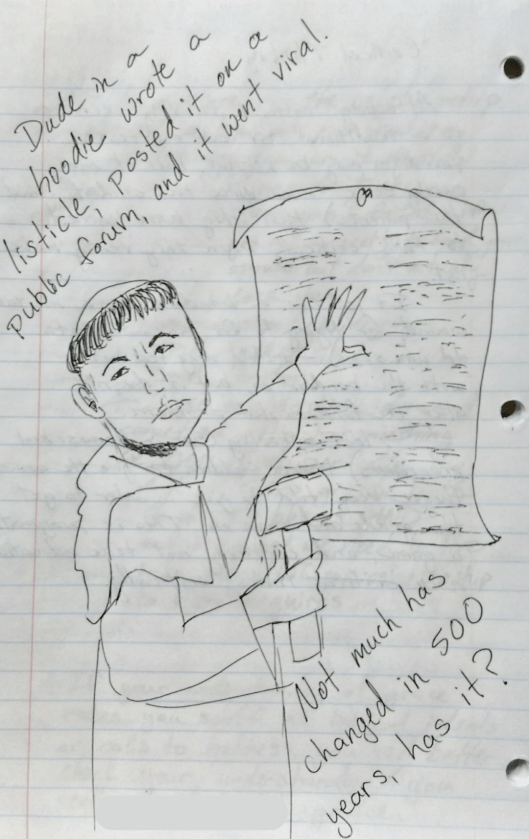
Luther cartoon Reformation Day 95 theses homeschool

As my crummy excuse for a cartoon above seeks to humorously remind us: while technologies and power structures change, mankind is very much the same throughout the centuries.

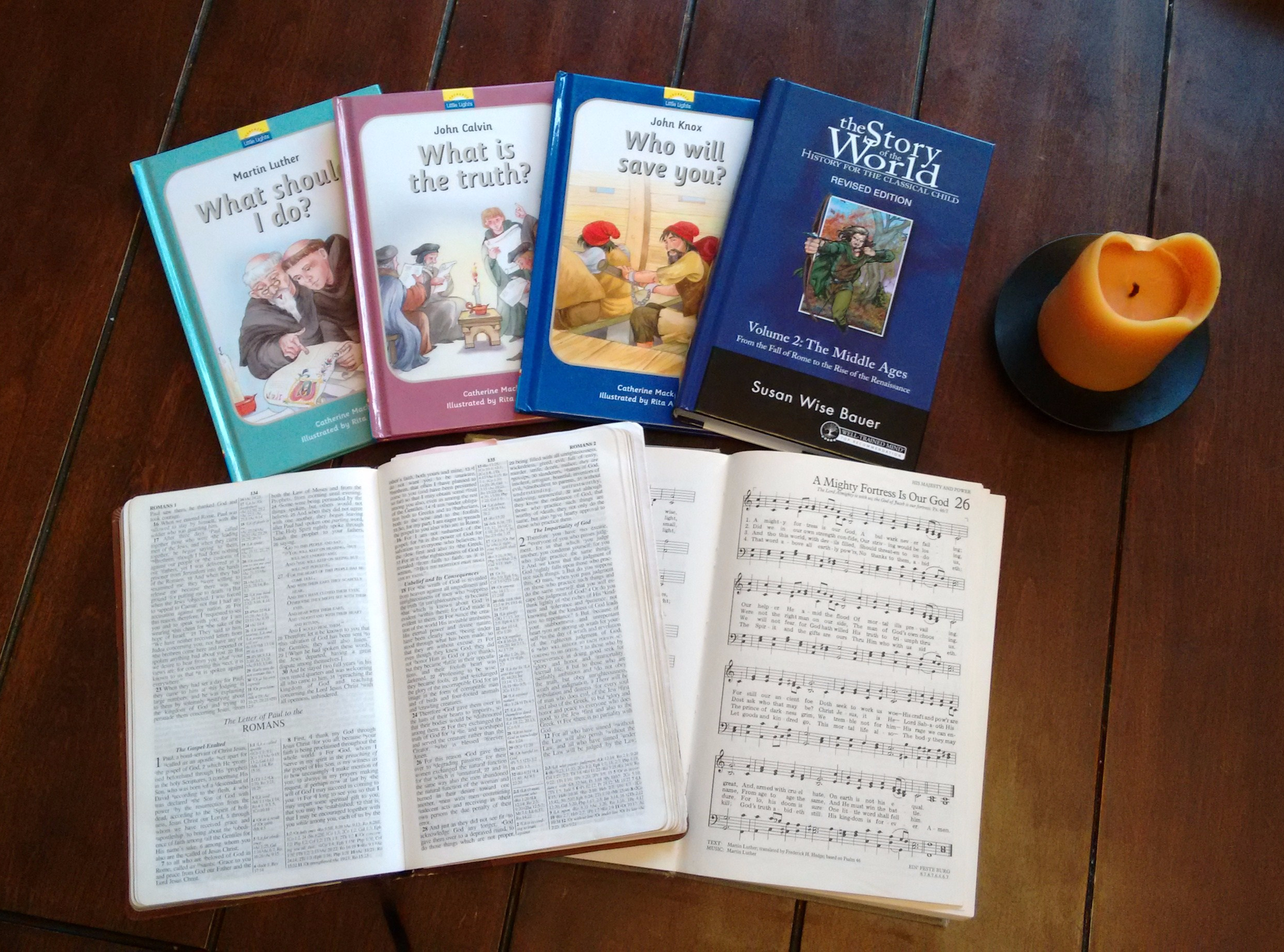
Getting a bit more practical now, primary sources are a great way to look more directly into the past.  And they’re not just for college history classes!  Here are a few we’re using with our elementary-aged kids:  the book of Romans (which the Lord used to bring Luther to the understanding of salvation by faith); quotes from Luther himself, particularly a few lines from his Ninety-Five Theses and his defense at the Diet of Worms; and Luther’s hymns “A Mighty Fortress is Our God” and “Lord, Keep Us Steadfast in Your Word”.  As our kids get older, it’s my aim that we’ll look more into Protestant, Catholic, and political documents and counsels, among many other sources and including many other key players and precursors to the Reformation.

As we engage with several kinds of source materials, I want us to remember that bias is ever-present and history is never simple.  While we can see glimpses of the hand of God weaving together the events of time into the meta-narrative tapestry of His choosing, we can only ever see a few of the threads at a time.  So we should be humble with our own narratives, recognizing that God’s truth doesn’t depend upon me spinning the events in a way that I think is favorable.  A single group’s human narrative can be helpful, but only if it recognizes it is incomplete.  (Yes, this definitely has application to the current state of upheaval in our society today.)

Confession:  Luther isn’t really on our list of personal favorite Christian heroes.  He did some really great things and God clearly used him mightily for His purposes.  But my husband’s favorite heroes of Christian history are the faithful, quiet plodders—you know, the type of people who aren’t flamboyant or famous enough to have a day set aside to celebrate them—and who maybe don’t ever make it into the history books.  This is a pretty good personal antidote to our world’s (and often the church’s) emphasis on “changing the world” and “doing big things”.  So often it’s difficult to see the line between godly motivation and mere self-promotion and glory-seeking.  Those of us who recognize this do well to slow down and consider the lowly servants of Jesus throughout the ages, or those who played a support role to the “main actors” on the stage of church history.  I’m thankful that my husband is leading our family in valuing the faithfulness that sometimes only God can see.  It’s spiritually healthy, and it’s right.

While our family certainly doesn’t care to over-emphasize Luther’s heroism, his stand for truth and for conscience is an example to be admired.  We may never find ourselves in such a life-or-death test for our faith or our trust in the Word of God as when Luther stood before the Diet of Worms in 1521 and gave his most famous declaration.  But we nevertheless need courage on a daily basis to do what is right, to share the gospel of grace, to serve and love the lowly, to choose faithfulness in the small things no matter the outcome, to say no to delusions of grandeur or inclinations toward comfort and safety that would bring us to self-preserving, self-exalting compromise and complacency.  Luther’s legacy is not only in the truth he taught, but in the courage he had to “stand, and … do no other.”

Reformation Books Hymns Romans

We’ve selected a few children’s biographies to read this morning along with singing hymns and possibly watching a movie on the subject this evening as a family.  But more even than the particular books we read or the media we consume are the discussions we have as a family.  Discussions of what the gospel, or good news, of salvation in Jesus is—and has been from the beginning.  Discussions of how the Catholic Church was in error in the past and which of those errors have been abandoned and which have been maintained to this day.  Discussions of error on the other side of the line and how we each must seek to faithfully follow the Word of God, being willing to stand even amidst pressure from “our own” institutions.  Discussions of how we should treat those with whom we disagree (hint:  we like the example of Jesus and His disciples better than that of either the Catholic or Protestant state-churches!  Eek!).  Discussions of how we can see God’s hand at work throughout history—preserving His word and His people, using imperfect men and women to accomplish His purposes, and His provision for the gospel to spread to the ends of the earth—to every tribe and tongue and nation.  These discussions contain far more than mere information—they include love for the Lord, for His word, for others, and for our children themselves as we help them understand their own place in the line of history and the world of people and ideas.

While much more could be said (and probably has been said elsewhere in this vast space called the internet), I hope these limited thoughts of mine have been coherent enough to be a thought-provoking blessing to you today as you contemplate the Reformation and remember it with your family, friends, or church.

And as for costumes, I think my kids might currently be more interested in dressing up as Calvin and Hobbes than Luther and Calvin.  And I think I’m ok with that.

In closing, I’ll leave you with the Five Solas of the Reformation, because I didn’t manage to fit them in anywhere else and it seemed wrong to leave them out:

Sola scriptura – Absolute authority for Christian faith and practice comes from God’s word alone.

Sola fide – Salvation is through faith alone.

Sola gratia – Salvation is by grace alone.

Solus Christus – Salvation is in Christ alone.

Soli Deo gloria – All of this is for the glory of God alone.

Amen.

How are you remembering or celebrating?  What’s your favorite take-away from your contemplation of the Reformation?  Do you have an angle on it that I didn’t cover in this article?  I’d love to hear it!

Growing a Love for Music: A Review of the Prodigies Music Lifetime Membership (Plus a Discount Code!)

30 Saturday Sep 2017

Posted by Lauren Scott in Home Education

≈ Leave a comment

Tags

Curriculum Review, Elementary Music, Home Education, homeschooling, Music, Preschool Music, Preschool Prodigies, Prodigies Music

In this review I’ll give a bit of history as to how we decided on the Prodigies Music Program for our kid’s education, a discount code for my readers, and then some examples of how our kids have benefited from the program over the past nine months!  This post contains affiliate links, but I’ve been promoting Prodigies to friends long before signing up as an Ambassador–you’ll see some of the reasons why I believe in it so much in this post.  

My husband and I both love music.  And we love sharing it with out kids.  But it’s hard to find the time to introduce them to the basics of music theory with my husband’s busy work schedule and the fact that I’m already teaching them every other subject in our homeschool.

We looked at local general music classes, and probably would have gone that route if we hadn’t found Prodigies.  We sampled the videos they made available for free on YouTube, and I was impressed.  So impressed that after crunching numbers and comparing our options, we bought the Lifetime Membership for our family.

Here’s why the Prodigies Lifetime Membership beat the local class option hands-down:

  • We paid one price for the whole family for life–within just one year of weekly local classes for two children, we would have paid the same amount for FAR less instruction.  This would be even more economical for a larger family.
  • We can do music lessons every day in the comfort of our own home–this again ups the amount of instruction and guided practice, allowing kids to go deeper and practice regularly without mom having to muster up the energy or having to waiting on the next class day to roll around.
  • We have access to all the materials (videos, workbooks, songbooks) both online and as downloadable files for our computer.  This means I have an awesome curriculum (and my kids have a fun music teacher!) available any time it fits our needs or schedule.
  • While I’m sure the local classes are nice, they aren’t using the Prodigies program–which is colorful, engaging, and focuses not only on meaningful play with pitch to train a child’s ears, but also on learning to translate between the color names, number names, letter names, AND solfege names of the notes of the major scale.  Most teachers wouldn’t dream that teaching all of this at such early ages is possible.  But it is!  Mr. Rob does it!  And my kids are getting it!
  • The team at Prodigies Music is constantly adding to their program, which means that the money I put down for our membership goes farther and farther.  They now have a complete preschool program (what my kids are working through now), have started publishing lessons in the primary program, have tons of fun supplemental videos in their Melodies series, and are now rolling out lessons for the recorder.

DSC_0126

Finally, here’s some of the benefits I’ve seen in my children over the past year that we’ve been using Prodigies.

  • My kids can translate easily between solfege, color, number, letter names, etc.  This is something I never knew how to do despite participating in choir as a kid.
  • They are learning the names of chords and what notes are used to build them.
  • My husband can pull out his guitar and the kids can pull out their bells and play together because they’ve memorized the melodies of a handful of songs.  It’s a family jam session!

  • The kids are learning to sing on pitch in a friendly, non-embarrassing environment.
  • ONE OF THE BEST THINGS I’ve seen so far is that my kids are not intimidated by music.  Or any instrument.  Though their practice at home so far is only with the desk bells and hand-signs, they have internalized the concept that music is made up of notes–notes which they have learned to call by name.  So all they have to do when they walk up to an instrument is figure out where the notes are, and then they can play any of the songs they’ve learned!  The boys will eagerly plunk out a melody on a piano whenever one is near–with no fear whatsoever.  While at a family member’s house, they spotted a harp and asked how it worked.  With no more instruction than “The strings are notes on the scale,” my eight-year-old guessed that the red strings were Cs and began to play the Imperial March from Star Wars.  On the harp.  When he’d never touched the instrument before.   And while some instruments like violin are inherently more difficult to play, my kids have also fearlessly picked them up and guessed at what notes they hear when they scratch away at the strings.  Point being:
  • The pump has been primed (and will continue to as they acquire the ability to read music from their Prodigies lessons) to have such an intuitive understanding of music that when we do sign them up for instrument-specific lessons down the road, they will be able to focus on the mechanics because the understanding will already be there.
  • Beyond all of this, they are learning to both understand and enjoy music.  And when you understand something, it’s a lot easier to love it, and when you love it, it’s a lot easier to want to learn and understand it more.  Thus, with Prodigies, our kids are being equipped for a literal lifetime of learning and enjoying music.

I hope this review has been helpful!  Check out the Lifetime Membership at the Prodigies site, and don’t forget you can use the code KEPT to get an extra 5% off your Lifetime Membership PLUS 5% off anything in your cart–like the bells, or hard copies of workbooks or songbooks.

Newer posts →
  • View KeptandKeeping’s profile on Facebook
  • View lauren.keptandkeeping’s profile on Instagram
  • View keptandkeeping’s profile on Pinterest
  • View @laurenscott.keptandkeeping’s profile on YouTube
Lauren Scott

Lauren Scott

Christian. Wife. Mother. Homemaker. Home Educator. Blogger. Book Addict. Outdoorist.

View Full Profile →

Enter your email address to follow Life Meets Jesus and receive notifications of new posts by email.

Affiliate Disclosure

We are a participant in the Amazon Services LLC Associates Program, an affiliate advertising program designed to provide a means for us to earn fees by linking to Amazon.com and affiliated sites.

Hands-on Math Curriculum

RightStart™ Mathematics

Check Out Prodigies Music Curriculum!

music curriculum sale

Quality Video Curriculum

Top Posts & Pages

  • Ten Tips for Frugal Homeschooling
    Ten Tips for Frugal Homeschooling
  • Five Refreshing Scriptures for Finishing Strong when You Feel Weak and Weary
    Five Refreshing Scriptures for Finishing Strong when You Feel Weak and Weary
  • Wisdom in the Book of James
    Wisdom in the Book of James

Advent April Fool's Day April Fools Book Review Books Books Charlotte Mason Charlotte Mason Homeschool children Christian Classical Education Christian Classical Homeschool Christian Homeschool Christian life Christian mom Christian Parenting Christian Women Christmas Classical Education Classical Homeschool devotional education faith Guest Post Home and Family Home Education Homemaking homeschool encouragement homeschooling Jesus Living Books love marriage meditations micro book reviews motherhood Nature Nature Studies parenting poems poetry Practical Atheism Reading List Reflections Relationships trials

A WordPress.com Website.

  • Subscribe Subscribed
    • Kept and Keeping
    • Join 173 other subscribers
    • Already have a WordPress.com account? Log in now.
    • Kept and Keeping
    • Subscribe Subscribed
    • Sign up
    • Log in
    • Report this content
    • View site in Reader
    • Manage subscriptions
    • Collapse this bar
 

Loading Comments...