• Home
  • About
  • Living Faith
  • Home and Family
  • Home Education
  • Books
  • Recommended Resources
  • Media

Kept and Keeping

~ Rest in Grace, Labor in Love

Kept and Keeping

Tag Archives: Charlotte Mason Homeschool

Narrating through School Education, Ch. 1: Docility and Authority Pt. 1

28 Saturday Oct 2023

Posted by Lauren Scott in Home and Family, Home Education

≈ 1 Comment

Tags

Charlotte Mason, Charlotte Mason Homeschool, Charlotte Mason Philosophy, Christian Parenting, Educational Philosophy, Home Education, homeschooling, motherhood, Parental Authority, parenting

This post contains affiliate links. If you make a purchase at one of these links, I may make a commission at no additional charge to you. Thank you for supporting my blog!

Charlotte Mason’s writings have been such a blessing to me–a tool in God’s hands to shape my mother’s heart into what it ought to be, chiseling away at rough edges and teaching me to love what is truly good and right and beautiful.

To date, I have read four out of Charlotte Mason’s six volumes that make up her Home Education Series: Volume One: Home Education, Volume Two: Parents and Children, Volume Four: Ourselves, and Volume Six: Toward a Philosophy of Education. I wish I had blogged through each of these over the years. I think it would have been valuable to force myself to do a written narration of each chapter all along the way. But it isn’t too late to start that habit! So here is my first installment. Maybe it will be a good refresher–or an introduction!–to you, my readers. I’d love to hear your thoughts.

Charlotte Mason Philosophy School Education volume 3

Volume Three, Chapter One: Docility and Authority in the Home and the School

Miss Mason opens her book on School Education with a discussion of two key principles: authority (as authorized rule) and docility (as teachable obedience).

She notes that most adults at the time of her writing were raised under rather autocratic and arbitrary rule by their parents. There is a kind of sturdiness that comes from an entire society upholding the rule of authority by parents, even to the fault of upholding arbitrary rule, but the benefits of this system have their limits. Children, for example, may bear their fears and other burdens all on their own without helpful direction if there is not a means by which they can share their struggles and questions with their parents.

Miss Mason notes that rationalistic philosophers from Locke to Spencer have etched away at this notion of arbitrary authority (and the idea of the divine right of kings) by elevating the idea of individual reason.

When Locke promoted the rationality of the individual, he did not do so in a materialist philosophic vacuum. He developed his ideas with a view to Christian religion and virtue. But, Miss Mason argues, people picked up the lone idea of individual reason trumping all and left behind the insistence upon training that reason in what is good. An extreme example of this is the excessive and myopic (and bloody) rationalism of the French Revolution.

The likes of Mr. Spencer (an educationalist cited throughout the chapter by Miss Mason) promote parental authority only as it serves to throw off all authority. Why? Because Spencer recognizes that to throw off God’s authority is to throw off all other authority. Or, conversely, to diminish parental authority is to chip away at God’s. This is the kind of “liberation” that the extreme rationalist wants.

As Miss Mason puts it, “So long as men acknowledge a God, they of necessity acknowledge authority, supreme and deputed.”

One movement’s excesses may be tamed by another’s…and also replaced by a new set of vices. So the old arbitrary authority might be slightly corrected by rationalism…and then thrown off in a fury when that rationalism proceeds on into its own excess.

But what is best for children?

There is an Almighty God with whom we have to do. And He has set parents in the place of authority over their children. Not to wield it arbitrarily but to do so responsibly under God’s authority. As Charlotte Mason sums it up at the end of the chapter:

“We know now that authority is vested in the office and not in the person; that the moment it is treated as a personal attribute it is forfeited. We know that a person in authority is a person authorised; and that he who is authorised is under authority. The person under authority holds and fulfils a trust; in so far as he asserts himself, governs upon the impulse of his own will, he ceases to be authoritative and authorised, and becomes arbitrary and autocratic.”

More Quotes from Chapter One

Here are a few other quotes I appreciated from this chapter:

“The evolution of educational thought is like the incoming of the tide. The wave comes and the wave goes and you hardly know whether you are watching ebb or flow; but let an hour elapse and then judge. … After all allowances for ebb and flow, for failure here and mistake there, truer educational thought must of necessity result in an output of more worthy character.” Vol. 3 p. 3-4

So the test of our philosophy of education will be the character it produces in our children (and perhaps also in ourselves, eh?).

~~~

“But it is much to a child to know that he may question, may talk of the thing that perplexes him, and that there is comprehension for his perplexities. Effusive sympathy is a mistake, and bores a child when it does not make him silly. But just to know that you can ask and tell is a great outlet, and means, to the parent, the power of direction, and to the child, free and natural development.” Vol. 3 p. 4-5

I especially appreciated how this quote illustrated the ideal of open communication between child and parent. The parent’s thoughts are not the only ones that count. It is not an abdication of parental authority to be capable of hearing a child’s sincere questions and helping them to sort out what confuses them. In fact, a parent that so knows their child’s heart is in a much better position to wisely direct it. And a child given such a safe place to be heard can grow and develop in a healthy, “free and natural” way.

~~~

Speaking of Spencer: “he repudiates the authority of parents because it is a link in the chain which binds the universe to God.”

My how we see this today, don’t we?

She then continues: “For it is indeed true that none of us has a right to exercise authority, in things great or small, except as we are, and acknowledge ourselves to be, deputed by the one supreme and ultimate Authority.” Vol. 3 p. 7
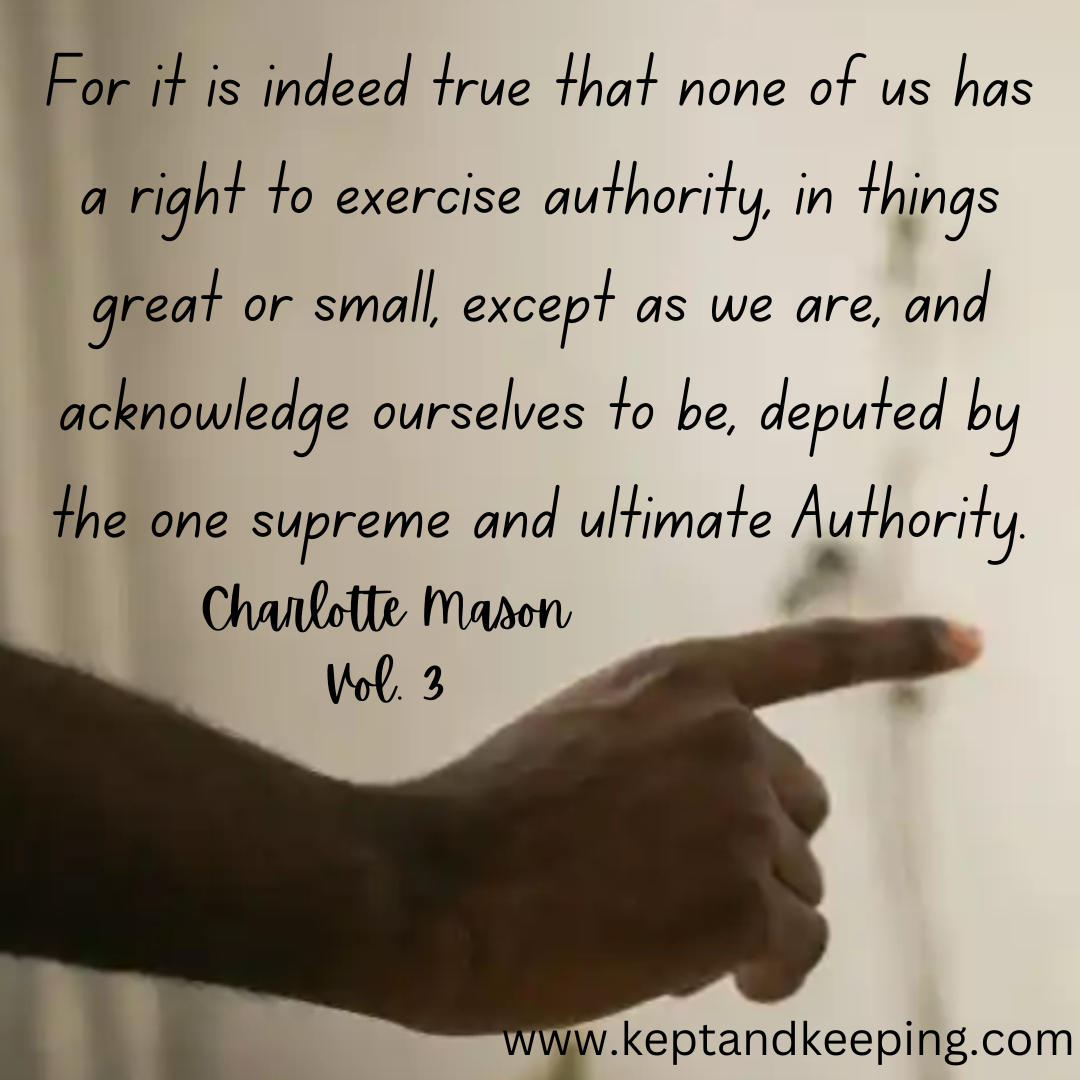
Charlotte Mason philosophy authority parenting quote

~~~

Echoing St. Augustine: “Nothing less than the Infinite will satisfy the spirit of a man. We again recognize that we are made for God, and have no rest until we find Him…” Vol. 3 p. 9

~~~

A warning against the wrong kind of liberty: “We all have it in us to serve or to rule as occasion demands. To dream of liberty, in the sense of every man his own sole governor, is as futile as to dream of a world in which apples do not necessarily drop from the tree, but may fly off at a tangent in any direction.” Vol. 3 p. 10

~~~

Here’s a good word on how damaging, reductionist ideologies form in a person:

“Some such principle stands out luminous in the vision of a philosopher; he sees it is truth; it takes possession of him and he believes it to be the whole truth, and urges it to the point of reductio ad absurdum. [reduction to absurdity]” Vol. 3 p. 11

Key Takeaways for the Parent-Teacher

My parental authority is given me by God (as “deputed authority”). I cannot exercise it properly if I do not first recognize that I myself am under authority—authorized by Someone above me, namely God.

Children by nature have questions. Wise authority leaves room for this—and even welcomes questions and expressions of genuine confusion about the world or even parental expectations as organic opportunities to guide the child in the way they should go.

Don’t get swept away with the latest tide, especially when one concept is elevated to the exclusion of all else. Parenting and educational fads may come and go, but the proof of their wisdom will be in the kind of character they produce over the long haul.

Have you read Volume Three lately? Or been meditating on Charlotte Mason’s principles of authority and docility (they make up the third of her 20 principles)? I’d love to have you weigh in with your thoughts in the comments!

7th and 5th Grade Homeschool Plans for 2022/2023–What We Actually Did!

25 Sunday Jun 2023

Posted by Lauren Scott in Home Education

≈ Leave a comment

Tags

5th grade, 7th grade, Books, Charlotte Mason Homeschool, Classical Homeschool, Home Education, Homeschool Planning, Homeschool plans, homeschooling

This post contains affiliate links. If you make a purchase through one of these links, I may make a commission at no additional cost to you.

My oldest is now a teenager and has just finished the 7th grade. My baby is 11 and has wrapped up 5th grade. It’s amazing how the time flies. Here are the plans I had for my boys for this school year and how we did implementing them.

Math

This year my 7th grader (a good but not-very-mathy student) worked independently through Saxon Math 8/7 with PreAlgebra. He will be heading into Algebra 1 next year in 8th grade.

My very-mathy 5th grader worked through Saxon Math 7/6. He will be doing the 8/7 with PreAlgebra book next year in 6th grade.

We have used the same independent-work routine for a couple years now: They each do the facts practice, read the lesson, do the practice problems, and then do either the even or odd numbers from the problem set. Each boy then corrects his own daily work using the solutions manual, identifying any mistakes made (as either arithmetic errors, understanding errors, copying errors, or neatness errors), and showing those corrections to me before recording how he did and moving on with his day. When it comes to tests, I do the grading, so my boys know that it’s in their best interest to be honest with how they handle their daily work. This has not been a problem. We’ve all learned over the years that mistakes on daily work are just part of the learning process. The opportunity to show mastery, especially in the Saxon program, comes on the tests.

Writing / Language Arts

My boys aren’t crazy about writing assignments, but they do like to write. I try to keep a balance between assigned writing (because it builds character to submit to something someone else has chosen for you) and having time in the schedule for them to work on their quarterly neighborhood newspaper, the historical fiction novel or a script my oldest has started, or one of my youngest’s silly stories. Our goal is that they write every day (ideally at least one page front and back), that I read and constructively correct their writing, and that they learn from correcting their mistakes and from my coaching to be better writers.

This past year, this has generally looked like one day of copywork, a day or two of free writing (usually one on the computer), at least one day of written narration, an occasional book report when finishing a school book, and some poetry writing days and studied dictation thrown in the mix. Toward the end of the year, I have given my boys some writing prompts to get them thinking more deeply about what they have read this year. This is sort of like a Charlotte Mason end-of-term exam (a practice I am trying to get better at actually doing). When I tried this a time or two in our first semester, my boys struggled and pushed back a bit–especially the 13 year-old since he’s reading heftier books. Now, at the end of the year, they are both willing to do the work of thinking and writing, and I’m especially enjoying the depth I’ve seen from said 13 year-old. That’s the kind of growth we’re looking for!

My oldest also did a lengthy report on soundtrack composer John Williams for our local Discovery Fair event. He won first place for his age group and best in show. His younger brother did a report on the infamous Karl Marx–he at first suggested this topic as a joke, but I told him it would probably make for a great project. And it did. He won second place behind his brother.

7th grade project john williams
5th grade project karl marx

I had planned for my 7th grader to finish up Grammar of Poetry (which we began in 6th grade), and then work through Nancy Wilson’s Our Mother Tongue. But the poetry thing fizzled out in the fall and we were so busy in the spring that I didn’t even try to make OMT happen. He enjoys writing poetry already. And we get so much grammar from our Visual Latin lessons and practical English grammar from me correcting his writing that he’ll probably do fine if he never works through a grammar program. I will keep Our Mother Tongue waiting in the wings if it looks like he’d benefit from it, but I may just pull a little from it here and there so we get some practice diagraming sentences and call that good.

Reading (and History and Literature and Science and…)

We cover most school subjects through reading living books. In years past, instead of reading from multiple subjects in one day, my kids have mostly just sat down with one book on a given day, immersing themselves in it. This year I did a bit more of a schedule, often with two readings per day. For the fall, I attempted to schedule reading certain types of books a certain number of times per week. But I didn’t divide things out thoroughly and the reading was more for time than a set number of pages. By the end of the semester, both of my sons had read almost 33% less than I had intended for them, so the read-for-time honors system wasn’t working that well.

Granted, we also were preparing for a backpacking trip across the Grand Canyon, went on said trip in September…

Our first day descending into the Canyon from the North Rim. Our destination, the South Rim, is visible on the horizon line, with a mountain jutting up above it in the distance.

…and then needed to catch up on the rest of life once we got home, so some of the reading deficit came from full days on which my boys asked if they could read for less time and I granted it. They just got accustomed to those “less time” days and didn’t revert back to normal on their own.

So, for the spring semester I scheduled out their readings by page numbers–a set amount of reading for a set amount of time. And, guess what! It has worked really well. And I think I have grown in my ability to manage details in a lot of areas for having done the work to manage their reading on a more detailed level.

Book List for 7th Grade

Our goals for 7th grade reading: Enjoying Regional and State History; Revisiting Fairy Tales; Filling Science Gaps; and Beginning Studies of Government and Economics. I also had my 13 year-old read a few great books, tracing the idea of knights and chivalry up to the cowboy days. The following books are organized by general subject matter.

Devotional/Theological: Regular independent Bible reading, family Bible time, and began attending our church’s weekly men’s bible study with his papa. Plus:

Pilgrim’s Progress by John Bunyan

Insights into Bible Themes and Customs by G. Christian Weiss

7th grade homeschool plans devotional bible books

Biographies and Autobiographies to accompany Devotional Studies:

Grace Abounding to the Chief of Sinners by John Bunyan (find my review here)

John Bunyan by Kevin Belmonte

Robert Chapman, Apostle of Love by Robert L. Peterson

The Autobiography of George Muller (Chapman and Muller were contemporaries)

Arkansas and Regional History and Historical Fiction:

An Arkansas History for Young People (my son’s first experience with a traditional history text book–he’s not a huge fan, LOL. Even so, he simply read and narrated it, skipping the busy work)

Cotton in my Sack by Lois Lenski

Bass Reeves by Gary Paulsen

“The Big Bear of Arkansas,” a short story by Thomas Bangs Thorpe (also added Thorpe’s “A Piano in Arkansas”), both found in the book Humor of the Old Southwest, which I found at my local library. We also enjoyed listening to the Bear Grease podcasts on “The Big Bear” and on “The Arkansaw Image”.

Rifles for Watie by Harold Keith

It Happened in Texas by James A. Crutchfield to cover some history from my beloved home state (picked this one up at Palo Duro Canyon State Park–warning, there are some disturbing stories, especially the chapter titled “Mass Murder”).

Following the themes of Knights to Cowboys:

7th grade homeschool plans books knights cowboys

Sir Gawain and the Green Knight (this, in addition to poems covered at co-op, makes up his study of poetry for the year)

Don Quixote by Miguel Cervantes (yes, the whole thing–he thought it was hilarious)

True Grit by Arkansan Charles Portis

Government/Economics:

Whatever Happened to Penny Candy? (reviewed in this post)

Whatever Happened to Justice? by Richard J. Maybury

Tales:

7th grade homeschool plans tales books

D’Aulaire’s Book of Norse Myths

Uncle Remus by Joel Chandler Harris (the tales, not all of the poems; contains some language)

Grimm’s Fairy Tales (selections; I reviewed the book in this post)

Science:

7th grade science homeschool apologia

Exploring Creation with Human Anatomy by Apologia

Logic/Other:

7th grade homeschool how to read a book

How to Read a Book by Mortimer Adler (Part 1, first 55 pages–this book will be spread over the next few years)

Free Reads: Life of Fred: Fractions, Viking Quest series by Lois Walfrid Johnson (Christian historical fiction), The Land by Mildred D. Taylor, Let the Circle be Unbroken by Mildred D. Taylor, and Re-reads: The Ikabog by J. K. Rolling, The Hobbit by J. R. R. Tolkein, and various other titles I can’t remember or keep track of.

Book List for 5th Grade

My 11 year-old had a slight focus on Scottish history and literature this year. He’s not as fast a reader as his brother, so a lot of his reading time was simply getting in some of the great classic children’s books.

Devotional: This year he has simply done his own Bible reading and participated in family Bible time.

History/Biography/Historical Fiction:

5th grade homeschool plans history books

Scotland’s Story by H. E. Marshall

Amos Fortune, Free Man by Elizabeth Yates

Star of Light by Patricia St. John

The Hawk that Dare Not Hunt by Day by Scott O’Dell (historical fiction story around William Tyndale)

Literature:

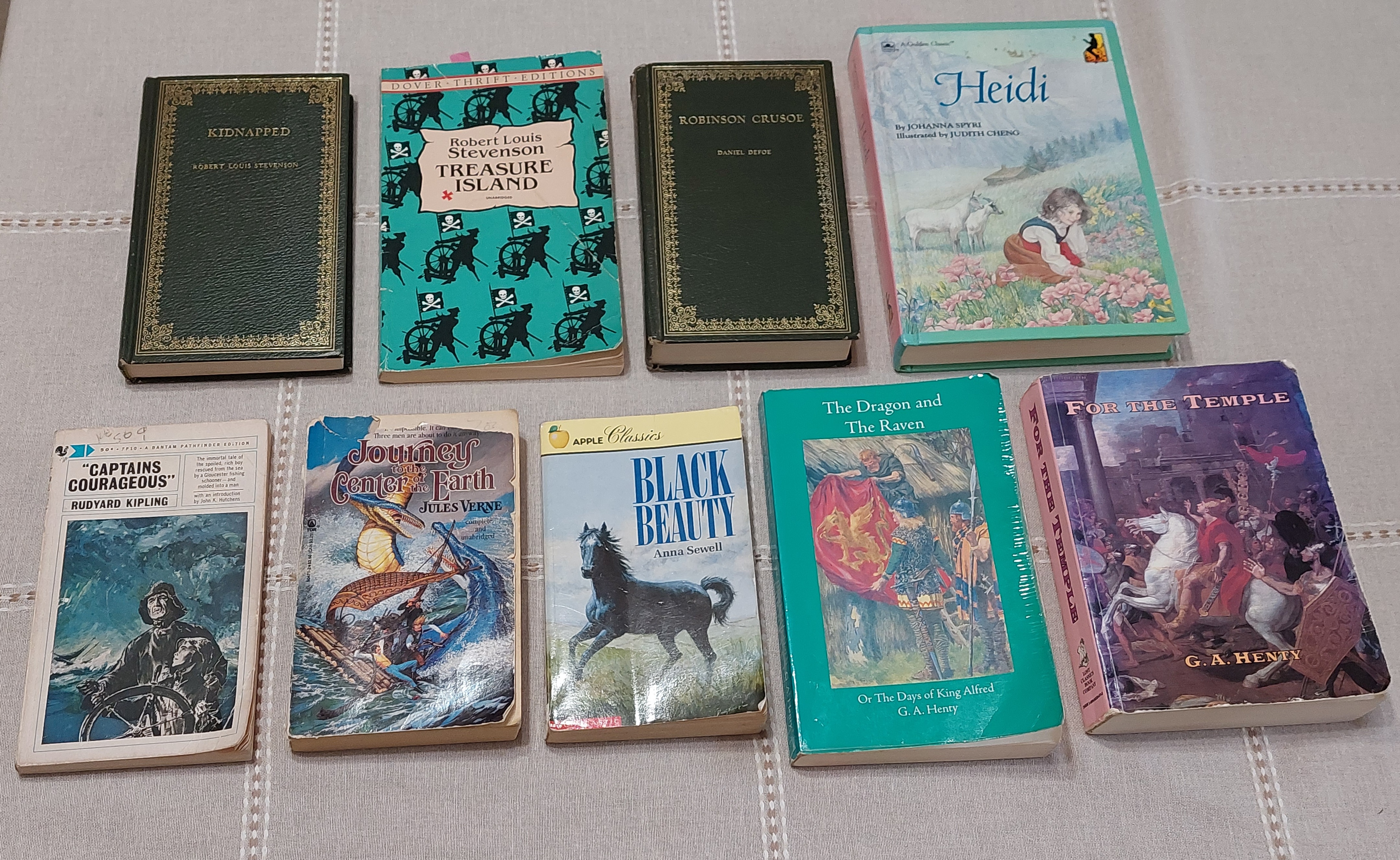
5th grade homeschool plans literature books

Kidnapped! by Robert Louis Stevenson

Treasure Island by Robert Louis Stevenson

Robinson Crusoe by Daniel Defoe

Heidi by Johanna Spyri

Captains Courageous by Rudyard Kipling

Journey to the Center of the Earth by Jules Verne

Black Beauty by Anna Sewell

The Dragon and the Raven by G. A. Henty

For the Temple by G. A. Henty

Geography:

5th grade homeschool plans maps mean adventure geography

Maps Mean Adventure by Christie McFall

Logic:

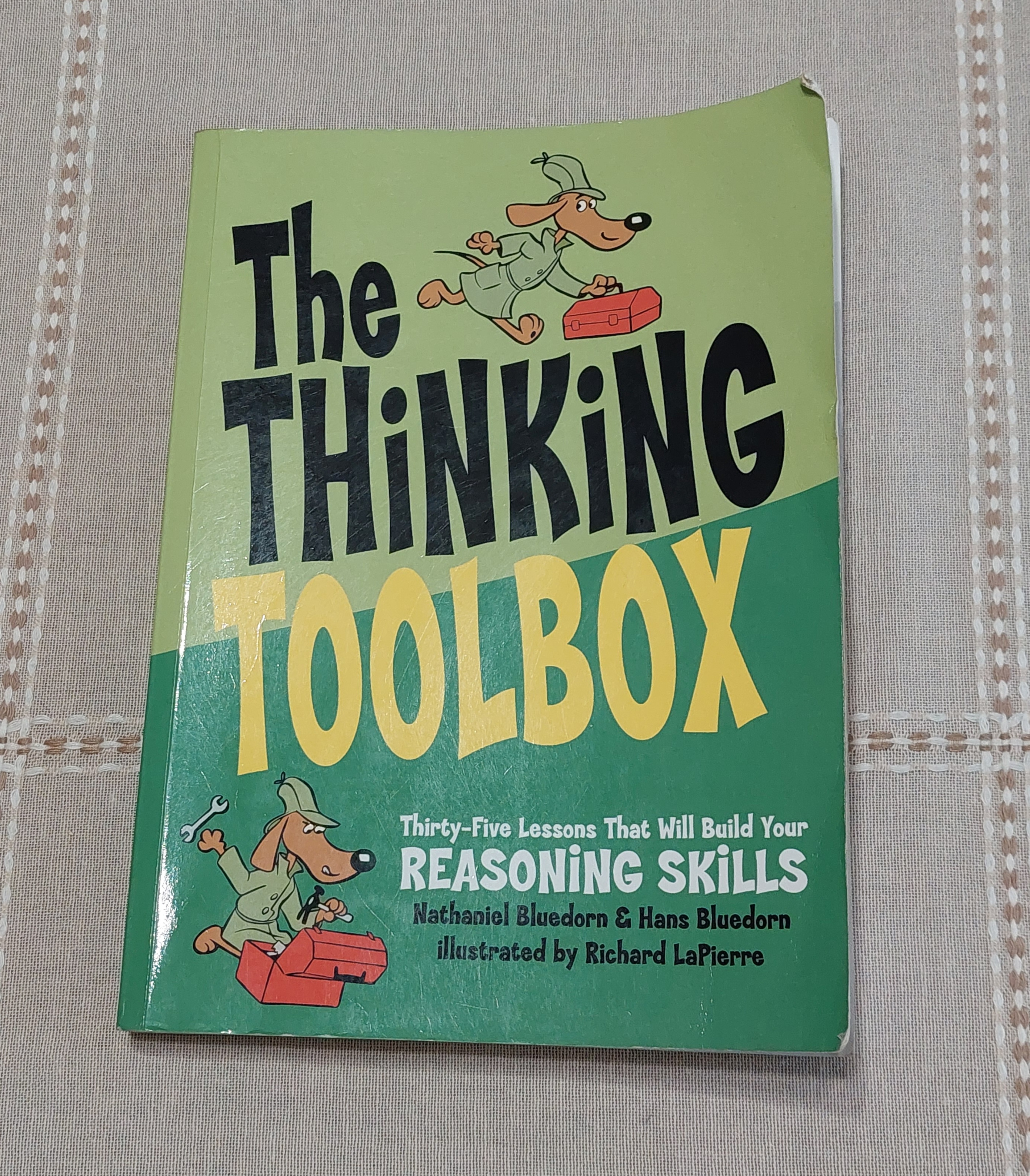
5th grade homeschool logic thinking toolbox

The Thinking Toolbox by Nathaniel and Hans Bluedorn

Science:

5th grade homeschool science plans

A Drop of Water by Walter Wick

Apologia Flying Creatures of the 5th Day

Archimedes and the Door of Science by Jeanne Bendick

Galen and the Gateway to Medicine by Jeanne Bendick

Along Came Galileo by Jeanne Bendick

The Ocean of Truth by Joyce McPherson (a Christian biography of Isaac Newton)

This boy read several of the same free reads as his brother, as well as numerous others I didn’t keep track of!

Beyond Independent Learning

As for things we studied together as a family, you can read about my Morning Time plans for this year here. In addition to those plans, we also enjoyed exploring topics on YouTube from time to time, kept a family read aloud going in the evenings, and participated in various other activities (such as choir, piano, backpacking, gardening, and pick-up games of frisbee and baseball).

This year, the boys also took up playing recorder, did lots of creative work in the garden, fixed bikes, built steps, dug holes, sewed costumes, learned calligraphy, wrote messages with Anglo-Saxon/Middle Earth runes, and cooked things like acorn pancakes (and regular pancakes, too). These are the kinds of things I don’t plan–other than to leave space for them and make sure the kids are well-supplied.

There you have it. 7th and 5th grades in the books. Over half of my oldest son’s homeschool years are behind us now, and the same will be true of my youngest by the end of next year. That’s pretty crazy to think about, but it’s also pretty exciting to watch my boys grow and take on each next thing. Onward and upward!

Want to know more about how and why we homeschool? Here’s our why. And here’s our how (on an over-arching philosophical level).

Books Read in 2022: For Homeschool

24 Friday Mar 2023

Posted by Lauren Scott in Books, Home Education

≈ 1 Comment

Tags

Books, Charlotte Mason, Charlotte Mason Homeschool, Commonplace, Home Education, homeschooling, Living Books, micro book reviews

This post contains affiliate links. If you make a purchase through one of these links, I may make a commission at no additional cost to you. Thank you for supporting my blog.

I read 35 books last year! So I’m releasing my micro book reviews in manageable chunks. Here are the books I read while homeschooling or in support of my role as a home educator in 2022.

Book review homeschool Charlotte Mason 2022

Books Read for Homeschool

Grimm’s Fairy Tales These were sometimes delightful, sometimes familiar, and sometimes utterly absurd. I pre-read this collection of 55 tales in order to select the best for my son to read for school this year. Here are the ones I chose for their cultural importance and/or entertainment value: The Cat and Mouse in Partnership, The Frog Prince, Briar Rose, The Fisherman and His Wife, Rumpelstiltskin, Rapunzel, Cinderella, Snow White and the Seven Dwarfs, The Elves and the Shoemaker, The Water of Life, The Golden Goose, The Table, the Ass, and the Stick, Red Riding Hood, Tom Thumb, Frederick and Catherine, Snow White and Red Rose, The Four Accomplished Brothers, The Giant with the Three Golden Hairs, Hansel and Gretel

Sir Gawain and the Green Knight (My copy translated by Marie Borroff) This is probably the first epic poem I’ve ever read all the way through. What does that say about the education I received from Kindergarten through college?!?!? I pre-read this before having my 13-year-old read it this year. It’s a little bazar but also fun. The alliterative style of poetry was new to me, but I enjoyed it. Here’s a passage that highlightss the story’s themes of Providence, courage, and integrity, as Sir Gawain tells how he cannot turn back from meeting the enemy:

Fair fortune befall you for your friendly words!
And conceal this day’s deed I doubt not you would,
But though you never told the tale, if I turned back now,
Forsook this place for fear, and fled, as you say,
I were a caitiff coward; I could not be excused.
But I must to the Chapel to chance my luck
And say to that same man such words as I please,
Befall what may befall through Fortune’s will
or whim.
Though he be a quarrelsome knave
With a cudgel great and grim,
The Lord is strong to save:
His servants trust in Him.

Lines 2118-2139

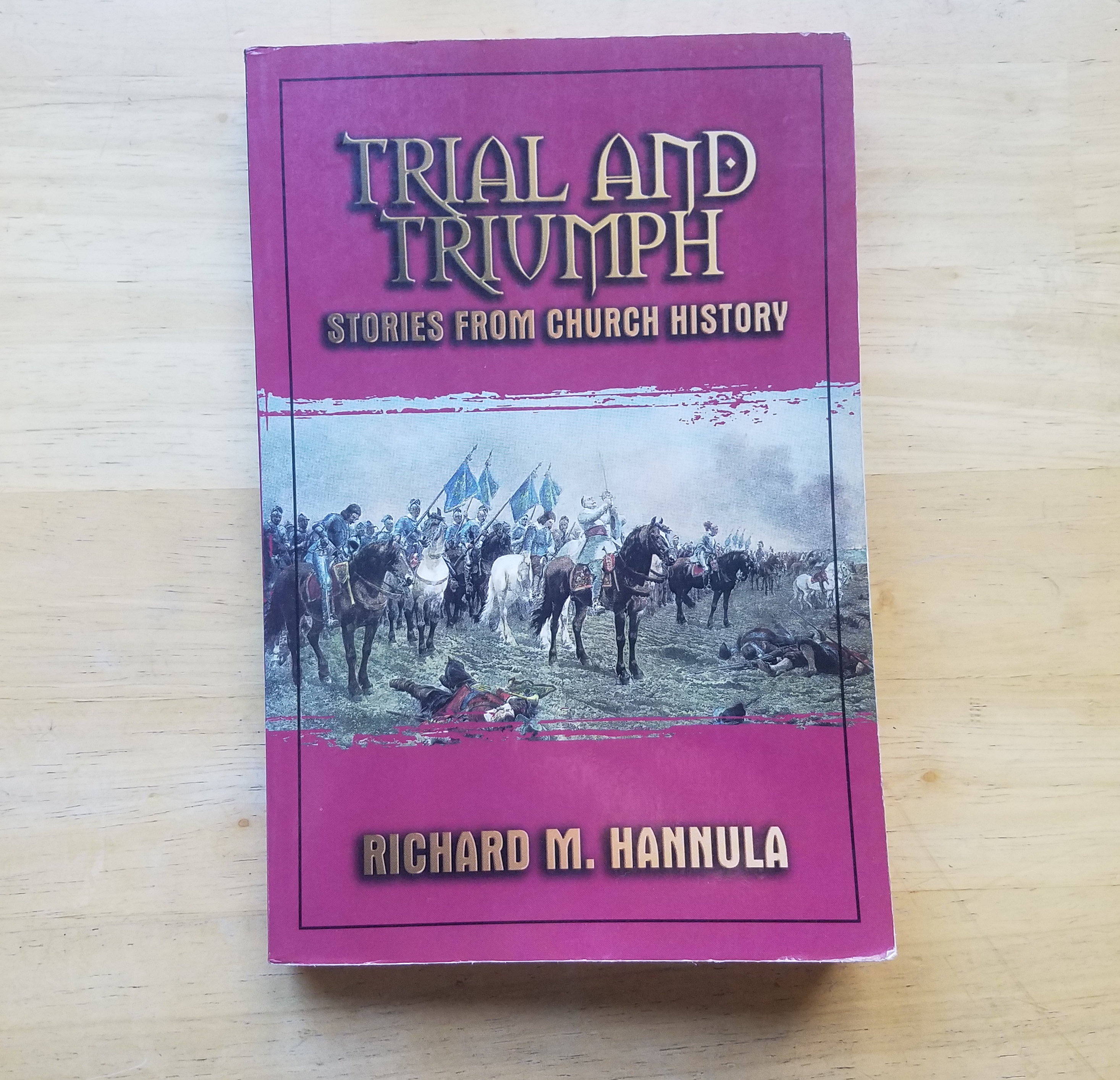
Trial and Triumph by Richard Hannula (read aloud) This is a years-long read-aloud project that we finally finished this past summer, reading it alongside our history book (see next). I highly recommend Trial and Triumph as a good survey of individuals whose stories inspire our faith and play an important role in church history. I dare you to read it aloud to your kids without crying.

The Story of the World, Volume 4: Modern Times by Susan Wise Bauer (read aloud) This has been an incredibly enjoyable journey through all four volumes of The Story of the World. This one on Modern Times was a really great read at ages 12 and 10. My boys were old enough to handle the challenging level of violence that makes up modern history. Bauer traces patterns and events well, helping the reader to see how events connect chronologically, geographically, and in parallel.

The Fallacy Detective by The Bluedorns (read aloud) This was an incredibly fun read—my boys would constantly ask for it, or ask for me to read more when it was time to stop. Fallacies may not be the most ideal way to get acquainted with logic for the first time (it’s generally recommended for any discipline that you learn the rules before you learn how they are broken), but this was so accessible and fun (not to mention I won a copy as a door prize at a local homeschool event) that I couldn’t resist. The boys love to identify errors in thinking: in the news, each other…. We have urged them, though, that they don’t actually know logic yet, so take it easy. These are tools to help us evaluate arguments and propaganda, not for us to tear others down.

Whatever Happened to Penny Candy? by Richard J. Maybury I pre-read this book for my 7th grader this year. I don’t remember having any early and gentle introduction to economics before being thrown into it in high school—having to read a large portion of Adam Smith’s The Wealth of Nations over the summer and take a test over that tome on the first day of class. I wish I had learned a little bit along the way and in the context of history. Whatever Happened to Penny Candy? supplies this need quite well, covering topics like money, inflation, boom and bust cycles, the role of government, and more in short, well-explained chapters—err, uh, letters, from Uncle Eric to his nephew. This would NOT make for a complete economics course for high schoolers, however. Just like The Fallacy Detective is not a comprehensive study of logic, Penny Candy is not a comprehensive study of economics–but both books can whet the appetite for further study.

Gather by Pam Barnhill and Heather Tully This was less for school and more about it. Gather is about what many homeschool moms refer to as Morning Time–a time in the school day when most everyone in the family is together for shared learning or activities, ranging from worship and singing to reading, making, and exploration. This book is full of inspirational and practical essays and full-color photographs from a handful of homeschool families in various stages and of various sizes. It’s a pretty great day-in-the-life kind of encouragement for homeschool moms. I enjoyed it.

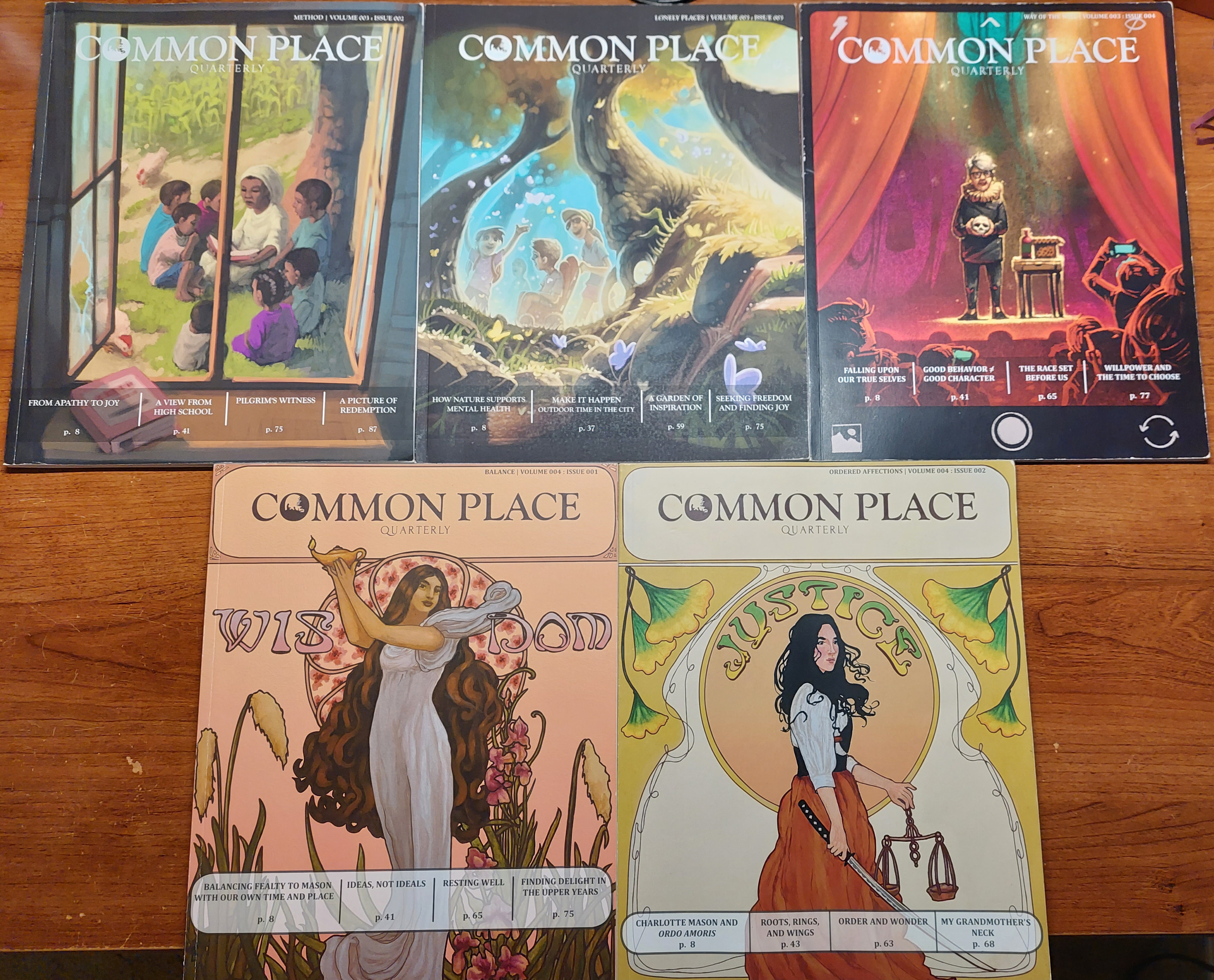
CommonPlace Quarterly (a refreshing magazine on Charlotte Mason homeschooling)

These are the issues of CommonPlace Quarterly that I read cover-to-cover last year: Lonely Places, Way of the Will, Balance, Method, and Ordo Amoris.

commonplace quarterly charlotte mason homeschool

I have read every issue from the first year of publication. It is a little pricey, but the content is very encouraging in the faith, in loving and educating my kids well, and in growing in my own education toward what is true and good and beautiful. About a year ago I was thinking super-frugally and canceled my subscription, and my husband questioned me on it, saying I’d probably regret that. And he was right. 🙂 This makes for excellent bedtime reading when I’m too tired to read a stiff book. If you are into Charlotte Mason homeschooling, this is a resource worth checking out.

That’s it for this post!

Next up: Christian Thinking and Life Management Books I read in 2022.

Coming Soon: Books I read on Marxism and Black Christian Perspective

Homeschool Morning Time Plans 2022/2023

29 Monday Aug 2022

Posted by Lauren Scott in Home Education

≈ Leave a comment

Tags

Books, Charlotte Mason Homeschool, Christian Classical Education, Christian Classical Homeschool, Christian Homeschool, Home Education, Homeschool plans, homeschooling, Learning Together, Living Books, morning time

This post contains affiliate links. If you make a purchase through one of these links, I may make a commission at no additional charge to you.

I have done some form of Morning Time with my boys for something like ten years. It looks a little different now that they are 13 and 11 this year instead of 3 and 1, when I likely started with a song, a scripture, and a calendar at the kitchen table. For one thing, my youngest is no longer restrained in a high chair (though there were a few years where he would be upside down on the couch or literally climbing onto my shoulders as I read aloud that I might have wished for that high chair again!).

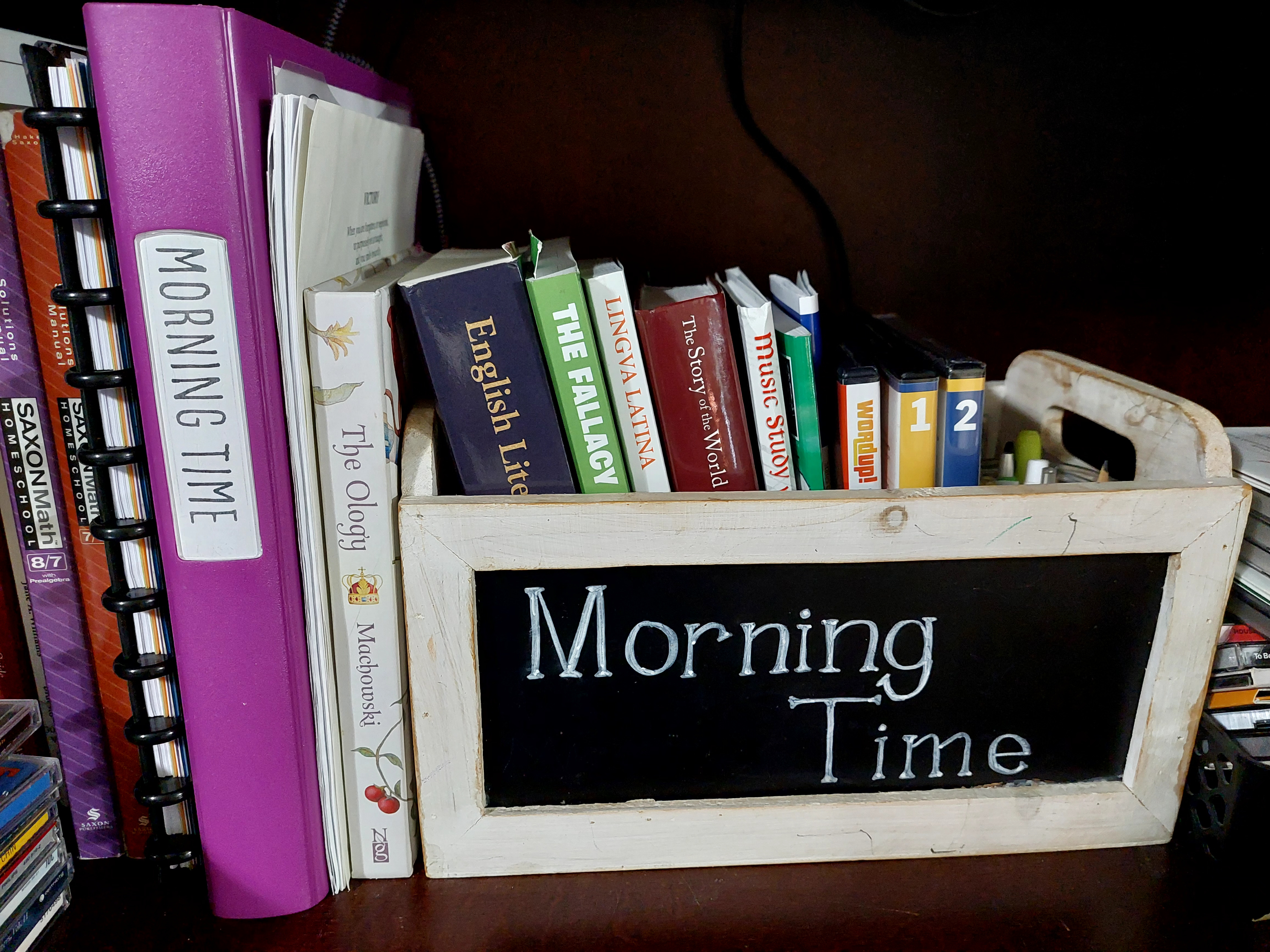
This Morning Time Box has seen a lot of action over the years!

Latin

This year we are continuing our study of Latin with Visual Latin 1. We did the first 20 lessons last year and the plan is to finish Level 1 by Christmas so that we can start Visual Latin 2 next semester. I made it through the first 20 lessons last year without doing the worksheets myself (thanks to many hours of college-level Spanish), but this year I have printed off lessons 21-30 so that I can get in the same translation practice that my boys are doing. The grammar is a bit more complicated now, so it’s easier for me to keep track of it if I’m doing the work, too. And as an added bonus, I can very easily check the boys’ work without having to pull up the answer key pdf every time.

On lighter days in Visual Latin, we’ll sprinkle in some reading from Lingua Latina and perhaps also from Familia Mala (“Bad Family”…this book doesn’t shy away from the fact that the Roman myths are a hot mess).

Read Alouds

Just finished at the start of the year:

Cue drum roll… We have finally finished reading The Story of the World Volume 4: Modern Times by Susan Wise Bauer. It’s crazy to think we’re done with the whole series. I think we’ve actually read Volumes One and Two twice. This series goes down as one of our family all-time favorites. My kids would ask me even on the weekend: “Read Story of the World while we play Legos?” This has been a great adventure through chronological world history.

We also recently finished The Fallacy Detective. This was a big hit with my boys–a fun read with often-entertaining examples and exercises. I’ve tried to make a point to my sons that being able to identify logical fallacies is fun and useful, but 1) it isn’t to be used to tear others down, and 2) fallacies make up a small, small fraction of the study of logic–we have yet to begin to cover all of what logic actually is. We’ll take a break this year before heading into formal logic when my oldest is in 8th grade. The Fallacy Detective has certainly whet their appetite for it.

New reads this year:

I pre-read The Ology a few years ago but it’s finally making it into our rotation this year. I think it would have been great to read sooner, but I think it will still be a good, simple treatment of theology for us to enjoy and discuss this year.

In our home, we love books by H. E. (Henrietta Elizabeth) Marshall, having enjoyed Our Island Story (British history), This Country of Ours (US history), and Scotland’s Story in the boys’ independent elementary studies. This year I decided we could start reading her book English Literature for Boys and Girls together. I’m eager to read it myself, and sometimes the best way to make that fit in my schedule is to read it aloud. 🙂 The boys are excited to hear again from a beloved author, and I’m excited for us to venture into the world of British Lit–more deeply than I ever did in school!

Other Riches

I’m in the process of starting a co-op with some local families, so we’ll be covering hymns, Scripture memory, folk songs, poems, artist study, composer study, and nature study in community this year!

There’s also a book club time and my boys (who are both in the “older kids” group) will be studying Shakespeare, one play each semester. This fall, it’ll be The Tempest.

I’ll try to work our co-op selections into our daily Morning Time. But as the kids are getting older and our Latin studies require a daily commitment, this will be more sporadic than regular (has our Morning Time ever been more than sporadic? Hmmm…). One of the reasons for the co-op, after all, is because it is hard to make space for all of these beautiful things!

Want some inspiration for Morning Time in your home? Over the summer, I enjoyed reading Pam Barnhill and Heather Tully’s new book Gather. It’s a beautiful compilation of thoughts, practices, and examples from their own homeschools, and it’s chock full of lovely photos of other homeschool families (of all sizes!) who enjoy learning together. It’s like one of those “day in the life” blog posts, only there’s a book’s worth of it and you can actually hold it in your hands. Tangible book lovers, rejoice!

What about you? Do you do Morning Time? Or something like it at another time of day? What are your plans for this school year?

Growing the Outdoor Habit [Especially in Arkansas]

25 Sunday Jul 2021

Posted by Lauren Scott in Home and Family, Home Education

≈ 1 Comment

Tags

Adventure Schooling, Arkansas Homeschool, Backpacking, Charlotte Mason, Charlotte Mason Homeschool, Living Books, Nature, Nature Study, Outdoors

The following article has been adapted from a talk I presented at the Natural State Charlotte Mason Retreat in April 2021.
This post contains affiliate links. If you make a purchase through one of these links, I may receive a commission at no additional cost to you. 

charlotte mason outdoor habit arkansas

Here’s a little literary puzzle for you: What do the following books have in common?

  • Pilgrim’s Progress
  • The Hobbit and The Lord of the Rings
  • The Odyssey
  • True Grit by Charles Portis
  • CS Lewis’ The Silver Chair

Literary nerds would say most of these are examples of “The Hero’s Journey”, but my husband says they’re all just backpacking stories.

Getting Outside to Live the Adventure

This spring my family reached the halfway point of the 223-mile Ouachita Trail.

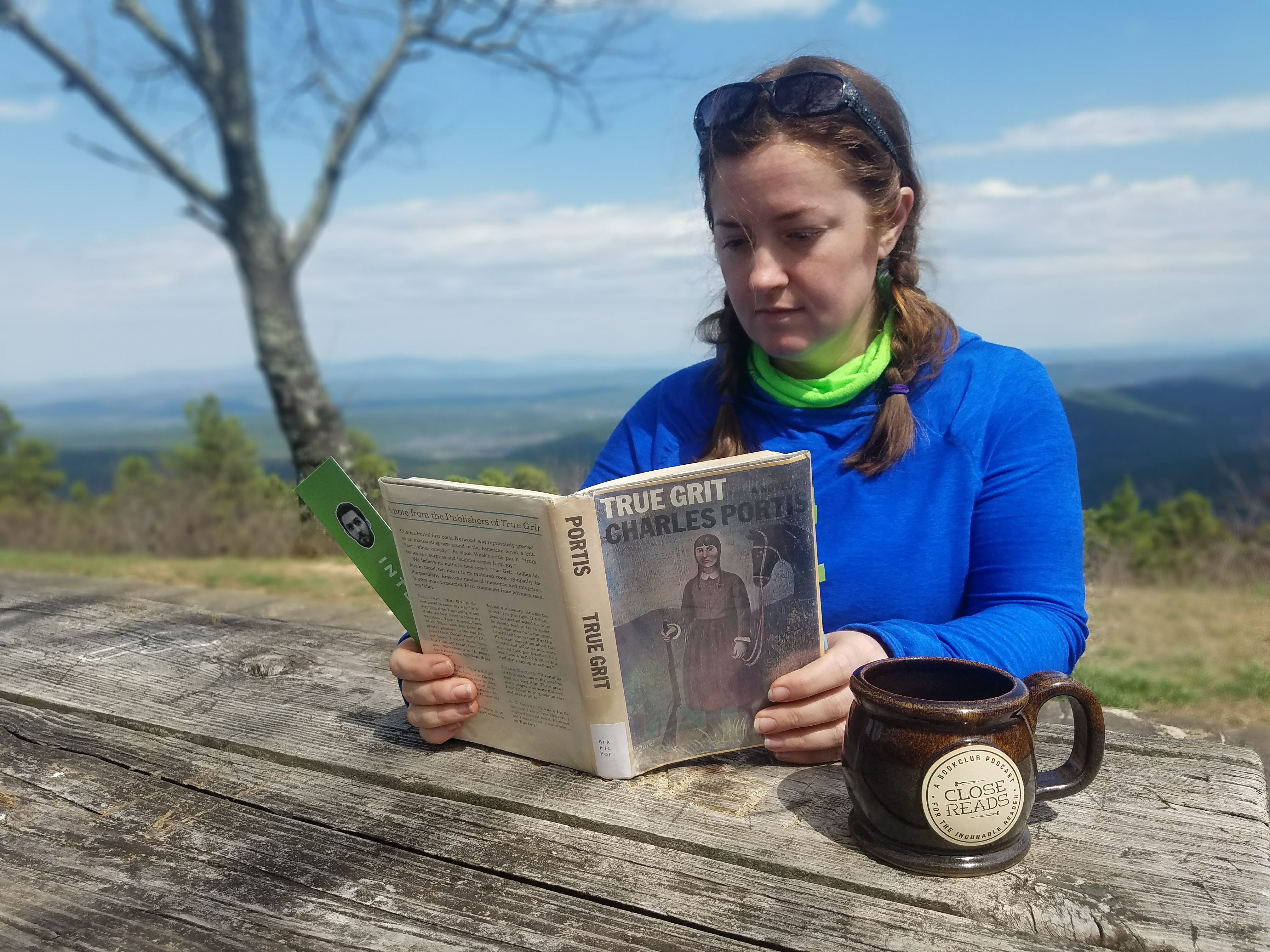
We’ve been section-hiking the OT ever since I read True Grit back in 2018 and wanted to walk down where the story takes place.

True Grit book outdoor hike
2018: Had to bring the book along with us on that first trip!
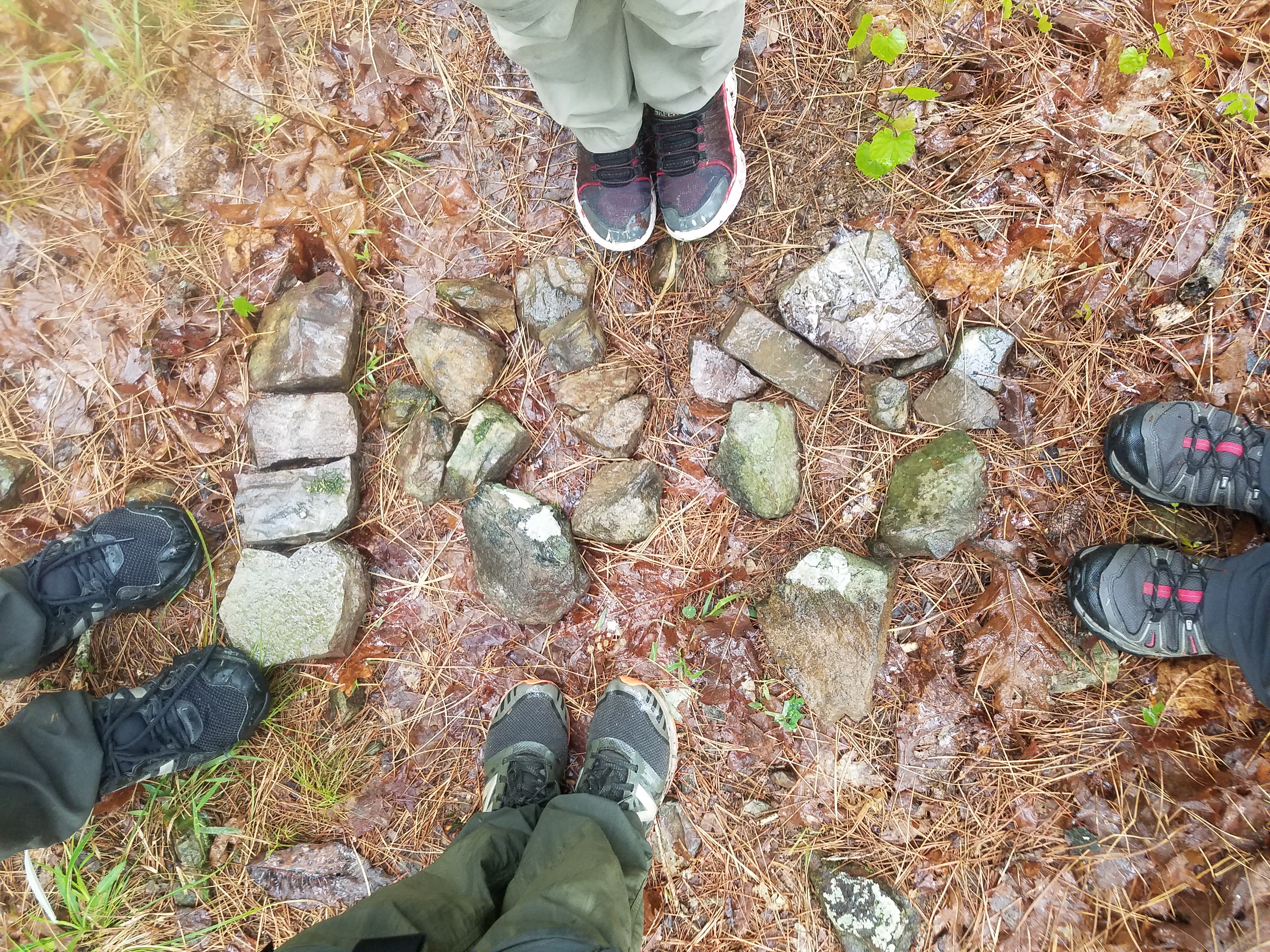
100 miles Ouachita Trail outdoor habit backpacking
Fast forward: Reaching the 100-mile point! Others had marked this milestone and it seemed like a good photo op!
We’ve now logged over 115 miles on the OT.
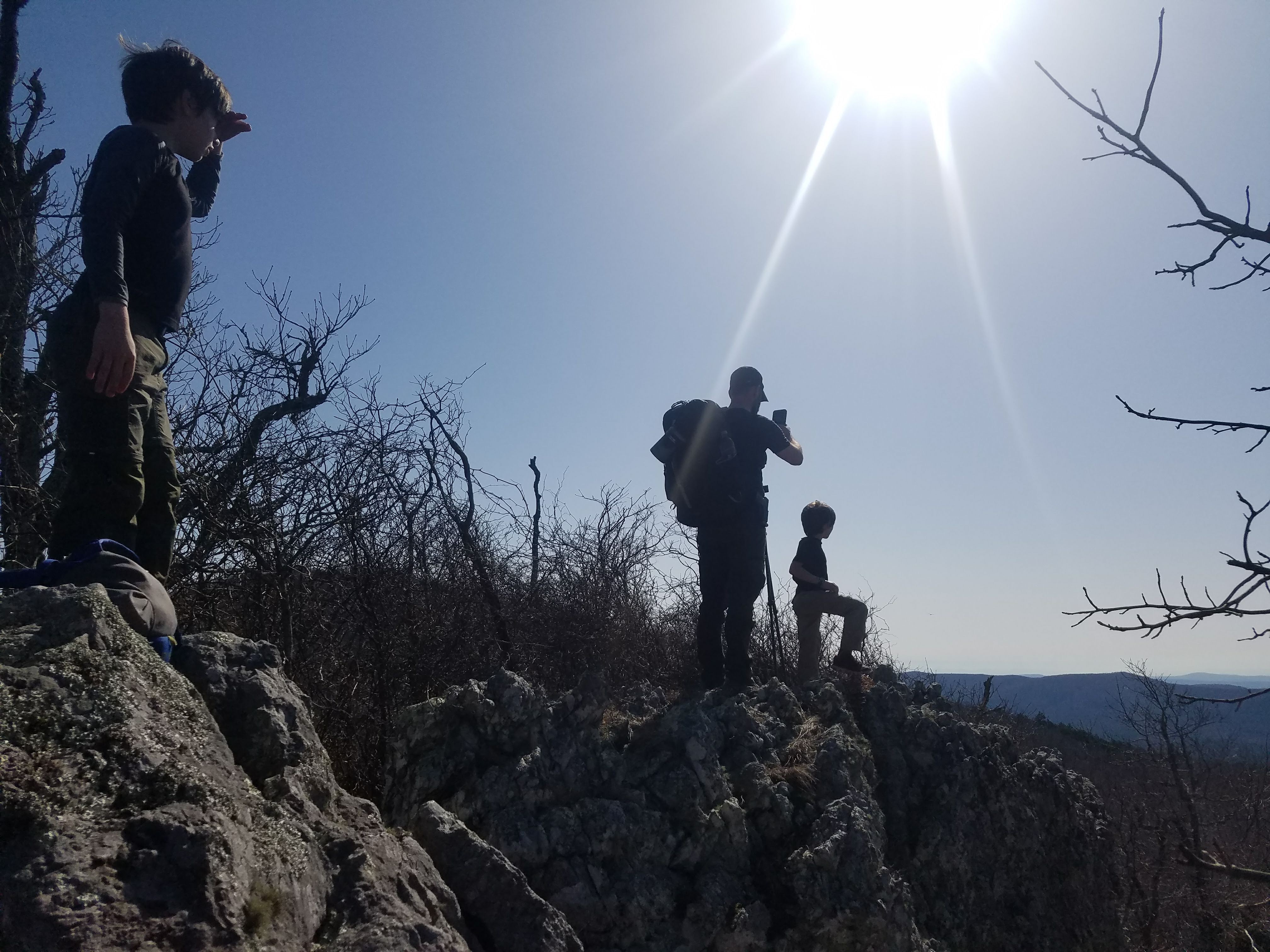
hiking view mountain outdoors family adventure
Enjoying a rewarding view.

Backpacking has provided our family with many transcendent connections—literary and otherwise. When we set out to cover some ground on foot, we’re getting in touch with a very ancient human practice. When we do something challenging, we have a chance to grow in character. When we face a grueling, rocky climb, our books can inspire us: “It’s the steps of Mordor! Onward to Mount Doom!”

Backpacking isn’t for everyone, but I firmly believe that reading living books and spending time outside are the one-two punch when it comes to helping our kids experience and enjoy what Charlotte Mason calls the science of relations. Some of our best family discussions and most interesting ah-ha moments happen on the trail. And it’s beautiful. But the magic doesn’t happen if we don’t step outside.

Do you know the context for the familiar Charlotte Mason quote “…mothers work wonders once they are convinced that wonders are demanded of them?” It’s from Volume One, in the section on “Out-of-Door Life for the Children.” Miss Mason recognizes that getting our kids outside might require us to work wonders. It’s a high calling. And it may feel at times that we have to climb mountains to make it happen. But the payoff is worth it. The connections made, the character built, and the awe at our Creator’s handiwork are all worth the effort.

I want to address two attitude obstacles, drawing from my family’s journey into backpacking. Even if you don’t choose to get into backpacking, I hope these concepts will help you recognize your own obstacles to getting outdoors and think of how you might work wonders to overcome them.

Attitude Obstacle #1: The Anxious Mama

We have not always been a backpacking family. I’ve enjoyed hiking since my teens, but sleeping outside is another story.

Several years ago, my husband looked into hammocking as a more comfortable alternative to sleeping on the ground. One evening, he set up a brand-new hammock kit in our yard, complete with a narrow “mummy” sleeping bag, bug net, and rain tarp. He tried it out and thought it was great. I tried it out and literally started hyperventilating. I’d never slept in a mummy bag before, and it turns out, I’m mildly claustrophobic. I couldn’t see the sky, I couldn’t move my arms or legs. It was too much all at once.

hammock backpacking Arkansas outdoors
My hammock set-up with the rainfly folded back so one side is open.

My husband realized that we needed to start by just getting me comfortable being outside. So, he’d set up the hammock on a pretty day and suggest I go out to take a nap or read a book. That, I could do.

Over time, as I got more comfortable, we tried sleeping outside on mild nights with no need for rain tarp or bug net. But I would still sometimes go inside midway through the night. This was not my thing, but it was growing on me.

Fast forward to today: I find my hammock quite inviting after a long day of hiking. And I’ve even gotten to the point where I can sleep on the ground on an ultralight air mattress.

Your husband may not be the one leading the charge into the great outdoors for your family, and that’s ok. You may not be interested in backpacking, and that’s ok—I wouldn’t be doing it if it weren’t for my husband. But I hope you can see some of the takeaways from this story. 

First off, we need to be patient—with ourselves and with our people. We are all–moms, dads, and children–born persons. So, consider your people and their quirks.

Secondly, we also need to recognize that if there is a strong reaction to something, it may mean we’re doing too much too soon. Start small, with things you can enjoy, and build up gradually from there.

Thirdly, our fears and anxiety may also mean we need more exposure—not less—to the things that scare us.

Let’s say you’re terrified that a snake is hiding behind every rock, just waiting for you to walk by so it can strike. You go over the facts: “Snakes are as eager to avoid me as I am to avoid them.” But often the facts by themselves don’t govern our emotional response until we’ve had the experience of safely walking past 100 or maybe even 1,000 suspicious rocks, with no snake incidents.

Facing our fears and dealing with our hangups is part of practicing masterly inactivity. It’s well worth reading chapter three of Volume Three to get better acquainted with what that means. But Miss Mason does give us a short list of what masterly inactivity involves: authority, good humor, self-confidence, confidence in the children, and a sound mind in a sound body.

Miss Mason adds, “If the sound body is unattainable, anyway, get the sound mind.” 😉

Our anxiety can trip us up, but it can also trip up our kids if we allow it. If we don’t face our fears and cast our cares upon the Lord, we may fail to communicate “confidence in the children,” we may be more inclined to say no when we should say yes, and we may deny our kids opportunities to test their capabilities and to grow in grit and resourcefulness.

Instead of modeling anxiety, we want to model curiosity and wonder at the things God has made. Instead of allowing our fears to keep us inside, we want to show our children by example how to step out beyond our comfort zone and grow.

Attitude Obstacle #2: The Reluctant Child

We know we’ve got to deal with ourselves first, but we may find that our kids are just as hesitant as we are–or perhaps even more so. What’s a mama to do?

Here are some considerations that may help.

Make it Sensitive

My oldest son loves Legos. When we started more serious backpacking the thought of missing out on more than one day of Lego playtime almost brought him to tears. So, for his birthday one year, my husband bought him a minifig backpacker complete with accessories. There’s even a Lego bear, a fish, and some poison ivy. He gets it out when we stop for lunch or after we’ve set up camp, and it’s made our extended time in the woods much more enjoyable for him.

lego backpacking kids family outdoors
The beloved camping Legos.

It makes a big difference for a child to know that their interests have been considered. If there’s an activity that they already enjoy, taking it outside may be a good way to gently encourage a new love for the outdoors. Take read-alouds or poetry tea-time or something artsy out on the lawn. If your reluctant child can get more comfortable doing ordinary things outside, it can help the transition into more outdoorsy activities.

Make it Special

We can also make our outdoor time more fun by making it special. There are treats we enjoy only while hiking—things like pre-packaged snacks or GORP (good old raisins and peanuts) or homemade apple leather or dried fruit. And this brings up the idea of special responsibilities. You don’t need to do all of the preparations, mama. It can be more fun for kids if they have some skin in the game and can say, “I made the trail mix!” or “I sliced the apples!” Give them the opportunity and see what happens.

We can also give our children special tools as appropriate. A well-timed gift of a compass, spyglass, or pocketknife can be a big boost to a child. If you have a garden or do landscaping around your home, let your kids use real tools as soon as they are capable of safely wielding them. Our kids are often more capable than we give them credit for. If we tell them “no” all the time when they’re little, we shouldn’t be surprised if they shrink from doing big person things when they’re teens.

In backpacker culture, people use special names that in some way describe who they are. My trail name is Persistent Turtle. 😉 My 9-year-old is ALP, which stands for Apple Leather Power. You don’t have to be a backpacker to enjoy coming up with trail names.

Make it Social

We can also make our outdoor time more fun by making it social. My kids love having friends over to play in the woods or in our creek, and we enjoy hiking with other families. It can be a really great way to learn, too, as we observe and wonder at things with friends whose outdoor knowledge and skills are different than our own.

charlotte mason homeschool outdoor habit kids friends

Make it Seasonal

Make it fun by making it seasonal. Nobody really enjoys tick season. So, we do our backpacking mostly in spring and fall. In summer, we do more short hikes to swimming holes. Bonus points if there’s a waterfall to jump off of.

waterfall Arkansas gif jump flip outdoor family habit
My husband enjoys doing flips off of waterfalls. I’m good for about one jump and then I’m done.

And in winter, our day hikes might focus more on finding waterfalls—frozen waterfalls look really cool.

frozen waterfall Arkansas outdoor habit hike
If you can’t tell, that’s snow falling in the picture.

Other seasonal elements we consider are fall colors, spring blooms, and berry picking season. For years when my boys were small we would read Blueberries for Sal and then go and pick blueberries.

Make it Smile

Make it fun by smiling. This is simple, but powerful. When your kids make an observation or create something with mud or rattle off more snake facts than you ever thought you wanted to know—or better yet they bring a snake inside the house—acknowledge their discovery or creativity and smile, even if you’re simultaneously leading them and the snake out the back door. Miss Mason says it like this: “…if they see that the things which interest them are indifferent or disgusting to you, their pleasure in them vanishes, and that chapter in the book of Nature is closed to them.” Vol. 1, 58

So, keep that book of nature open by showing interest and smiling. Even if it’s gross.

Make it Screen-Free

Sometimes our screen habits are an obstacle to our outdoor habits. One may need to be cut back significantly to make room for the other—not just as a consideration of time but as a consideration of how our habits are training us. Charlotte Mason emphasizes training our children to really see when they are outside. The more we look at screens, the less practiced our eyes are at seeing depth and detail that isn’t pre-focused for us. Carefully consider screen habits in your home, as they can affect attitude on a general level as well as hinder our ability to really see and appreciate God’s world.

Once you’ve addressed attitude obstacles, the rest is just details.

This post isn’t going to go into all of the potentially relevant details, but I do want to briefly address hiking safety. The three most important things I can tell you about keeping your kids safe on the trail are these:

  1. Train the habit of obedience—when you have little ones on the top of a cliff, they need to be able to stop when you say stop.
  2. Train the habit of attention, of really seeing and being aware of their surroundings.
  3. Get every walking member of your family a whistle. In our family, one blast means “Where are you?” or, in response, “Here I am.” Two blasts means “Come here.” And three blasts is an international distress signal, used for emergencies.

Along with these safety tips, check out the principles of Leave No Trace–these are outdoor ethics which serve as an excellent guide to walking wisely, practicing good stewardship, and loving your neighbor while out on the trail.

Take the Long View

Remember that this goal of getting outside is not a competition. To whatever extent we lead our children out of doors, we’re setting their feet in a wide room, and it doesn’t get much wider than the big world God has made and the living books that we enjoy.

Three years ago my family set out on the first section of the Ouachita Trail. I was so sore and tired by the end of our third day that I suggested to my husband that he might need to hike out to the highway and hitch us a ride back to our car in the morning. But after a good night’s sleep in my comfy hammock I felt much better, and we set out to complete the last eight miles of our 24-mile trip. Toward the end of the day, we climbed to a peak and looked behind us. After diligently studying the map and the horizon, my husband told me to look at the furthest peak in the distance.

I asked, “Is that where we started four days ago?”

“No,” he said with excitement. “That’s where we started this morning.”

mountain view family backpacking hike outdoor habit Charlotte Mason Arkansas
Messy red arrow points to the peak we started at that day!

Remember that if you and your family just keep taking the next step, before you know it, you will reach a vantage point far on down the trail, look back, and be amazed at the ground that you’ve covered.

Looking for great places to hike and camp or otherwise explore Arkansas? Check out my friend Lindsey’s website: All About Arkansas.

Curious about Charlotte Mason? Check out this post: How We Homeschool: Hello, Charlotte. Hello, Classical.

How We Homeschool: Bible

14 Thursday Jan 2021

Posted by Lauren Scott in Home and Family, Home Education, Living Faith

≈ 1 Comment

Tags

Bible Curriculum, Bible Lessons, Charlotte Mason Homeschool, Child Training, Christian Classical Education, Christian Classical Homeschool, Christian Homeschool, Christian Parenting, discipleship, Family Culture, Family Discipleship, Family Worship, Homeschool Bible, homeschool encouragement, homeschooling, parenting

Amazon links are affiliate links. If you make a purchase through one of these links, I may receive a commission at no additional cost to you. I make no money from links to Christian sellers, but I encourage you to support them over Amazon whenever possible.

“What Bible curriculum do you use for grade x?”

It’s a question I get from time to time, and it never ceases to make me squirm a little.

Why, you may ask? Well, because the idea of “Bible curriculum,” and especially for a particular “grade level,” is foreign to me.

Now of course I’m aware of the fact that “Bible curriculum” and “Bible classes” exist in Christian school settings, but I’ve always wrinkled up my nose a bit thinking about the Bible being made to fit the mold of an academic subject, added on to a school day like just another textbook or workbook to get through. What affect does that have on the way kids approach the Scriptures? And do they give grades for those classes? What does that teach?

Our approach to the Bible looks a lot less like school and a lot more like discipleship. Reading the Bible together has been a part of our family culture since before our children were born. We haven’t ever felt a need to make sure we added Bible to the kids’ schooling because they’ve been getting Bible with their breakfast since they were tiny.

In fact, while every part of school is informed by the Scriptures, we like to keep the Bible itself separate from “school” in a sense so that they don’t get the impression that a day off of school is a day off from devotion to the Lord.

But what does that look like? And how can you get started with this holistic family discipleship model of Bible learning if it’s foreign to you?

Well, let’s start with why.

Our Why: Created Reality and Biblical Goals

Our children are precious creations of our Heavenly Father–and they are precious gifts entrusted to us as parents. We desire to give them access to the Truth that God has revealed in His Word so that they can grow in wisdom and stature and in favor with God and man, that they would begin to know and love their Creator.

Ultimately, we desire that our children would trust in the Lord Jesus Christ for salvation from their sins and that they would love and serve Him all their days–for their good and God’s glory, both in this life and in the life to come. We don’t ultimately control this outcome. But we can be faithful to train our children in the way they should go.

Our Why Dictates Our How: Holistic Family Discipleship

Given the nature of our children, the nature of our relationship to them as their parents, and the nature of our goal (that they would have a relationship with God), it follows then that we ought to teach them in a way that is first and foremost relational. And decidedly not academic.

This means that interaction with the Scriptures comes woven into the fabric of our every day lives. There are no worksheets nor tests, no grades nor grade levels.

This doesn’t mean we don’t use printed materials to aid our children’s learning (I will link to some below), but we need to remember that the greatest resources we have to instruct our children in the ways of the Lord are His Word, His Holy Spirit, and our own lives lived alongside and before our children.

God’s Word: We must be in the bible ourselves and we must offer the Scriptures to our children.

The Holy Spirit: We must be seeking God to be at work both in us and in our children–apart from Christ we can do nothing. We may have had a direct role in bringing about our children’s physical life, but the spiritual life is of the Spirit–we cannot manufacture it in our kids. Prayer is indispensable.

Our Own Lives: We must model for our children what it means to believe the Word of God, to study it, to meditate on it, to practically submit our lives to it, and to receive both correction from it when we fail and comfort from it when we repent.

What does this actually look like?

Family Bible Time (what some call Family Worship)

Our current family Bible reading pattern, which we’ve had going for several years, is Proverbs at breakfast and Gospels at supper.

Now, this doesn’t mean each one happens every day. The reason we read the Bible over breakfast and dinner is because we often don’t read the Bible over breakfast and dinner. This is a scattering of seeds, not mechanical planting. We aim for faithfulness and perseverance rather than anything that resembles perfect consistency. But in keeping up the habit, we pretty reliably hit at least one of these each day, sometimes both. And before it was Proverbs and Gospels, we read slowly through the entire Bible at meal times–it may have taken a decade, but we kept going. The reason we’re in Proverbs and the Gospels right now is because the primary needs of our children are to receive instruction and correction according to God’s wisdom and to receive Jesus the Messiah as their Savior.

While we eat breakfast, my husband will read a few verses from the chapter of Proverbs that matches the calendar date (since there are conveniently 31 chapters in Proverbs), either selecting these verses ahead of time or asking for the kids to randomly select a number. He reads a verse and asks what it means. The kids give it their best shot and then we all discuss the meaning. He asks if they can think of any examples (a child may not use his brother as a negative example–this is a necessary rule, folks!). It has been fun over the years to hear the examples the kids come up with–sometimes from a fable, from literature, from a Bible story, from a movie. They are learning about wisdom and foolishness and learning how to identify each.

After Proverbs, we recite the Shema and the Lord’s Prayer. We switched up this recitation time over the holidays last year in order to recite and memorize Mary’s Magnificat. Now that we have the placeholder for recitation, we may use the time for other passages when they seem fitting.

Our evening Family Bible Time involves my husband reading from a passage of Scripture (currently Luke) at mealtime and then asking a few questions:

What did we learn? This is a good time for kids to either pick one thing that stuck out to them or simply narrate what they heard.

What can we worship God for? Sometimes, when we’ve been in the prophets, the answer is usually “That God was so patient and gave so many warnings.” Now that we’re in the first few chapters of Luke, the answer is usually “For sending Jesus to save us.” Sometimes the answer is different, but it’s no problem to worship God for the same things over and over again–in fact, it’s right to do so. Once answered, we pray and praise God based on what we saw in the passage–even if it’s simply for preserving the genealogy of Christ (which is pretty amazing when you think about it). Sometimes there may not be an obvious answer. When we were in the middle of Job as a family, it was admittedly hard to find any answer from the text–so we felt Job’s desolation a bit but worshipped God anyway.

What can we do with what we have learned? This is where we pay attention to the right response(s) to what we have read. Sometimes it is simply to worship as we did in the second question. Sometimes there is a command that we ought to obey. Sometimes there is something for which we ought to be thankful, something that ought to amaze us, something that ought to cause us to care for others, an example to follow or an example not to follow.

Now, these questions aren’t magical. They’re just the tools we have used for discussing the Bible as a family and for attempting to respond to it properly. Sometimes the kids are fully engaged and wow us with their insight. But sometimes the kids aren’t super excited to answer. Sometimes we get blank stares. But we don’t read the Bible and ask the questions in order to get perfect responses from our kids. We do it so that they are regularly interacting with the Scriptures and learning by modeling how to respond to them. It’s not perfect, but it is worthwhile. We are planting seeds.

Other Applications and Resources

The seeds we plant in Family Bible Time are watered by a lot of other practices and experiences.

We pray together as a family before meals and before bed. We try to remember to include intercession: to pray for neighbors, friends, family members, etc–sometimes on a weekly rotation so we don’t forget (but let’s be honest, we sometimes forget and go for long stretches with just basic bedtime prayers).

We have also made sure to include Bible time for our children to enjoy independently, even from a very early age by listening: Dove Tales (with cassettes–yes, we inherited these from my in-laws), Jesus Story Book Bible (with CDs), and a dramatized audio Bible from Faith Comes by Hearing. Now that our boys are 11 and 9, they are expected to read a chapter of the Bible first thing in the morning before coming downstairs for breakfast. This doesn’t mean it always happens, but that’s the goal and the general habit.

We’ve also enjoyed watching videos by The Bible Project–edifying for parent and child alike.

This emphasis on the Word of God being integrated into all of life means that it also influences our school day–just not in the graded-Bible-curriculum sort of way.

We read church history: Little Lights Biographies (for very young children, from a Christian seller), Christian Biographies for Young Readers (from a Christian seller), and Trial and Triumph (from a Christian seller).

We read aloud some theological books for children: A Faith to Grow On, Sammy and His Shepherd, The Attributes of God for Kids (from a Christian seller), and The Ology (from a Christian seller). As the kids grow older, their school reading list will include many Christian books that encourage them to walk with God and know Him more deeply.

We have listened and sung along with scriptures put to music: Hide ’em in Your Heart and Seeds Family Worship.

We have enjoyed singing many hymns in our Morning Time (currently singing along with this channel), and we have also enjoyed music by Sovereign Grace Kids (from a Christian seller). Even as adults, when we listen to music with lyrics, we generally choose music that is spiritually edifying. Our kids take this in as well.

The Scriptures inform the other books we choose–and how we read them–whether literature, tales, history, poetry, nature, etc.

The Scriptures make it into our kids’ copy work and dictation, too (that’s language arts).

Keeping It Real

We don’t do all of these things all the time. The most regular parts of our every day life are family Bible time, listening to hymns and other spiritual songs, family prayer, and good discussions on all kinds of things as we go about our days together. And these discussions aren’t just aimed at our kids. My husband and I discuss books, current events, and so many things with each other, seeking to apply God’s Word and His wisdom to everything we encounter. Our kids are audience to these adult conversations, too.

The aim is holistic, not check-list driven. And it is gloriously free from pressure to “get through it” on any kind of annual school schedule (thank God!).

The point of this post isn’t to say we’ve got it down, nor to set any kind of expectation for anyone else. The point is to demonstrate the many ways in which we can spiritually nurture and disciple our children–without boxed curriculum. And to remind all of us (myself included) that we may sow seeds, but the Lord causes the growth. Our dependence upon Him is central to our efforts at training up our children in the ways of the Lord.

All of the things we do have begun as small habits. A little here, a little there. If you are just starting to bring Scripture into your home and homeschool, don’t be discouraged or overwhelmed. Pick one thing. One habit that you and your children can enjoy. Plant a seed. And then another. Water where you can. The Lord causes the growth.

I hope this post has helped to somewhat answer the “What do you use for Bible curriculum?” question. It’s not a short answer, but I hope it may encourage some to think outside that proverbial box … of curriculum. 😉

How do you nurture your children in God’s Word? What resources have you found helpful?

Looking for Bible time ideas for older kids? Here’s an update on How Family Bible Time Has Grown with the Kids.

Other posts in this series (so far):

Why We Homeschool: Our Top Seven Reasons

How We Homeschool: Hello, Charlotte. Hello, Classical.

How We Homeschool: Hello, Charlotte. Hello, Classical.

09 Wednesday Sep 2020

Posted by Lauren Scott in Home Education

≈ Leave a comment

Tags

Charlotte Mason, Charlotte Mason Homeschool, Christian Homeschool, Classical Education, Classical Homeschool, homeschooling

This post contains affiliate links. If you make a purchase through one of these links, I may receive a commission at no additional cost to you. 

In my last post, I shared Why We Homeschool, and part of our WHY included the freedom to choose HOW.

I explained a bit of our story–how my husband was homeschooled and how I went to public school. And I shared our mission statement:

Since before they were born, my husband Nathaniel and I have purposed to bring our children up in the nurture and admonition of the Lord and to educate them at home by means of whole/living books, meaningful work and life experiences, and disciplined habits of wisdom and personal responsibility—for school and for life and ultimately for eternity.

In this post, I’ll give a little more of our story and begin to flesh out just how we have come to do what we do–and how we think about it, summarizing Charlotte Mason and classical philosophies as best I can.

A Little More of Our Story…

That mission statement above was written recently, but it pretty well describes what our aims have been from the beginning, owing much to what Nathaniel’s family passed down and to his experience with the literature-based Robinson Curriculum.

Our initial trajectory found further inspiration nearly six years ago when an older mom-friend at the local homeschool co-op first introduced me to the ideas of Charlotte Mason and Christian classical education (yes, both at the same time–it’s taken me years to sort them out! Ha!).

We were already legally homeschooling our five-year-old at this point–attempting to use my mother-in-law’s KONOS unit studies curriculum. Think: a text-only Pinterest board in a three-inch binder (though I’m sure it’s more up-to-date these days). I had already found that, rogue that I am, I took the subject matter we were supposed to cover in KONOS, ignored the binder and its overwhelming amount of options completely, and simply went to the library to check out as many quality books as I could find for us to read aloud on a given subject.

I’m not a crafty mom, nor do I like Pinterest.

While carting books home from the library for our immediate needs, I began to explore Charlotte Mason via Ambleside Online and some of my friend’s Well Trained Mind materials (which are Classical, too).

Somewhere in that first year I also acquired Educating the WholeHearted Child, an excellent resource on Christian homeschooling, by Clay and Sally Clarkson–and I found Charlotte Mason quotes littered throughout.

Hmmm…Interesting. The wheels were spinning.

Half way into our second year, now invested in a couple of those Well Trained Mind materials and a practice called Morning Time (recommended by my friend and expanded upon by Pam Barnhill), I found myself tuning in to a new podcast called Scholé Sisters, “a casual conversation…” for “the classical homeschooling mama who seeks to learn and grow while she’s helping her children learn and grow.”

Inspired by the podcast to “find your sisters,” I invited the friend who had started this mess 😉 as well as a few others to form our own book club and read Susan Schaeffer Macaulay’s For the Children’s Sake–arguably the Charlotte Mason gateway drug.

At this point my research perhaps turned into somewhat of an addiction.

I began to see that Charlotte Mason’s ideas about books, habit training, and real-life learning lined up with so much of what we were already doing–and they challenged me to grow further out of my push-through-to-the-next-thing mindset that I’d acquired in my own school years.

I also began to explore classical education a bit, but never really hopped on the Trivium-as-stages Train. I was delighted to find in further listening and research that the “stages” application of Grammar, Logic, and Rhetoric was a gross oversimplification–classical education, as I had hoped, has far more to offer.

Since that first year where I didn’t-really-follow-KONOS, we haven’t used any sort of all-in-one curriculum (though I have borrowed a lot from Ambleside Online and we do use curriculum for math).  We appreciate the educational philosophy of Charlotte Mason and Christian classical education, and we choose materials eclectically guided by a lot of the principles from these philosophies.

So, what exactly are they?

Hello, Charlotte

Charlotte Mason, a British educator who lived at the turn of the 20th century, describes education as “an atmosphere, a discipline, and a life.” Atmosphere refers to the naturally occurring environment of the child—the home in which they live, the people they live with, the world outside their front door. This also includes the attitudes that they pick up from, say, their parents.

Discipline refers to the formation of habits, whether personal cleanliness, academic, or other habits of character. Again, who we are as parents teaches a lot!

Life might be a bit confusing. By life Mason means “living ideas,” or knowledge that is vital. This kind of knowledge is found by being in living touch with the world around us and especially by being presented with a rich curriculum that puts us in touch with the knowledge made available in books—and particularly books of literary quality rather than dry textbooks which can often strip knowledge of its delight. When Charlotte Mason mamas speak of living books, they’re in this realm of “education is a life.”

Our mission statement corresponds with this framework for education:
“…meaningful work and life experiences…” — a big part of atmosphere.
“…disciplined habits of wisdom and personal responsibility…” — discipline.
“…whole/living books…” — and there’s the life.

Now, that’s Charlotte Mason on a very general level. She also has a list of 20 principles and six volumes in which she develops her philosophy and method. Some of the key elements include training the habit of attention, growing in self-education, narrating back what one has heard or read after just one reading, spending time outside in nature, studying a wide range of beautiful things, and resisting the urge to over-teach so that the child does the work of thinking for him/herself. But that’s just scratching the surface.

When I list Charlotte Mason as part of how we homeschool, I mean that we are happily influenced by her ideas, but I do not mean that I follow her method anything near completely. Her principles resonate with me and challenge me to be a better mom, but I implement them very much in our own way. And that’s perhaps why I sometimes feel that we fit more easily within Classical education (a philosophical umbrella with arguably various methods up for grabs) than we do in a strictly Charlotte Mason approach (a philosophy with a prescribed method to go with it). But they really do meld together well in our home!

Hello, Classical

Christian classical education aims at wisdom and virtue and at cultivating an appreciation for what is true, good, and beautiful. It emphasizes an ancient and long-standing educational tradition that has been abandoned in the past 150 years or more, but it’s making a strong comeback today. Training in The Seven Liberal Arts of Grammar, Logic, Rhetoric (the arts of language); Arithmetic, Geometry, Astronomy, and Music (the mathematical arts) is a key part of the curriculum. But this isn’t the sum total of learning, either. Other elements in this tradition include training in piety, gymnastic, music (in more than a mathematical sense), common and fine arts, sciences and history and philosophy–with Christian theology as both the guide and the goal.

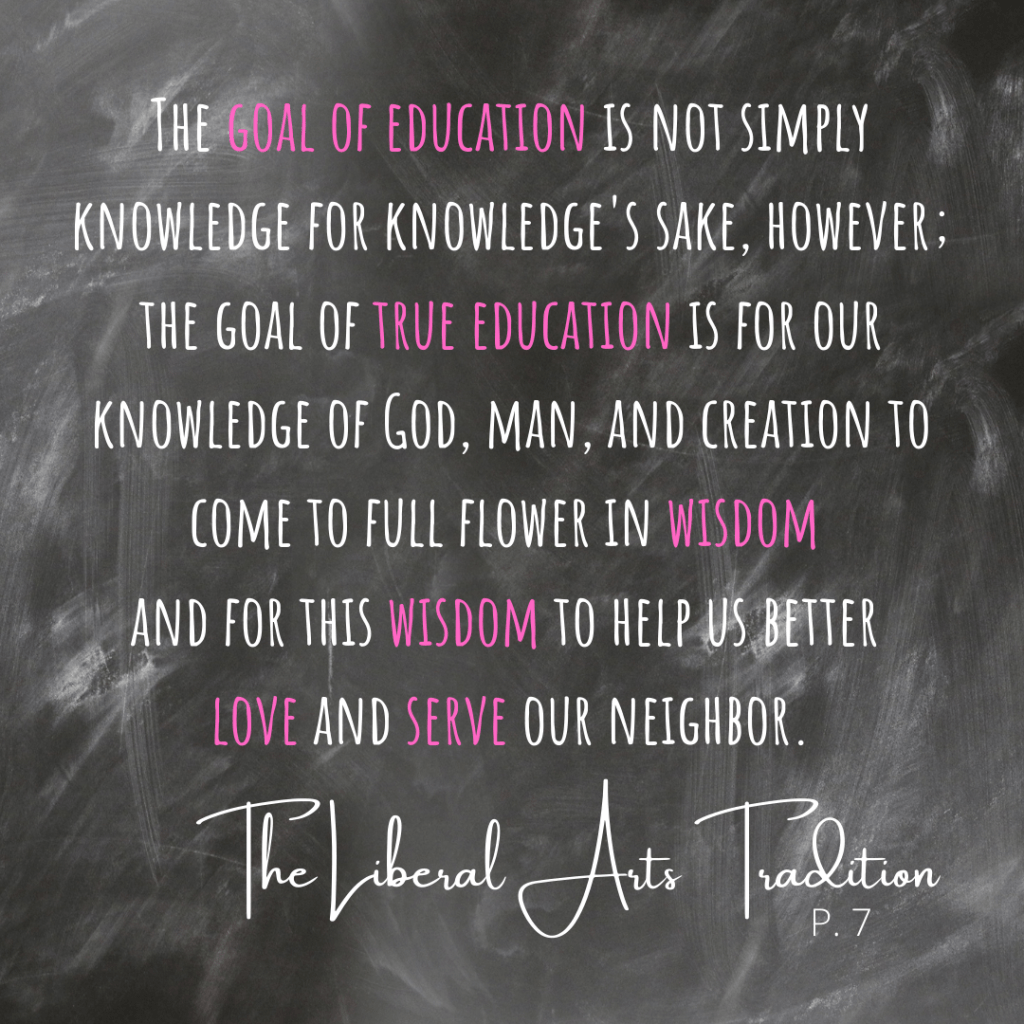
There is a learning curve here, especially since the words I just used to tell you what’s included in a classical education all have older definitions and understandings that are either completely abandoned or else eclipsed by the way we understand them today. There are helpful resources out there, though. Podcasts like the Scholé Sisters, Ask Andrew, and Cafe Schole have been helpful. As for reading, these articles at the Circe Institute can get you started, and the booklet Introduction to Classical Education is a helpful overview. But once you’re ready to dive into a thorough treatment of Christian classical education, be sure to grab The Liberal Arts Tradition (revised edition) by Kevin Clark and Ravi Scott Jain. This book ties all the pieces together with lots of historical references so that you come away with a better and deeper understanding of the whole paradigm and where it all comes from. There’s also a short glossary of key words and concepts at the back of the book that’s a very handy reference!

Charlotte Mason and classical both aim at a holistic education that respects the nature of the child as made in God’s image. As such, children ought to be nurtured and educated in body, mind, and soul–and primarily by those that love them most. Today’s secular school system doesn’t acknowledge the soul of the child, so it falls short even when it aims at a holistic education.

Some of what we do will sound flowery, but that’s because our focus isn’t just on academic skills—it’s on all of life enjoyed and lived to the glory of God—and this includes a lot of things that are both enriching in an enjoyable way and pay dividends academically, too. What we do is academically rigorous, but in a very different way.

We’ve found that both Charlotte Mason and Christian classical education each resonate with our priorities and direction, while also giving a greater depth and breadth to our efforts than we knew was possible.

Do you have to follow either of these philosophies or methods to homeschool you kids well and raise them in the ways of the Lord? No. The best way to do that is to be humbly and constantly immersing yourself and your children in God’s word, believing it and living by it together in your everyday, everywhere life. But both classical and Charlotte Mason philosophies can be extremely helpful to that end–not only for the way they give you many positive things to implement in your teaching, but also for the way they challenge you to peel back the layers of negative influence from our modern, materialistic education system.

Stay tuned for more in this series as I begin to post specifically about how we handle various subjects in our homeschool (without actually concerning ourselves much with “teaching all the subjects”).

In case you missed it, here’s the first post in the series: Why We Homeschool.

Next up: How We homeschool: Bible

  • View KeptandKeeping’s profile on Facebook
  • View lauren.keptandkeeping’s profile on Instagram
  • View keptandkeeping’s profile on Pinterest
  • View @laurenscott.keptandkeeping’s profile on YouTube
Lauren Scott

Lauren Scott

Christian. Wife. Mother. Homemaker. Home Educator. Blogger. Book Addict. Outdoorist.

View Full Profile →

Enter your email address to follow Life Meets Jesus and receive notifications of new posts by email.

Affiliate Disclosure

We are a participant in the Amazon Services LLC Associates Program, an affiliate advertising program designed to provide a means for us to earn fees by linking to Amazon.com and affiliated sites.

Hands-on Math Curriculum

RightStart™ Mathematics

Check Out Prodigies Music Curriculum!

music curriculum sale

Quality Video Curriculum

Top Posts & Pages

  • Five Refreshing Scriptures for Finishing Strong when You Feel Weak and Weary
    Five Refreshing Scriptures for Finishing Strong when You Feel Weak and Weary
  • Wisdom in the Book of James
    Wisdom in the Book of James
  • 30 Day Dress Challenge Recap
    30 Day Dress Challenge Recap

Advent April Fool's Day April Fools Book Review Books Books Charlotte Mason Charlotte Mason Homeschool children Christian Classical Education Christian Classical Homeschool Christian Homeschool Christian life Christian mom Christian Parenting Christian Women Christmas Classical Education Classical Homeschool devotional education faith Guest Post Home and Family Home Education Homemaking homeschool encouragement homeschooling Jesus Living Books love marriage meditations micro book reviews motherhood Nature Nature Studies parenting poems poetry Practical Atheism Reading List Reflections Relationships trials

A WordPress.com Website.

  • Subscribe Subscribed
    • Kept and Keeping
    • Join 171 other subscribers
    • Already have a WordPress.com account? Log in now.
    • Kept and Keeping
    • Subscribe Subscribed
    • Sign up
    • Log in
    • Report this content
    • View site in Reader
    • Manage subscriptions
    • Collapse this bar
 

Loading Comments...