I was in 8th grade when I found out the world was broken. The Columbine High School Massacre shook a nation, and it shook me, too.
Sure, growing up in Texas, I had been vaguely aware of the 1993 Waco Siege and a bit more aware of the Oklahoma City Bombing since it provoked a moment of silence before one of my 10U softball games.
But when you’re 14 and your conversion to Christ is less than a year old, the martyrdom of would-be peers like Cassie Bernall and Rachel Scott tends to leave an imprint.
“Do you believe in God?”
“Yes, I do.”
Bang.
Just a few years later, the world broke again.
It was September 11, 2001, and I had just walked into my Junior English class. There was a bit of a commotion and a student turned on the TV in the upper corner of the room, opposite the door, so I had a perfect view as I walked in. There was a tall building with smoke coming out of it. We watched with confusion, incredulity, and horror as a second plane ran into the other tower on live TV.
A girl in one of my classes shrieked that her dad was flying that day. She was a wreck until she found out he wasn’t on one of those planes.
Our US government test was canceled that afternoon. Instead, we watched and discussed history in the making, with room for questions, grief, and silence.
Just as my 14 year old self took courage from the stories of students who lost their lives at Columbine, I also followed stories of heroism from 9/11. Of particular note was Christian husband and father Tod Beamer. He was one of the men who left the illusory safety of his passenger seat to fight his plane’s hijacker. This is the plane that crashed in a field rather than, say, the White House. His widowed wife tells the story in the book Let’s Roll.
These are the moments and stories we never forget.
You remember the images. You remember where you were standing when the news broke and your world broke with it.
Today’s remembrance of 9/11 follows in the fresh wake of another world-breaking moment.
I won’t soon forget where I was standing yesterday afternoon when Charlie Kirk was murdered. I was in the kitchen, about to process some chicken and prepare enchiladas for our church’s youth who would arrive at our house in a few hours. I picked up my phone to check Instagram, and at the top of my feed was a simple text post from Allie Beth Stuckey announcing the shooting and pleading for prayer.
My first thought was, “Oh, God. Not Charlie Kirk.” You might have expected political violence against some of the more abrasive and loud-mouthed conservative figures. But Charlie was a devout Christian, outspoken but incredibly patient and willing to engage in dialog with anyone. “Not Charlie.”
Tears and many prayers followed.
Prayers and tears while cooking taco meat and rolling enchiladas. I asked the boys to put on a good album of Christian music while they cleaned and I cooked. I hadn’t told them yet. Still processing the event and food and prayer after prayer after prayer.
But when the report came out that Charlie had died, and the boys could likely see that something had been eating at me or at least had me distracted, I finally told them. Right there in the kitchen, standing next to the kitchen table.
The words didn’t come easily. But they came. So did the stunned faces, the look of shock and sadness.
Yesterday my 8th grader found out the world was broken, if he didn’t know that already.
Because yesterday a good man got shot for speaking truth. It’s the same thing that happened to Cassie Bernall and Rachel Scott, just on a grander and more sophisticated scale.
Promote free speech and civil discourse by living it.
Clearly articulate conservative moral and political views.
Speak up for the unborn.
Promote biblical marriage and family life.
Unashamedly proclaim the gospel.
Bang.
A young woman widowed. Two precious children left without a father. A nation of young people touched by the violence against a man who touched their lives.
What are we to do? There’s anger, there’s grief. What does the Scripture say?
Be angry and yet do not sin.
Weep with those who weep.
Pray for the widow and orphan.
Pray for those who persecute you.
Speak the truth in love.
Do not be ashamed of the gospel: the world is broken, and we know the only Healer.
Yes, we can do that. By the grace of God, we can do all of that. I can encourage my sons in that.
But I’m also thankful that I had responsibilities to feed other people yesterday evening. To pull me away from the news updates, the doom scrolling, the negative spiral and back into the physical world of embodied service and life in community.
We welcomed our friends last night, shared a meal, read and reflected on the Sermon on the Mount, prayed with our teens, and then as parents and leaders, prayed for our teens. What a healing balm on such a tragic day. We just did the usual thing, nothing loud and fancy—we gathered as believers in Christ, practicing the ordinary means of grace.
And I think that’s where I’ll leave this. Where do we go from here? We go to the Word and all of the most basic Christian disciplines—both in our solitude and in community. We run to Jesus, pleading that He might produce the fruit of His Spirit in us. And we go about our ordinary, everyday obedience to Christ, rolling up our sleeves and our enchiladas, refusing to abandon our post, refusing to shy away from the hard conversations, refusing to compromise the truth, prayerful and Christ-exalting in all of it.
And maybe, just maybe, instead of being more afraid because of yesterday’s events, we’ll do it all with even more courage and boldness because of Charlie Kirk’s example.
“The blood of the martyrs is the seed of the church.” —Tertullian
Some are called to serve Christ on the front lines by reaching young people on college campuses. And some of us are called to serve Christ on the front lines by raising our own young people before they land on a college campus.
So to the mamas out there: Hold the line. Make that meal. Arrange those flowers. Love your husband. Love your children. Call that friend. Provide the physical sustenance that brings people together for fellowship around the spiritual sustenance of the Word of God.
And pray for Erika Kirk as she seeks to do the same—without Charlie by her side.
The following article and the other two in this series are talks that I gave at a women’s retreat in my area. The theme was “Pioneer Women”, and the scriptures were chosen for me. It was a fruitful exercise for me and a delight to get to share some insights from God’s Word with the lovely ladies who gathered to hear it. I hope you’ll find it to be an encouragement to you, as well. Building on the foundation of Godly Wisdom, and the life of Good Works that God calls us to, this third and final article discusses a Christian woman’s Gracious Words that ought to flow from hearts that have been redeemed by the love of God through the gospel of Jesus Christ.
Before we wrap up this series, let’s recap where we’ve been:
We want to pursue wisdom, asking God for it and searching for it in His Word—and we want to use that godly wisdom to glorify God by building up our household—caring for the people and things that God has entrusted to us.
We want to walk in the good works that God has prepared for us. Godly wisdom helps us to discern what works are truly good and worth our time, and we know that godly wisdom is rooted in the fact that our salvation rests fully on the work of Christ—not our own works. We love because He has first loved us. With faith and hope in Jesus, and with assurance of His incredible love for us, we can roll up our sleeves and do good to others in His name.
But Our Words Can Make or Break Our Service
We know that serving others can be messy. When we help those in need, we often become aware of things in their lives that they are ashamed of. The places they need help are often places of pain.
This is actually the context for today’s passage on the tongue. Our verse is 1 Timothy 3:11, but I’m going to get a run at it, starting with verse eight:
Deacons likewise must be men of dignity, not double-tongued, or addicted to much wine or fond of sordid gain, but holding to the mystery of the faith with a clear conscience. These men must also first be tested; then let them serve as deacons if they are beyond reproach. Women must likewise be dignified, not malicious gossips, but temperate, faithful in all things.
The word deacon means “servant.” This can take a lot of forms, from serving tables (Acts 6) to managing finances to visiting the sick and needy. Many commentators see the women in this passage as the wives of deacons, since the word for woman is the same in Greek as the word for wife. However you take it, it’s clear that the bible holds high standards for both men and women who serve in the church, and that standard is the kind of Christian maturity that we all ought to be aiming toward.
A woman who helps her husband in the service of God’s people, or who does real service in the church, whether married or not, needs to be someone who can be trusted. Are you a trustworthy friend and helper? Or does your mouth share what ought to be kept private? This takes wisdom and discretion, and we all will get it wrong sometimes (James 3). Each time we fail in our speech is an opportunity to confess it to the Lord and to anyone else where necessary, to repent of that sinful speech, and trust fully in the Lord Jesus who died to pay the penalty for that sin.
A High Calling
Now, let’s look a bit closer at 1 Timothy 3:11, complete with color-coding to help us see what’s there. 🙂
It’s interesting to note that the characteristics held up for the women in our verse mirror most of those listed for the men:
Both are to be “dignified,” or honorable, so that when they serve in an official capacity for the church, they represent it and the Lord Jesus Christ well.
While it says women are to be “temperate,” the men also are to “not be addicted to much wine”—both are to be self-controlled and not under the influence of alcohol, so that they are able to serve with good, sober judgment at all times.
The call for women to be “faithful in all things” mirrors the men’s calling to be “beyond reproach”—so that no charges of misconduct can be brought against them.
The need for a deacon to be “not fond of sordid gain”, that is, ill-gotten or unjustly acquired wealth, fits here, too. When you are active in service, you may be entrusted with money either to give to those in need or to purchase things for service projects. “Faithful in all things” certainly would have an impact on how a man or woman handles money.
The same mirroring pattern holds for gossip. Women are not to be “malicious gossips.” And the men are not to be “double-tongued,” talking nice to someone’s face but saying something quite different behind their back.
Gossip
So what is gossip? Well, in our passage, the Greek word translated gossip is “diabolos.” The majority of the time this word is used in the New Testament, it is translated “devil”—referring to our enemy, the accuser of the brethren, the slanderer of our good and gracious God.
Our world today may wink at gossip as though it isn’t a big deal, or may even celebrate it by publishing it in tabloids, posting it on social media, or promoting it as “news.” But we’re warned in Scripture that gossip is a devilish and destructive behavior.
Here’s a definition of gossip from Matthew Mitchell, a pastor invested in biblical counseling: He says that gossip is “Bearing bad news behind someone’s back out of a bad heart. …We gossip because our sinful hearts are attracted to negative stories much like moths to a flame.”
Ouch! But isn’t there truth in that statement? Have you ever wondered why the news focuses so much on bad news? Why most viral social media posts are angry rants? The human heart is drawn to this stuff.
If we are to become wise women whose speech is characterized by gracious words, we need to learn how to resist gossip from the heart—not just try to stop damaging words at our lips, but learning to renew our hearts and minds by the help of God’s Holy Spirit.
Out of the overflow of the heart, the mouth speaks, Jesus told us.
In Philippians 4:8, Paul tells us to think about whatever things are true, honorable, right, pure, lovely…if there is anything of good repute, if there is excellence, or anything worthy of praise, think about these things.
That’s a pretty good filter both for what we take in and for what we dish out.
Gossip can include passing on a scandalous news story that you haven’t verified—or one that you have verified but simply isn’t necessary. It can include divulging private matters that someone entrusted to you in confidence—and in such cases, it’s a breech of trust that can not only hurt the person you’re speaking about, but it can also do lasting damage to your relationship. And the person you shared that juicy morsel with—how likely are they to trust you in the future? They already know that you talked about your other friend behind her back.
Searching Our Hearts
Here are some questions we can ask ourselves to keep our hearts and our tongues in check. These are borrowed from a recent podcast episode on gossip by Marci Farrell, at Thankful Homemaker:
Questions to ask yourself:
Is it time to say this?
Am I the right person to say this?
Is it necessary? (Will it really help/give grace?)
Is it kind?
Is it true?
A question I would add is this:
Why do I want to share this? Am I making myself feel or look better by sharing someone else’s shame?
How can I speak graciously and honestly about this person without divulging things that ought to remain private?
Where to watch out for gossip:
Social media
When seeking counsel
Prayer requests
Sharing conflict
Venting
Caveat: We may need a trusted husband or friend or mentor with which to share the details of our lives and the wrestlings of our hearts—just make sure they are trustworthy and not prone to morbid interest in gossip or to repeating what they hear. I remember sharing something with a friend in college, and her response was, as she assumed, to join me in bashing the other person. But that wasn’t what I was doing, nor was it what I wanted from her. She demonstrated that she was not a godly, trustworthy friend. A good and godly friend will sympathize with you without taking on an ungodly attitude on your behalf. Look for that in a friend, and seek to be that kind of friend for others.
Here are two other caveats that we can’t go into detail on today, but that I’d still like to briefly state:
1) There’s a difference between a hard word and a harsh word. We can’t control how someone will respond when we bring a needed reproof (a hard word). But we can control how we deliver it—by being gracious rather than harsh.
A gentle answer turns away wrath, But a harsh word stirs up anger.
Proverbs 15:1
2) There’s also a big difference between everyday wise restraint of our speech and reporting a crime. Talk to the wise older women and leaders in your church for help knowing when it is time to speak up and get help. If there’s real danger, please reach out to someone who can help.
Gracious Words Build Up Children
To bring this all home, I want to illustrate the deep impact our words can have. Let’s think for a moment about our long-ago pioneer woman. Let’s imagine that her family lives out on the plains where their nearest neighbors are 50, maybe 100 miles away, back in a time when that kind of journey would take a couple days. Her husband and her children would be the only people around on a daily basis. And that means that the words she spoke to them would make up just about all that they heard from anyone. There would be no video or audio recordings. No telephones. No one else to speak words of life to her husband and children. What if she spoke bitterly and sarcastically toward her husband and impatiently and critically toward her children? What if she filed all of her complaints against her husband to the children? And what if she did them same when reporting on the children to their father?
The man and the children might try to encourage each other, but what has mama contributed to their hearts and minds? What atmosphere has she created in her home?
We have so many entertainments and noisy diversions today that we might imagine that the impact of our words is less critical than in bygone days (but it’s not). And with all of our personalized distractions, it’s possible to hurt others by our lack of speech: completely ignoring the people in our homes, each of us more attached to a device or screen than we are to one another. We can do harm both by destructive words and by checking out.
Children not only learn to talk from their parents, they also build their inner script off of what they hear from their parents. I believe it was Sally Clarkson who first made me aware of this particular power of mothers. We set the tone for our children’s hearts and minds, fueling their inner dialog, or what some call “self-talk.” I’ve seen this work out beautifully. My pastor and his wife have some incredibly joyful daughters. I can see so much of their mother’s words and attitudes in them. But I also have a friend whose mother spoke words of poison into her soul. And the impact has been disastrous, wreaking havoc in my friend’s life ten, twenty years into adulthood. There are very real and long-lasting consequences to the words we speak in our homes.
It’s not that we can’t, by the grace of God, overcome the difficult and sometimes downright devilish words that have been spoken around us or to us or about us. By God’s grace and the power of His Spirit, we can put off the old and put on the new, we can fill our hearts and minds with Scripture, turn our thoughts to what God says is true, be nourished by friends and mentors who speak God’s truth over us. But isn’t it better, if it is in our power, especially if we are mothers, to lay that kind of foundation for our families in the first place?
Reading the bible to the children, helping them memorize scripture, singing songs and hymns, telling good, heroic stories, calming them when they’re scared, teaching them to turn their thoughts to what is true and good, praying with them, lovingly teaching them all the practical skills of everyday life, calmly disciplining and then redirecting them when they misbehave…
Our attitudes and words in all of these activities make up the air that our children breathe.
Gracious Words Build Up Husbands
And this is true for anyone we share our home with, including our husbands, if we’re married. Our words to our husbands either strengthen our relationship, put it on ice, or tear it down. What are you doing in your words to your husband? Typically, a wife’s opinion and treatment of her husband matters to him more than what anyone else thinks of him or says to him. Use that power for good. Build him up with gracious, encouraging words. Thank him for what he does for your family—both at work and at home. If he plays with the children, encourage and celebrate it. Remind him why you fell for him in the first place and tell him what you still love about him today. Like the pioneer husband on the plains, he won’t get that kind of encouragement from anyone else but you—and he shouldn’t.
Whomever you live with or near—a roommate or sibling, a neighbor down the street or down the hall—what impact can your gracious words have on them? For their good and for the sake of the gospel of Jesus? Let’s align our hearts with God’s truth and use our words to proclaim and show forth His goodness to those around us—in our homes, in our churches, and wherever else we may go.
God, in the beginning, You spoke and created all things. And you said that it was all GOOD. Only You have true words of life, so help us to run to You, to cling to Your life-giving Word. And Father, please put Your Word into our hearts and minds, and may it also pour out of us into the lives of others, that our words would be in line with Your words, Your truth, Your goodness. May the teaching of kindness be on our lips. Amen.
Have you read all three posts in this series? What has spoken to your heart when it comes to living out Godly Wisdom, Good Works, and Gracious Words? Have you prayerfully put any of this into practice?
The following article and the other two in this series are talks that I gave at a women’s retreat in my area. The theme was “Pioneer Women”, and the scriptures were chosen for me. It was a fruitful exercise for me and a delight to get to share some insights from God’s word with the lovely ladies who gathered to hear it. I hope you’ll find it to be an encouragement to you, as well. Building on the foundation of Godly Wisdom, this second article discusses a Christian woman’s Good Works, and the third article focuses on the Gracious Words that ought to flow from hearts that have been redeemed by the love of God through the gospel of Jesus Christ.
In Part One we covered how Godly Wisdom can help us build up our homes and people. Now we’re going to look more specifically at how that Godly Wisdom produces a life of Good Works.
First we’ll discover from our passage that modesty and Good Works flow from the same heart.
Then we’ll look at examples of Good Works and consider how they might look different in different seasons in our life.
And then I have a poem to share with you.
Getting Dressed in … Good Works
Our world puts a lot of emphasis on outward beauty, and we all have likely felt the pressure to keep up. There’s an endless supply of makeup and beauty products from companies that are eager to play on your insecurities as a business strategy. Fast fashion provides an endless supply of clothing and accessories, cheaply made, and changing from season to season so that you’ll always fall behind.
These influences can promote insecurity about who we are, competition with others, and the temptation to exalt ourselves to keep up. While it’s good to care for your body and your physical appearance, it’s not good to sell your soul to do so, or to crowd out things that are far more important.
To that point, let’s take a look at 1 Timothy 2:9-10:
Likewise, I want women to adorn themselves with proper clothing, modestly and discreetly, not with braided hair and gold or pearls or costly garments, but rather by means of good works, as is proper for women making a claim to godliness.
The apostle Paul calls us to wear proper clothing, but even more so he calls us to adorn ourselves with good works!
Modesty is part of the context of our passage, so I want to give you something you can take home on the subject—and you might be surprised that it actually relates to our topic of good works. The Greek word translated “modestly” or “with modesty” in many of our English translations means “shame.” But it’s not the wallowing, debilitating kind. In fact, in the only other place it’s used in the New Testament, it’s translated “awe” toward God. So this is a shame that doesn’t get stuck feeling bad about oneself but rather sees the importance of something outside itself. It’s a kind of shame that goes hand in hand with honor.
God is worthy of honor, so I would be ashamed to do something or wear something that would dishonor Him. The people around me are worthy of honor, so I would be ashamed to do or wear something that would in some way harm or dishonor them. My body, which God has made, is worthy of honor, so I would be ashamed to wear something or behave in a way that treats it as though it’s cheap.
When we know what is truly valuable, we order our lives to reflect it. When we see God for who He is, the most other, the most holy, the most powerful, loving, just, merciful, and good—worthy of all praise and adoration; when we see that this amazing God sent His own Son to die so that we could live; when we see that our sin and shame was nailed to the cross and Jesus’ righteousness has been credited to our account—then our tendency to want to exalt ourselves by what we wear or do melts away. That’s where a truly modest heart comes from. And that’s what drives both our manner of dress and what we choose to do with the time and energy we are given.
Our primary focus is not on showing off our wealth or our bodies or even our self-righteousness. Our primary focus is on honoring God and others by what we wear and even more so by what we do.
What Good Works?
So if we have clothed ourselves first with godly wisdom, which in this case means a heart that values God supremely and that sees the value of others and wants to honor them, how then do we clothe ourselves in good works? What can that look like?
1 Tim. 5:9-10 gives a list of good works that were to make up an older widow’s reputation if she was to be assisted by the church. What kind of works were listed there?
Bringing up children — Don’t forget that your care for your children is not just a good work, it is one of the greatest works of your life. Devote yourself to doing it well. Those of you that work with children, whether you have any of your own—nurturing and caring for them, teaching them and pointing them to Jesus—that is a good work. If you give to support the work of ministries who care for children, who care for women facing a surprise pregnancy, who help the foster or adoptive parent community. These are all good works.
Showing hospitality to strangers — In the ancient world, this often meant welcoming a traveler into your home, providing every comfort and sustenance for their stay and helping them on their way when it was time to leave. When we open our homes to others, it has the potential to nourish them spiritually, physically, emotionally—in just about every way.
So look for and invest in those opportunities the Lord brings to show hospitality: whether it’s having people into your home to share your food and your life with them, or cooking food for a potluck at church enabling a longer and more intimate time of fellowship on a Sunday afternoon, having someone live with you while they’re between jobs or housing options, or throwing a graduation party, bridal shower, baby shower, charitable bake sale, you name it.
By this work of provision and hosting, we women have the ability to deeply impact our families, our churches, and our broader communities, bidding them each to taste and see that the Lord is good and that fellowship among His people is sweet. That the grace that saves us is also a grace that changes us. It is amazing how God uses the love of Christians for one another to draw people to trust in Jesus.
Washing the feet of the saints — This is about serving in lowly ways. Feet get dirty. And they especially got dirty back in Bible times. Do you think certain acts of service are beneath you? Or are you willing to stoop down and do the work that must be done, whatever it is? Cleaning toilets. Changing diapers. Staying up with a toddler until they’re done throwing up the last bite of supper. Staying up through the night praying with a friend until she’s willing to flush that last joint. Pet sitting for a neighbor when you’re not a pet person, but her husband is in the hospital, so of course you say yes. These moments are not glamorous. They’re not fun. They may not line up with your gifts. And they won’t make it on your resume. But God sees. And He delights in and works through such sacrifices when they are offered to Him in faith.
Assisting those in distress — James tells us that part of true religion is visiting orphans and widows in their distress. The focus here is not just on the material need; it’s about those who are suffering alone: widows, orphans. Loneliness is a very real problem today, even in our supposedly connected modern world. Sometimes the best thing you can do for someone is simply show up. On an average Tuesday afternoon. Or in the hospital. At the funeral. With a card or flowers a year later at the anniversary of a loss. At their home with a warm meal or cup of coffee and an offer to listen.
This is where today’s hustle culture can really lead us astray. Chasing our dreams with no concern for the needs of those around us means we likely don’t even see them. And if we do, we excuse ourselves. We don’t have time. We’re too busy getting ahead.
But true religion sees and seeks to meet needs.
Good Works Go Both Ways
Now, I want to tell you a story that demonstrates how good works don’t always have to go in one direction.
Almost two years ago there was a godly older man in our church whose wife was dying of cancer. A storm had downed a lot of limbs in his yard, but he didn’t have the time or energy to handle it in that season—especially not by himself. My husband Nathaniel organized a group of men from church to show up on a Saturday to cut and haul and burn until his yard was cleared.
Several months later, after his wife went home to be with the Lord, Nathaniel broke his hand. There was a lot of work to do on our property, and he was discouraged about it. So, I planned a surprise work day party for his 40th birthday, inviting friends from church to come help us clear brush and get our garden ready for the season. And you know who was the first person to show up that day, chainsaw in hand, ready to serve? The very same man my husband had helped several months before.
Sisters, that’s what it looks like when the church behaves like a family. Or like an old-time community on the frontier, where neighbors help each other. It’s just what they do. There’s not one class of people doing good works all the time with another class of people always on the receiving end. We each serve when we’re able and how we’re able. And we receive with gratitude when we’re the ones in need.
Part of making this kind of thing happen, though, is being vulnerable enough to share our needs with others so that we give them the opportunity to joyfully meet them in the name of Jesus.
There’s a particular need that my husband and I have noticed in recent years. There are a lot of young people, and even some approaching middle age, whose parents never taught them how to do basic life skills. They need someone to step in and provide for them the kind of life training that they didn’t receive growing up. If your parents taught you a handful of life skills and you’ve been on your own or caring for a family for a decade or more, you probably take your skills for granted. You don’t have to be a homesteader and make sourdough to have something to offer. The skills you’ve gained over the years are incredibly valuable, and there are people who need to learn from what you know.
Aside from the obvious home skills, what other skills do you have that could bless the people around you? In your church? In your place of work? The point here is not to zero in on any one set of skills, but to see what you have to offer that meets the needs of the people around you.
Good Works, Different Seasons
It’s cliché but true: We can’t all do everything, but we all can do something.
Sometimes we’re in a season of expansion—where we find we are capable of taking on more responsibility, more good work out there. Other times, we find ourselves in a season of pulling back, focusing on the essentials—or even being more on the receiving end of other people’s good works and service on our behalf. There is no shame in any of these seasons. If you can’t give much right now, if you are doing a lot more receiving than giving—then do so graciously. Give thanks. Don’t let feelings of guilt crowd out your ability to rejoice in the good work God is doing through others while you receive it or watch from the sidelines. And don’t forget that your prayers are a very important part of the work of the kingdom.
If this message finds you in a season of overwhelm, where you’re thinking, this all sounds nice, but I’m swamped, maxed-out, worn out… let me encourage you that the Christian life isn’t about doing more. Some may need a nudge to get moving, maybe you don’t.
At the next opportunity, I encourage you to step outside. To take a moment to pause. Take some deep breaths, and look around you at this incredible world that God has made. A world that He keeps spinning. A whole big world that doesn’t depend upon you. You don’t have to carry the weight of the world. God’s got that covered.
Soak up what God has made—the birds of the air, offering up their songs to the Lord and to our ears for our enjoyment; the trees and flowers in bloom, filling our view with dazzling colors. And consider. God cares for each of these. And He cares for you, too.
In all your busyness, in all your responsibilities, in all your overwhelm, don’t forget your Heavenly Father’s tender care for you—and cast your cares on Him. Seek first His kingdom and His righteousness, and all these things will be added unto you. God cares and provides for His people. And the work that has you so bogged down right now may produce fruit in due season—if you do not lose heart. Do not grow weary in doing good.
For your reflection:
What are the good works that God is calling you to do right now? Are there things to add?
Is there anything on your plate right now that doesn’t belong there? That is either too much or all about exalting yourself? Or is it simply a distraction from the good work that you know God has called you to?
Are there good things that you are already doing, but you’re grumbling as you do them? Can you see with the eyes of faith that the work set before you is GOOD and therefore, it’s worth doing it cheerfully?
I’d like to leave you with a poem that Elisabeth Elliot often shared in her writing and teaching. “Do the next thing” may sound like just another modern, over-simplified, get-er-done mantra. But in the context of the poem and a life lived to the glory of God, it is much more: a call to live out our faith in Christ through surrendering to God in each task He sets before us, casting our cares on Him each step of the way.
DO THE NEXT THING
From an old English parsonage down by the sea There came in the twilight a message to me; Its quaint Saxon legend, deeply engraven, Hath, it seems to me, teaching from Heaven. And on through the doors the quiet words ring Like a low inspiration: “DO THE NEXT THING.”
Many a questioning, many a fear, Many a doubt, hath its quieting here. Moment by moment, let down from Heaven, Time, opportunity, and guidance are given. Fear not tomorrows, child of the King, Trust them with Jesus, do the next thing
Do it immediately, do it with prayer; Do it reliantly, casting all care; Do it with reverence, tracing His hand Who placed it before thee with earnest command. Stayed on Omnipotence, safe ‘neath His wing, Leave all results, do the next thing.
Looking for Jesus, ever serener, Working or suffering, be thy demeanor; In His dear presence, the rest of His calm, The light of His countenance be thy psalm, Strong in His faithfulness, praise and sing. Then, as He beckons thee, do the next thing.
But Rather By Means of Good Works
Being a wise and godly woman involves more than just donning the right outfit. Putting on a cotton prairie dress and some makeup can change your appearance, and that’s fine, but it doesn’t change your heart or get the work done for you.
Please don’t let the algorithm or someone else’s business model determine who you are, how you dress, and what you do. Stay rooted in God’s word, dressing in a way that fits your profession of faith (and your daily activity!), and devoted to walking in the good works that God has prepared for you (1 Tim. 5:10 & Eph. 2:10).
Dear Father,
Help us to be women who are willing to roll up our sleeves, to step into the messes of life to lend a helping hand to our brothers and sisters in need. Help us to not be afraid to get dirty, having the heart of a true servant, like our Lord Jesus who stooped down to wash the feet of His disciples and to heal those who were sick or unclean.
May we see all of our work—in our homes, in our jobs or studies, in Your church, in our local communities, and even reaching to other nations—may we see all of it as an opportunity to serve others and adorn the gospel, the message of good news that while we were sinners, utterly lost in our rebellion, hopeless to gain salvation by our own works—that You, Jesus, lived that perfect life that pleases God, that You died on the cross as a payment for our sins, so that simply by placing our faith and hope in You, Jesus, we could be forgiven and gain full acceptance into Your family.
Help us to trust in You, Jesus, to see our sin and need for salvation, that no amount of our own good works can save us. But may we also see Your incredible love for us and Your offer of forgiveness and the hope of eternal life. May we do good works because You have done the ultimate work, and it is finished. May we rest in grace and labor in love. It’s in Your sweet name, Jesus, that we pray. Amen.
The following article and the two that follow it are talks that I gave at a women’s retreat in my area. The theme was “Pioneer Women”, and the scriptures were chosen for me. So you could say I was writing and speaking to a prompt, which was a new and fun challenge. It was a fruitful exercise for me and a delight to get to share some insights from God’s word with the lovely ladies who gathered to hear it. I hope you’ll find it to be an encouragement to you, as well. This first article discusses a Christian woman’s Godly Wisdom, and the two following articles flow from that, digging deeper into the Good Works and Gracious Words that ought to flow from hearts that have been redeemed by the love of God through the gospel of Jesus Christ.
I’m not a pioneer woman. Although we live on seven acres, homeschool, make most of our food from scratch, and tend a large garden, we don’t have animals [yet], and we live close enough to town that lately I end up going there for activities and errands most days of the week, so I wouldn’t call myself a homesteader and certainly not a pioneer woman.
But I know someone who fits the description pretty well. In fact, I have used Proverbs 14:1, our passage for today, about this friend of mine, because she has been literally building her house along with her husband, debt free on a teacher’s salary up in north central Arkansas with lumber they milled themselves right there on the family land. They’ve also got a cow and chickens and goats and cats, she makes her own kombucha, and they’re homeschooling the oldest few of their five young children. They’re really doing it. And it’s kinda crazy and truly inspiring. We go up to visit them every summer to pitch in, and it’s a blast.
We’re not all going to live that kind of lifestyle, but I think we can all recognize the incredible spunk and resourcefulness, patience and intention that go into that kind of undertaking. So in this article we’re going to explore how we can apply some of those same pioneer woman qualities in our own context.
First, we’ll cover Proverbs 14:1 looking at what Godly Wisdom is and does.
Then, we’ll see how our passage lays only two options before us. And I’ll give you five habits of a wise woman that can help you think through your own situation.
Finally, I’ll tell you about the great recognition that might just change the way you think about your home life.
What Godly Wisdom Is and Does
Our first scripture for today reminds us of the power and influence we have over our household. How we show up at home matters today as much as it did in times past.
Here’s Proverbs 14:1:
The wise woman builds her house, But the foolish tears it down with her own hands.
In the broader context of Proverbs, this verse simply continues the contrast between wisdom and folly. The wise do this, and the foolish do that. Lady wisdom, as the idea of wisdom is often personified, does something positive, while Lady folly, her foolish counterpart, does something negative, sometimes with disastrous consequences.
Lady wisdom, or that wise woman of Proverbs, builds her house. But before we talk about building, we probably ought to understand what it means to be wise according to the Bible.
What is wisdom? In God’s word, wisdom carries both the idea of understanding what is good and right and best before God AND choosing or doing what is good and right and best in our own given situation. All of our practical wisdom can develop freely and in many creative directions if we first submit our hearts and minds to God, reverently loving what He loves and hating what He hates.
To give us some idea of what wisdom looks like in practice, here are some examples of what wisdom does:
Wisdom fears the Lord.
Wisdom seeks for knowledge and understanding rather than waiting around for it.
Wisdom pays attention.
Wisdom sees needs in advance and plans to meet them in a timely manner.
Wisdom sees harm in advance and prepares to avoid or endure it well.
Wisdom chooses the truth over the half truth or lies, the good over the bad, the effective over the ineffective (but also creative beauty over mere efficiency), to build rather than to destroy, to work with excellence rather than sloppiness (but it also prefers good enough and done over paralyzing perfectionism).
Wisdom considers all of the moving pieces of a household, whether people, animals, plants, or inanimate objects, and seeks to manage them well and for the health and flourishing of each member.
Wisdom speaks skillfully and with kindness; and is quiet when necessary, too.
James 3:13-18 gives us a good description of godly wisdom in contrast to worldly wisdom:
Who among you is wise and understanding? Let him show by his good behavior his deeds in the gentleness of wisdom. But if you have bitter jealousy and selfish ambition in your heart, do not be arrogant and so lie against the truth. This wisdom is not that which comes down from above, but is earthly, natural, demonic. For where jealousy and selfish ambition exist, there is disorder and every evil thing. But the wisdom from above is first pure, then peaceable, gentle, reasonable, full of mercy and good fruits, unwavering, without hypocrisy. And the seed whose fruit is righteousness is sown in peace by those who make peace.
The negative traits that James lists give us a picture of the kind of woman who might tear down her household or those around her: “bitter jealousy” “selfish ambition” “arrogance” “lies” “disorder” “hypocrisy”.
Are those things that you bring to your home? Or does your presence in your home bring with it “gentleness” “understanding” “good behavior” “purity” “peace” “reasonableness” “mercy” “good fruits” “righteousness”?
We don’t accidentally produce good fruit. We grow in godly wisdom and the fruit of the Spirit by depending upon the Lord, anchoring ourselves in His word, and practicing what we’re learning—with a lot of confession and repentance and resting in Jesus’ along the way when we get it wrong.
Only Two Options
Proverbs 14:1 paints a picture of only two options: a wise woman who actively builds up her household; and a foolish woman who actively tears it down. There is no neutral third party. Either you contribute to the good of your household, or you work toward its destruction by your complacency.
Now, I’m not talking about being a perfectionist, but I am talking about being faithful to do what you can. Proverbs warns us that “The lazy man is brother to him who destroys.”
Think about it: If you simply ignore the dust bunnies, will they go away or get bigger? Do your floors clean themselves? Does the clutter go away if you ignore it? No, all of these get worse with time and use. We can tear our house down by our neglect. (I’m learning now just how important maintenance is—for our homes and possessions and our aging bodies. Maintenance is required!) We’d like to be able to just ignore it all and do whatever new thing peaks our interest, but that’s not the way this sin-cursed world works. Things tend toward entropy. Toward falling apart and breaking down.
If we are merely indifferent toward our responsibilities to care for, to steward, the good things God has graciously given us, then we are actuallycontributing toward their destruction.
Think about how this works in relationships. If your husband or sibling or roommate always responded to you with blank looks and a mopey attitude, would you feel like they were close to you, or would you feel like they were moving away from you? Like maybe they had something against you? If we are not actively investing in the people in our lives—by looking them in the eyes, smiling at them, and engaging with them with interest and real concern, we are actually tearing down our relationships by our lack of investing in them. It’s been said that the opposite of love is not hate but rather indifference. Watch out that indifference doesn’t creep into your relationships.
Weather we’re talking about seeds in the garden or relationships in our home, if we don’t water it, it’s not gonna grow, and it might just die.
Five Habits of a Wise Woman
So, how can we be wise and intentional builders rather than foolish and negligent destroyers? How do we translate the idea-level wisdom of Scripture into a boots-on-the-ground wisdom that builds up our homes and people? Well, we need to first understand that wisdom discerns what best honors God and serves people in a real time and place. So there isn’t a cookie-cutter answer. But we can learn how to prayerfully think through our own situation and season of life.
To that end, here are FIVE habits of a wise woman that can help us to be builders in our homes. We need to PRIORITIZE, or put first things first, ATTEND to those things that are our priorities, IMAGINE what is possible for our homes and people, ESTABLISH rhythms or routines to help us follow through on our intentions, and ACQUIRE the skills necessary to do our duties and love our people well. If you have paper or a notebook handy, write down each habit and answer the questions or prompts listed under each.
PRIORITIZE
The commands and examples of scripture call us to prioritize home as the first place of ministry and as the place from which we can do good works for the glory of God beyond our front door. Remember that godly wisdom isn’t hypocritical. We ought to be practicing Christian virtue and service at home—where only our families or roommates—or maybe even only God—sees how we live.
So. —Who and what are you responsible for? List everything that comes to mind.
Circle those people and things that you are most responsible for before God. Think of where you live. An apartment? House? Assisted living? Think of who you live with or who is nearby.
If you wear the title “wife” or “mom” then you are irreplaceable in those roles. Make sure you show up for them first and always. If you are the only daughter of your parents, or you siblings’ only sister, know that you are irreplaceable in those relationships, too.
ATTEND
See your home and see your people—give your attention to each. It’s said about that Proverbs 31 woman that “She looks well to the ways of her household.” Look and really see both the people and the things around you. And write them down.
List what each one needs from you. Then circle those things that would make the most difference for them if you did them.
You can’t do everything. So evaluating and prioritizing are things we have to do again and again. When we have to do it on the fly, I call it triage. And I’ve been doing it a LOT lately since we’re into our second month of a home remodel project along with track season for the boys and a host of other projects.
The constant question isn’t how can I get it all done—instead it’s what can I not afford to leave undone? Some days or weeks that will be a task or project or something with a deadline; other times, it’s a conversation or other investment in a relationship that is timely and simply cannot wait.
Attend to yourself: The woman sets the tone of the household–your emotions are the thermostat. Are you heating things up? Are you cold toward others? Or are you pleasantly warm or cool to meet the needs in your home?
Do the members of your home need more hugs? How can you show appropriate physical affection? A hand on the shoulder to encourage a friend or roommate. Hugging your kids. When they get on your nerves, give them a hug rather than running away from them. It will probably calm you both down.
This is also a great opportunity to make plans to encourage the people in your home. Don’t leave this to chance. Take a quiet moment to think about who they are and what they do—and how you can praise and thank them for what they do well.
It’s hard to obey the command to consider the needs of others if you aren’t even aware of them. So start paying attention.
IMAGINE the good that is possible
It might be surprising to hear that cultivating imagination can help you live out your faith and build up your home and family. But the more our culture breaks ties between one generation and the generation that came before it, the more we are left in the dark about how godly women have done this job well in past ages. We lose touch with history and traditional skills and biblical family dynamics. And our TV and movies don’t usually give us pictures of these things—or if they do, they don’t often hold them up with dignity and encouragement.
Perhaps even more disturbing, with screens replacing face-to-face human interaction, we as a society are losing touch with the basic skills and manners that nourish relationships. We need instruction and imagination to think ahead about how to prefer others in social settings, or to understand what another person might be going through. I’ll just straight up tell you, that I’ve had to learn and grow a lot in that department over the years.
Read Christian books on homemaking—whether you work outside of the home or not, whether you’re married or single. They can inspire you—because making our homes a more enjoyable place to live and to share with others is a wonderful way to imitate God in His creative and sustaining work. Books by Sally Clarkson are a great place to start (I’ve enjoyed The Life Giving Home more than once).
What would make your home just a little more beautiful? Don’t break the bank—it can be a bunch of wildflowers collected from the side of the road that you put in a drinking glass on your desk or the kitchen table. What small touch can you add that will show yourself and others that you care for the space?
ESTABLISH rhythms of work and rest, fellowship and availability and solitude
If we’ve set our priorities and identified real needs, we ought to be intentional about making space for them in our schedule.
Is God’s word a part of your routine? Do you share that with the members of your household? Do you pray with them? For them? To build them up in the faith?
Meal times can be a great opportunity to attach bible reading to something that already happens during your day.
What would it take to make regular family meals a reality in your home if it isn’t already? Or, if you’re ready to level up, to have someone over for dinner once a week?
Do you plan times of rest into your days and weeks? Do you make space for screen-free family or roommate time where the focus is on each other and not on digital media?
Pick one or two building actions that you want to put into place this week—and choose ahead of time when you will do them. Establish a routine.
ACQUIRE skills and tools
As you are attending to your home and your people, you’ll probably start to notice that there are things that don’t come naturally, areas where you need a lot of growth or don’t know exactly what to do. That’s ok! Get started anyway. But take notes on what skills or tools you need to add to your tool box. What are they? Write them down! Seek out both physical skills and social graces. Look around at your sisters in Christ who do any of these things well. Imitate them or ask them to teach you.
The Great Recognition:
GOD IS A MEMBER OF YOUR HOUSEHOLD—This may be most notable for those who live alone.
If you live alone, who is there with your thoughts and actions? You and God. Are you building each of them up? Do your words to yourself ring true—do they build you up in the faith? Or do they tear you down? Are your thoughts about yourself and others always critical, echoing the voice of the accuser? Or are you renewing your mind with God’s word?
Are your thoughts about God and your prayers to Him what they ought to be? God deserves our praise, even more than the people who may live in our homes need our encouragement. Do we recognize that God is with us? As the central figure in our home? How does the goal of building your house change when you consider that, if you are a believer in Jesus, He is there with you in the quietness of your home? Do you “build up” your thoughts of God with the truth of Scripture?
Now God is so big and self-sustaining that He doesn’t need anything from us. But He desires our childlike trust, our responsive love, and our sincere thanks and adoration for all He is and all He has done for us. And He invites us to join Him in the work that He’s doing in the world.
So as you consider building up the people in your home, please do not forget that God is a part of your household. That your relationship with Jesus and your thoughts of Him, as well as those of everyone else in your home, need to be built up, too.
Bringing It Home
The wise woman builds her house, but the foolish tears it down with her own hands. We need godly wisdom that fears the Lord, ordering all of our loves and actions under His Lordship and authority and putting to use all that God has given us to point to the grace of God in Christ Jesus.
Please don’t underestimate the power of a warm home and a healthy, loving family in this kingdom-building work. So many people are coming from broken homes and broken situations. Nothing out there in the world can replace the home they should have had. But our homes, surrendered to the Lord and made welcoming for people, can be a place of love and warmth that points others to the love of God.
So, like the strong, resourceful pioneer women, with a prayer and a plan, let’s roll up our sleeves and get to work.
How do you plan to build up your people and your home this week?
This post contains affiliate links. If you make a purchase through one of these links, I may make a commission at no additional cost to you. Thank you for supporting my blog!
Is your cup of tea or coffee feeling lonely lately? Here’s a recipe for you! This versatile homemade biscotti recipe can be made with whatever fruit and nuts you have on hand–you can even make it gluten free and/or dairy free!
Biscotti is a twice-baked tea cookie that pairs well with tea, coffee, and cocoa!
I learned to make biscotti from my sister-in-law Abigail. As a homeschooled teenager, she and a friend started a catering business, providing tea and goodies for tea parties and other ladies’ events–and biscotti was a standard offering. She later passed this beloved recipe on to me, and it has become a family favorite, especially around the holidays.
Here’s what you’ll need.
EQUIPMENT:
Mixing bowls (this set has served me well for years)
(1/4 cup milk or water, if needed to form dough–use water or dairy free milk for dairy free option)
1 1/4 cup nuts, chopped
3/4 cup dried fruit (like raisins, cranberries, currants, etc)
PREP:
Preheat oven to 300 degrees and grease and flour a large baking sheet. Parchment paper is not recommended for this recipe.
In a large bowl, combine dry ingredients.
In a medium bowl, combine wet ingredients.
Add wet ingredients all at once to dry ingredients, stirring with a spoon (or hands) to combine. Dough will be thick and firm. If too dry to come together, add 1/4 cup milk (or water for dairy free option).
Add nuts and fruit. Stir or knead into dough until thoroughly mixed.
Divide dough in half and spread each half onto prepared baking sheet, forming two flat loaves 13″ long by 2 1/2″ wide, 3-4″ apart.
Wet fingers and press and smooth the tops and sides.
Here’s what those loaves look like. The one on the right is still bumpy, just like I initially formed it and placed it on the pan. The one on the left has been smoothed with wet fingers. Now you know what you’re going for! When both loaves are smooth, you’re ready to bake!
FIRST BAKING:
Bake for 40 minutes at 300 degrees or until firm. Cool 5 minutes.
Turn oven down to 275 degrees.
Slice loaves diagonally into 1/2 inch slices. Stand 1/2 inch apart on baking sheet.
Here’s what it looks like once you’ve sliced the loaves into pieces and arranged them for the second baking.
SECOND BAKING:
Bake sliced loaves at 275 degrees for 20-25 minutes.
Check for doneness by pressing slightly on the top of a large slice–the slice should be firm/dry enough not to give under light pressure. Let cool and enjoy!
If the biscotti feels dry and doesn’t squish under light pressure, it’s done!
The picture above is from a batch of Double Chocolate Chip Biscotti (recipe coming soon!). It’s a great variation on this recipe, especially for gifting at Christmas!
A delightful, crunchy cookie to pair with coffee, tea, or cocoa.
Credit: My SIL Abigail Scott
Ingredients
2 1/4 cup flour (can be all purpose, whole wheat, or GF: I use Premium Gold Gluten Free)
1/2 teaspoon baking powder
1/2 teaspoon baking soda
1/4 teaspoon salt
1/2 teaspoon cinnamon
3 large eggs
1 cup sugar
1 1/2 teaspoons vanilla
(1/4 cup milk or water, if needed to form dough)
1 1/4 cup nuts, chopped
3/4 cup dried fruit (like raisins, cranberries, currants, etc)
Directions
PREP:
Preheat oven to 300 degrees and grease and flour a large baking sheet. Parchment paper is not recommended for this recipe.
In a large bowl, combine dry ingredients.
In a medium bowl, combine wet ingredients.
Add wet ingredients all at once to dry ingredients, stirring with a spoon (or hands) to combine. Dough will be thick and firm. If too dry to come together, add 1/4 cup milk (or water for dairy free option).
Add nuts and fruit. Stir or knead into dough until thoroughly mixed.
Divide dough in half and spread each half onto prepared baking sheet, forming two flat loaves 13″ long by 2 1/2″ wide, 3-4″ apart.
Wet fingers and press and smooth the tops and sides.
FIRST BAKING:
Bake for 40 minutes at 300 degrees or until firm. Cool 5 minutes.
Turn oven down to 275 degrees.
Slice loaves diagonally into 1/2 inch slices. Stand 1/2 inch apart on baking sheet.
SECOND BAKING:
Bake sliced loaves at 275 degrees for 20-25 minutes.
Check for doneness by pressing slightly on the top of a large slice–the slice should be firm/dry enough not to give under light pressure. Let cool and enjoy!
Storage or gifting: Cool completely before storing in an air tight container or wrapping up as a gift.
Feel free to get creative with different fruit and nut combinations in this recipe! But if you want to try some of my family’s favorites, check out Double Chocolate Chip Biscotti and Orange Cranberry White Chocolate Biscotti (both coming soon!)! Both recipes have gluten free and dairy free options!
Did you try to make this biscotti recipe? I’d love to hear how it turned out!
We shared biscotti with friends during our homeschool co-op’s teen book club. 🙂
Dear sisters, this article is about miscarriage. Some things I share may be a little too much if you are in the early weeks of pregnancy waiting for that first appointment, or if a loss is still fresh in your memory. It’s ok to skip reading this for now if that is what is best for you. For the rest, I hope what I share will be an encouragement and a help—if you have suffered pregnancy loss, may it remind you that you are not alone and that your have a heavenly Father who cares for you; and if you have not, may this help you to understand what many, many women experience during their childbearing years so that you can love them well in your own community. >hugs<
Maternity photo when my oldest was on the way.
Today might have been my due date.
The pregnancy was a surprise. We had discussed perhaps trying for another child before my fertility ran out (for reference, I’ll be 40 this fall), but we hadn’t made any decision yet to do so. We were both shocked when the test was positive.
My youngest son was 12. There would have been a 13 year gap. I was excited at the thought of a new baby, but I mourned the gap.
We had sold our minivan over the summer and replaced it with a pick-up truck. Vehicle prices had gone way up, and it looked like we would need to find another van.
We were in the middle of a very busy Christmas season, and with my pregnancy-induced autoimmune disease looming on the horizon, I had to find a doctor—and the right one–FAST.
To say that this news rocked our world would not be an understatement.
To add injury to shock, a few hours after the positive pregnancy test, my oldest fell on his otherarm, and we were off to the emergency room that very same day.
Thankfully the fracture was mild this time, but while he was still in a brace, his brother got the flu, and we missed Christmas with my family. We tried to go down for New Year’s, but Nathaniel and my oldest got sick as well. We prayed, were careful, invested in some TamiFlu, and I thankfully managed to stay well.
Even so, my first OB appointment got delayed a week since we still had some lingering flu symptoms in the house.
Before moving on, I want to take a moment here to share how I related to God through this time of expectant waiting…
I knew I was a much older mom at this point, and that the likelihood of pregnancy loss was much higher. But I thanked God for the gift of new life, no matter what would come of it. To be expecting again was a gift. To be carrying a child, to love a child I could not yet see, was a gift. No matter what happened.
In terms of symptoms, I marveled that my initial hint-of-queasiness that started at 6 weeks hadn’t ramped up any by almost 8 weeks. Maybe this pregnancy would be different!
And indeed it was.
At what should have been 7 weeks and about 5 days, the ultrasound, though it showed a sac and everything in the right place, measured only 5 weeks and 5 days. No visual on the baby. No heartbeat.
“Everything looks good. It could just be that we’re working on a different time line than we originally thought.”
But I’d been charting my cycles for 16 years. I had the dates right. I knew something wasn’t right.
We were very pleased with the doctor and her staff, however. They were absolutely wonderful. And we were relieved to have a doctor who would readily prescribe the medication I needed to manage my autoimmune disease with nothing more than a phone call as soon as it started to flare up.
To get a better picture of how I was progressing, they drew blood to check HCG levels. And scheduled me to come back two days later to check it again.
But later that evening I started spotting. I thought perhaps it was related to a potential UTI, for which they’d given me antibiotics. By the next morning, it had gotten worse, and I was in pain.
By the day of my follow-up HCG draw, the pain grew intense. I had labored without pain medication for both of my boys, and would gladly do it again, but seeing the writing on the wall, I took a Tylenol to take the edge off for the ride to doctor’s office, which was awful. I’d never labored in a vehicle before. My autoimmune disease had required us to induce twice, so this was a new experience. That car ride was the worst.
Given my symptoms, we did another ultrasound to check on things. This time there was no sac to be seen. I could hear the heartbeat from another baby in another room, but again none in mine. I went home to wait.
The next day I stayed in bed and by evening had lost the pregnancy—and whatever there was of a tiny, yet unseen by me, baby—in the toilet.
I stayed home from church the next morning. Physically needing rest and knowing that I just couldn’t handle it emotionally yet anyway.
Friends took good care of us, bringing us meals. I can’t say enough how wonderful it was to be so well cared for. Our family and church family are such a blessing.
And we got to return the favor rather quickly, as a friend at a similar place in pregnancy had the same experience one week later. We grieved together and prayed for one another.
With my firstborn son, fifteen years ago. Add a few lines around the eyes, gray hairs, and extra pounds to imagine what might have been.
Once I had rested adequately, taking it slow for about four weeks, I threw myself into whatever work was at hand. Speaking at a local homeschool mini conference, planning a surprise party for my husband’s 40th birthday, reaching out to ladies at church, among other things. If having a baby would provide one set of opportunities, not having a baby would open up another. We weren’t sure if we would try again, so in the mean time, I put my hand to the plow and tried not to look back. If this was the door the Lord had open for me, I would walk through it with as much fervor as I had thrown into supporting my pregnancy.
Sometimes it’s hard to know whether we have fresh diligence in our work or if we’re just looking for a distraction from pain. I think it was a mixture of the two for me. I tried to be present with my grief when it came over me, talking it through with my husband, and pouring it out before the Lord. But I also didn’t want to sit in it. Still, it would come on in waves, the triggers taking me by surprise.
Like shopping for clothes for my boys at the big consignment sale event. I didn’t think anything of it most of the time we were there…until we stepped into the room with all the baby gear…the kinds of things I would have been shopping for that day if there was still a baby growing in my womb.
Another trigger hit with a wave of both grief and gratitude.
When I was going through some important papers a couple months after the miscarriage, I came across my youngest son’s birth certificate. I read the words: “Certificate of live birth,” and immediately burst into tears and gave thanks to God. How precious those words were. Because my son is precious, and I can remember how tumultuous his birth was—how I had been monitored for almost ten weeks by a high risk OB with ultrasounds and non-stress tests, how my amniotic fluid levels got to be too low and risk of stillbirth increased, how his heart rate wasn’t great when we went in to induce, how things got better with an IV but eventually got worse and even risky as labor went on, how close we were to an unmedicated emergency C-section, how the doctor coached me to push non-stop-no-breaks until he was out and breathing. “Oh, baby, baby, baby!” That’s how I greeted him when he took his first breath, filled his lungs, and let out his first, sweet cry.
But I had processed all of that before. This time the words hit me with all of that weight and the added weight of a live birth that now could never be. There’s a sinking feeling as I type those words, but my overwhelming takeaway from that moment with my son’s birth certificate in my hands is this: life is precious. It’s a gift. It’s not guaranteed. The fact that I have two amazing sons who are now in their teen years is all of grace, all a gift of God. And I’m thankful.
Fast forward to today. In the midst of a busy end-of-summer, start-of-school, birthday-celebration season for our family, it’s strange to think of how different our current pace would be if I’d been battling an autoimmune disease and late-pregnancy fatigue and had had a baby a week ago (I didn’t expect to reach my due date).
The grief doesn’t rush over me like a wave anymore. It’s more like a sad but distant peak into an alternate life that might have been but isn’t. Our life and our hearts are full, even having been given a taste of another good thing only to have it taken away. God is good.
That’s not a cliché, it’s truth. A truth to cling to in the midst of trials that feel anything but good.
God would be good however it all turned out. The Author of life is the Author of our stories, and we are living in the story He has chosen to write for us–for our good and growth in Christ and for His glory. In so many ways it isn’t what we would have imagined or chosen ourselves. But it is good. He is good.
And that is where my heart can find its comfort and rest.
I recently had the privilege of chatting with Mystie Winckler on her Simplified Organization Podcast, sharing the story of how I really learned to be an impervious homeschool mom during my oldest son’s challenging fourth grade year. As soon as the recording was over my mind filled with further thoughts and clarity on the subject, which, in my limited experience with podcasts, seems to be par for the course. At any rate, I’d like to share the concept of imperviousness with you for your benefit so that the story I tell on Mystie’s podcast will make that much more sense and be that much more helpful.
I first heard about imperviousness many years ago from Mystie herself, who heard it from Cindy Rollins before that. Despite having been introduced to the concept early in our homeschool journey, it took me some time to wrap my head around it.
So what does it mean to be impervious? Here’s the definition from Webster’s:
Impervious: 1a: not allowing entrance or passage : impenetrable Ex: ‘a coat impervious to rain’ b: not capable of being damaged or harmed Ex: ‘a carpet impervious to rough treatment’ 2: not capable of being affected or disturbed Ex: ‘impervious to criticism’
The essential idea when applied to parenting and homeschooling is to not let your kids get to you. You are committed to doing what is right for your kids without being thrown off course by their ups and downs, whining or talking-back, disobedience or tantrums, pleading or puppy-dog eyes.
This doesn’t mean you’re cold and heartless, it just means that you are in control of yourself rather than letting your kids take the reigns or knock you off-kilter. Kids aren’t born with self-control, so you’ve got a long head-start on them in developing it; and if you are a regenerate follower of Jesus Christ, you have the Holy Spirit to produce that fruit in you.
Be controlled by the Spirit, not by your kids. (See Ephesians 5:18 and laugh with me at the loose parallelism that I just made.)
Imperviousness absolutely ought to come with love, joy, peace, patience, kindness, goodness, faithfulness, gentleness, and self-control (Galatians 5:22-23). Though in the moment, when you’re tested by all the fuss your children can muster, it can feel a lot more like holding back a wave of frustration and mommy-tantrums than like “smooth and easy days” (I’m looking at you, Charlotte). 😉
From my own experience, I will offer that imperviousness—a bit of emotional separation from your kids—is actually an important step toward having genuine fruit of the Spirit grow in your relationships with your children.
It’s tempting to think that the more we detach from our kids’ emotions, the less able we will be to sympathize with them and offer the emotional support that they may need. But in reality, if my emotions aren’t under control, if they are instead reactive or reflective of my child’s emotions, then I’m not providing the stable anchor for my child in the midst of his turbulent sea.
Once I was able to see my son’s ups and downs without joining him in them or reacting to them, I was then able to calmly call him to do his duty and also calmly comfort him when learning to overcome his particular challenges was really hard.
Imperviousness is sometimes referred to as “being the wall” for our kids. Setting a course or a standard and sticking to it no matter how our kids bump up against us. But take note that being a wall doesn’t require being angry. In fact, getting upset actually means that our wall is likely to move—either to give way to our kids or to fall on them and crush them. That’s not imperviousness in either case.
When our kids are on an emotional roller coaster, we don’t need to get on the roller coaster with them. We can help them calm down and do the work only when we ourselves remain calm and stay off of the wild ride that they’re on.
In the podcast with Mystie, I tell the story of my oldest son’s fourth grade year, which was a painful learning process for us both. My lack of imperviousness around math led to a need for intervention—my husband helped set us on a course that provided more distance between me and my son’s day-to-day math performance. As a result, we both grew by leaps and bounds that year, and we have reaped the benefits of it ever since (that 10-year-old is now 15!). I learned to be truly impervious in what was for me the place of greatest testing. Make sure you get the full story by listening to (or watching) the podcast, and then consider these take-aways from my experience:
Even when you have an idea of how to be impervious as a mother, don’t be surprised if you find yourself tested in a particular area. I could be impervious in a lot of settings, but math was my Achilles’ heel. Watch out for that one specific area that trips you up. “Therefore let him who thinks he stands take heed that he does not fall.” 1 Corinthians 10:12
Impatience is the opposite of imperviousness. Maybe imperviousness can have other opposites, too, but in my case, the real emotional upheaval was around the fact that I couldn’t speed up the learning process to meet my expectations. My expectations and attitude had to change before I could provide the stability my son needed.
Natural consequences and/or an impersonal standard are tools that can make imperviousness a little easier to practice. When your kids are reeling against the direction you’ve given or are asking for things to be different, it’s a lot easier to hold your ground when you have already clearly communicated your expectations and have even written them down somewhere. You don’t have to flex your authority when you can simply appeal to the law of the land (or maybe just your house) and tell them that if you do x you get y (whether that’s a positive or negative reinforcement). Direct disobedience needs discipline, authority isn’t something to be afraid of, but well-established expectations and consequences can help with most other scenarios. (Listen to the podcast for the specific steps we took in this department!)
One important element of imperviousness is that you can see beyond more than just today. We can expect that there will be ups and downs in our day-to-day experience, but we need to remember that we’re playing the long-game (something my husband has had to remind me of often).
When Mom lacks imperviousness, Dad may be a good source of it! Dads (not always but often) can come at a parenting situation with greater emotional distance. Sometimes their approach seems harsh/too strict to us as moms, but sometimes that’s exactly what is needed. Value what Dad brings to your parenting team.
If you find yourself in the middle of a crazy season because you’ve gotten on the roller coaster ride with your kids or have provided some of the loopty-loops yourself, it’s ok. You’re normal. Course correct as soon as you can—preferably before outside intervention is necessary! Hold the line. But don’t wallow in your past mistakes. To quote Mystie: “Repent. Rejoice. Repeat.”
There CAN be peace on the other side of your worst homeschooling mistakes. God is merciful and gracious. And He can heal what is broken. Confess and repent, rejoice in the Lord, and pursue joyful-yet-impervious fellowship with your kids as you guide them through their home school years and beyond.
I hope my story and these considerations can help you in your parenting and homeschool journey. God is faithful. Look to Him for the fruit of the Spirit each day, and trust Him for the fruit He will produce in you and your children over the long haul. Steady your heart to provide a stable, impervious mama for your kiddos. You and they will be better for it.
Here’s the podcast link, one last time:
And if you want another peek into my story, here’s an article I wrote while in the middle of that challenging season: Ideals and the Daily Grind.
Have you ever heard the term “impervious” before? Have you had a seriously challenging season with one of your children? How did you handle it?
This post contains affiliate links. If you make a purchase through one of these links, I may make a commission at no additional cost to you. Thank you for supporting my blog!
This is a guest post from my good friend, Tabitha Alloway. We both have high schoolers this year, and they’re both going to read some Homer. While I’ve read The Iliad and The Odysseyrecently so that I can be in conversation with my son about what he is reading, Tabitha has gone a step further and actually written out her thoughts, which I have found both interesting and helpful! I hope you will, too. Check out Part 1, Part 2, and Part 3 if you haven’t already. Here’s Tabitha with Part 4:
“The Greeks seek after wisdom: But we preach Christ crucified… unto the Greeks foolishness” (see 1 Corinthians 1:17-31).
The Greeks had no shortage of bizarre and outlandish tales about their gods. But Christ astonished them.
He died for mankind. Their gods could not die—and certainly wouldn’t for anything so insignificant as a mortal.
He forgave man’s sins. Their gods were quick to mete out justice and retribution, but slower to show mercy. Forgiveness was not a well-developed concept in Greek culture.
He conquered death. A general resurrection of the dead? This was an outrageous thought—something beyond the Greeks’ wildest dreams. It just couldn’t be.
It was the teaching of the resurrection that divided the Greeks who heard Paul preach at Mars Hill. Some mocked. Others were willing to hear him again. A few believed.
To most, the gospel appeared weak and foolish. Their heroes smashed their enemies—they didn’t die for them! The Greeks could not understand a God who would suffer for mortals, just as the Jews, who were looking for a mighty conqueror to save them, did not recognize their humble Messiah who came to serve, rather than be served. And perhaps more than anything, the Greeks couldn’t fathom eternal life in immortal bodies—something they could only envy the gods for possessing. Or else, like Plato, found ridiculous and even undesirable.
Early Church Father Justin Martyr appealed to the Greeks’ understanding of the gods’ immortality to explain the resurrection: “And when we say also that…Jesus Christ, our Teacher, was crucified and died, and rose again, and ascended into heaven, we propound nothing different from what you believe regarding those whom you esteem sons of Jupiter [Zeus]” (1 Apol. 21).
The gospel was the power of God to salvation for everyone who believed, and God added both Jew and Greek to his church, washing away strife, envy, wrath, and hatred through the Lamb who conquered sin, death, and the grave.
Christ is not only the Lamb of God. He is also the Lion of the Tribe of Judah. He did not suffer for suffering’s own sake; he did it for the joy set before him. He came to rescue a people for himself. He earned a name above every name. Glory. Honor.
In contrast to the Greeks, many today may be more comfortable with a God who is kind, forgiving, suffers without returning insult for insult, and mingles with the lowly, yet struggle with aspects of his justice that might not have been so difficult for the Greeks to understand.
A Servant who girds himself to wash his disciples’ feet is a comforting picture. Is he equally accepted as a King who will return to require worship—and destroy those who do not give it (Psalm 2)? A Lord who will rule with a rod of iron and smash his enemies to pieces (Revelation 2:27, 19:11-16)? A Lawgiver who will break the teeth of the wicked (Psalm 3:7/58:6-8)? An Avenger who “reserveth wrath for his enemies” (Nahum 1:2) and is “angry with the wicked every day” (Psalm 7:11)? A God who tramples the wicked in fury until their blood is splattered all over his garments, and feeds their carcasses to the animals (see Isaiah 63:1-10, Revelation 19:11-18)?
“Kiss the son [signifying worship], lest he be angry, and ye perish from the way, when his wrath is kindled but a little. Blessed are all they that put their trust in him” (Psalm 2:12).
This picture of God may be a far less comfortable one for modern sensibilities, but it puts the cross into perspective. It tells us just how offensive we are to a righteous Sovereign.
Mercy only means something in the presence of true justice.
Christ came to reconcile us to God and deliver us from his anger. But the day of mercy will not last forever. When the door of the ark closes, only those found in Christ will be able to safely ride out the flood of God’s wrath. Unlike the Greeks and their petty gods, God’s wrath is holy and justified.
The cross was not the end, but a means to an end: to redeem a people for God’s own glory and possession. Both divine justice and mercy were displayed at the cross. God has linked our good and his glory together.
The God of the Bible is not about foregoing glory. We may be less comfortable with the concept of seeking personal glory (while in the pursuit of God’s glory) than the biblical writers are.
But Paul puts the idea of seeking glory, honor, and immortality for oneself in a good light (the full context of Romans 1-5, of course, is an argument against trusting in works for salvation, and the need to find it—this glory, honor, and immortality—by faith in the finished work of Christ). He motivates believers with the promise of glory, praise, and reward awaiting them, and warns them not to look for this from man on earth. (See John 5:44, Matthew 25:21, 23, 1 Corinthians 4:5, 2 Corinthians 10:17-18, Romans 2:6-7, 29, 8:16-17, 30, 2 Thessalonians 1:11-12, Galatians 1:10, Matthew 6:1-6 Colossians 3:23-24, James 1:12, Matthew 5:11-12, Ephesians 6:8, Hebrews 11:6, Revelation 22:12, 1 Corinthians 3:8-15, etc, etc.)
The question is not whether it is a moral thing to seek glory, honor, and immortality for oneself. That is a given in Scripture. It is moral for God to seek his own glory, and it is moral for us to seek both his and our own (these are tied together for the Christian). But how and where are we looking to find it? Vainglory is empty, vapid, invaluable. It is the kind of glory most men seek, and it falls far short of the glory awaiting the believer.
“When I began to look into this matter I was shocked to find such different Christians…taking heavenly glory quite frankly in the sense of fame or good report. But not fame conferred by our fellow creatures —fame with God or (I might say) ‘appreciation’ by God. And then, when I had thought it over, I saw that this view was scriptural; nothing can eliminate from the parable the divine accolade, ‘Well done, thou good and faithful servant’.”
Striving for reward is a concept that would have been very familiar to the Greeks. In fact, Paul uses the picture of running for a prize or competing in athletic games to illustrate the Christian life (1 Corinthians 9:24-27, Hebrews 12:1-3, Philippians 3:13-14, 2 Timothy 4:7-8). Earning prizes and glory is something his Gentile audience would have easily understood.
So there are aspects of our God that the Greeks probably could have understood, to some degree, even better than we might today. And yet, he was still so different from their own gods, from anything they had conceived in their own minds.
They may have been able to appreciate God’s demand for worship and his promise of personal glory and reward for his followers. But the idea of taking up one’s cross and being willing to relinquish temporal life to save one’s eternal soul (Matthew 16:24-25) might have been less tasteful.
They might have been able to identify with Christ as a conquering King and hero. But His life as a suffering Servant to mortals would have been more difficult to understand.
They may have been able to recognize a God of justice. But a God of mercy and forgiveness who reached out in love to those who were his enemies would have been harder to comprehend.
“Among the gods there is none like unto thee, O Lord, neither are there any works like unto thy works… thou art God alone” (Psalm 86:8, 10).
The Greeks valued glory, honor, wisdom, and longingly wished for immortality, a resurrection of the body. Those among them who believed found all these things in Christ—and more. They were freed from wrath, pride, envy, and the sins that so easily beset men. Finding peace with God, they experienced it with their fellow man and strife was “able to die”—a thing Achilles fruitlessly sighed for. They became heirs of a lively hope, an inheritance incorruptible and undefiled. They enjoyed the hospitality and fellowship of the house of God.
While the gospel appeared foolish to the rest of their countrymen, to those who believed, Christ was made the wisdom and power of God… a power not even their greatest heroes could boast.
This post contains affiliate links. If you make a purchase through one of these links, I may make a commission at no additional cost to you. Thank you for supporting my blog!
This is a guest post from my good friend, Tabitha Alloway. We both have high schoolers this year, and they’re both going to read some Homer. While I’ve read The Iliad and The Odysseyrecently so that I can be in conversation with my son about what he is reading, Tabitha has gone a step further and actually written out her thoughts, which I have found both interesting and helpful! I hope you will, too. Check out Part 1 and Part 2 if you haven’t already. Here’s Tabitha with Part 3:
Unless both of your parents were gods, you could expect a rather bleak and meaningless existence after death.
The Underworld, ruled by the god Hades, was split into three parts: Tartarus (where the evil went), Asphodel meadows (essentially purgatory for all the souls of those who were not particularly good, evil, or noteworthy—this is where Achilles descends to), and the Elysium fields (for good men and great warriors/leaders). The Greeks had a sturdy sense of their own mortality. As Achilles acknowledges, “The grave…hugs the strongest man alive.”
Radcliffe Edmonds III writes,
“The Homeric epics present a mixed picture of what happens to an individual after death… [The] bleak vision of death and afterlife is fundamental to the Homeric idea of the hero’s choice – only in life is there any meaningful existence, so the hero is the one who, like Achilles, chooses to do glorious deeds. Since death is inevitable, Sarpedon points out, the hero should not try to avoid it but go out into the front of battle and win honor and glory. Such glory is the only thing that really is imperishable, the only meaningful form of immortality, since the persistence of the soul after death is so unappealing. “As powerful as this grim vision of the afterlife is in the Homeric epics, commentators since antiquity have noticed that this uniformly dreary life for the senseless, strengthless dead is not the only vision of afterlife presented in the Homeric poems.” (A Lively Afterlife and Beyond: The Soul in Plato, Homer, and the Orphica)
There are times in Homer’s works in which the dead experience feelings and emotions and have memories of their former lives. Sometimes they even interfere in the world of human affairs.
But for the most part, Homer presents an existence in the House of Hades as empty, mindless, meaningless. When Odysseus speaks to the spirit of dead Achilles in The Odyssey, Achilles moans,
“By god, I’d rather slave on earth for another man— some dirt-poor tenant farmer who scrapes to keep alive than rule down here over all the breathless dead.”
There was little hope of joy in the afterlife. No general resurrection of the dead. This was reserved for only a small handful of privileged individuals—perhaps a mortal whose parentage included at least one god or goddess and who had done great deeds (such as Hercules, who was promoted to immortality). Or a man or woman who was very great and good might possibly be reincarnated up to three times, after which the soul could travel to the Blessed Isles and enjoy a happy existence.
The desire for a happier ending in the afterlife led some Greeks to turn to Middle Eastern mystery religions. The Eleusis mysteries promised that those who lived a virtuous life and performed certain religious rituals would experience a blessed afterlife. The Orphic cult assured followers that through special rites and initiation into secret knowledge they could escape the fate of most men and find the path to a better place in the afterlife. Members were buried with esoteric inscriptions on thin gold sheets that would guide the deceased through the Underworld.
Greek culture focused on glory. Eternity would probably be bleak, but if you could win a name for yourself, you would at least be remembered and praised after your death. Feats of courage and strength were applauded; cowardice and weakness, despised. This created a highly competitive culture that, arguably, was responsible for much of the country’s rise in the world.
Leaving behind great deeds was a way of becoming immortal, in a sense: the Greeks could not be reunited with their bodies, but they could be memorialized.
Avoiding bodily decay after death was a big deal: if a warrior did not receive a proper burial, his spirit was doomed to forever wander along the riverbank Styx. It could not properly rest in the house of the dead. This is why Achilles is desperate to recover the body of his friend Patroclus and see it gets an honorable burial—and to desecrate the body of Hector, his enemy.
While the Greeks valued life—the physical body and the material world—Plato would later (about 300 years after Homer’s time) present a different conception of life and death, meaning and purpose. He saw the body as something to one day happily put off, so that one’s soul might be set free from a prison that prevents a person from reaching true knowledge, True Being—the Beatific Vision. The physical and material were inferior to the spiritual and mystical. The body was a tomb to be cast off in order that one might become “other-worldly.” Plato spurned the idea of resurrection—for anyone. The Gnostics drew from his teachings.
True immortality for the Greeks meant the body must be resurrected and eternally united with the soul. All the immortal gods engaged in physical activities—eating, drinking, sleeping, having marital relations. Unless you were of the Platonian persuasion, it was a state much to be desired, but one which few, even among their best, could ever hope to attain.
The light of the Christian resurrection would one day pierce the darkness of this fear of death—and divide the Greeks at Mars Hill…
Lauren’s Note:
In reading The Republic, it’s so interesting to me that Plato didn’t want people to read/listen to Homer (though he acknowledges that Homer was pretty much the source of philosophical education for the Greeks in his day). Plato wanted gods that were far better examples than they were in Homer’s telling. He idealized and wanted a truly just and honorable God, and the truly just man according to Plato would be just even when not recognized as such, even when treated as though he were unjust, even to the point of …wait for it… crucifixion! What Plato longed for in a God, in a just man…he didn’t find it in Homer. But he was on to something.
Plato also didn’t like poetry. He was a “give it to me straight” kind of guy.
This post contains affiliate links. If you make a purchase through one of these links, I may make a commission at no additional cost to you. Thank you for supporting my blog!
This is a guest post from my good friend, Tabitha Alloway. We both have high schoolers this year, and they’re both going to read some Homer. While I’ve read The Iliad and The Odysseyrecently so that I can be in conversation with my son about what he is reading, Tabitha has gone a step further and actually written out her thoughts, which I have found both interesting and helpful! I hope you will, too. Read Part 1 if you haven’t already. Here’s Tabitha with Part 2:
The characters of The Iliad are often arrogant, petty, and easily angered—much like their gods. The Greek deities bicker and quarrel throughout the story, employ deception, fight one another, and alternately wreck havoc on the defenders and attackers of Troy, their only guide their own whims, unconstrained by moral considerations. Capricious and fickle, they often behave like spoiled children.
Achilles is described throughout the epic as “god-like.” But perhaps their gods were more “man-like” than anything: except for their immortality and power, the deities resembled man all too much in their thoughts and vices.
The concept of forgiveness and mercy was not really an intrinsic part of Greek culture. David J. Leigh writes,
“A study of the earliest Greek literature and philosophy indicates that the Greeks developed a strong sense of justice and law as related to both gods and humans, but did not develop a concept of forgiveness and mercy. The closest they came to the latter concept was the practice of legal leniency and the notion of ‘pity’… Neither the gods nor human beings in early Greece were seen as ‘forgiving’ people their injustices or offenses… Because the Greeks lacked a divine or messianic example of unconditional forgiveness, they did not feel a religious compulsion to forgive other persons… At most, these hints of the rising importance of pity in the Greek world might suggest some readiness for the reception of the Christian teachings on the divine forgiveness of sins and the human need to forgive one another.” (Forgiveness, Pity, and Ultimacy in Ancient Greek Culture)
Over time, “emergence of something beyond strict justice” did make its way into Greek thinking. And even Homer shows the characters acting, at times, with a compassion borne of pity. Homer presents these as admirable virtues, as part of what makes us truly human. He occasionally gives us a glimpse of man at his worst. And yet, woven throughout the tragedy, acts of kindness, mercy, justice, courage, friendship, loyalty, and honor are displayed.
Even by Achilles.
After killing Hector, Achilles drags the body behind his chariot, dishonoring him in one of the worst ways a man could be dishonored in the ancient world: he intends to let his corpse rot without burial.
But King Priam, Hector’s father, sneaks into the Greek camp and approaches Achilles, begging him to have pity on a grieving old man who has lost his sons. He reminds him how Achilles’s father would grieve were he to lose him. He asks to be given the body of Hector that he might bury it honorably.
It is human feeling that suddenly causes a change of heart in Achilles. Achilles the beast becomes a man again. He weeps for his own father, knowing he (Achilles) will soon die. Pity, compassion, even gentleness overtake him.
He grants Priam his wish, even offering him food and a place to spend the night.
Another shocking turn takes place in the poem when Diomedes and Glaucus meet on the battlefield. Both men are seething with hate and ready to kill when Diomedes calls out to Glaucus, asking who he is. Glaucus proceeds to give him his family lineage. Suddenly, Diomedes plunges his spear into the ground and joyfully tells Glaucus they cannot be enemies.
“…Splendid—you are my friend, my guest from the days of our grandfathers long ago! Noble Oeneus hosted your brave Bellerophon once, he held him there in his halls, twenty whole days, and they gave each other handsome gifts of friendship.”
The two soldiers immediately make a pact of friendship, based on the fact that the ancestor of one had entertained the ancestor of the other. In one moment, hate melts into love and goodwill.
This seems strange—until one understands the significance of hospitality in the ancient Greek culture. Hospitality, or philoxenia (“loving the stranger”), was considered a sacred duty. Turning a stranger away was an ill-advised act, for it might be a god in disguise, testing the host to see if he would practice proper hospitality. (There’s a rather interesting Christian corollary in Hebrews 13:2: “Be not forgetful to entertain strangers: for thereby some have entertained angels unawares.”)
It didn’t matter who came to your door—they must be fed, entertained, and given a parting gift. This important ritual usually signified friendship for life. This is why, even generations removed from the original act of hospitality, Diomedes and Glaucus instantly reconcile.
And this is the reason Paris’s treachery was so heinous to the Greeks. When Paris visited King Menelaus’s home, he took advantage of his host’s hospitality to woo Menelaus’s wife, Helen, away. By this act, he violated a sacred code of Greek ethics—xenia (“guest-friendship” or “ritualized friendship”), returning evil for hospitality.
Philonexia/philoxenia and philoxenos (Strong’s Greek #5381 and #5382) are found a total of five times in the New Testament: in Hebrews 13:2 (as mentioned above), Romans 12:13 (when Paul admonishes the believers of Rome to be “given to hospitality”), 1 Timothy 3:2/Titus 1:8 (a requirement for an elder is that he be a “lover of hospitality” and “given” to it), and 1 Peter 4:9 (“Use hospitality one to another without grudging”).
Both the Greeks, and later the Christians, would highly value the practice of hospitality, but there are some key differences:
The Greeks practiced hospitality out of duty, fearing retribution of the gods. The Christian practices hospitality out of love, for God’s glory and Christ’s reward.
The Greeks expected the good they did to be returned to them by their guest (if opportunity arose). The Christian only looks to God for reward, not expecting man to pay him in kind.
The Greeks were not allowed to turn a stranger away. Christians are actually commanded to turn some men away, and to withhold fellowship from others. “If there come any unto you, and bring not this doctrine, receive him not into your house, neither bid him God speed: For he that biddeth him God speed is partaker of his evil deeds” (2 John 1:10-11). “I wrote unto you in an epistle not to company with fornicators… But now I have written unto you not to keep company, if any man that is called a brother be a fornicator, or covetous, or an idolater, or a railer, or a drunkard, or an extortioner; with such an one no not to eat” (1 Corinthians 5:9, 11).
Peace was made between two soldiers because of an old act of hospitality. Sharing one’s home and table in the ancient world was a symbol of friendship and goodwill. This also carried great significance for new Jewish converts, who, prior to Christianity, physically separated themselves from the Gentiles.
“Ye know how that it is an unlawful thing for a man that is a Jew to keep company, or come unto one of another nation,” said Peter to the Gentile Cornelius as he stood in his home. He continued, “But God hath shewed me that I should not call any man common or unclean” (Acts 10:28).
The gospel shattered the barrier walls between Jew and Gentile. Both were invited to the future marriage supper of the Lamb—and both could now practice hospitality with one another. Homes and hearts opened. Tables accepted guests previously shunned. When Peter cowardly went back on this and stopped eating with the Gentiles, Paul rebuked him to his face (see Galatians 2:11-13).
Dining together and practicing hospitality were important rituals in the ancient world. At least eighteen scenes of hospitality are said to be found in Homer’s works. To share a table was to share more than food. It was an acknowledgment of shared humanity. This kindness marked good men—virtuous men. Paris is thus a true villain, lacking the humane instinct to gratefully return the good he has received. His treachery brings strife and death to both Greeks and Trojans.
Lauren’s Note:
It is striking when reading Plato’s Republic, that in all of his discussion of justice and virtue, love is not really a part of the discussion. This is why Faith, Hope, and Love are called the “Christian virtues”. While the concepts existed, they were not held up as ideals by the Greeks in the way that Christians exalted them.


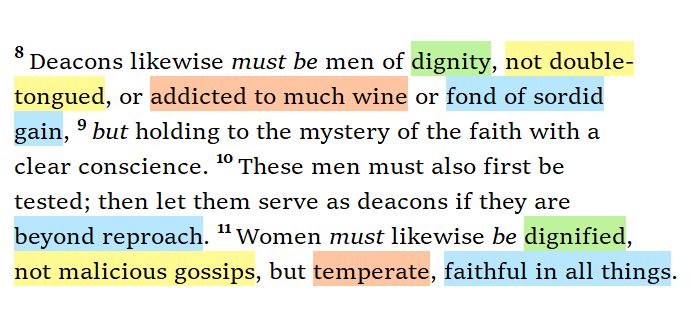




















 He was a “give it to me straight” kind of guy.
 Kept and Keeping