This post contains affiliate links. If you make a purchase through one of these links, I may make a commission at no additional charge to you. Thank you for supporting this blog!
I used to do micro book reviews of every book I read in a year. That worked great at first, but now that I’m reading 35-45 books in a year, it’s a little unwieldy and often simply doesn’t happen. So I’m revising my practices.
Here are my top five reads from the past year, as well as a simple list of the other books I read, mostly without comment. You can follow me on GoodReads to keep up with my book reviews and ratings as I write them throughout the year. Deal?
Top Five Books Read in 2024
Faithful Women and Their Extraordinary Godby Noel Piper. This was an incredibly encouraging and inspiring read. It’s good to hear of how the Lord has worked through saints who have come before us. And for women of God, it’s good to hear how He has worked particularly through His daughters. Highly recommended. Reviewed on GoodReads.
Leave It to Psmith–first Wodehouse I’ve shared with the boys! So fun! When life gets crazy, I first go to the Word of God. That is foundational. But I also try to work in some P. G. Wodehouse. Laughter is good medicine, and Wodehouse offers a healthy dose of it! Leave It to Psmith doesn’t have any really admirable characters. They’re all a mess. And yet it’s redeeming in a way to see such folly on display and to laugh at it. Wodehouse’s signiture creative word play is delightful, too.
Pride and Prejudice by Jane Austen—It was a joy to reread this long-time favorite along with the tweens and teens in our small homeschool co-op. What better way to enjoy Jane Austen than with tea, snacks, and good conversation?!? I read both Pride and Prejudice and Sense and Sensibility (first time!) this year, and while both get a five-star rating from me in GoodReads, I still come back to Pride and Prejudice as my favorite Jane Austen novel. The Dashwood sisters in Sense and Sensibility are fantastic characters and I loved the lessons learned. But Pride and Prejudice has similar character development—plus humor. The humor apparently makes the difference for me.
Leaf by Niggle by JRR Tolkien—a surprising, short, and sweet read for any creator/writer! Tolkien is known for hating allegory, but it turns out he has played with the genre. Leaf by Niggle is an allegory capturing the struggle of the creative process and the tension between working on your passion project, keeping up with life’s necessities, and giving of your time, energy, and resources to help your neighbor. It’s a delightful and thought-provoking read.
The US Constitution–so good to read and discuss during an election year. I led our co-op class through a reading of the Constitution. Yes, even an 11 year old read the Constitution this year! If he can do it, you can, too! I supplemented my reading with context from one of my college history books: Liberty, Order, and Justice, some of the lectures from the free Constitution 101 course from Hillsdale, and Kahn Academy’s discussion videos covering each article of the Constitution. I also read the Articles of Confederation and the Declaration of Independence and a few of the Federalist Papers. These ought to be read by every American citizen.
Here are the other books I read in 2024, with star ***** ratings.
The Art of War by Sun Tzu **** Listened to the audiobook.
12 Rules for Life: An Antidote to Chaos by Jordan Peterson **** Listened to the audiobook. Don’t go to Jordan Peterson for your theology. He doesn’t handle scripture well. But there are some very practical helps in this book. I can see why he’s a big deal. Sometimes the book droned on a bit, like JP was showing off his knowledge more than helping his reader. LOL
Know and Tell: The Art of Narration by Karen Glass *** This is admittedly a book on educational philosophy and practice, but that’s a kind of leadership, isn’t it? I honestly feel bad for not liking this book more than I do. I love Karen Glass, this is just not my favorite of her books. Review HERE
[Life is busy [track season, ongoing home remodel, etc], so I’m not giving every link possible on the following books. If you are interested in one of them, and you want to purchase it through one of my affiliate links to support this blog, please simply click on one of the Amazon links above and then search for the title in question. 🙂 Thank you for your support!]
Books I read on Government:
Are We Good Enough for Liberty? by Lawrence W. Reed ****
Thomas Sewell: Self-Made Man by Sean B. Dickson **** Read aloud to the boys, picture book.
The Law by Frederic Bastiat *****
The Declaration of Independence *****
The Constitution of the United States *****
The Articles of Confederation ***
Books I read on Biblical Studies/Counseling:
Prayer: The Church’s Great Need by Jesse Hamilton
The Fruit of Her Hands: Respect and the Christian Woman by Nancy Wilson ***** Listened to the audiobook.
Faithful Women and Their Extraordinary God by Noel Piper ***** Listened to the audiobook. Review HERE
The Enneagram and the Biblical Counselor by Rhenn Cherry *** Review HERE
Grace Is Free: One Woman’s Journey from Fundamentalism to Failure to Faith by Marci M. Preheim ** I don’t recommend this book. See my review on GoodReads where I explain why.
Mama Bear Apologetics: Empowering Your Kids to Challenge Cultural Lies by Hillary Morgan Ferrer **** Not bad, but it misses some very important things. Review HERE
Eve in Exile and the Restoration of Femininity by Rebekah Merkle ***** Excellent. This was my second time reading this book.
What’s the Difference? A Study of Important Biblical Distinctions by William MacDonald ***
The Marvelous Pigness of Pigs: Respecting and Caring for All God’s Creation by Joel Salatin ***** Listened to the audiobook. This could easily fall under “Home Management” with other homesteading books in that category, but this one is special–Joel looks at things from a biblical lens, writing to a more narrow audience than most of his other books: to his fellow Christian believers.
Becoming Free Indeed: My Story of Disentangling Faith from Fear by Jinger Dugger Vuolo **** Listened to the audiobook. This is a much better read than the Grace Is Free book listed above. Jinger untangles her past with a lot more biblical discernment and fidelity.
The Good Portion – Scripture: Delighting in the Doctrine of Scripture by Keri Folmar ****
Everyday Gospel Christmas Devotional by Paul David Tripp *** This was ok. Edifying but needed a better editor.
The Quest for Meekness and Quietness of Spirit by Matthew Henry **** Listened to the audiobook.
Literature/Fiction Books I read:
Leave It to Psmith by P. G. Wodehouse *****
Pride and Prejudice by Jane Austen *****
Joy in the Morning by P. G. Wodehouse *****
The Horse and His Boy by C. S. Lewis ****
Sense and Sensibility by Jane Austen *****
Der Struwwelpeter by Heinrich Hoffmann **** This is a classic German picture book that we found at an estate sale. My husband used AI to translate the German into English. The stories are funny, dated, and often a bit morbid.
Homestead Living I got this magazine for the year and have enjoyed a few issues. I cancelled going forward just because I have plenty to catch up on already without new magazines coming in the mailbox!
This post contains affiliate links. If you make a purchase through one of these links, I may make a commission at no additional cost to you. Thank you for supporting my blog!
This is a guest post from my good friend, Tabitha Alloway. We both have high schoolers this year, and they’re both going to read some Homer. While I’ve read The Iliad and The Odysseyrecently so that I can be in conversation with my son about what he is reading, Tabitha has gone a step further and actually written out her thoughts, which I have found both interesting and helpful! I hope you will, too. Check out Part 1, Part 2, and Part 3 if you haven’t already. Here’s Tabitha with Part 4:
“The Greeks seek after wisdom: But we preach Christ crucified… unto the Greeks foolishness” (see 1 Corinthians 1:17-31).
The Greeks had no shortage of bizarre and outlandish tales about their gods. But Christ astonished them.
He died for mankind. Their gods could not die—and certainly wouldn’t for anything so insignificant as a mortal.
He forgave man’s sins. Their gods were quick to mete out justice and retribution, but slower to show mercy. Forgiveness was not a well-developed concept in Greek culture.
He conquered death. A general resurrection of the dead? This was an outrageous thought—something beyond the Greeks’ wildest dreams. It just couldn’t be.
It was the teaching of the resurrection that divided the Greeks who heard Paul preach at Mars Hill. Some mocked. Others were willing to hear him again. A few believed.
To most, the gospel appeared weak and foolish. Their heroes smashed their enemies—they didn’t die for them! The Greeks could not understand a God who would suffer for mortals, just as the Jews, who were looking for a mighty conqueror to save them, did not recognize their humble Messiah who came to serve, rather than be served. And perhaps more than anything, the Greeks couldn’t fathom eternal life in immortal bodies—something they could only envy the gods for possessing. Or else, like Plato, found ridiculous and even undesirable.
Early Church Father Justin Martyr appealed to the Greeks’ understanding of the gods’ immortality to explain the resurrection: “And when we say also that…Jesus Christ, our Teacher, was crucified and died, and rose again, and ascended into heaven, we propound nothing different from what you believe regarding those whom you esteem sons of Jupiter [Zeus]” (1 Apol. 21).
The gospel was the power of God to salvation for everyone who believed, and God added both Jew and Greek to his church, washing away strife, envy, wrath, and hatred through the Lamb who conquered sin, death, and the grave.
Christ is not only the Lamb of God. He is also the Lion of the Tribe of Judah. He did not suffer for suffering’s own sake; he did it for the joy set before him. He came to rescue a people for himself. He earned a name above every name. Glory. Honor.
In contrast to the Greeks, many today may be more comfortable with a God who is kind, forgiving, suffers without returning insult for insult, and mingles with the lowly, yet struggle with aspects of his justice that might not have been so difficult for the Greeks to understand.
A Servant who girds himself to wash his disciples’ feet is a comforting picture. Is he equally accepted as a King who will return to require worship—and destroy those who do not give it (Psalm 2)? A Lord who will rule with a rod of iron and smash his enemies to pieces (Revelation 2:27, 19:11-16)? A Lawgiver who will break the teeth of the wicked (Psalm 3:7/58:6-8)? An Avenger who “reserveth wrath for his enemies” (Nahum 1:2) and is “angry with the wicked every day” (Psalm 7:11)? A God who tramples the wicked in fury until their blood is splattered all over his garments, and feeds their carcasses to the animals (see Isaiah 63:1-10, Revelation 19:11-18)?
“Kiss the son [signifying worship], lest he be angry, and ye perish from the way, when his wrath is kindled but a little. Blessed are all they that put their trust in him” (Psalm 2:12).
This picture of God may be a far less comfortable one for modern sensibilities, but it puts the cross into perspective. It tells us just how offensive we are to a righteous Sovereign.
Mercy only means something in the presence of true justice.
Christ came to reconcile us to God and deliver us from his anger. But the day of mercy will not last forever. When the door of the ark closes, only those found in Christ will be able to safely ride out the flood of God’s wrath. Unlike the Greeks and their petty gods, God’s wrath is holy and justified.
The cross was not the end, but a means to an end: to redeem a people for God’s own glory and possession. Both divine justice and mercy were displayed at the cross. God has linked our good and his glory together.
The God of the Bible is not about foregoing glory. We may be less comfortable with the concept of seeking personal glory (while in the pursuit of God’s glory) than the biblical writers are.
But Paul puts the idea of seeking glory, honor, and immortality for oneself in a good light (the full context of Romans 1-5, of course, is an argument against trusting in works for salvation, and the need to find it—this glory, honor, and immortality—by faith in the finished work of Christ). He motivates believers with the promise of glory, praise, and reward awaiting them, and warns them not to look for this from man on earth. (See John 5:44, Matthew 25:21, 23, 1 Corinthians 4:5, 2 Corinthians 10:17-18, Romans 2:6-7, 29, 8:16-17, 30, 2 Thessalonians 1:11-12, Galatians 1:10, Matthew 6:1-6 Colossians 3:23-24, James 1:12, Matthew 5:11-12, Ephesians 6:8, Hebrews 11:6, Revelation 22:12, 1 Corinthians 3:8-15, etc, etc.)
The question is not whether it is a moral thing to seek glory, honor, and immortality for oneself. That is a given in Scripture. It is moral for God to seek his own glory, and it is moral for us to seek both his and our own (these are tied together for the Christian). But how and where are we looking to find it? Vainglory is empty, vapid, invaluable. It is the kind of glory most men seek, and it falls far short of the glory awaiting the believer.
“When I began to look into this matter I was shocked to find such different Christians…taking heavenly glory quite frankly in the sense of fame or good report. But not fame conferred by our fellow creatures —fame with God or (I might say) ‘appreciation’ by God. And then, when I had thought it over, I saw that this view was scriptural; nothing can eliminate from the parable the divine accolade, ‘Well done, thou good and faithful servant’.”
Striving for reward is a concept that would have been very familiar to the Greeks. In fact, Paul uses the picture of running for a prize or competing in athletic games to illustrate the Christian life (1 Corinthians 9:24-27, Hebrews 12:1-3, Philippians 3:13-14, 2 Timothy 4:7-8). Earning prizes and glory is something his Gentile audience would have easily understood.
So there are aspects of our God that the Greeks probably could have understood, to some degree, even better than we might today. And yet, he was still so different from their own gods, from anything they had conceived in their own minds.
They may have been able to appreciate God’s demand for worship and his promise of personal glory and reward for his followers. But the idea of taking up one’s cross and being willing to relinquish temporal life to save one’s eternal soul (Matthew 16:24-25) might have been less tasteful.
They might have been able to identify with Christ as a conquering King and hero. But His life as a suffering Servant to mortals would have been more difficult to understand.
They may have been able to recognize a God of justice. But a God of mercy and forgiveness who reached out in love to those who were his enemies would have been harder to comprehend.
“Among the gods there is none like unto thee, O Lord, neither are there any works like unto thy works… thou art God alone” (Psalm 86:8, 10).
The Greeks valued glory, honor, wisdom, and longingly wished for immortality, a resurrection of the body. Those among them who believed found all these things in Christ—and more. They were freed from wrath, pride, envy, and the sins that so easily beset men. Finding peace with God, they experienced it with their fellow man and strife was “able to die”—a thing Achilles fruitlessly sighed for. They became heirs of a lively hope, an inheritance incorruptible and undefiled. They enjoyed the hospitality and fellowship of the house of God.
While the gospel appeared foolish to the rest of their countrymen, to those who believed, Christ was made the wisdom and power of God… a power not even their greatest heroes could boast.
This post contains affiliate links. If you make a purchase through one of these links, I may make a commission at no additional cost to you. Thank you for supporting my blog!
This is a guest post from my good friend, Tabitha Alloway. We both have high schoolers this year, and they’re both going to read some Homer. While I’ve read The Iliad and The Odysseyrecently so that I can be in conversation with my son about what he is reading, Tabitha has gone a step further and actually written out her thoughts, which I have found both interesting and helpful! I hope you will, too. Check out Part 1 and Part 2 if you haven’t already. Here’s Tabitha with Part 3:
Unless both of your parents were gods, you could expect a rather bleak and meaningless existence after death.
The Underworld, ruled by the god Hades, was split into three parts: Tartarus (where the evil went), Asphodel meadows (essentially purgatory for all the souls of those who were not particularly good, evil, or noteworthy—this is where Achilles descends to), and the Elysium fields (for good men and great warriors/leaders). The Greeks had a sturdy sense of their own mortality. As Achilles acknowledges, “The grave…hugs the strongest man alive.”
Radcliffe Edmonds III writes,
“The Homeric epics present a mixed picture of what happens to an individual after death… [The] bleak vision of death and afterlife is fundamental to the Homeric idea of the hero’s choice – only in life is there any meaningful existence, so the hero is the one who, like Achilles, chooses to do glorious deeds. Since death is inevitable, Sarpedon points out, the hero should not try to avoid it but go out into the front of battle and win honor and glory. Such glory is the only thing that really is imperishable, the only meaningful form of immortality, since the persistence of the soul after death is so unappealing. “As powerful as this grim vision of the afterlife is in the Homeric epics, commentators since antiquity have noticed that this uniformly dreary life for the senseless, strengthless dead is not the only vision of afterlife presented in the Homeric poems.” (A Lively Afterlife and Beyond: The Soul in Plato, Homer, and the Orphica)
There are times in Homer’s works in which the dead experience feelings and emotions and have memories of their former lives. Sometimes they even interfere in the world of human affairs.
But for the most part, Homer presents an existence in the House of Hades as empty, mindless, meaningless. When Odysseus speaks to the spirit of dead Achilles in The Odyssey, Achilles moans,
“By god, I’d rather slave on earth for another man— some dirt-poor tenant farmer who scrapes to keep alive than rule down here over all the breathless dead.”
There was little hope of joy in the afterlife. No general resurrection of the dead. This was reserved for only a small handful of privileged individuals—perhaps a mortal whose parentage included at least one god or goddess and who had done great deeds (such as Hercules, who was promoted to immortality). Or a man or woman who was very great and good might possibly be reincarnated up to three times, after which the soul could travel to the Blessed Isles and enjoy a happy existence.
The desire for a happier ending in the afterlife led some Greeks to turn to Middle Eastern mystery religions. The Eleusis mysteries promised that those who lived a virtuous life and performed certain religious rituals would experience a blessed afterlife. The Orphic cult assured followers that through special rites and initiation into secret knowledge they could escape the fate of most men and find the path to a better place in the afterlife. Members were buried with esoteric inscriptions on thin gold sheets that would guide the deceased through the Underworld.
Greek culture focused on glory. Eternity would probably be bleak, but if you could win a name for yourself, you would at least be remembered and praised after your death. Feats of courage and strength were applauded; cowardice and weakness, despised. This created a highly competitive culture that, arguably, was responsible for much of the country’s rise in the world.
Leaving behind great deeds was a way of becoming immortal, in a sense: the Greeks could not be reunited with their bodies, but they could be memorialized.
Avoiding bodily decay after death was a big deal: if a warrior did not receive a proper burial, his spirit was doomed to forever wander along the riverbank Styx. It could not properly rest in the house of the dead. This is why Achilles is desperate to recover the body of his friend Patroclus and see it gets an honorable burial—and to desecrate the body of Hector, his enemy.
While the Greeks valued life—the physical body and the material world—Plato would later (about 300 years after Homer’s time) present a different conception of life and death, meaning and purpose. He saw the body as something to one day happily put off, so that one’s soul might be set free from a prison that prevents a person from reaching true knowledge, True Being—the Beatific Vision. The physical and material were inferior to the spiritual and mystical. The body was a tomb to be cast off in order that one might become “other-worldly.” Plato spurned the idea of resurrection—for anyone. The Gnostics drew from his teachings.
True immortality for the Greeks meant the body must be resurrected and eternally united with the soul. All the immortal gods engaged in physical activities—eating, drinking, sleeping, having marital relations. Unless you were of the Platonian persuasion, it was a state much to be desired, but one which few, even among their best, could ever hope to attain.
The light of the Christian resurrection would one day pierce the darkness of this fear of death—and divide the Greeks at Mars Hill…
Lauren’s Note:
In reading The Republic, it’s so interesting to me that Plato didn’t want people to read/listen to Homer (though he acknowledges that Homer was pretty much the source of philosophical education for the Greeks in his day). Plato wanted gods that were far better examples than they were in Homer’s telling. He idealized and wanted a truly just and honorable God, and the truly just man according to Plato would be just even when not recognized as such, even when treated as though he were unjust, even to the point of …wait for it… crucifixion! What Plato longed for in a God, in a just man…he didn’t find it in Homer. But he was on to something.
Plato also didn’t like poetry. He was a “give it to me straight” kind of guy.
This post contains affiliate links. If you make a purchase through one of these links, I may make a commission at no additional cost to you. Thank you for supporting my blog!
This is a guest post from my good friend, Tabitha Alloway. We both have high schoolers this year, and they’re both going to read some Homer. While I’ve read The Iliad and The Odysseyrecently so that I can be in conversation with my son about what he is reading, Tabitha has gone a step further and actually written out her thoughts, which I have found both interesting and helpful! I hope you will, too. Read Part 1 if you haven’t already. Here’s Tabitha with Part 2:
The characters of The Iliad are often arrogant, petty, and easily angered—much like their gods. The Greek deities bicker and quarrel throughout the story, employ deception, fight one another, and alternately wreck havoc on the defenders and attackers of Troy, their only guide their own whims, unconstrained by moral considerations. Capricious and fickle, they often behave like spoiled children.
Achilles is described throughout the epic as “god-like.” But perhaps their gods were more “man-like” than anything: except for their immortality and power, the deities resembled man all too much in their thoughts and vices.
The concept of forgiveness and mercy was not really an intrinsic part of Greek culture. David J. Leigh writes,
“A study of the earliest Greek literature and philosophy indicates that the Greeks developed a strong sense of justice and law as related to both gods and humans, but did not develop a concept of forgiveness and mercy. The closest they came to the latter concept was the practice of legal leniency and the notion of ‘pity’… Neither the gods nor human beings in early Greece were seen as ‘forgiving’ people their injustices or offenses… Because the Greeks lacked a divine or messianic example of unconditional forgiveness, they did not feel a religious compulsion to forgive other persons… At most, these hints of the rising importance of pity in the Greek world might suggest some readiness for the reception of the Christian teachings on the divine forgiveness of sins and the human need to forgive one another.” (Forgiveness, Pity, and Ultimacy in Ancient Greek Culture)
Over time, “emergence of something beyond strict justice” did make its way into Greek thinking. And even Homer shows the characters acting, at times, with a compassion borne of pity. Homer presents these as admirable virtues, as part of what makes us truly human. He occasionally gives us a glimpse of man at his worst. And yet, woven throughout the tragedy, acts of kindness, mercy, justice, courage, friendship, loyalty, and honor are displayed.
Even by Achilles.
After killing Hector, Achilles drags the body behind his chariot, dishonoring him in one of the worst ways a man could be dishonored in the ancient world: he intends to let his corpse rot without burial.
But King Priam, Hector’s father, sneaks into the Greek camp and approaches Achilles, begging him to have pity on a grieving old man who has lost his sons. He reminds him how Achilles’s father would grieve were he to lose him. He asks to be given the body of Hector that he might bury it honorably.
It is human feeling that suddenly causes a change of heart in Achilles. Achilles the beast becomes a man again. He weeps for his own father, knowing he (Achilles) will soon die. Pity, compassion, even gentleness overtake him.
He grants Priam his wish, even offering him food and a place to spend the night.
Another shocking turn takes place in the poem when Diomedes and Glaucus meet on the battlefield. Both men are seething with hate and ready to kill when Diomedes calls out to Glaucus, asking who he is. Glaucus proceeds to give him his family lineage. Suddenly, Diomedes plunges his spear into the ground and joyfully tells Glaucus they cannot be enemies.
“…Splendid—you are my friend, my guest from the days of our grandfathers long ago! Noble Oeneus hosted your brave Bellerophon once, he held him there in his halls, twenty whole days, and they gave each other handsome gifts of friendship.”
The two soldiers immediately make a pact of friendship, based on the fact that the ancestor of one had entertained the ancestor of the other. In one moment, hate melts into love and goodwill.
This seems strange—until one understands the significance of hospitality in the ancient Greek culture. Hospitality, or philoxenia (“loving the stranger”), was considered a sacred duty. Turning a stranger away was an ill-advised act, for it might be a god in disguise, testing the host to see if he would practice proper hospitality. (There’s a rather interesting Christian corollary in Hebrews 13:2: “Be not forgetful to entertain strangers: for thereby some have entertained angels unawares.”)
It didn’t matter who came to your door—they must be fed, entertained, and given a parting gift. This important ritual usually signified friendship for life. This is why, even generations removed from the original act of hospitality, Diomedes and Glaucus instantly reconcile.
And this is the reason Paris’s treachery was so heinous to the Greeks. When Paris visited King Menelaus’s home, he took advantage of his host’s hospitality to woo Menelaus’s wife, Helen, away. By this act, he violated a sacred code of Greek ethics—xenia (“guest-friendship” or “ritualized friendship”), returning evil for hospitality.
Philonexia/philoxenia and philoxenos (Strong’s Greek #5381 and #5382) are found a total of five times in the New Testament: in Hebrews 13:2 (as mentioned above), Romans 12:13 (when Paul admonishes the believers of Rome to be “given to hospitality”), 1 Timothy 3:2/Titus 1:8 (a requirement for an elder is that he be a “lover of hospitality” and “given” to it), and 1 Peter 4:9 (“Use hospitality one to another without grudging”).
Both the Greeks, and later the Christians, would highly value the practice of hospitality, but there are some key differences:
The Greeks practiced hospitality out of duty, fearing retribution of the gods. The Christian practices hospitality out of love, for God’s glory and Christ’s reward.
The Greeks expected the good they did to be returned to them by their guest (if opportunity arose). The Christian only looks to God for reward, not expecting man to pay him in kind.
The Greeks were not allowed to turn a stranger away. Christians are actually commanded to turn some men away, and to withhold fellowship from others. “If there come any unto you, and bring not this doctrine, receive him not into your house, neither bid him God speed: For he that biddeth him God speed is partaker of his evil deeds” (2 John 1:10-11). “I wrote unto you in an epistle not to company with fornicators… But now I have written unto you not to keep company, if any man that is called a brother be a fornicator, or covetous, or an idolater, or a railer, or a drunkard, or an extortioner; with such an one no not to eat” (1 Corinthians 5:9, 11).
Peace was made between two soldiers because of an old act of hospitality. Sharing one’s home and table in the ancient world was a symbol of friendship and goodwill. This also carried great significance for new Jewish converts, who, prior to Christianity, physically separated themselves from the Gentiles.
“Ye know how that it is an unlawful thing for a man that is a Jew to keep company, or come unto one of another nation,” said Peter to the Gentile Cornelius as he stood in his home. He continued, “But God hath shewed me that I should not call any man common or unclean” (Acts 10:28).
The gospel shattered the barrier walls between Jew and Gentile. Both were invited to the future marriage supper of the Lamb—and both could now practice hospitality with one another. Homes and hearts opened. Tables accepted guests previously shunned. When Peter cowardly went back on this and stopped eating with the Gentiles, Paul rebuked him to his face (see Galatians 2:11-13).
Dining together and practicing hospitality were important rituals in the ancient world. At least eighteen scenes of hospitality are said to be found in Homer’s works. To share a table was to share more than food. It was an acknowledgment of shared humanity. This kindness marked good men—virtuous men. Paris is thus a true villain, lacking the humane instinct to gratefully return the good he has received. His treachery brings strife and death to both Greeks and Trojans.
Lauren’s Note:
It is striking when reading Plato’s Republic, that in all of his discussion of justice and virtue, love is not really a part of the discussion. This is why Faith, Hope, and Love are called the “Christian virtues”. While the concepts existed, they were not held up as ideals by the Greeks in the way that Christians exalted them.
This post contains affiliate links. If you make a purchase through one of these links, I may make a commission at no additional cost to you. Thank you for supporting my blog!
This is a guest post from my good friend, Tabitha Alloway. We both have high schoolers this year, and they’re both going to read some Homer. While I’ve read The Iliad and The Odysseyrecently so that I can be in conversation with my son about what he is reading, Tabitha has gone a step further and actually written out her thoughts, which I have found both interesting and helpful! I hope you will, too. Here’s Tabitha with Part 1:
“Rage—”
The opening word of The Iliad captures the whole tenor of this Homeric epic: wrath, hatred, strife, envy, pride, the clash of wills—of both gods and mortals. Rage drives the heroes to great acts of courage… and rage brings ruin and death.
Beginning with a description of the anger of Achilles, Homer introduces us in the opening lines of the poem to the quintessential Greek hero: a mortal man born of the gods, fated to suffer tragedy, who will accomplish supernatural feats.
When his pride is wounded over an insult by King Agamemnon, Achilles swears he will no longer help the Greek army—already nine years into the siege of Troy—till tragedy befalls them. No generous offer of gifts, restitution of wrongs, or desire to reconcile on the part of Agamemnon can move him.
When a party of men conveys Agamemnon’s offer of peace and begs him to let his “heart-devouring anger go,” he explodes,
“… Die and be damned for all I care!… His gifts, I loathe his gifts… I wouldn’t give you a splinter for that man.”
Odysseus, one of the three men sent with the message, rebukes,
“Achilles— he’s made his own proud spirit so wild in his chest, so savage, not a thought for his comrades’ love… You—the gods have planted a cruel, relentless fury in your chest!…”
Odysseus returns to King Agamemnon with these words: “The man has no intention of quenching his rage.”
Later, Apollo himself expresses disgust over Achilles’s anger:
“That man without a shred of decency in his heart… his temper can never bend and change—like some lion going his own barbaric way, giving in to his power, his brute force and wild pride, as down he swoops on the flocks of men to seize his savage feast. Achilles has lost all pity!…”
This stubborn pride costs Achilles his dearest friend, Patroclus:
With Achilles out of the fight, the tide of war turns in favor of the Trojans. After seeing the devastation inflicted by their enemies, Patroclus implores Achilles to let him join the battle if he will not do so himself. Consenting, Achilles sends Patroclus out with his own suit of armor.
Patroclus achieves a victory on the battlefield, but is killed when he pursues the Trojans back to their city. The news devastates Achilles. In his grief, he cries out,
“If only strife could die from the lives of gods and men and anger that drives the sanest man to flare in outrage— bitter gall, sweeter than dripping streams of honey, that swarms in people’s chests and blinds like smoke—”
He resolves to beat down “the fury mounting inside” him, “down by force.” At last he is able to set aside his personal grievances in order to avenge his friend’s death. A formal display of reconciliation between Agamemnon and Achilles reveals that neither party takes full responsibility for their acts. Both blame their bad behavior on the gods. Nonetheless, Achilles is back in the fight.
But rather than overcoming his fury, he merely finds a new target for it—the Trojans, and Hector in particular.
Now his bloody rampage begins. He slaughters mercilessly, with cruelty and joy. He mocks and taunts, hates—and loves hating. “God-like Achilles” descends to the lows of a murderous animal, with so much hostility in his heart he cares not if he dies.
Achilles was born of a goddess and a mortal. Knowing her son was fated for an untimely death, his mother attempted to avert the inevitable by holding him by his heel and dipping him into the River Styx when he was an infant. He was made invulnerable everywhere the water touched him. His heel, which was not submerged, became his one point of weakness. It is Paris who later brings down the mighty warrior—with a poisoned arrow to his heel.
But Achilles’s true heel, his vulnerability, is his inability to control his spirit and check his wrath. “He that hath no rule over his own spirit is like a city that is broken down, and without walls,” wrote the wise man (Proverbs 25:28).
The conquer and sack of Troy after the death of Achilles mirrors the defeat in his own heart, the pillaging of his soul.
The great hero is a conquered man, driven by his feelings and passions rather than guided by reason and wisdom. He has no walls of self-control, no defenses against his own pride that poisons him long before Paris’s arrow flies to its mark. His spirit ravaged by rage, he falls. His “cruel, relentless fury” nearly burns to ashes his very humanity, just as the Greek fires will later blacken the streets of Troy.
And yet, for a moment in the saga, before he reaches his end, his fury relents–and Achilles finds room in his proud, bitter heart for mercy…
This post contains affiliate links. If you make a purchase through one of these links, I may make a commission at no additional cost to you. Thank you for supporting my blog!
This is a longer book review than I usually write on Goodreads, so I thought I’d share it here. When I take the time to give a more thorough review, it’s often because I think the book is valuable and that at least some people probably ought to read it, but it also likely means I have some considerations that I think readers ought to keep in mind in order to sift through it and apply it rightly. Mama Bear Apologetics is one such book. In this case, there are some things to “chew and spit” from the book, even as the book itself teaches moms how to “chew and spit” what they encounter in the world today.
My rating: 4 of 5 stars I give this 4 stars, but that’s rounded up from 3.5.
While I am a mother, I am not the target audience for Mama Bear Apologetics. I’ve been around the block a few times when it comes to apologetics. The authors are writing to moms who aren’t so familiar with it. But I was excited to see this title in Hobby Lobby and wanted to preview it to see how useful it would be for younger moms I know.
Verdict: The content chapters are very good at briefly covering the various isms and issues of our day–I’m thankful that a book like this exists. I’d say it is useful to its purpose but with a few very important caveats, especially concerning the introductory chapters.
Most foundationally, while I understand wanting to stress the importance of apologetics, there were some problems in how the authors laid it out in the first two chapters. They talked about apologetics as “foundational”. They cited the sad statistics of how few professing Christian teens actually read their bibles (among other stats). But then a few pages later they said that reading the bible (along with Sunday school, etc) isn’t enough–we need apologetics. There’s a disconnect here, folks. If only 5% of professing Christian teens today read the bible, and that’s down from 8% in 1991, then the most foundational problem is that teens aren’t actually in the Word. And what’s more, those teens from 1991 (or the decade or two after that) are parents today–so we have biblically illiterate parents as well as teens. If apologetics gets people to dig into their bibles more, great. But the foundational issue is not a lack of apologetics. The foundational issue is a lack of a foundation–in the Scriptures.
To be fair, the author of chapter two does say: “We need to remain in God’s Word and in regular prayer to Him. After all, we can’t defend Scripture if we don’t know it.” But 1) this was one statement in a sea of overemphasis on apologetics, 2) it still makes bible reading subservient to apologetics (“we can’t defend…”) instead of reading it for its most foundational purpose–to know and love God, and 3) it still only refers to the parents and not the training of the children to read the Bible for themselves.
It may feel to some like I am splitting hairs here, but it is incredibly important to put things in their proper order! Jesus is worthy of devotion no matter what goes on in the world around us. And His Word is precious to us because it is how we grow in knowledge of our God and how we can serve Him. Then we can learn to defend against enemy attacks because we prize what we are defending. We only arm ourselves with apologetics because there is something worth defending and holding onto for its own sake. I trust that the authors agree with this, but I sure wish they had taken the time to allude to the real foundation and give a brief outline of core Christian teachings and basic spiritual disciplines before diving into the rest of their content. A little less cutesy talking down to moms would probably have provided the space needed.
Connected to this inordinate emphasis on apologetics is the idea that apologetics is needed–and even apologetics curriculum!–for very, very young children. Everything in me screams, “No!” Children need to be steeped in the Word of God. Their first instruction needs to be the positive teaching of Christian faith and practice in reference to the Bible and their everyday life, not instruction in reference to the wrong ideas in the world. A closing thought from one of the authors at the end said that in reading this book, “you have taken your first step toward teaching yourself and training your children to love God with their minds. Bravo!” The encouragement intended is not lost on me, but a book like this is not the first step, friends. Confess your sins and trust in Jesus for salvation. Read God’s word, memorize it and meditate on it (THIS is how you train or renew your mind). Participate in local church fellowship, baptism, and the Lord’s supper. Teach and share these things with your children and pray for the Lord to work. The ordinary means of grace are the first steps and they are the step after that and the step after that and the step after that–even as you add some apologetic training to your ordinary, faithful Christian lives.
In chapter two, there’s a bullet point tip to “Carve Out Regular Family Time to Study”. This sounds great on the surface, but it’s not a direct call to read the bible together as a family, it’s a call to go through apologetic resources (which is fine if you’re already doing the basics, but it’s sidestepping the obvious if you aren’t). And if you need an example to help you get started, “we can look to…other faith systems that have successfully established certain routines within their families. Islam, Mormonism, and Orthodox Judaism prescribe specific times each day during which they stop to pray, study their religious texts, or disciple their kids.” My friends, we don’t need to look elsewhere for how to train up our children, as interesting and instructive as an outside comparison may be. Our point of reference ought to be Deuteronomy 6:4-9 and Ephesians 6:1-4 and the countless examples of faithful Christians who have been intentional about training up their children in the ways of the Lord for centuries to the present day. Not to mention countless modern books encouraging parents in their role of discipling their children. Why not recommend one of those books in passing? Why not call parents to their duty in reference to scriptural command rather than in reference to fear of the culture?
The above examples are real point-of-reference problems in the book (almost all from the introductory material in chapters one and two). As much as I love the content chapters on the issues of our day, the way in which the entire discussion is framed falls short–readers ought to take this into consideration. Seek out positive examples of Christian training and instruction in the home–from real, live godly people and solid books. Apologetics is only one small but important part of the whole, and unfortunately that isn’t communicated well in Mama Bear Apologetics.
Most of the rest of the book was very good and helpful. The chapters on Discernment and Linguistic theft were great. As were those on Self-Helpism and Naturalism.
But Chapter 7 on Skepticism (agnosticism and atheism) contains encouragement for Christians to embrace a “healthy skepticism”. This is clever, perhaps, but I don’t see the Scriptures promoting any kind of skepticism. Wisdom and discernment and turning away from lies, yes. Taking captive every thought, yes. But not “skepticism.” I think this is a poor word choice when there are Christian virtues and scriptural language that could be forwarded instead. There are great points in this chapter about being willing to wrestle openly with doubt and questions, but please take care not to promote “skepticism” to your children. I couldn’t pray along with those words in the scripted prayer at the end of the chapter.
The chapters on Postmodernism and Moral Relativism are pretty good, but after the chapter on Emotionalism I felt like I needed a break from the book.
Switching between writers mid-chapter (especially in the chapter on Emotionalism), was confusing at times and made for a less than great reading experience. I didn’t care for the overly-caricatured tone throughout the book, either. Everything is in “mama bear” terms, and it gets a little old and cheesy (even for a seasoned mother!). And some of the illustrations just didn’t work logically. I put the book down about half way through due to these frustrations, but I am glad I picked it back up several months later to finish it. I found the latter half (chapters on Pluralism, New Spirituality, Marxism, Feminism, and Progressive Christianity) to contain better writing and argumentation and to be a bit more serious in tone.
While I don’t believe we need to “advocate for a healthier feminism” just like I don’t believe my kids need to be “healthy skeptics,” the general handling of all of these isms was really very good.
Bottom line for young moms: This book can help you get a handle on the big ideas competing for hearts and minds in our world today, and if you have kids in public school where they encounter these ideas early, or if one or more of your kids are 10+, it can equip you to practically start and navigate conversations with your children.
But if you only have little ones, there isn’t anything to do with this information yet other than to learn it yourself. Your young children primarily need you to do the normal (traditional) Christian things: pray with and for your children, read the bible to them, sing hymns and praise songs and scripture set to music, memorize key bible verses, learn to give instruction with loving patience, but also teach them to obey and to repent and to believe and trust in Jesus’ death, burial, and resurrection. Love them and their father well, teaching them to be respectful by your example. Be faithful members of a biblically-solid local church. Love God and your neighbor. Live out your faith alongside your children and before them. Teach them ordinary life skills. All of the above, laid down little by little, is the best foundation you can give them. You’ve got time to learn and grow yourself in all of these things, so don’t parent scared. Be faithful in these “little” things, and when it comes time to tackle tough issues or formally teach your kids apologetics, trust the Lord that you’ll all be ready for it–and trust in the Lord that He will be there with you.
This post contains affiliate links. If you make a purchase through one of these links, I may make a commission at no additional cost to you. Thank you for supporting my blog!
I just finished listening to this book and wanted to write a review before I forgot what I’d heard!
My rating: 4 of 5 stars (More like 3.5 rounded up.)
This was a good and edifying read/listen. Wolgemuth brings much-needed exhortation to women–young and old, married or single–to step up and reach out to make the Titus 2 vision of life-on-life discipleship of Christian women a reality.
This is a pretty thorough treatment of Titus 2:3-5 and the broader context of Paul’s letter to Titus, with an emphasis on adorning the gospel and with plenty of examples and support from other passages of scripture as well. It’s written with a very accessible tone and a heart that clearly loves the Lord Jesus and God’s people.
I thought the chapter on slander was particularly good.
I give this book 4 rather than 5 stars for a few reasons, however.
While the treatment is thorough, it is also pretty wordy. It could have been a shorter book.
The two chapters on sobriety and a sound mind/self-control overlapped a lot, and each felt like an opportunity to spring-board into a laundry list of any and all possible ways a woman might be enslaved to something or be lacking in self-control. One warning area was being overly desirous of sex–even in the proper context of marriage. While this might be a problem in some rare? cases, it seems strange to warn against this but not spend much energy in the rest of the book on promoting the enjoyment of this good gift of God as a part of a healthy marriage. Flirtatious behavior was also in the bad column but not mentioned as a healthy and fun part of marriage. Protecting the purity of your marriage involves fueling the home fires. This was almost entirely neglected.
I’m sure these kinds of practical lists (like the chart on self-control) can be helpful to some readers, but I think they may also be stretching far beyond what Paul had in mind in his letter, not to mention they may be unbalanced or biblically incomplete.
The application of a passage should not be confused for the original intent. I think the author could have clarified the meaning of Paul’s words a bit more before diving into the many possible applications that are a step (or a few!) removed from Paul’s obvious meaning.
For example: “not enslaved to much wine” is pretty self-explanatory, but Wolgemuth begins the chapter on this phrase by talking about all of the secondary applications (basically any form of excess or idolatry). She does get around to dealing with drunkenness/drinking, and she does a good job for the most part, but she doesn’t really ever paint a picture of a godly woman who can enjoy a drink on occasion. The only stories we read of are negative experiences with alcohol or of someone who could righteously enjoy alcohol deciding to give it up for the sake of someone else (which is fine–wonderful even!, but still only shows one side of how godly people could handle it). There are also a ton of questions that lead the reader to question whether it is ever ok to drink. I’m actually not against these questions–they can be good to consider. But lacking a positive example, it feels unbalanced and would likely lead some readers to view those who do drink responsibly with suspicion. The weight of the chapter was just far beyond what Paul’s words to Titus had to say. The author did recommend reading other authors who disagree with her on this point, so I really think she attempted to handle this subject carefully and with all good faith. I respect her convictions and intentions– I’m not too far removed from them myself.
Again, on the whole, this is a very good book. It could be beneficial and edifying for individual study or in a discipleship relationship or small group. BUT when it comes to fleshing out the details, young married women (the target audience of Titus 2:4-5) will need older women who have been married for the long haul to speak more deeply into their lives about (among other things) the good gift of sex in marriage and how to enjoy one another and keep that gift alive–through pregnancies, illnesses, rough seasons, etc.
The strength of this book is that Wolgemuth can speak to a broad range of experience for women–including singles. The weakness is that she has only been married for one year at the time of writing this book, at age 58. And Titus 2:4-5 is directly speaking to youngmarried women. Broadening the focus for all kinds of women means watering down what can be given to that target audience. This doesn’t make this a bad book, it just means it probably shouldn’t be the only book a young woman reads on Titus 2. And it underscores the need for real-life mentorship, which Wolgemuth herself rightly emphasizes over and over.
One last note: since I listened to the audio book, I found the chapter organization to be a bit confusing. I expected (and honestly would have preferred for) the chapter topics to follow the order in which they occurred in Titus 2. But they don’t. They are organized a little differently: A Woman Under God (doctrine and reverence), A Woman Under Control (slander, excess, self-control, purity), and A Woman Under Her Roof (home and family relationships). The rather primary encouragement to younger women to love their husbands and children gets put off until part three. Once I looked up the table of contents, I was fine. But for a while there, I was concerned. Hopefully this note helps anyone who plans to listen to the audiobook rather than read a physical copy.
Addendum: Another part of the book that lacked much practical application was the area of homemaking. The chapter was good, but it stayed big-picture and didn’t really get into the nitty-gritty details of keeping home. If you’re looking for a book with a biblical view of home that will also show you how to roll up your sleeves and manage it well, check out Mystie Winckler’s new book: Simplified Organization: Learning to Love What Must Be Done. It is FANTASTIC. (See my review of that book on Amazon.)
Have you read Adorned? What were your thoughts? Have you read any other good books on Titus 2 lately?
This post contains affiliate links. If you make a purchase through one of these links, I may make a commission at no additional cost to you. Thank you for supporting my blog.
This post wraps up the books I read in 2022. For my other micro book reviews from 2022, click here (homeschool reads) and here (theology and life management reads).
I’m spending a lot more words on this post than I usually do on my micro book reviews, but that’s because I think this subject matter deserves a lot of care. I don’t usually tout my credentials, but it may be useful for the reader to know that I have a degree in history. So handling it with care is not merely a platitude but a trained conviction.
Since 2020, American politics and public discussion has been a bit of a dumpster fire. I’ve paid attention where I could and ignored what I could for sanity’s sake. I’m not one to pick a fight on social media about these things, but these issues do matter. And so I did a bit of reading on two sides of a coin, you could say.
The Scholé Sisters hosted a seminar on Marxism last spring (accessible now through their Sophie Membership), with three books recommended for reading and careful consideration, which you will find listed first below. Concerns over Marxist-inspired ideology in our day are not unfounded. But they are not the only concerns that are valid.
As much as we need to be on our guard against such ideology, we also need to be aware of our own history–and the fact that some of that history has been ignored or kept from us. And so I also read books by black Christian authors on their experiences, history, and wrestlings with the current cultural climate. To focus on one side of this coin while ignoring the other is short-sighted at best and potentially damaging at worst–to our neighbors, to our nation, and to our witness for Christ in the world. See exhibit A below.
A protest against “the Little Rock Nine” at the Capitol in my home state of Arkansas, 1959.
If you are an American Christian who leans politically left, you owe it to yourself and to your neighbor to read up on these concerns about the influence of Marxist ideology and the current disturbing progression toward what Rod Dreher (see below) calls soft totalitarianism. There’s history there you may be missing. Also, hear from the black voices listed below–they hardly get ANY air time in the mainstream media–and especially not on the left.
If you are an American Christian on the political right, you owe it to yourself and to your neighbor to understand the political labels you throw around (“Marxism” likely among them), and to especially do some homework to understand WHY things like Critical Race Theory have appealed to so many. If people get excited about a bad proposed solution (CRT), it may be because there is or has been a legitimate problem (America’s tainted past). Never mind if the current Theorists don’t pinpoint that problem correctly–we shouldn’t ignore it just because others misdiagnose it. The books I’ve read this past year, as well as some other resources I’ll link to at the end of this post should prove helpful to that end.
Let the love of the brethren continue, and may the Lord be glorified in His people even as we dig-in to understand some of the issues that are currently tearing our nation–and sometimes our churches–apart.
Physical copies for this category–Marx and Plutarch can be read for free online.
Marxism, etc.
The first three books listed here are from Spring Training. The rest are books I chose to read to flesh out the topic a bit more, exploring the dangers of totalitarianism, whether Marxist or not.
The Communist Manifesto by Karl Marx and Friedrich Engles (I acknowledge both authors up front, but my review refers to Marx alone for simplicity’s sake.) I first read The Communist Manifesto during 2020—it seemed an appropriate time. It was good to listen and process it again. The Manifesto is divided into four parts.
Part One opens: “The history of all hitherto existing society is the history of class struggles.” Marx proceeds to explain this point with a narrative of history that has two key qualities. 1) It’s materialistic, and as such, it’s an incredibly narrow lens for interpretation. Material and economic factors are the only things that count. 2) It’s a new application of Hegelian Dialectic, which saw the clashing of ideas as what produces a new idea, moving collective human thought ever onward toward truth, led on by something Hegel called “Spirit.” This is the essential pattern of thought in all forms of progressivism. In Marx, the clashing of classes produces revolution and new social orders, moving ever forward toward the communist ideal, led on by “History.” What Marx demands to be done is, in his view, what will inevitably be.
In Parts Two and Three, respectively, Marx lays out the Communist battle plan in defiance of Bourgeois objections and then criticizes the socialist movements that are, in his view, not revolutionary enough to get things done.
In Part Four, there’s an inspiring call to action for Proletarians everywhere to join whatever political movement is likely to produce a revolution: “The Communists disdain to conceal their views and aims. They openly declare that their ends can be attained only by the forcible overthrow of all existing social conditions. … Working men of all countries, unite!”
I have to hand it to Marx, his prose is riveting. It’ll get you fired up in one way or another.
It’s important to understand that because of Marx’s historical materialism, immaterial things or concepts like God, love, freedom, family, religion, duty, and moral ideals of any kind are seen as mere instruments for oppression flowing from the current system of production.
No benefit of the doubt is given to people who believe in such principles–all is material, all is political, all is economic.
Inherent human sinfulness doesn’t factor into his equation. If God and moral ideals don’t exist, sin can’t either. The nature of human dignity as having been made in the image of God and the nature of human sinfulness due to the fall are both abolished. Marx refuses to see them, leaving a divine vacuum to be filled by the state (or the gospel-hope of a communist non-state) and a faulty, materialistic anthropology (view of man) to both explain and condition human behavior.
It is this anthropology that drives the desire to abolish private property and consolidate the means of production–because if you can control material outcomes and do away with class structures, everything will be great, right? Marx, seeing only what he allows himself to see, seems to think so.
I wish that reading The Communist Manifesto was only an academic exercise to marvel at the ideas held by a few crazy people sometime “back then”. But sadly, Marx’s ideas, in part if not in whole, are driving much insanity forward today. The narrow oppressor-oppressed lens of historical study is alive and well, and class warfare is being promoted in our day, make no mistake about it. The lines are simply drawn in different places.
That Hideous Strength: How the West was Lost by Melvin Tinker I thought this was a very helpful book for understanding the influence of ideas over the past 150 years, and especially how those ideas have crept into the church (Tinker was an Anglican minister). To assume that ideologies popped up in the 1970s or 2010s without any connection to past ideas is simply ignorant of the way the world works. There are connections and this book traces them.
Tinker does employ the term “cultural Marxism”, largely to define where those class warfare lines are drawn today, especially as they relate to the sexual revolution. I think it is important to understand that this term is used by opponents of Critical Theories and not by promoters of them. No one, to my knowledge, identifies as a “cultural Marxist.” And the origins of this term appear to be associated with anti-Semitism. Most people throwing the term around today, however, eagerly decry anti-Semitism. And the potential negative associations don’t make it an altogether bad descriptive term, because the words themselves highlight what part of Marxist theory has been brought forward: the cultural revolution part, and less so the emphasis on economic theory (though it may be waiting in the wings). All the same, I think it’s easy enough to use the word “Neo-Marxism” to describe the same phenomenon. So, rather than get in a huff over terminology (like our cancel culture loves to do), figure out if the concept being referred to is valid. And choose the term that you think is most appropriate to describe it.
One of the best contributions of Tinker’s book, aside from the fact that it is pretty well documented, is his discussion of “social imaginaries”–how the stories and images that we take in as a culture shape our understanding of the world. This is good food for thought and discussion around what kind of social imaginary we are cultivating in our homes with our children–a positive application that can be drawn from an otherwise exposé-focused book.
Agis and Cleomenes by Plutarch This was the last bit of assigned reading for the Scholé Sisters Spring Training, and it was an interesting dose of perspective. In this story from ancient Greece, it was the conservative movement that called for a repartitioning of the land and a move toward greater collectivism, hailing back to the good ol’ days of Lycurgus the lawgiver. I can’t say I understood or remember everything from this reading, though the discussion inside the Scholé Sistership was very helpful. The main takeaway is that it’s good to shake up our political boxes and assumptions–most political ideas have been around for along time, and they don’t always package themselves in the same way or have the same flavor over the centuries. Again, a good read for the sake of perspective.
Animal Farm by George Orwell I read Animal Farm in high school (or at least I think I did—I know I was supposed to). It was fun to read it this year alongside my oldest son. The animals throw off their oppressive farm master only to eventually find that some of their own animals are “more equal than others.” And the second oppression is just as bad—or arguably worse—than the first. It was interesting to me to find that George Orwell was a socialist. So while his book warns of the evils of communism and perhaps the ditch that socialism can fall into, it doesn’t mean he agrees with my free market, limited government principles. I marveled similarly when I read The Picture of Dorian Gray by Oscar Wilde. Though Wilde had a death-bed conversion to the Catholic faith, he was for most of his life a hedonist. Dorian Gray exposes the devilishness of that philosophy and the harsh conclusion that following it without restraint can bring.
Whether we’re talking about Orwell or Wilde, I think this is interesting and important to keep in mind: People don’t exist in only two ideological boxes—yours and the bad guy’s. The ideas that thoughtful individuals hold are usually more complex than that, and we do well to ask questions to understand before assuming. Unless, of course, someone is just screaming at you or throwing nothing but ad hominem arguments your way or threatening to cancel you–in that case, don’t waste your time. And don’t be that person, either.
That Hideous Strength by C. S. Lewis This is a sci-fi novel, but you can expect from Lewis that it communicates truth as much as his directly philosophical and apologetic works do. I’ve written briefly my reflections on this book before, so I’ll quote that here.
“…This third book of Lewis’ Space Trilogy confronts totalitarian scientism and many of the themes addressed in The Abolition of Man. … I’ve found it to be great food for thought. [On the subject of womanhood…] Elisabeth Elliottells about being a woman. Lewis shows it. His character Jane wrestles through it, and Lewis, as the author, lets her be a woman. … I’m finding it quite instructive and freeing, as I tend to have some of the same modern-woman hang-ups as Jane.”
There are a lot more spiritual, ethical, and political themes to consider in this book beyond what it means to be a woman, but I have especially appreciated that personal application in my own life. As I said in the quote above, this book shows the dangers of totalitarian scientism more than Marxism, but both are quite relevant to thoughtful discussions on politics, ethics, and science today.
Live Not by Lies by Rod Dreher If you want the perspective of recent history and political development through a broadly Christian lens, this book is a fantastic read. It’s both informative and edifying. Rod Dreher is a Catholic journalist. Drawing from the stories of survivors who lived under Soviet control, as well as other sources, Dreher discusses the social trends that set the stage for totalitarianism and also the social pressures that help to tighten its grip over a people. While this book traces much sad history and disturbing developments in China and the west, it also contains amazing stories of courage and determination to “live not by lies”–even when faced with imprisonment and death for speaking truth. Dreher also gives encouragement to Christians to build strong families and Christian community as the church has been intended to do from the beginning. This book can feel bleak at times, but it is not without hope. This makes it my favorite read in this category–the book I’m most likely to pick up again soon.
Black Christian Perspective
Each of these books is by a Christian author whom I have followed for a very long time in one way or another. I’ve read articles by Jasmine Holmes since she was a teenager blogging under her maiden name Jasmine Baucham. I’ve listened to her daddy, Voddie, and have read his articles from time to time. I’ve enjoyed music by Shai Linne and Lecrae since my college days (I’m kind of stuck on their oldies). And I grew up hearing Tony Evans on the radio–my mom loves him. So this isn’t some list of black voices selected at random to meet some “white guilt”-driven quota. >insert uproarious laughter here< These are my brothers and sister in Christ who have encouraged me in my walk long before these issues made it hip to elevate black voices.
So many audio books! These are the only two hard copies I have for this section.
Unashamedby Lecrae Moore Technically I finished this book at the tail end of 2021, but I’m including it here because it goes well with this discussion. This is Lecrae’s autobiography. He doesn’t address any political issues directly, but his personal testimony demonstrates the hardship that some young black men face in America. There are drugs, women, abortion…it’s a rough ride. Lecrae is quite vulnerable in sharing his Christian testimony–not only his conversion story but also the challenging and often-failing road of sanctification as a young believer who grew up with zero positive male examples in his life. This book will challenge and expand your capacity for compassion. I especially enjoyed listening to the audiobook from Christian Audio, as Lecrae reads his book himself; and when there are quotes from his rap songs, they are included as clips from his songs rather than merely reading the lyrics off the page.
Carved in Ebony by Jasmine Holmes This was a unique book. Jasmine tells stories of black women from American history with both evenness and heartfelt personal reflection. I deeply appreciate Jasmine’s stated approach to American history: her goal is to glorify God in telling these stories, not to glorify America nor to throw disgrace upon her. She’s filling in some gaps both in our traditional American history framework and in American church history—some of these women reminded me of Christian missionary Amy Carmichael and Christian educational philosopher Charlotte Mason. This brought me to ask, why have I not heard these stories before? In all my reading on heroes of the faith, I’m not sure I’ve ever read the life of a black Christian woman. Well, now I have. And I’m blessed by it. I plan to have my boys read this book in high school.
The New Reformation by Shai Linne Christian pastor and hip-hop artist Shai Linne addresses the issues of “racism” (his preferred, biblically-aligned term: “ethnic sin“) in four parts. In part one he shares his own story, which is of particular interest if you’ve followed his music. In part two, he deals with some backstory, wrestling honestly (and graciously) with some of the skeletons-in-the-closet of Reformed heroes like Jonathan Edwards and Martin Luther. In part three, he digs into theology, especially justification by faith alone, and its implications for the church. Finally, in part four, he concludes with a discussion of biblical unity and practical ways that Christians can walk that out.
Linne’s main point seems to be that we are on the verge of another reformation–instead of simply reclaiming doctrinal purity, this reformation is about applying it more fully: the Christ-alone, faith-alone, grace-alone gospel is available to all people from every tribe, tongue, and nation. And our churches ought to seek to reflect that when possible through genuine unity in Christ across any and all ethnic divisions–not just black and white. I so appreciate Shai Linne’s vulnerability and faithfulness to sound doctrine–not merely in verbally ascribing to it but in calling us to live out its life-changing implications by the power of the Holy Spirit. Highly recommend. This is a very good read to have in conversation with the next two books, also written by pastors.
Oneness Embraced by Dr. Tony Evans (A new edition of this book came out last year. My review is of the previous edition.) I listened to this book via Christian Audio. I appreciated Dr. Evans’ tour of black American history—and especially the peek into its spirituality and church history. This, like Jasmine Homes’ book above, fills in some important gaps. I couldn’t verify all of his citations and over-arching claims as I listened, but I think the perspective is valuable and it would be worth searching out some day when I have more time (and a physical copy in hand). It’s important to note that Dr. Evans is probably writing to the broadest demographic of any author in this category (aside, perhaps, from Lecrae). He’s an evangelical pastor whose readership will be varied in race, political affiliation, and theological leanings (Dr. Evans is not in the Reformed camp that the rest of these authors are in). With this in mind, it makes a little more sense that at the start of the book, he says some things that help him relate to people across racial and political lines.
There are, therefore, things that will make both Republicans and Democrats uncomfortable. For example, he uses the term “social justice” for most of the book—likely accommodating the popular use of the term–before he states in the last few chapters that he prefers the term “biblical justice,” and then proceeds to suggest what that ought to look like. These creative efforts to do justice biblically are where this book really shines, in my opinion, though you can’t dispense with the background knowledge that he gives to build up to that point (especially his evaluation of liberation theology’s appeal and shortcomings). I would like to own this book in print, which is to say, I liked it and think it’s important enough to own. That’s a pretty high recommendation.
Faultlines by Voddie Baucham This was an excellent book. Probably the best in this category. Again, I listened to it rather than had it in front of me. Interestingly, the reader was the same for this book as for Oneness Embraced, and I enjoyed the feeling that these books were connected—coming at some of the same issues from the same side of the fence, but with different emphases and perspectives and solutions—different, but both seeking to faithfully apply the scriptures. Both were incredibly valuable. But Voddie Baucham hits the nail on the head as he discusses the problems with the modern social justice movement. Unlike the other books on this list, Voddie is able to address the problematic ideology of progressivism and woke social justice head-on, providing a much-needed evaluation of the claims made by the media and by some within the church today. He even calls Shai Linne out for a weak statement he made. Sometimes I felt Baucham was a bit harsh in his call-outs of faithful, godly pastors and leaders. But I think I understand these to be warnings that even the good guys can get caught up in this stuff and say things that may lead people to accept ideas that are wrong. The warning is warranted at least for consideration, even if at times it feels a bit nit-picky. I think it is given in the spirit of love for the brethren, including those whom he calls out.
While this book was excellent, I think it would be VERY SAD if this is the only book in this category that you pick up. He’s going to say things that will resonate with what most white conservatives already believe. Which is fine if the things he says are true (and I believe they are). What he doesn’t do is challenge the same group of people to expand their understanding and compassion toward other believers to the extent that some of the other authors on this list do. If you’ve got the time, read all five of these books–they’re each an important piece of the puzzle.
TWO: On a related and very practical note, here is a discussion of living books as Mirrors and Windows (in the context of a Charlotte Mason education, largely considered to be under the classical umbrella). The main point is that kids need to read quality books that both reflect their ethnicity (mirrors) and give them a peek into the experiences of others (windows).
THREE: Both Baucham’s and Tinker’s books above provide a critique of Critical Theories while tracing their development. You can find similar information in this series by James Lindsay (an agnostic liberal who exposes the flaws of progressivism and the woke left). Lindsay has not only done extensive research, but he reads at-length directly from Marxist and Critical Theorist sources so you can hear it from the proverbial horse’s mouth. Heads up, there may be some strong language in his talks.
For some current-events commentary from James Lindsay, check out these recent interviews with Relatable host and Christian, Allie Beth Stuckey: Why Bud Light… (giving background for the crazy corporate and UN decisions being made lately) and …Debate Christian Nationalism (which discusses some concerns with the CN movement–from a conservative Christian and agnostic liberal perspective). These various topics do in fact tie in with the issues discussed in this post.
FOUR: Lecrae is probably the most sympathetic person on this list to Critical Race Theory and the books published espousing concepts from it. He’s walking a bit of a tight rope. Even so, I appreciate hearing from him as a believer who seeks to remain faithful to Christ but who desperately wants his brothers and sisters to understand what he’s been through and what he sees. This TEDx Talk from 2016 is a challenging message to that end. You don’t have to agree with every little thing he says–and this talk doesn’t say everything there is to say, even from Lecrae’s own vantage point as a Christian–but it is valuable to at least hear and consider the story he tells and the points he’s trying to make when working through these issues.
There you have it. Have I offended everyone yet? I hope I’ve at least given quality food for thought and inspiration for prayer and faithfulness. Real conversation on these issues is important. If you’ve got a thoughtful question or comment to share, please drop it below.
This post contains affiliate links. If you make a purchase through one of these links, I may make a commission at no additional cost to you. Thank you for supporting my blog.
Here’s another installment of my micro book reviews for 2022. In my last post, I shared the books I read for our homeschool. This time around, I’ve collected my 2022 reads on Christian Thought as well as Life Management (and a bonus category Just For Fun).
Christian Books on Theology, Practice, Philosophy, or Education
On Christian Teaching by Augustine This was probably the oldest work I read last year, aside from Plutarch and the Bible. Writing in the fourth century, Augustine lays out some important guidelines and considerations for teaching–with applications for education in general and for the study and teaching of the Scriptures. Augustine’s ordering of loves (ordo amoris) is incredibly edifying, explaining how all earthly loves can and ought to be turned into the stream of love that we have for God most of all. He also addresses some classical education practices and suggests how Christians ought to approach them. I found reading Augustine to be more approachable and edifying than I had anticipated. I can see why his writing has stood the test of time.
Let Me be a Woman by Elisabeth Elliot This was a re-read of a beloved book. Elisabeth Elliot is one of my all-time favorite authors. Given the crazy confusion of our time, it was good to be immersed in a book that celebrates being a woman—and being a godly woman at that. Let Me be a Woman is a collection of short chapters written to Elliot’s daughter, making her prose both warm and candid. Here’s a particularly poignant quote about worldly attitudes toward women:
Women’s work, particularly the task assigned by Creation exclusively to women, that of bearing and nurturing children, is regarded not only as of lesser value but even degrading and “animal-like.” This is a hideous distortion of the truth, and an attempt to judge women by the criteria of men, to force them into an alien mold, to rob them of the very gifts that make them what they were meant to be. To subject femininity to the criteria of masculinity is as foolish as it would be to judge meat by the standards of potatoes. Meat would fail every test. For women to assume an esatz [or artificial] masculinity means that they will always lose.
Let Me Be a Woman, P. 151
Turns out women also lose when men assume an “esatz” femininity. But I digress…
Christian Reflections (essays) by C. S. Lewis I have to say, Lewis is right up there with Elisabeth Elliot as one of my favorite authors. I bought this book initially for Lewis’ essay on “Historicism,” which I very much enjoyed. I’ve read many of his books: The Chronicles of Narnia(series), The Screwtape Letters, Mere Christianity, A Grief Observed, The Great Divorce, The Four Loves, The Abolition of Man, and That Hideous Strength. But this is my first read through a collection of his essays. Lewis has an incredible ability to evaluate the past and see where things are headed in days to come. I don’t always agree with his take on everything (his essay on “Church Music” being a good example), but he sure does make me think. Here are some of my favorite essays from this collection: “The Poison of Subjectivism,” “Historicism,” “The Psalms,” “The Language of Religion,” and “Modern Theology and Biblical Criticism.” So many of the problems we see today are the fall-out of ideas that Lewis confronted in his day. I think this makes his writing essential reading. Start with Narnia (at least The Lion, the Witch, and the Wardrobe) and Mere Christianity, especially if you need to strengthen your reading muscles. But do work your way “further up and further in.” You will be rewarded for doing so.
First Principles: Becoming a Disciple by Geoff Reed My husband and I hosted an outreach Bible study last year using this first book in the First Principles series. We covered the gospel, baptism, and the call to renew our minds in God’s truth, which stands in stark contrast to the ideas and values of the world. It was a great study, digging into one Bible passage for each lesson, as well as offering discussion questions and commentary. One thing that sets this book apart from other Bible studies is the heavy emphasis on both discussion and follow-through. The questions make you think and examine the Scriptures without feeling like an exercise out of an academic textbook. There is ample room for taking your own notes and recording your own questions to bring to discussion. And the sixth and final lesson in the book asks you to look back over the first five lessons to restate what you’ve learned, ground it in the Scriptures, pick a verse or passage to memorize, and set some goal or intention for your life going forward. A lot of studies have little assignments with each lesson and then just plow ahead. This one makes you sit with what you’ve covered a bit more–and challenges you to really apply it before moving on. Because simply gaining academic knowledge of God’s word isn’t what we’re after–we want to respond to it properly, applying it to our lives with the help of the Holy Spirit and in fellowship with other believers who can hold us accountable.
The Essential Means of Grace by Paul Washer I have appreciated the teaching of Paul Washer since my college days, but this is the first book I’ve read by him. It was a short but meaty and refreshing read, covering our relationship to God through the Scriptures, prayer, repentance and confession, and the local church. Highly recommended. Only 71 pages.
Messiah: Prophecies Fulfilled by D. James Kennedy My husband read this to us in December as our Advent devotional. It was a good overview of Old Testament prophecies about Jesus Christ, the Son of God. My boys are in 7th and 5th grade, and it was a good fit for our family, though there was a reference to infant baptism, which we do not practice, so we simply and briefly discussed that with our kids. (Links are to a newer version of the book than we own.)
Life Skills/Management
Do More Better by Tim Challies I started 2022 off listening to this audiobook. Challies has some good principles for productivity that were helpful to me, and for a season I tried his process for managing tasks in ToDoist. I fell off of that specific application, but together with the books listed below, I think this has been a help to my focus and life management this past year.
Essentialism by Gregg McKeown This was recommended by a friend last spring and I snagged it on Audible. I wish I had a hard copy, because I think there are some diagrams that would be helpful, especially to review. At any rate, I loved this book. It urges you to really ask the important questions—what matters most? What is most essential? And then it challenges you to live by that. It’s not a Christian book, but it is Christian-friendly.
Effortless by Gregg McKeown This is the follow-up book to Essentialism. I’m not sure “effortless” is really what you get out of it, but the author does help you think through applying the principles of essentialism more thoroughly to your life. It was a good listen (again, audiobook). I will probably revisit both of these books sometime soon—maybe even this year. I think they’ve helped me a lot.
Cozy Minimalist Home by Myquillyn Smith I found this delightful book at an “extras” bookstore on our long drive home from a trip to Florida. Why have I never read a book on decorating before? I’ve been a homemaker for fifteen years, for crying out loud! Anyway, I’m glad I read this and glad to have some principles and guidelines for making décor decisions for my home. Cozy + minimalist is really a great combination, putting people above stuff, but also not putting bare minimalism over people. The author is apparently a Christian, so the decorating advice is well-ordered and not at all about putting on a show or keeping up with the Joneses.
Don’t Overthink It by Anne Bogel This was a fairly helpful book. As I listened to the audiobook, I kept finding myself wishing that the author would have dealt with the spiritual side of worry/overthinking. Instead all she did was give positive tips and tricks. All of which are helpful, but it’s just not the complete picture, and I had hoped for better from an author who is a professing Christian. Tips and tricks don’t fix my trust-in-God issues. All that to say, this was a profitable listen, but not nearly so much as it could have been. This is a your-best-life-now kind of book, and needs to be balanced by biblical truth.
Ploductivity by Doug Wilson Speaking of biblical truth, there’s a lot of it in this little book (again, for me, audiobook). I was surprised to find a lot of discussion on technology—even a theology of technology. This book was far less about tips and tricks and processes and far more about our assumptions and beliefs about technology, work, etc. A very good read, especially after having finished Don’t Overthink It and finding it wanting in the theological department. That said, I don’t share Doug Wilson’s Presbyterian eschatology, which does come out in the book; but that is a small part of the whole, and it was interesting and edifying to listen to nonetheless.
Just for Fun
The Inimitable Jeeves by P. G. Wodehouse This was my second-ever Wodehouse read. I liked The Code of the Woosters better, but this book was fun, too. I read it at the beginning of 2022 and can hardly remember what happened in the story…Bertie gets himself in trouble and Jeeves has to help him out of it, but some of that trouble is caused this time by his even-more-pathetic friend, Bingo. This one is more serial while all of Code of the Woosters unfolds from Bertie’s accidental pinching of a cow creamer. It’s hard to beat a cow creamer for ridiculous and memorable comedy. So if you want to enjoy some good laughs and British humor, you know which one I’d recommend.
That’s a wrap for today! What are your favorite Christian theology or Christian living books? What books have helped you to manage life well? I don’t seem to make much space for fun, comedic reading, but I find it refreshing when I do–what about you?
For more Books Read in 2022: For Homeschooling On Marxism and Black Christian Perspective (coming soon!)
This post contains affiliate links. If you make a purchase through one of these links, I may make a commission at no additional cost to you. Thank you for supporting my blog.
I read 35 books last year! So I’m releasing my micro book reviews in manageable chunks. Here are the books I read while homeschooling or in support of my role as a home educator in 2022.
Books Read for Homeschool
Grimm’s Fairy Tales These were sometimes delightful, sometimes familiar, and sometimes utterly absurd. I pre-read this collection of 55 tales in order to select the best for my son to read for school this year. Here are the ones I chose for their cultural importance and/or entertainment value: The Cat and Mouse in Partnership, The Frog Prince, Briar Rose, The Fisherman and His Wife, Rumpelstiltskin, Rapunzel, Cinderella, Snow White and the Seven Dwarfs, The Elves and the Shoemaker, The Water of Life, The Golden Goose, The Table, the Ass, and the Stick, Red Riding Hood, Tom Thumb, Frederick and Catherine, Snow White and Red Rose, The Four Accomplished Brothers, The Giant with the Three Golden Hairs, Hansel and Gretel
Sir Gawain and the Green Knight (My copy translated by Marie Borroff) This is probably the first epic poem I’ve ever read all the way through. What does that say about the education I received from Kindergarten through college?!?!? I pre-read this before having my 13-year-old read it this year. It’s a little bazar but also fun. The alliterative style of poetry was new to me, but I enjoyed it. Here’s a passage that highlightss the story’s themes of Providence, courage, and integrity, as Sir Gawain tells how he cannot turn back from meeting the enemy:
Fair fortune befall you for your friendly words! And conceal this day’s deed I doubt not you would, But though you never told the tale, if I turned back now, Forsook this place for fear, and fled, as you say, I were a caitiff coward; I could not be excused. But I must to the Chapel to chance my luck And say to that same man such words as I please, Befall what may befall through Fortune’s will or whim. Though he be a quarrelsome knave With a cudgel great and grim, The Lord is strong to save: His servants trust in Him.
Lines 2118-2139
Trial and Triumph by Richard Hannula (read aloud) This is a years-long read-aloud project that we finally finished this past summer, reading it alongside our history book (see next). I highly recommend Trial and Triumph as a good survey of individuals whose stories inspire our faith and play an important role in church history. I dare you to read it aloud to your kids without crying.
The Story of the World, Volume 4: Modern Times by Susan Wise Bauer (read aloud) This has been an incredibly enjoyable journey through all four volumes of The Story of the World. This one on Modern Times was a really great read at ages 12 and 10. My boys were old enough to handle the challenging level of violence that makes up modern history. Bauer traces patterns and events well, helping the reader to see how events connect chronologically, geographically, and in parallel.
The Fallacy Detective by The Bluedorns (read aloud) This was an incredibly fun read—my boys would constantly ask for it, or ask for me to read more when it was time to stop. Fallacies may not be the most ideal way to get acquainted with logic for the first time (it’s generally recommended for any discipline that you learn the rules before you learn how they are broken), but this was so accessible and fun (not to mention I won a copy as a door prize at a local homeschool event) that I couldn’t resist. The boys love to identify errors in thinking: in the news, each other…. We have urged them, though, that they don’t actually know logic yet, so take it easy. These are tools to help us evaluate arguments and propaganda, not for us to tear others down.
Whatever Happened to Penny Candy? by Richard J. Maybury I pre-read this book for my 7th grader this year. I don’t remember having any early and gentle introduction to economics before being thrown into it in high school—having to read a large portion of Adam Smith’s The Wealth of Nations over the summer and take a test over that tome on the first day of class. I wish I had learned a little bit along the way and in the context of history. Whatever Happened to Penny Candy? supplies this need quite well, covering topics like money, inflation, boom and bust cycles, the role of government, and more in short, well-explained chapters—err, uh, letters, from Uncle Eric to his nephew. This would NOT make for a complete economics course for high schoolers, however. Just like The Fallacy Detective is not a comprehensive study of logic, Penny Candy is not a comprehensive study of economics–but both books can whet the appetite for further study.
Gather by Pam Barnhill and Heather Tully This was less for school and more about it. Gather is about what many homeschool moms refer to as Morning Time–a time in the school day when most everyone in the family is together for shared learning or activities, ranging from worship and singing to reading, making, and exploration. This book is full of inspirational and practical essays and full-color photographs from a handful of homeschool families in various stages and of various sizes. It’s a pretty great day-in-the-life kind of encouragement for homeschool moms. I enjoyed it.
These are the issues of CommonPlace Quarterly that I read cover-to-cover last year: Lonely Places, Way of the Will, Balance, Method, and Ordo Amoris.
I have read every issue from the first year of publication. It is a little pricey, but the content is very encouraging in the faith, in loving and educating my kids well, and in growing in my own education toward what is true and good and beautiful. About a year ago I was thinking super-frugally and canceled my subscription, and my husband questioned me on it, saying I’d probably regret that. And he was right. 🙂 This makes for excellent bedtime reading when I’m too tired to read a stiff book. If you are into Charlotte Mason homeschooling, this is a resource worth checking out.


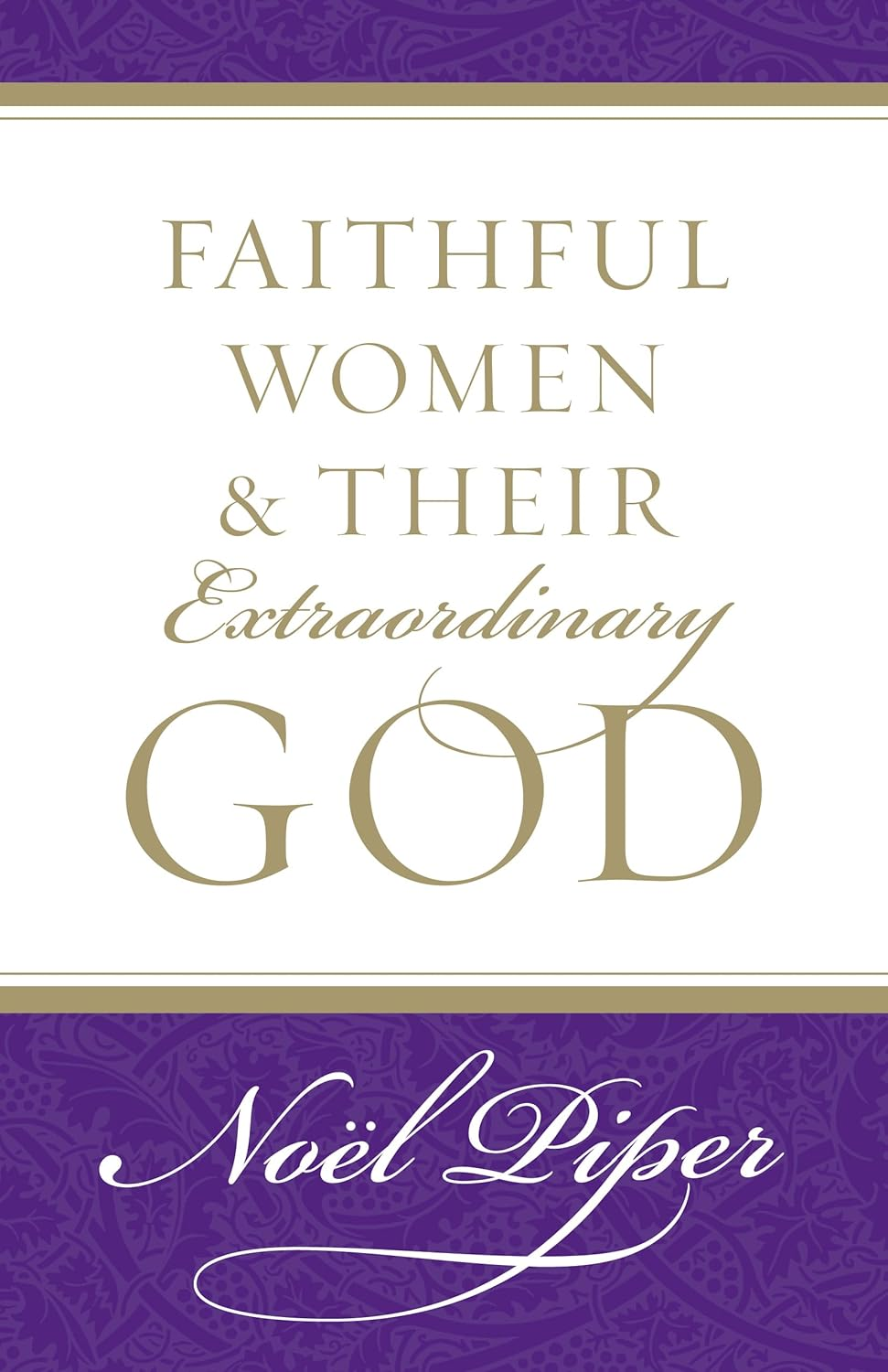




 He was a “give it to me straight” kind of guy.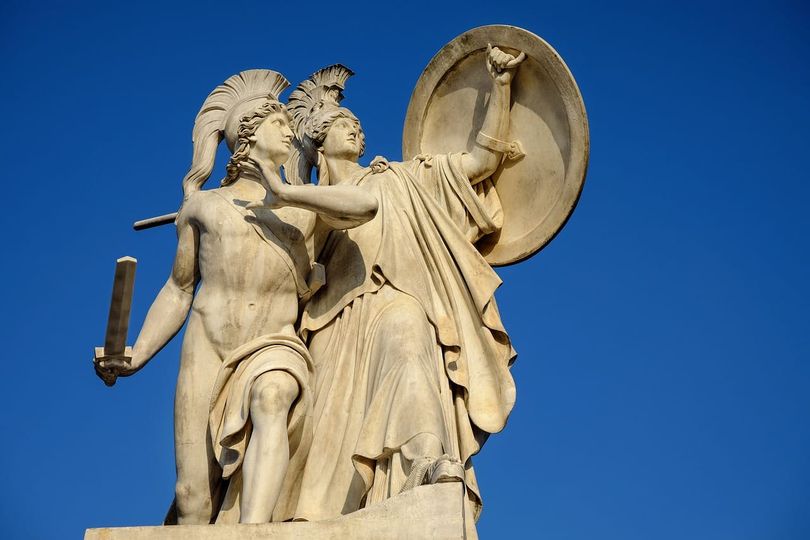
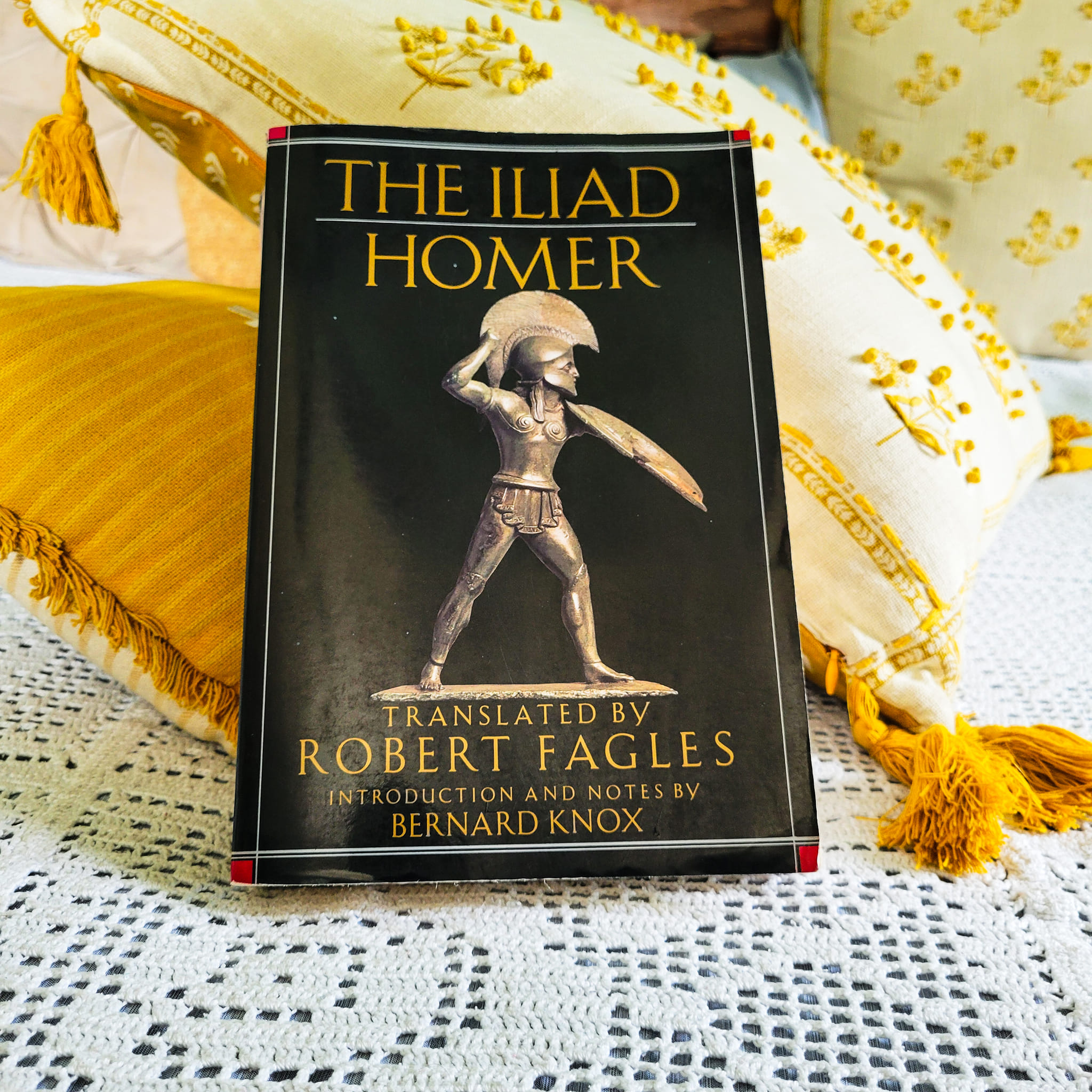


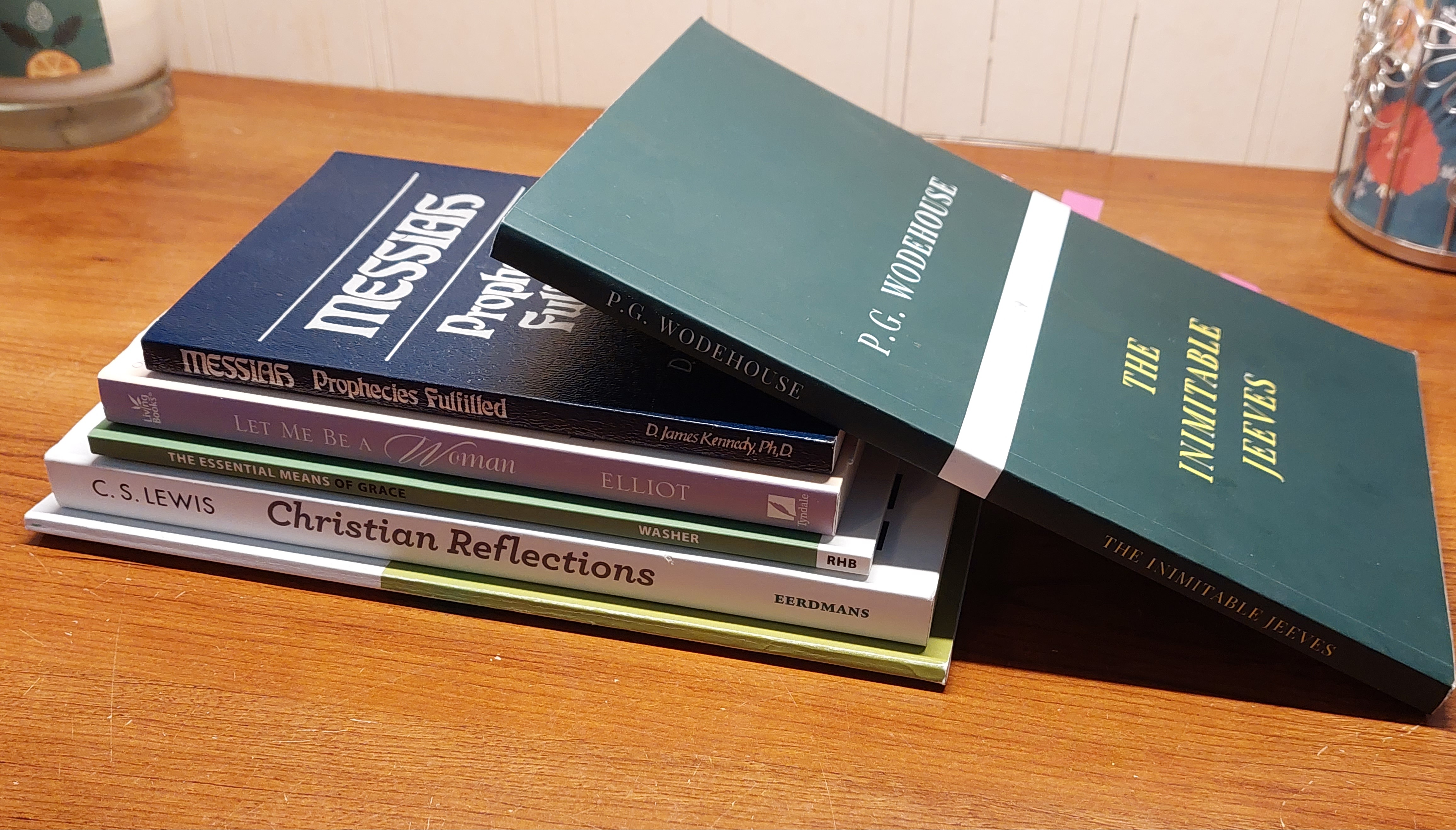


 Kept and Keeping