
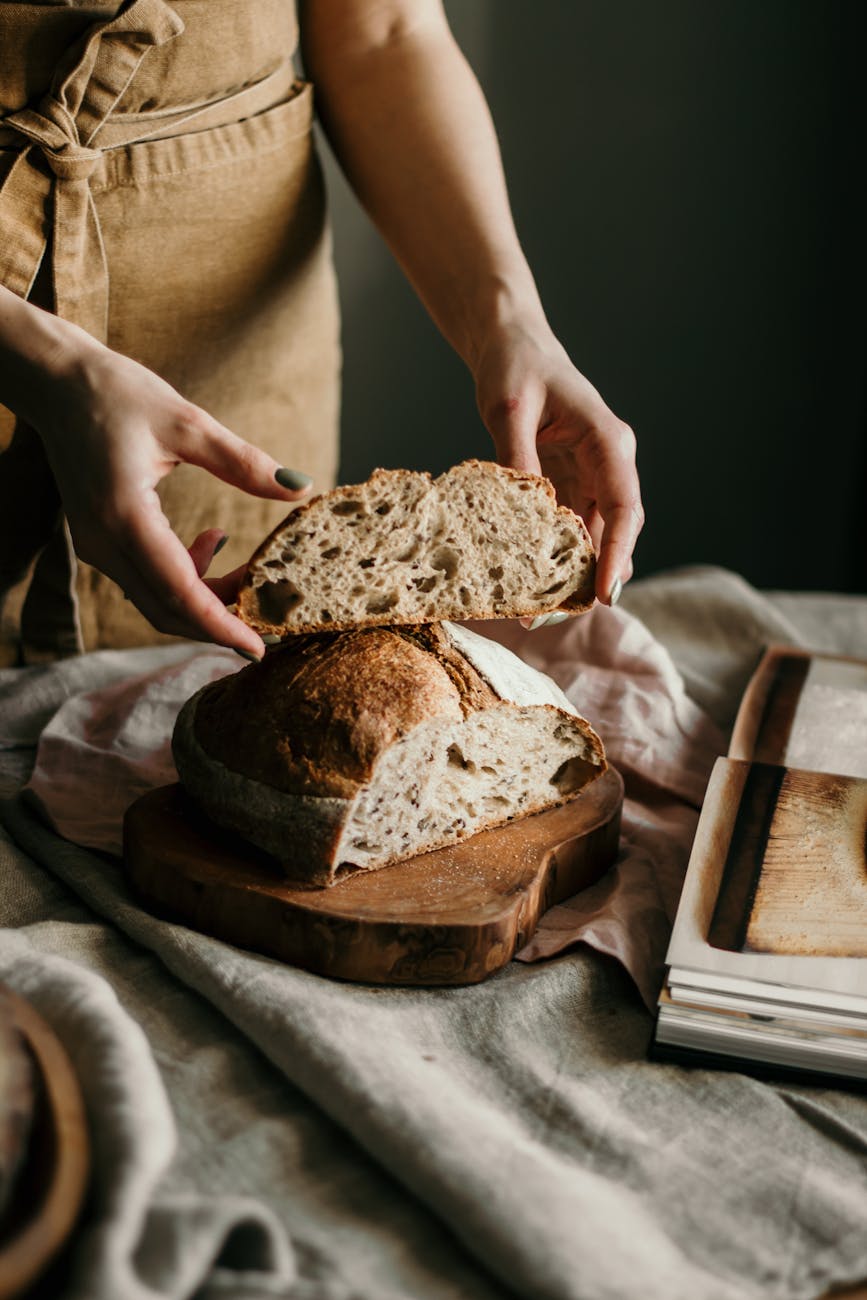
Have you ever gotten sucked into those bread making reels on social media? They can be mesmerizing and inspiring. But “like” enough of them, and the algorithm will feed you more of the same—only it’ll up the ante. They won’t just be women baking bread for their families—they’ll be women running home bakeries, producing 100 beautiful loaves a day.
What was once encouraging becomes discouraging.
If the images you see in internet reels are the measure of your godliness, you’ll find you can’t keep up. And if you try to keep up with someone else’s calling, you might find that it becomes a distraction from following your own.
Let’s dig in.
Images, Motivation, and Godliness
Our image-driven culture gives us a lot of aesthetics we could idealize as “true, biblical womanhood.”
Back in the early days of my own marriage, it was the Victorian woman or pioneer. Today it might be the trad wife. Or the homesteader. Or the gentle parent. Or the classical bookish type. Take your pick.
Images can be deeply motivating. I think this is why we like them. We want something to embody our ideals so that we can see what we’re after and work towards it. This isn’t all bad. “Follow me as I follow Christ,” is a pattern Paul left us in the Scriptures, after all.
But after 16 years of marriage, my own idealism and my husband’s have had plenty of time to bump up against each other and be disappointed (turns out we’re both human and sinners and finite). I can now see how chasing an idea of a godly wife is different from being one.
Let’s say I’m 27, and I decide to try out the wears-skirts-and-makes-her-own-bread version of biblical womanhood. Neither of those things are bad. But am I making bread because it saves my family money and provides greater nutrition, or am I doing it because it fits the image? Do I wear skirts because I delight in flowy, feminine clothing that my husband appreciates, or am I again seeking to craft an image that makes me feel more godly—or that I think gains approval from my tribe?
My motivation and walked-out attitude in these things matters immensely.
How I respond to my husband and children and manage my time and resources in the day-in, day-out details of making a life together tells a lot more about my godliness than the style of clothes I’m wearing or the on-trend baking projects I undertake.
Godliness is oriented toward God in our hearts and in all we do. It isn’t measured merely by activities and accessories.
The Wrong Image Can Create Blindspots
We ought to use our imaginations to help us envision what biblical womanhood can look like in our lives as wives and mothers (and it’s even better when those imaginations are informed by the real lives of godly women in our local communities). But when we fixate on the image or the persona—the meta-narrative we want to tell about our lives, especially when it’s informed more by social media than by reality—we may be at risk of blinding ourselves to the very real everyday decisions that actually add up to a life of obedience.
It’s entirely possible to think you’re checking all the boxes (because it sure looks like you are on the outside!) all-the-while neglecting to respond to your children’s needs in a timely manner or do that thing your husband asked you to do that you really-didn’t-wanna.
It’s pretty easy to craft an image of a godly, selfless wife and mother while being selfish and ungodly in the moments of our days.
Aesthetic does not equal character. Aesthetic does not equal godliness.
The desire to honor God in the way we live our lives is good. I think this motivates a lot of young wives and mothers to seek out inspiration to live the life they believe will do just that. My own motives were in this zone as a younger woman.
But I’ve come to realize that taking what might be steps in the right direction doesn’t mean we won’t face temptation along the way. And it sure doesn’t mean that when we do we’ll see that temptation for what it is. This is where that image-crafting can get us into trouble. We’re already sinners with a tendency toward self-deception (see Jer. 17:9).
The really surprising thing is that we can use even good things to keep ourselves deceived.
I’ve put on the prairie muffin uniform, and I’m doing all-the-things. How can I go wrong?
By fixating on the image—the outward appearance and all the accompanying gear and choreography—we may unwittingly create blind spots in our lives at home. Your husband and kids don’t actually care if you are on-trend among Christian women on Instagram. They care how you show up with them on an average day in real life.
To the Word
If the fall of professing Christian social media and reality TV stars teaches us anything, it’s that we can project a wholesome image to the world while rotting out on the inside. We do well to guard against this.
The two greatest commandments, to love the Lord with all our heart, soul, mind, and strength, and to love our neighbor as our self, are far more important than looking like a particularly curated and re-imagined version of the Proverbs 31 woman. That ideal woman (who is probably at least in mid-life at the time of writing 😉 ) dresses well and rolls up her sleeves to get things done, but it’s in the fear of the Lord, with the teaching of kindness on her tongue, and I guarantee you it’s in reference to the needs of her own family and community and not about chasing a fad.
Even Titus 2 speaks of the character of a godly woman—sensible, kind, pure, loving, working at home, alongside her husband—without dictating an aesthetic or a specific to-do list. And in 1 Peter, we’re instructed to have a gentle and quiet spirit, to hope in God, to do what is right without being frightened by any fear…over against a preoccupation with outward appearance (“not the putting on of dresses…”). Even in 1 Timothy where we get some instruction on modest dress, the emphasis is actually on living like women who are making a claim of godliness, with a reputation for good deeds.
We’re directed away from an image and to a kind of character—one that loves and fears the true God, works heartily for the good of others, and embodies the fruit of the Holy Spirit, especially in her closest relationships.
If a pagan or an atheist can put on the same uniform and take up the same tools (and they do, friends), then maybe playing the role of the trad wife or homesteader isn’t what makes us godly.
When we recognize that we are beholden to the Scriptures and that paying attention to our own people can help us see where we need to grow, it actually frees us from the bondage of feeling like we need to conform to the next fad in supposedly-biblical-womanhood that pops up in our feeds.
And the freedom from outward pressures to either adopt an image or craft one can leave us with enough peripheral vision to see how the Holy Spirit might be shining a light on areas where we need greater trust and repentance and obedient love.
When we see clearly and repent quickly, our consciences can be clear because we’re confessing sin and taking it to the cross where Jesus has paid for it in full. And we can then pursue styles and hobbies that we enjoy to the glory of God and that build up our families to the glory of God—regardless of whether those things “fit” a particular image.
When we see with this kind of clarity and move in this kind of freedom, our eyes can then be fixed on the only image that is really worthy of beholding, the ultimate inspiration for living a godly life: Jesus Himself. And none other.
Be godly. And then go ahead and bake the bread. Put on that skirt, if you want to. Enjoy it all to the glory of God. But make sure it’s for Him, for your family, for you. And not for the masses. Not for the likes and follows. Not for the sake of crafting an image.



 Kept and Keeping