• Home
  • About
  • Living Faith
  • Home and Family
  • Home Education
  • Books
  • Recommended Resources
  • Media

Kept and Keeping

~ Rest in Grace, Labor in Love

Kept and Keeping

Tag Archives: Home and Family

Wise Women Build Up, Part Two: Good Works

30 Friday May 2025

Posted by Lauren Scott in Home and Family, Living Faith

≈ Leave a comment

Tags

bible, biblical womanhood, Christian hospitality, Christian life, Christian Women, christianity, devotional, faith, god, Good works, Home and Family, Homemaking, Jesus, motherhood, Wisdom

The following article and the other two in this series are talks that I gave at a women’s retreat in my area. The theme was “Pioneer Women”, and the scriptures were chosen for me. It was a fruitful exercise for me and a delight to get to share some insights from God’s word with the lovely ladies who gathered to hear it. I hope you’ll find it to be an encouragement to you, as well. Building on the foundation of Godly Wisdom, this second article discusses a Christian woman’s Good Works, and the third article focuses on the Gracious Words that ought to flow from hearts that have been redeemed by the love of God through the gospel of Jesus Christ.

In Part One we covered how Godly Wisdom can help us build up our homes and people. Now we’re going to look more specifically at how that Godly Wisdom produces a life of Good Works.

First we’ll discover from our passage that modesty and Good Works flow from the same heart.

Then we’ll look at examples of Good Works and consider how they might look different in different seasons in our life.

And then I have a poem to share with you.

wise women build up good works christian

Getting Dressed in … Good Works

Our world puts a lot of emphasis on outward beauty, and we all have likely felt the pressure to keep up. There’s an endless supply of makeup and beauty products from companies that are eager to play on your insecurities as a business strategy. Fast fashion provides an endless supply of clothing and accessories, cheaply made, and changing from season to season so that you’ll always fall behind.

These influences can promote insecurity about who we are, competition with others, and the temptation to exalt ourselves to keep up. While it’s good to care for your body and your physical appearance, it’s not good to sell your soul to do so, or to crowd out things that are far more important.

To that point, let’s take a look at 1 Timothy 2:9-10:

Likewise, I want women to adorn themselves with proper clothing, modestly and discreetly, not with braided hair and gold or pearls or costly garments, but rather by means of good works, as is proper for women making a claim to godliness.

The apostle Paul calls us to wear proper clothing, but even more so he calls us to adorn ourselves with good works!

Modesty is part of the context of our passage, so I want to give you something you can take home on the subject—and you might be surprised that it actually relates to our topic of good works. The Greek word translated “modestly” or “with modesty” in many of our English translations means “shame.” But it’s not the wallowing, debilitating kind. In fact, in the only other place it’s used in the New Testament, it’s translated “awe” toward God. So this is a shame that doesn’t get stuck feeling bad about oneself but rather sees the importance of something outside itself. It’s a kind of shame that goes hand in hand with honor.

God is worthy of honor, so I would be ashamed to do something or wear something that would dishonor Him. The people around me are worthy of honor, so I would be ashamed to do or wear something that would in some way harm or dishonor them. My body, which God has made, is worthy of honor, so I would be ashamed to wear something or behave in a way that treats it as though it’s cheap.

When we know what is truly valuable, we order our lives to reflect it. When we see God for who He is, the most other, the most holy, the most powerful, loving, just, merciful, and good—worthy of all praise and adoration; when we see that this amazing God sent His own Son to die so that we could live; when we see that our sin and shame was nailed to the cross and Jesus’ righteousness has been credited to our account—then our tendency to want to exalt ourselves by what we wear or do melts away. That’s where a truly modest heart comes from. And that’s what drives both our manner of dress and what we choose to do with the time and energy we are given.

Our primary focus is not on showing off our wealth or our bodies or even our self-righteousness. Our primary focus is on honoring God and others by what we wear and even more so by what we do.

What Good Works?

So if we have clothed ourselves first with godly wisdom, which in this case means a heart that values God supremely and that sees the value of others and wants to honor them, how then do we clothe ourselves in good works? What can that look like?

1 Tim. 5:9-10 gives a list of good works that were to make up an older widow’s reputation if she was to be assisted by the church. What kind of works were listed there?

Bringing up children — Don’t forget that your care for your children is not just a good work, it is one of the greatest works of your life. Devote yourself to doing it well. Those of you that work with children, whether you have any of your own—nurturing and caring for them, teaching them and pointing them to Jesus—that is a good work. If you give to support the work of ministries who care for children, who care for women facing a surprise pregnancy, who help the foster or adoptive parent community. These are all good works.

Showing hospitality to strangers — In the ancient world, this often meant welcoming a traveler into your home, providing every comfort and sustenance for their stay and helping them on their way when it was time to leave. When we open our homes to others, it has the potential to nourish them spiritually, physically, emotionally—in just about every way.
hospitality good works christian women

So look for and invest in those opportunities the Lord brings to show hospitality: whether it’s having people into your home to share your food and your life with them, or cooking food for a potluck at church enabling a longer and more intimate time of fellowship on a Sunday afternoon, having someone live with you while they’re between jobs or housing options, or throwing a graduation party, bridal shower, baby shower, charitable bake sale, you name it.

By this work of provision and hosting, we women have the ability to deeply impact our families, our churches, and our broader communities, bidding them each to taste and see that the Lord is good and that fellowship among His people is sweet. That the grace that saves us is also a grace that changes us. It is amazing how God uses the love of Christians for one another to draw people to trust in Jesus.

Washing the feet of the saints — This is about serving in lowly ways. Feet get dirty. And they especially got dirty back in Bible times. Do you think certain acts of service are beneath you? Or are you willing to stoop down and do the work that must be done, whatever it is? Cleaning toilets. Changing diapers. Staying up with a toddler until they’re done throwing up the last bite of supper. Staying up through the night praying with a friend until she’s willing to flush that last joint. Pet sitting for a neighbor when you’re not a pet person, but her husband is in the hospital, so of course you say yes. These moments are not glamorous. They’re not fun. They may not line up with your gifts. And they won’t make it on your resume. But God sees. And He delights in and works through such sacrifices when they are offered to Him in faith.

Assisting those in distress — James tells us that part of true religion is visiting orphans and widows in their distress. The focus here is not just on the material need; it’s about those who are suffering alone: widows, orphans. Loneliness is a very real problem today, even in our supposedly connected modern world. Sometimes the best thing you can do for someone is simply show up. On an average Tuesday afternoon. Or in the hospital. At the funeral. With a card or flowers a year later at the anniversary of a loss. At their home with a warm meal or cup of coffee and an offer to listen.

This is where today’s hustle culture can really lead us astray. Chasing our dreams with no concern for the needs of those around us means we likely don’t even see them. And if we do, we excuse ourselves. We don’t have time. We’re too busy getting ahead.

But true religion sees and seeks to meet needs.

Good Works Go Both Ways

Now, I want to tell you a story that demonstrates how good works don’t always have to go in one direction.

Almost two years ago there was a godly older man in our church whose wife was dying of cancer. A storm had downed a lot of limbs in his yard, but he didn’t have the time or energy to handle it in that season—especially not by himself. My husband Nathaniel organized a group of men from church to show up on a Saturday to cut and haul and burn until his yard was cleared.

Several months later, after his wife went home to be with the Lord, Nathaniel broke his hand. There was a lot of work to do on our property, and he was discouraged about it. So, I planned a surprise work day party for his 40th birthday, inviting friends from church to come help us clear brush and get our garden ready for the season. And you know who was the first person to show up that day, chainsaw in hand, ready to serve? The very same man my husband had helped several months before.

Sisters, that’s what it looks like when the church behaves like a family. Or like an old-time community on the frontier, where neighbors help each other. It’s just what they do. There’s not one class of people doing good works all the time with another class of people always on the receiving end. We each serve when we’re able and how we’re able. And we receive with gratitude when we’re the ones in need.

Part of making this kind of thing happen, though, is being vulnerable enough to share our needs with others so that we give them the opportunity to joyfully meet them in the name of Jesus.

There’s a particular need that my husband and I have noticed in recent years. There are a lot of young people, and even some approaching middle age, whose parents never taught them how to do basic life skills. They need someone to step in and provide for them the kind of life training that they didn’t receive growing up. If your parents taught you a handful of life skills and you’ve been on your own or caring for a family for a decade or more, you probably take your skills for granted. You don’t have to be a homesteader and make sourdough to have something to offer. The skills you’ve gained over the years are incredibly valuable, and there are people who need to learn from what you know.

Aside from the obvious home skills, what other skills do you have that could bless the people around you? In your church? In your place of work? The point here is not to zero in on any one set of skills, but to see what you have to offer that meets the needs of the people around you.

Good Works, Different Seasons

It’s cliché but true: We can’t all do everything, but we all can do something.

Sometimes we’re in a season of expansion—where we find we are capable of taking on more responsibility, more good work out there. Other times, we find ourselves in a season of pulling back, focusing on the essentials—or even being more on the receiving end of other people’s good works and service on our behalf. There is no shame in any of these seasons. If you can’t give much right now, if you are doing a lot more receiving than giving—then do so graciously. Give thanks. Don’t let feelings of guilt crowd out your ability to rejoice in the good work God is doing through others while you receive it or watch from the sidelines. And don’t forget that your prayers are a very important part of the work of the kingdom.

If this message finds you in a season of overwhelm, where you’re thinking, this all sounds nice, but I’m swamped, maxed-out, worn out… let me encourage you that the Christian life isn’t about doing more. Some may need a nudge to get moving, maybe you don’t.

At the next opportunity, I encourage you to step outside. To take a moment to pause. Take some deep breaths, and look around you at this incredible world that God has made. A world that He keeps spinning. A whole big world that doesn’t depend upon you. You don’t have to carry the weight of the world. God’s got that covered.

Soak up what God has made—the birds of the air, offering up their songs to the Lord and to our ears for our enjoyment; the trees and flowers in bloom, filling our view with dazzling colors. And consider. God cares for each of these. And He cares for you, too.

In all your busyness, in all your responsibilities, in all your overwhelm, don’t forget your Heavenly Father’s tender care for you—and cast your cares on Him. Seek first His kingdom and His righteousness, and all these things will be added unto you. God cares and provides for His people. And the work that has you so bogged down right now may produce fruit in due season—if you do not lose heart. Do not grow weary in doing good.


For your reflection:

What are the good works that God is calling you to do right now? Are there things to add?

Is there anything on your plate right now that doesn’t belong there? That is either too much or all about exalting yourself? Or is it simply a distraction from the good work that you know God has called you to?

Are there good things that you are already doing, but you’re grumbling as you do them? Can you see with the eyes of faith that the work set before you is GOOD and therefore, it’s worth doing it cheerfully?

I’d like to leave you with a poem that Elisabeth Elliot often shared in her writing and teaching. “Do the next thing” may sound like just another modern, over-simplified, get-er-done mantra. But in the context of the poem and a life lived to the glory of God, it is much more: a call to live out our faith in Christ through surrendering to God in each task He sets before us, casting our cares on Him each step of the way.

DO THE NEXT THING

From an old English parsonage down by the sea
There came in the twilight a message to me;
Its quaint Saxon legend, deeply engraven,
Hath, it seems to me, teaching from Heaven.
And on through the doors the quiet words ring
Like a low inspiration: “DO THE NEXT THING.”

Many a questioning, many a fear,
Many a doubt, hath its quieting here.
Moment by moment, let down from Heaven,
Time, opportunity, and guidance are given.
Fear not tomorrows, child of the King,
Trust them with Jesus, do the next thing

Do it immediately, do it with prayer;
Do it reliantly, casting all care;
Do it with reverence, tracing His hand
Who placed it before thee with earnest command.
Stayed on Omnipotence, safe ‘neath His wing,
Leave all results, do the next thing.

Looking for Jesus, ever serener,
Working or suffering, be thy demeanor;
In His dear presence, the rest of His calm,
The light of His countenance be thy psalm,
Strong in His faithfulness, praise and sing.
Then, as He beckons thee, do the next thing.

But Rather By Means of Good Works

Being a wise and godly woman involves more than just donning the right outfit. Putting on a cotton prairie dress and some makeup can change your appearance, and that’s fine, but it doesn’t change your heart or get the work done for you.

prairie dress good work done christian

Please don’t let the algorithm or someone else’s business model determine who you are, how you dress, and what you do. Stay rooted in God’s word, dressing in a way that fits your profession of faith (and your daily activity!), and devoted to walking in the good works that God has prepared for you (1 Tim. 5:10 & Eph. 2:10).

women roll up sleeves good works

Dear Father,

Help us to be women who are willing to roll up our sleeves, to step into the messes of life to lend a helping hand to our brothers and sisters in need. Help us to not be afraid to get dirty, having the heart of a true servant, like our Lord Jesus who stooped down to wash the feet of His disciples and to heal those who were sick or unclean.

May we see all of our work—in our homes, in our jobs or studies, in Your church, in our local communities, and even reaching to other nations—may we see all of it as an opportunity to serve others and adorn the gospel, the message of good news that while we were sinners, utterly lost in our rebellion, hopeless to gain salvation by our own works—that You, Jesus, lived that perfect life that pleases God, that You died on the cross as a payment for our sins, so that simply by placing our faith and hope in You, Jesus, we could be forgiven and gain full acceptance into Your family.

Help us to trust in You, Jesus, to see our sin and need for salvation, that no amount of our own good works can save us. But may we also see Your incredible love for us and Your offer of forgiveness and the hope of eternal life. May we do good works because You have done the ultimate work, and it is finished. May we rest in grace and labor in love. It’s in Your sweet name, Jesus, that we pray. Amen.

Here are the other posts in this series:
Wise Women Build Up, Part 1: Godly Wisdom
Wise Women Build Up, Part 2: Good Works (that’s this post!)
Wise Women Build Up, Part 3: Gracious Words
Homemaker’s Journal: Things Fall Apart (Spring 2024)

23 Tuesday Jul 2024

Posted by Lauren Scott in Home and Family, Living Faith

≈ Leave a comment

Tags

faith, Family Culture, Good Friday, Home and Family, homemade, homemaker's journal, Homemaking, trials

It’s about time I got around to my second installment of my seasonal Homemaker’s Journal. If I had gotten around to it last fall, I would have shared all about how we survived our first season of middle school basketball (this was a boost to my meal planning skills, to be sure).

And maybe I would have included some pictures of holiday food prep.

But that was a busy season and it led straight into a hard season. And that’s what this post is about.

This year our family has suffered a loss, a broken arm, and a broken hand (all three of these separate instances within about six weeks of each other—and in this same time we missed both Christmas and New Years with extended family due to the flu). Since then, we’ve had the upstairs AC go out (still needs replaced), a car break down (was recently replaced), a fender-bender (oops), another vehicle AC failure, another broken-arm scare that thankfully turned out to be a sprain, and a freezer that put itself on defrost voluntarily (recently replaced but some food is still in my MIL’s freezer…).

While there were some tears and confusion in the first part of the year, and for good reason, these later trials have found us a bit incredulous and wondering what it all means…but they’ve also found us laughing.

“Well, ok, Lord. What’s next?”

Even when God’s providence is hard, we know He’s good.

I’ve also joked with Nathaniel that these things are probably all his fault since he suggested that we focus on learning to pray this year. 😉 (Here’s a book we’ve read on the subject: Prayer: The Church’s Great Need.)

Even as we work to fix things, pay medical bills, and budget for multiple major purchases, we’re trusting the Lord that He knows what He’s doing in all of this whether we ever figure it all out or not.

We feel the weight of each of these trials, but there’s a funny, non-congruent peace that comes when you can laugh at it all and look to the Lord with open hands. I think we’re learning contentment.

“It is always possible to be thankful for what is given rather than to complain about what is not given. One or the other becomes a habit of life.”
~~Elisabeth Elliot

Instead of grumbling about the cost, we could give thanks that we had enough savings to get what we needed without going into debt.

We could see the wonderful things growing in our garden despite not having had as much time to dedicate to it as we had planned. (And we can certainly give thanks that our friends helped us start our garden this year for my husband’s birthday since his hand was broken.)

40 birthday work day party garden

We could praise the Lord that He is indeed teaching us to pray. And not just for things but for hearts more ready to receive whatever it is that He chooses to give.

Now that you know the context of the past several months (or…year), let’s jump in to the things that have been growing despite all-the-things breaking down. Here are some of my cooking and gardening escapades from this past spring:

homemaker's journal
Candied oranges from Trader Joe’s and cinnamon Bundt cake.
cinnamon bundt cake homemaking
cooking homemaking
Baked chicken is always nice.
dinner homemaker
Baked chicken with home-grown sweet potato casserole and squash medley.
Dutch oven corned beef and cabbage
Learning to make corned beef and cabbage in my Dutch oven instead of the crock pot.
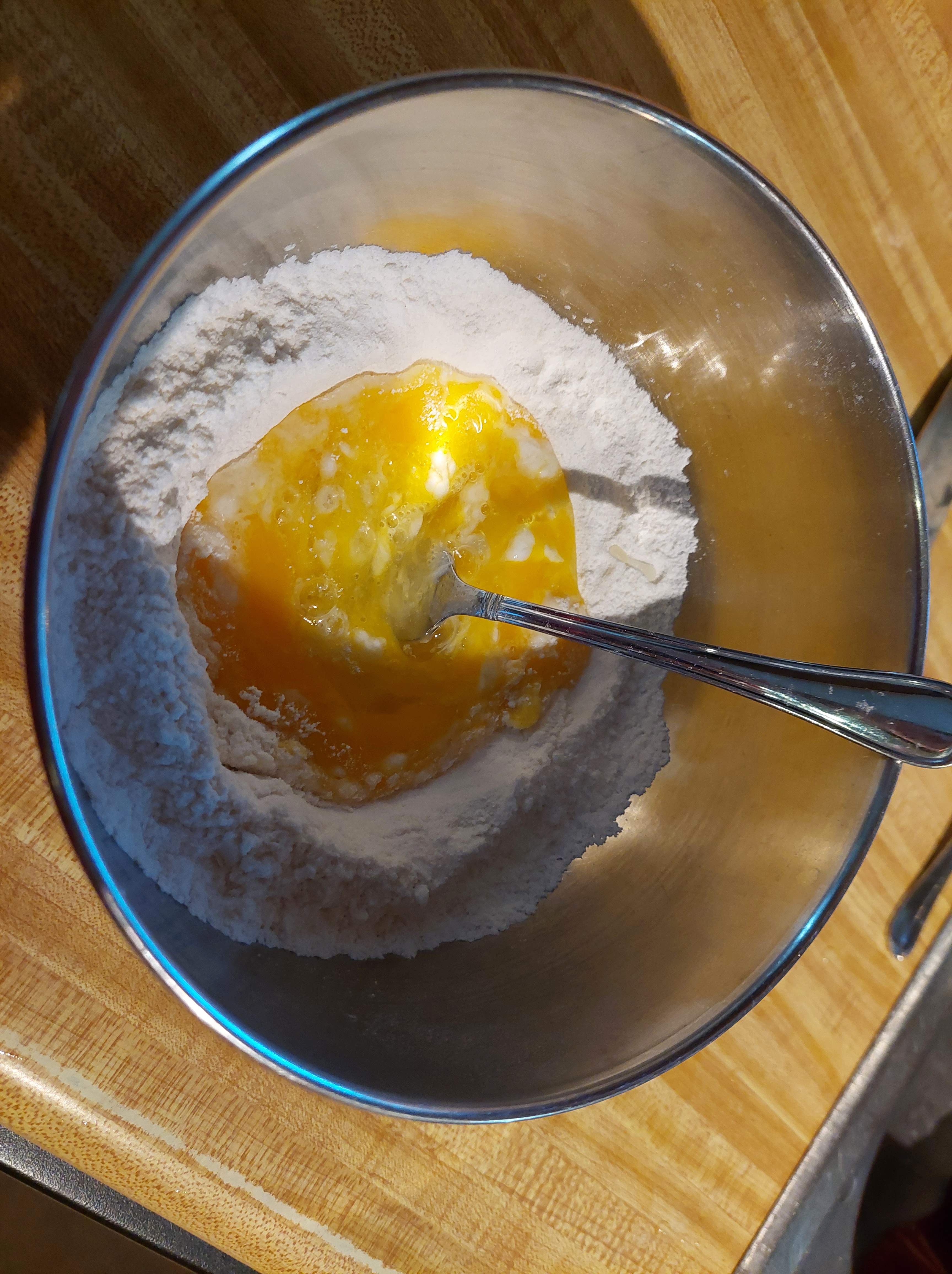
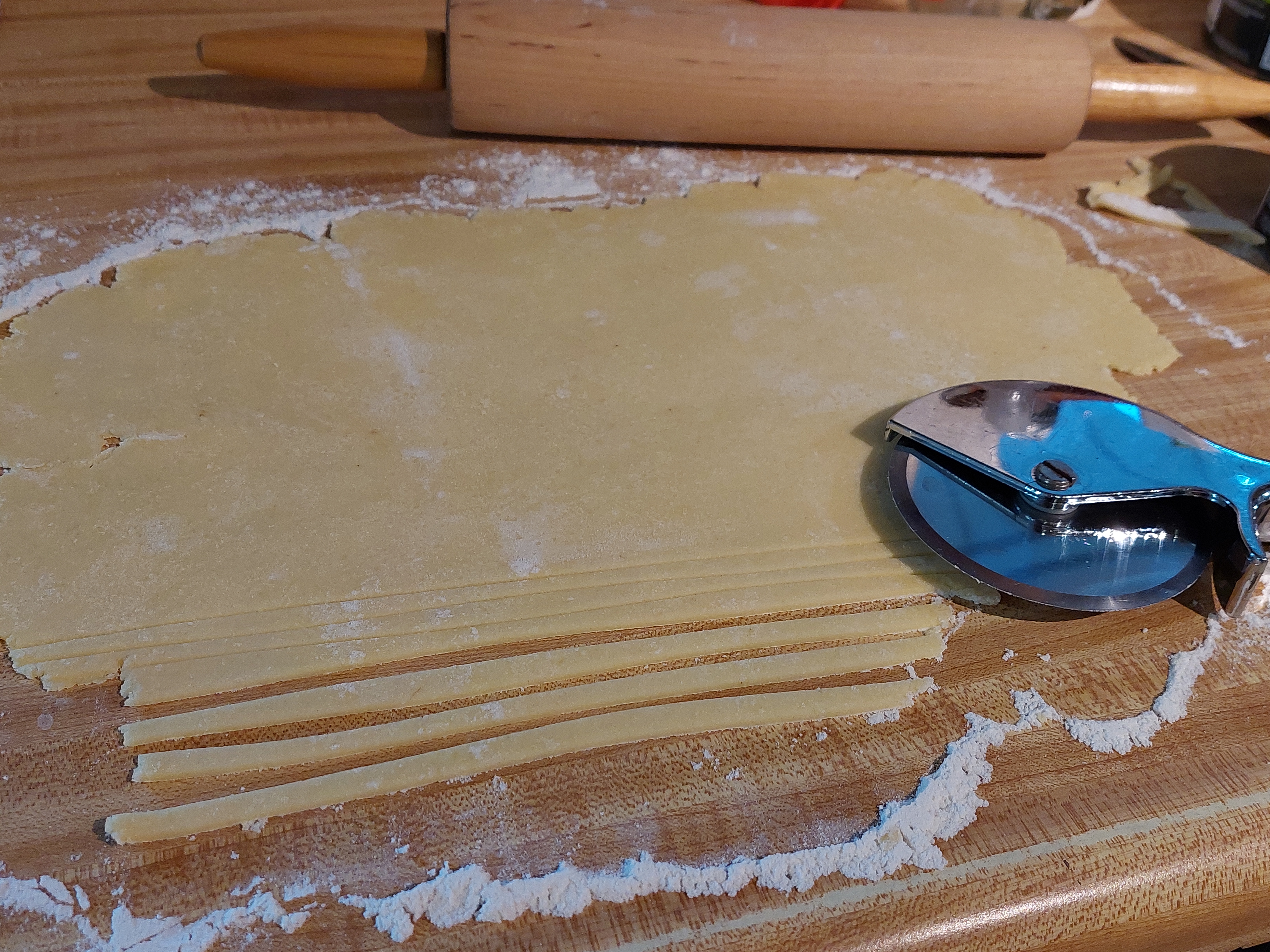
gluten free noodles homemade homemaking
Making gluten free noodles!
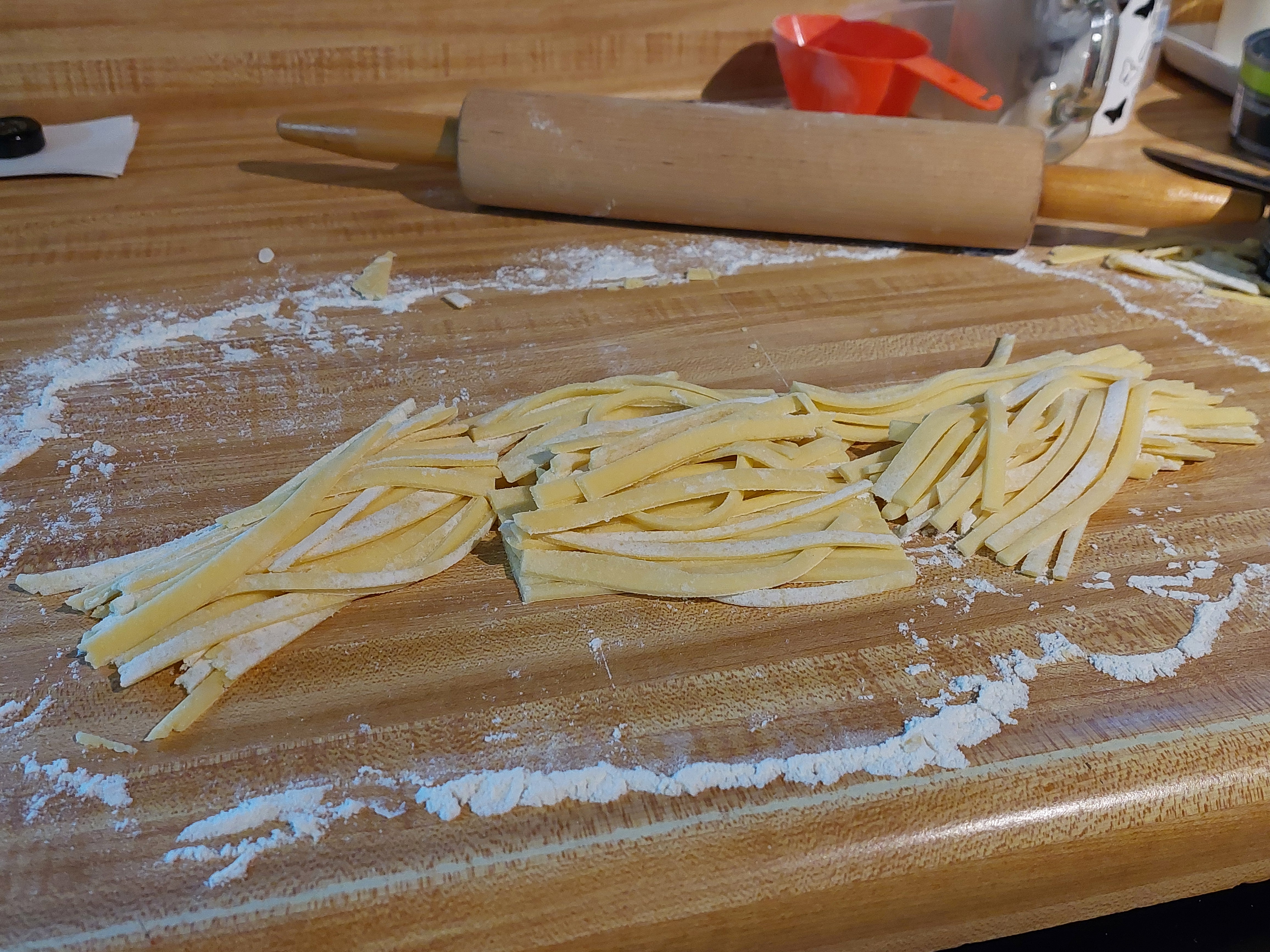
gluten free noodles
Homemade gluten free noodles!
Dutch oven homemade gluten free chicken noodle soup
Chicken noodle soup in Dutch oven.
Soup again
Looks nice in a jar for fridge storage.
dinner kit homemaker
Healthy chicken salad dinner kit I made for a couple at church after a hospital stay. Low sugar mousse with dark chocolate and raspberries for dessert. This was fun to put together!
garden home lettuce homemaker
Some of our lettuce starts!
Peas for planting!
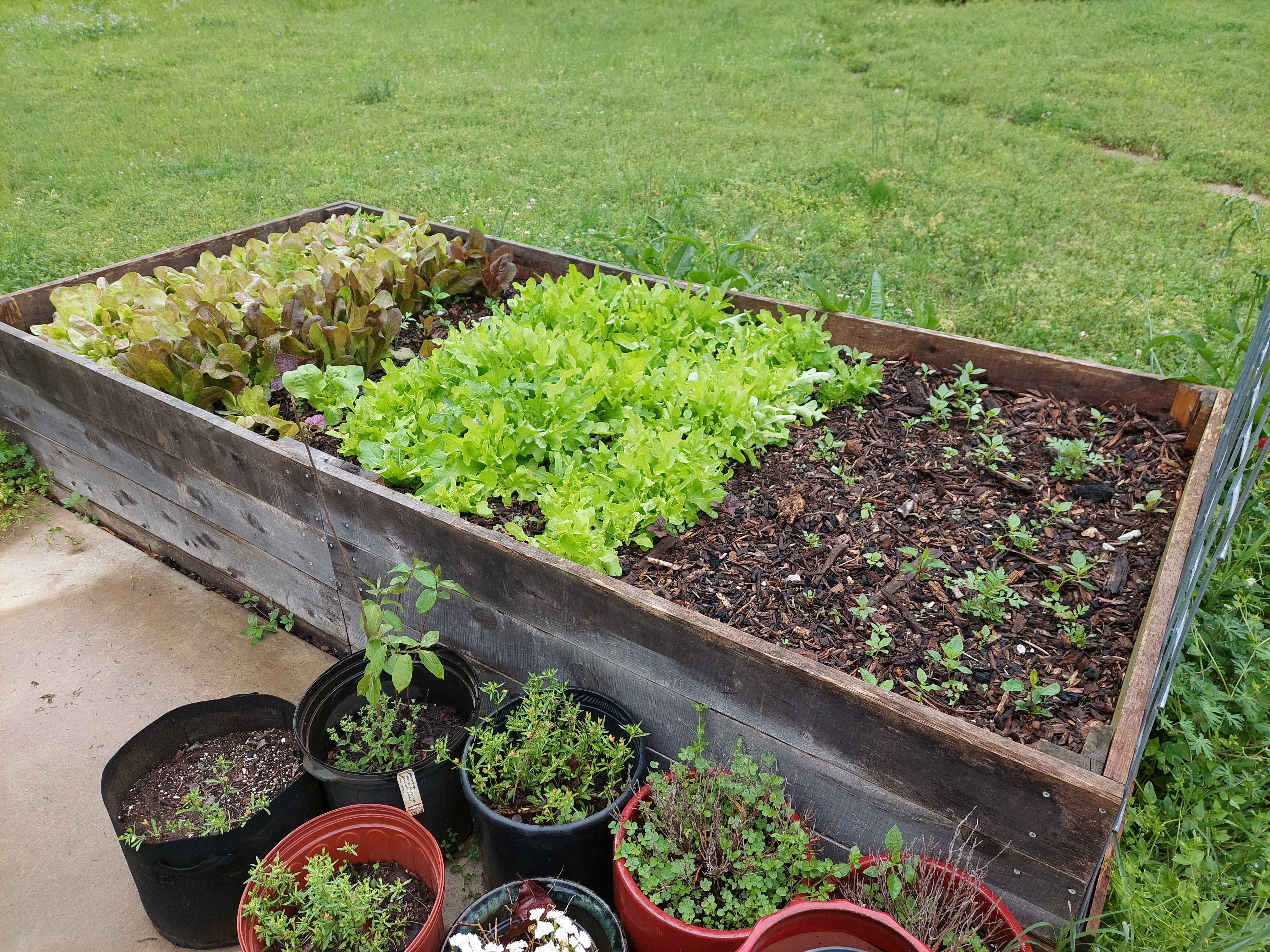
Prepping the raised beds…
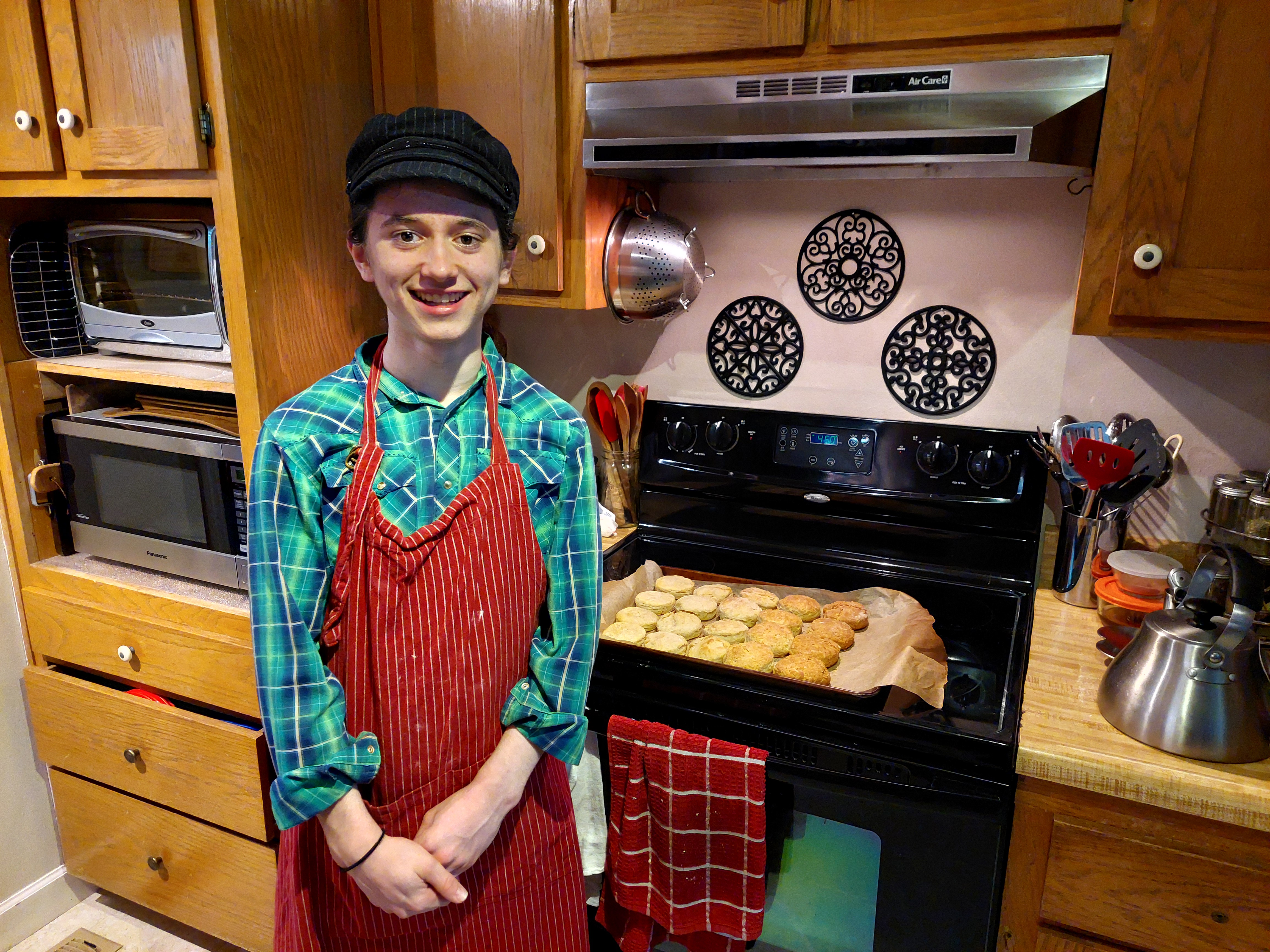
biscuits homemade
My oldest did a science fair project testing leavening agents in homemade biscuits!
Measuring rise.
garden lettuce mama
With my lettuces!
Gluten free Stromboli homemade
Gluten free Stromboli.
Gluten free stromboli homemade
Gluten free Stromboli. With sauce. Mmmm…
asparagus garden homemaker
Our first bunch of asparagus!
asparagus
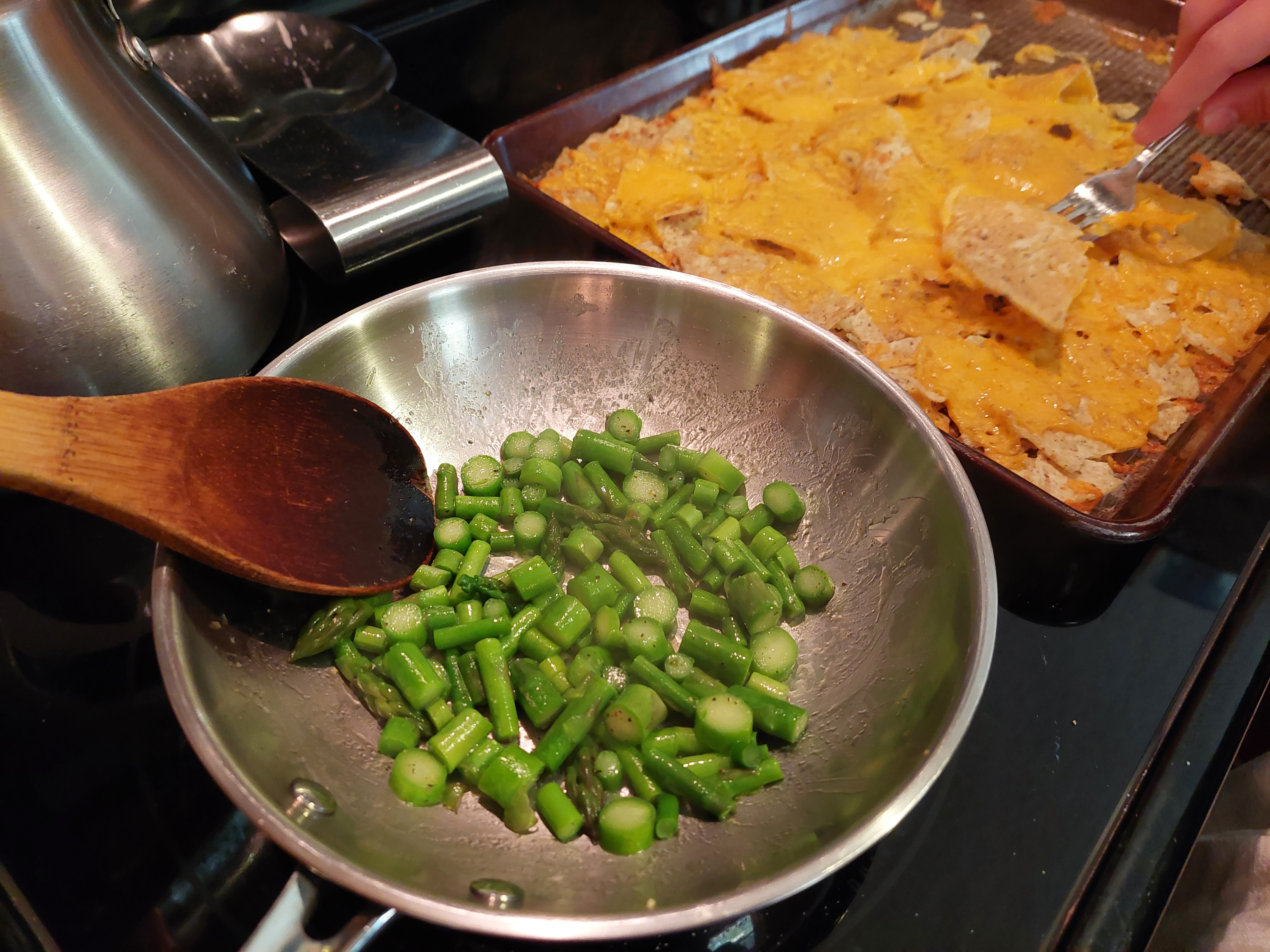
Fried up asparagus…with nachos. Because sometimes that’s how we roll.
hand pies homemade homemaking
Hand pies with left-over dough and homemade apple butter!
pi day pie homemade gluten free
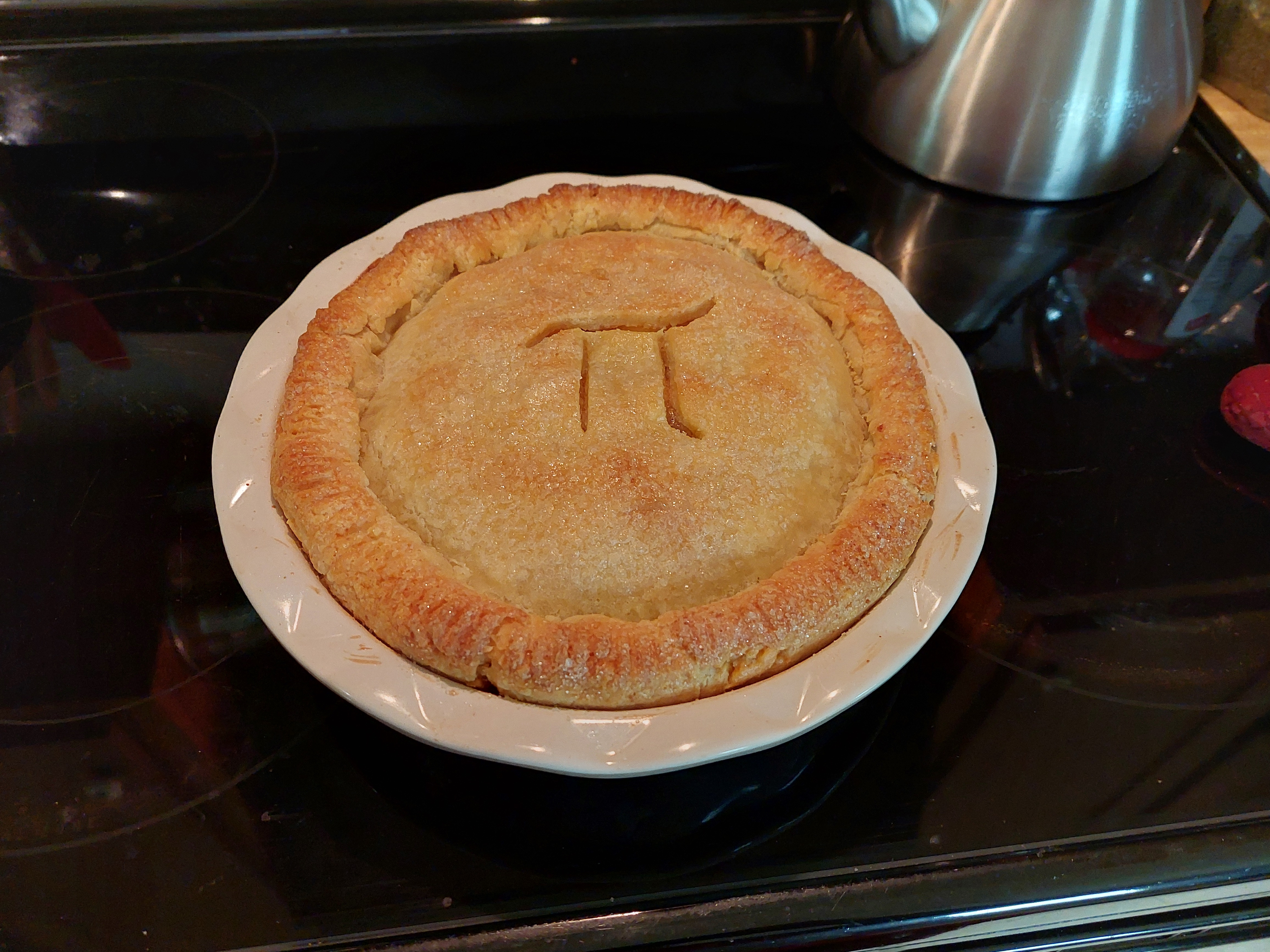
Gluten free apple pie for pi day!
pies homemade pi day
Pi Day celebration at our homeschool co-op.
biscotti homemade gluten free
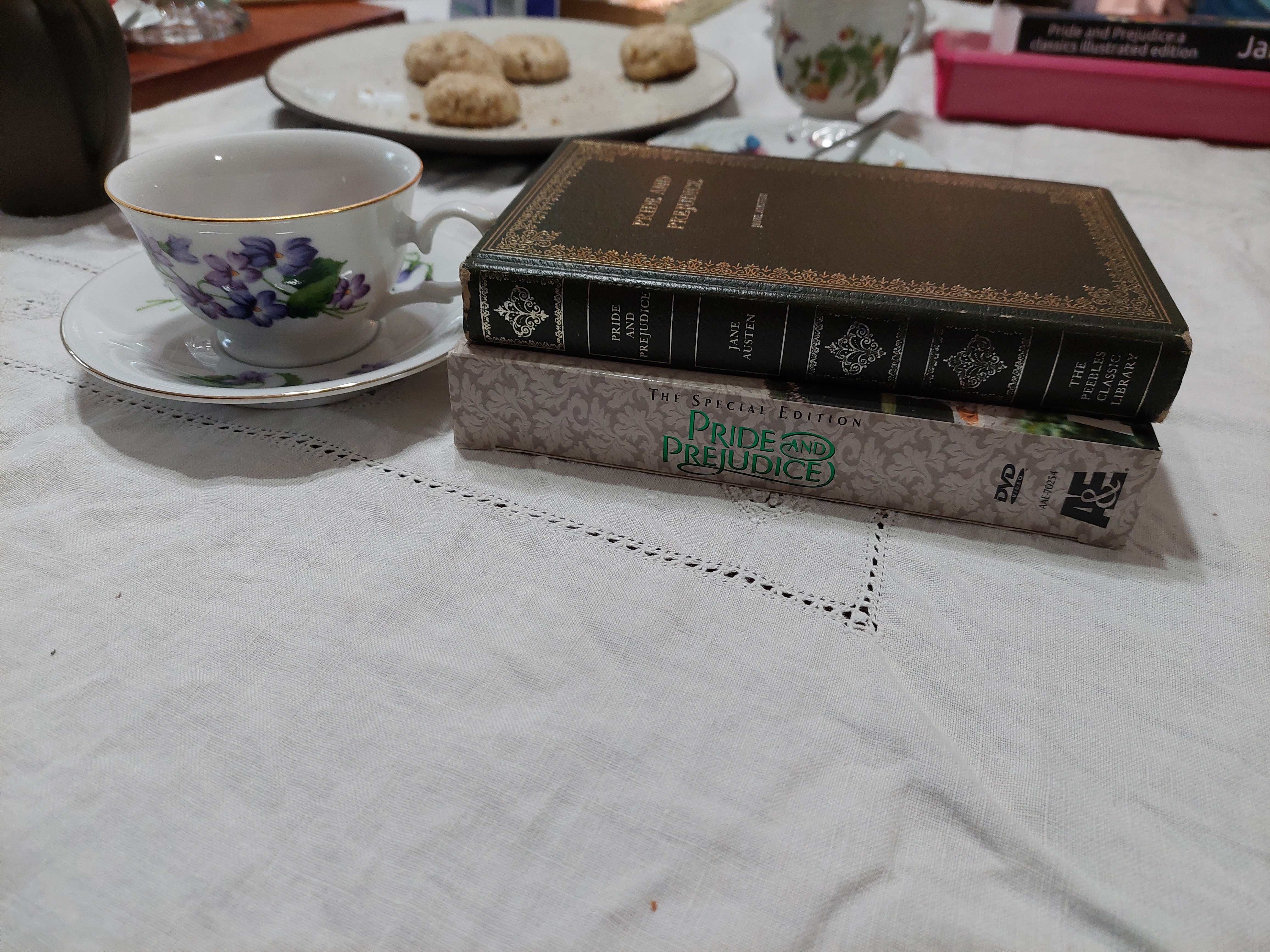
Homemade gluten free biscotti for our co-op book club discussing Pride and Prejudice!
Perfect with tea!
irish soda bread homemade homemaking
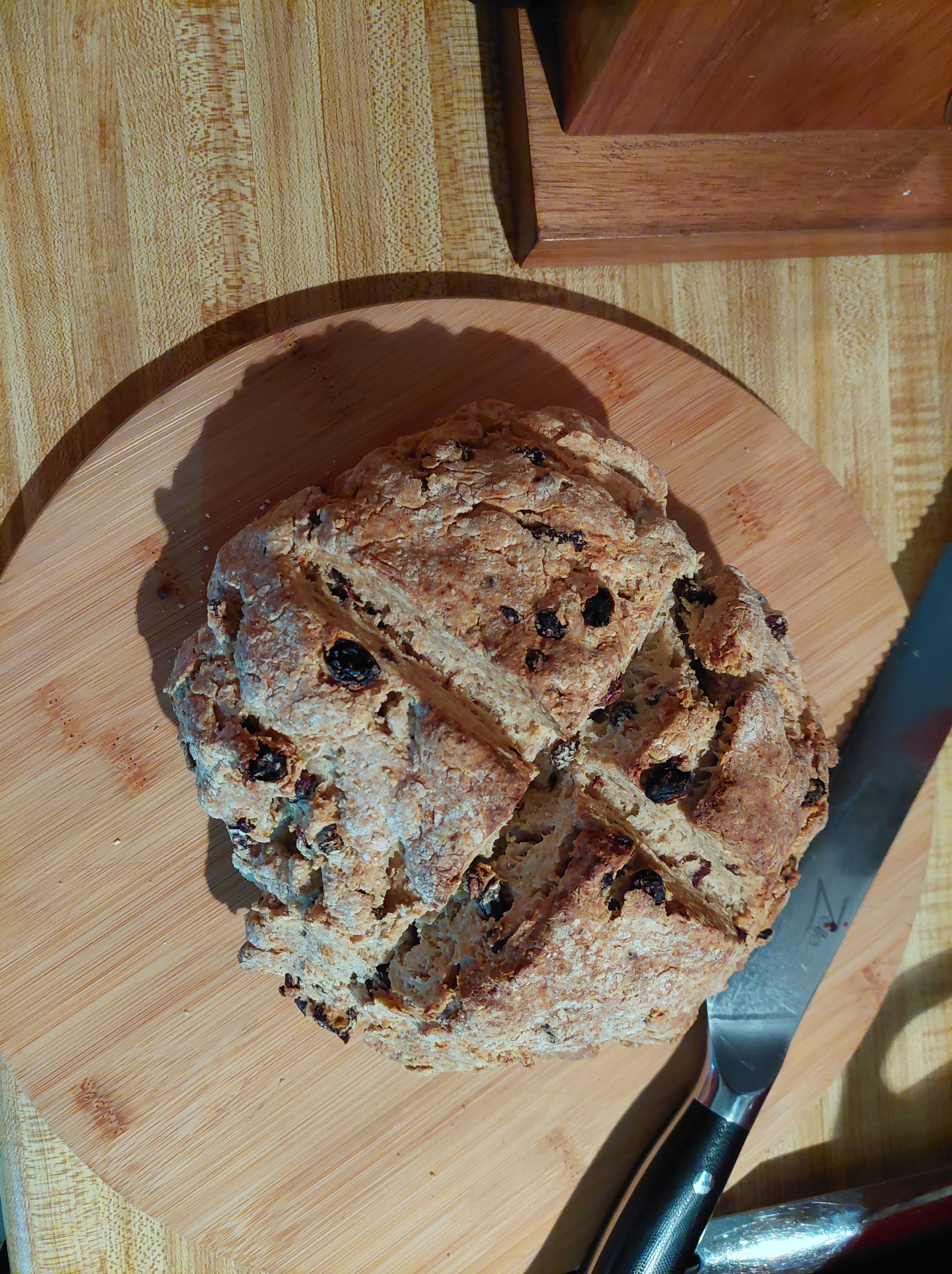
Irish soda bread.
kombucha homemade
Making fruit-flavored kombucha!
kombucha brewing
kombucha brewing homemaking
Kombucha brewing
Fruit favored kombucha!
garden sweet potatoes
Baking our garden sweet potatoes that we dug up last fall.
bread pickles homemade
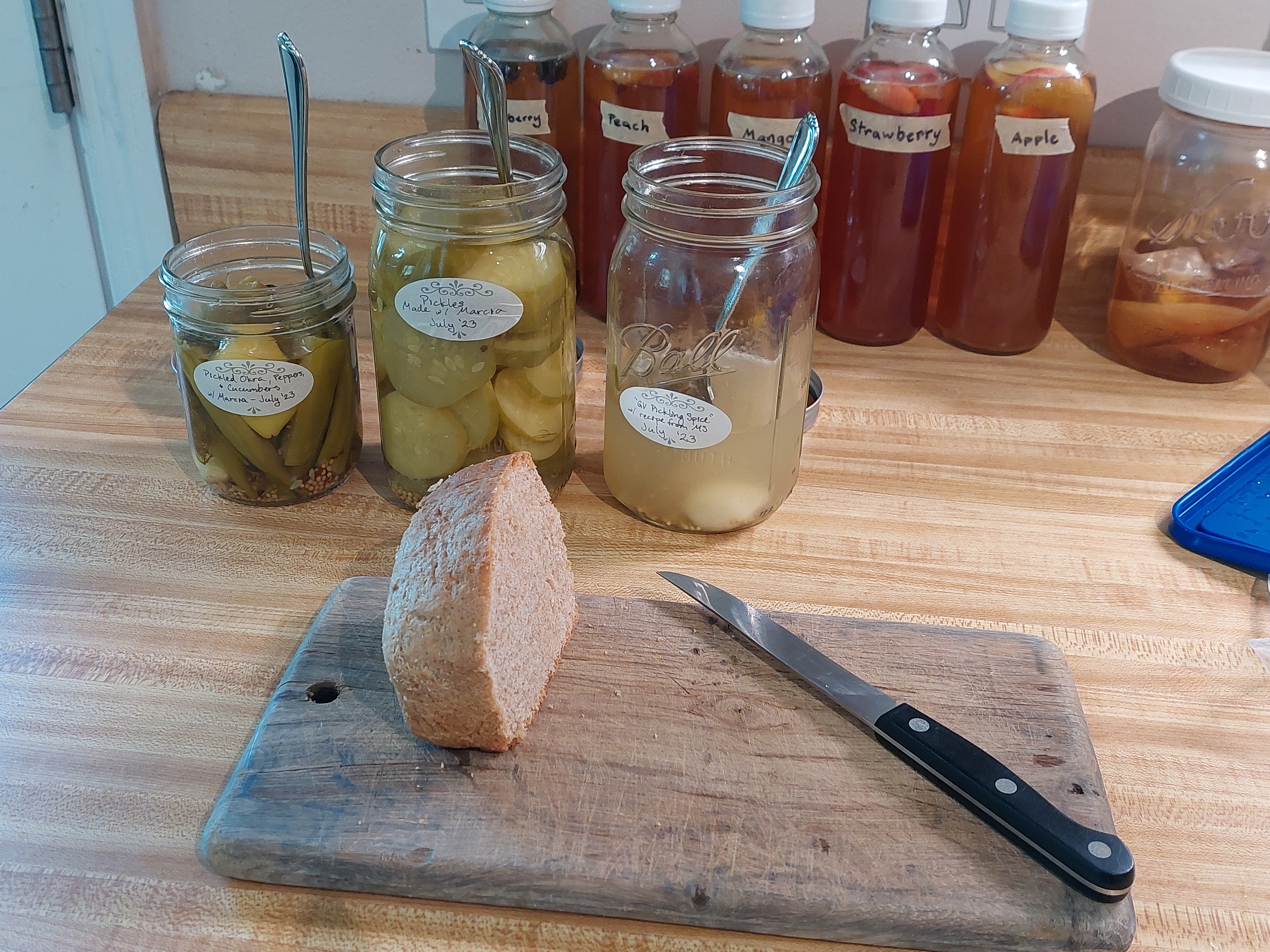
Home-grown and canned pickles and homemade bread.
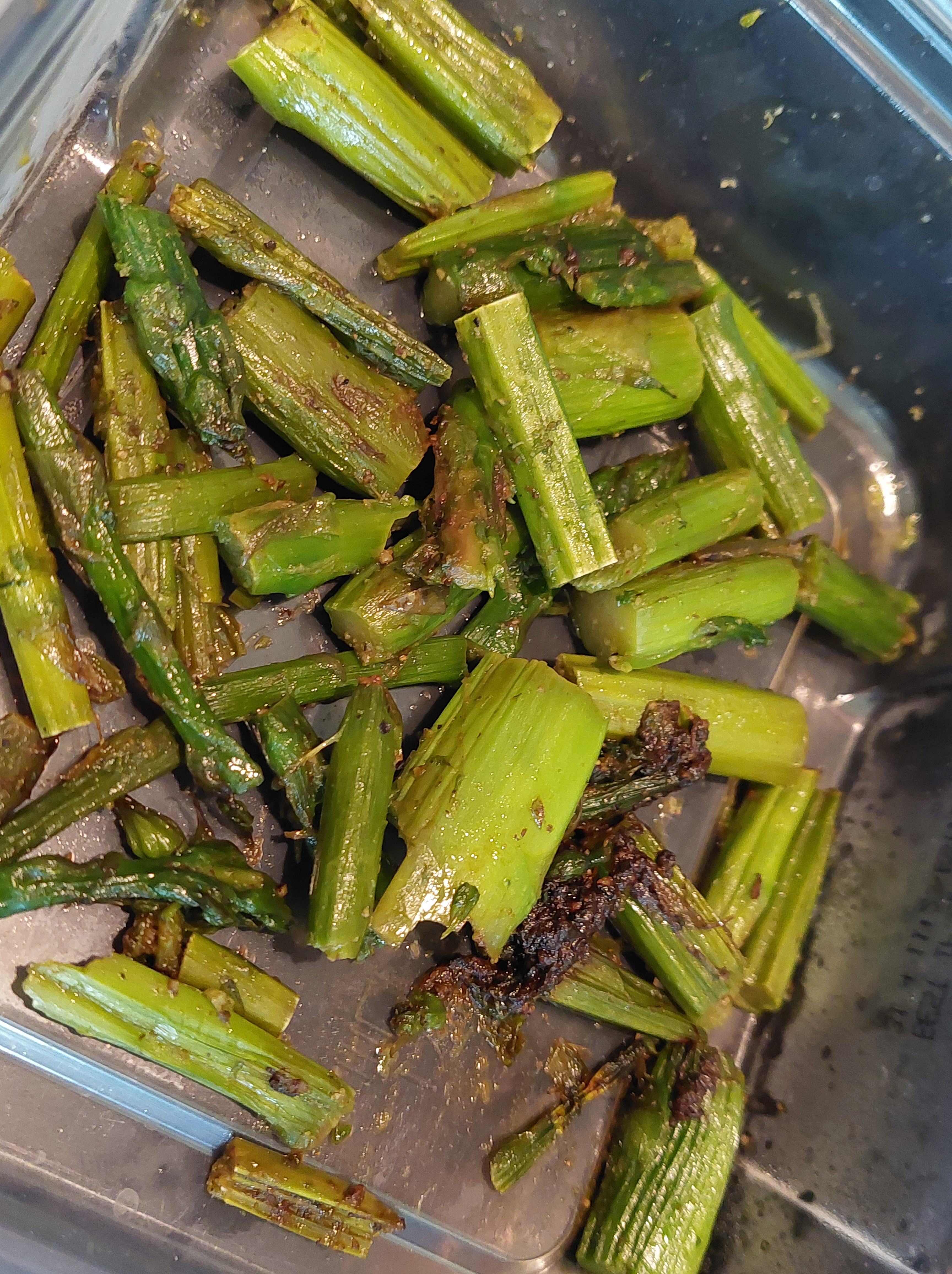
Roasted asparagus.
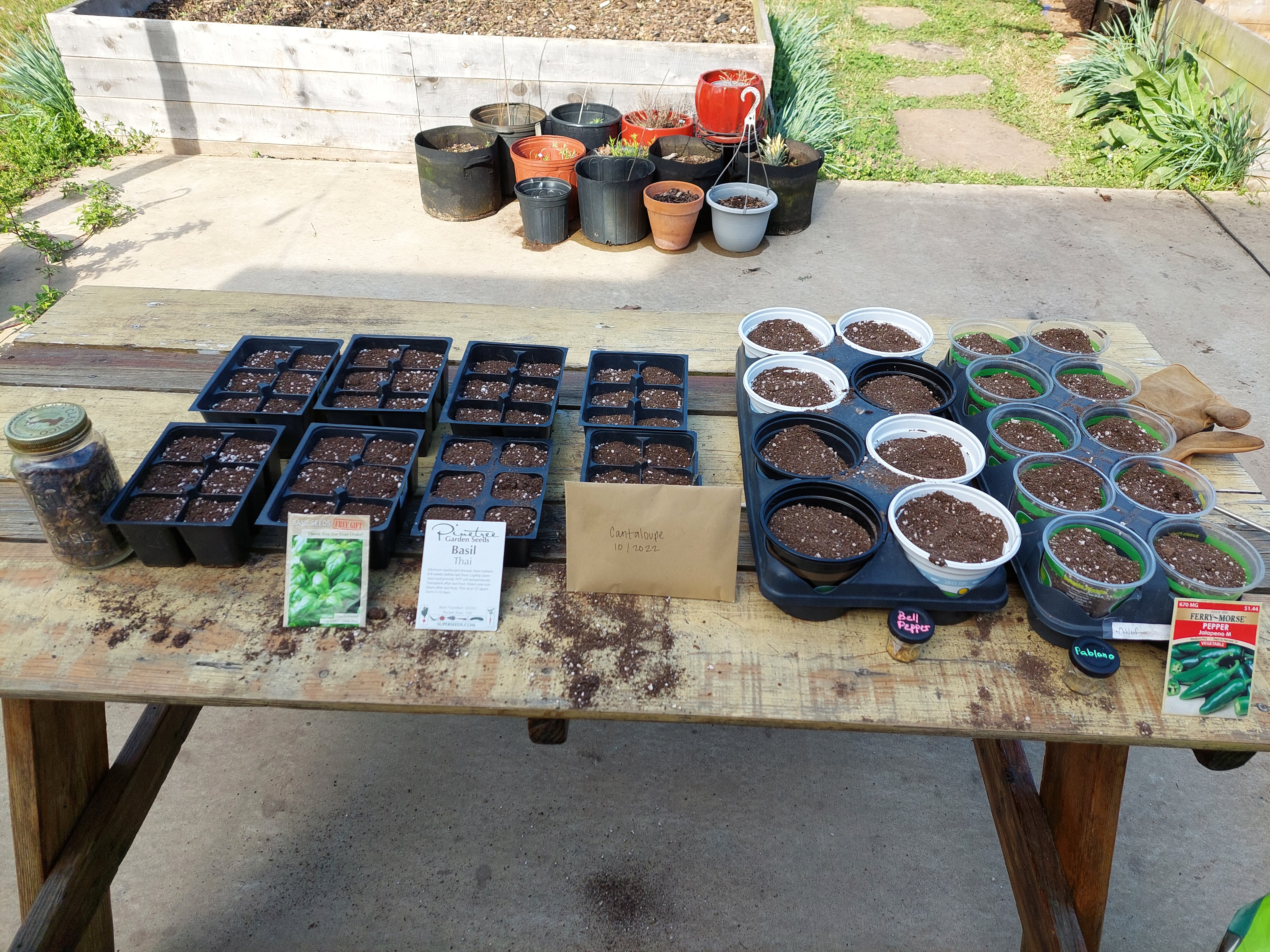
garden seed starting homemaker
Starting seeds!
Our little green house.
homemaking good friday meal passover
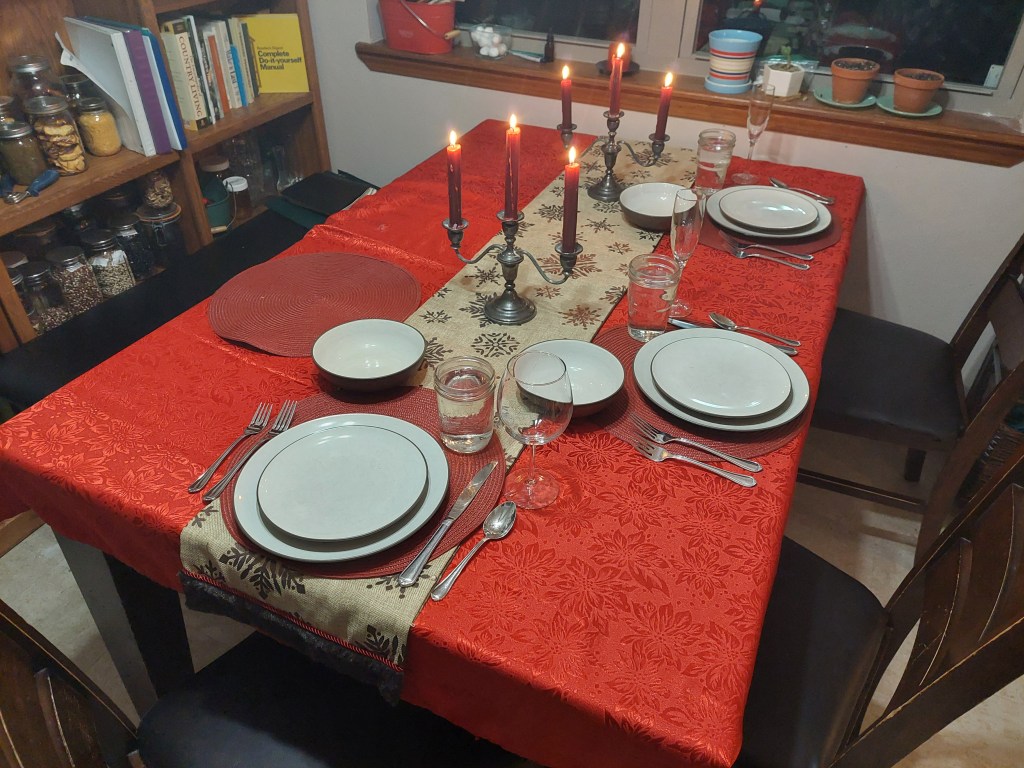
Preparing for a Passover-themed Good Friday meal.
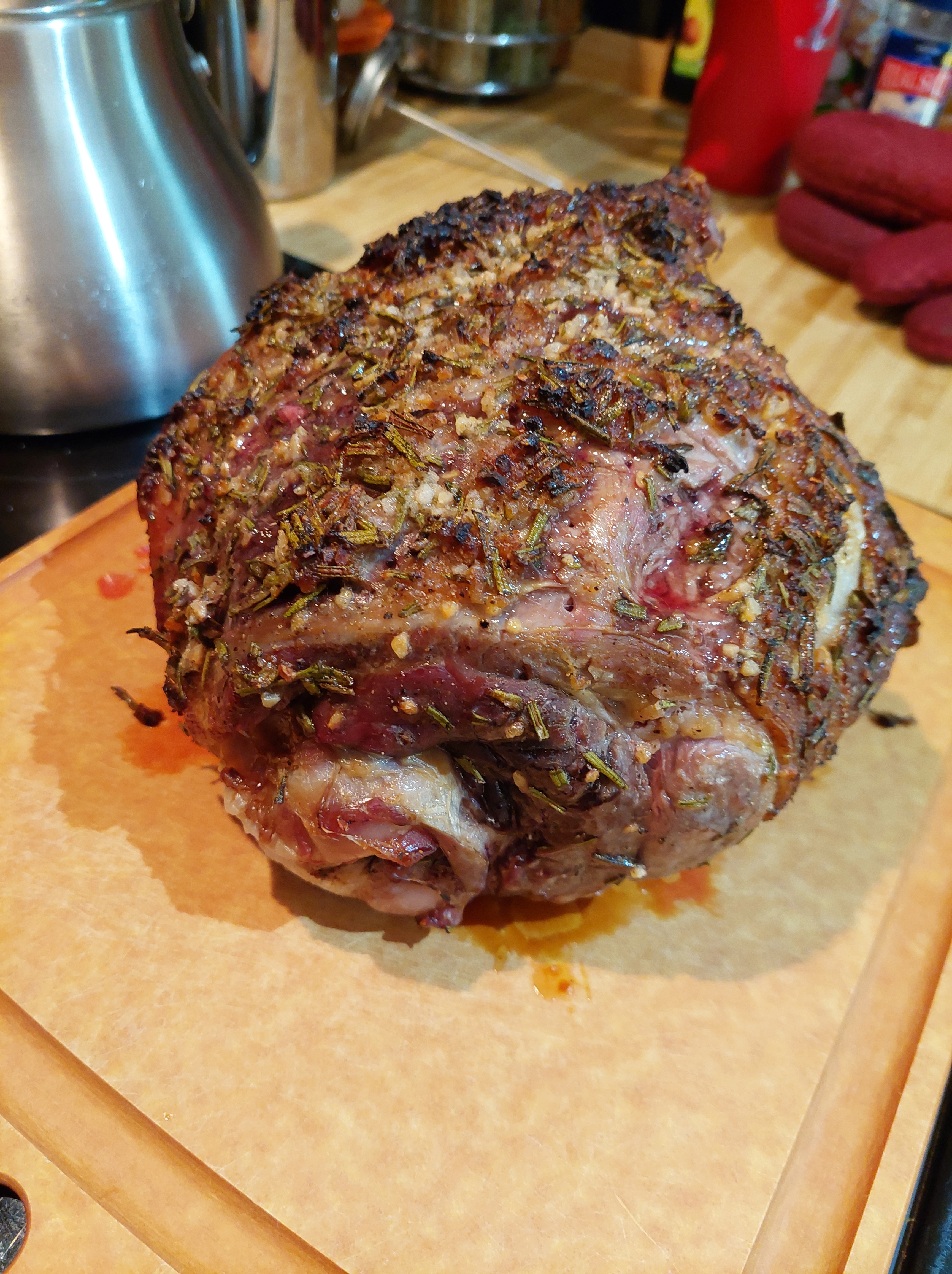
roast lamb good friday
Roast lamb–was cheaper than a beef roast!
Remembering the Lord’s death on our behalf along with good friends!
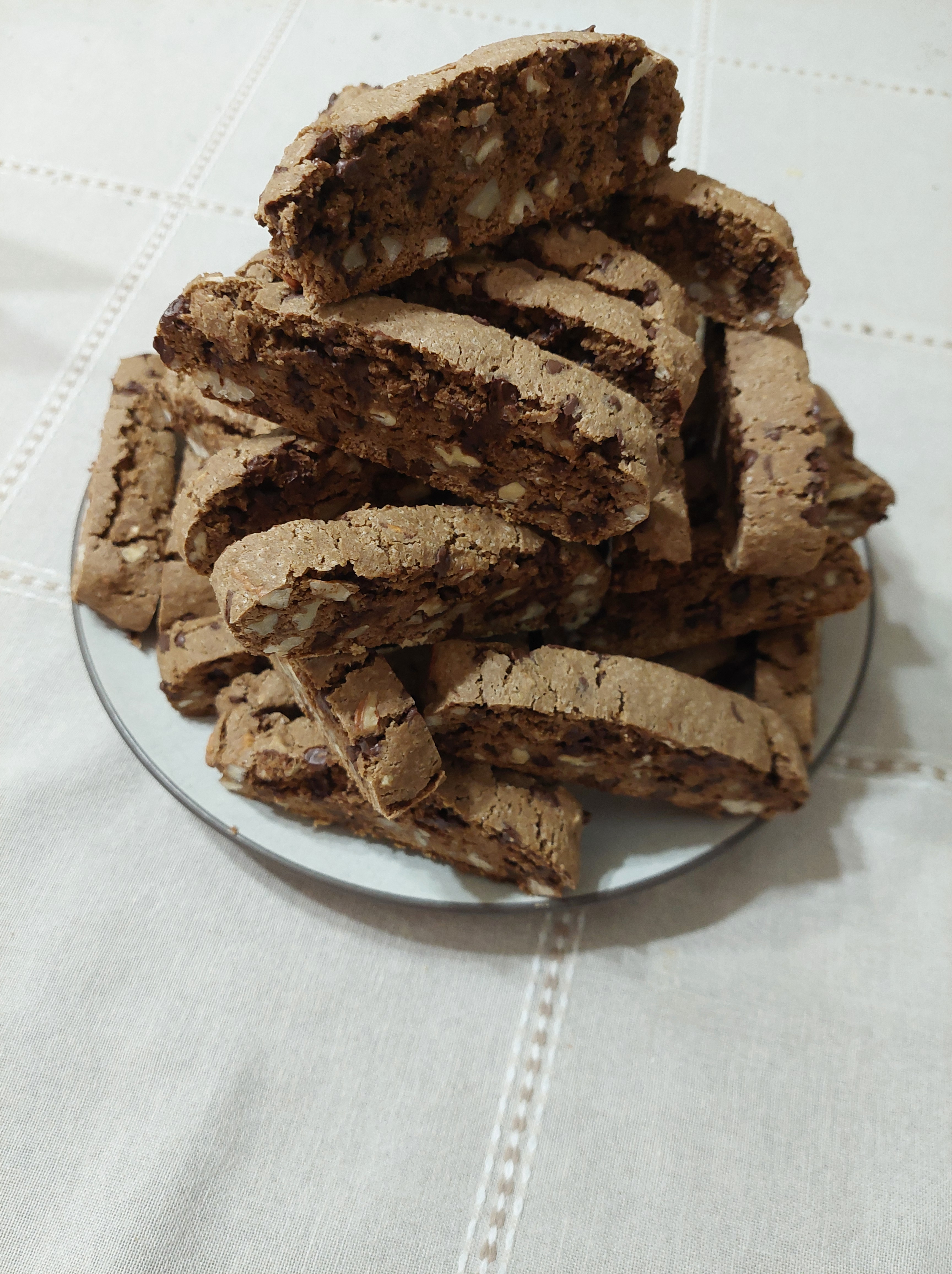
homemade biscotti
Biscotti between first and second baking.
homemade enchiladas
Homemade beef enchiladas, a family favorite.
biscotti
Chocolate-chocolate chip biscotti!
oranges decorative platter eclipse 2024
Oranges arranged for the eclipse!
eclipse 2024
Eclipse viewing with friends!
eclipse 2024 mama
Eclipse 2024
totality eclipse
Total eclipse 2024–we experienced over 4 minutes of totality!!!
quiche
Oldest helped make a quiche!
coffee
Got a milk frother. 🙂
Ouachita trail mile 165 maker
Family backpacking trip on the Ouachita Trail. We’re almost finished!
backpacking ouachita trail family hammocks
Hammocks set up in a shelter–super nice!
dried peaches
We took along our own dehydrated peaches from last summer!!
arkansas mountain view
Sunset view on the trail.
A sunset view from the trail.
garden sage
Sage from the garden.
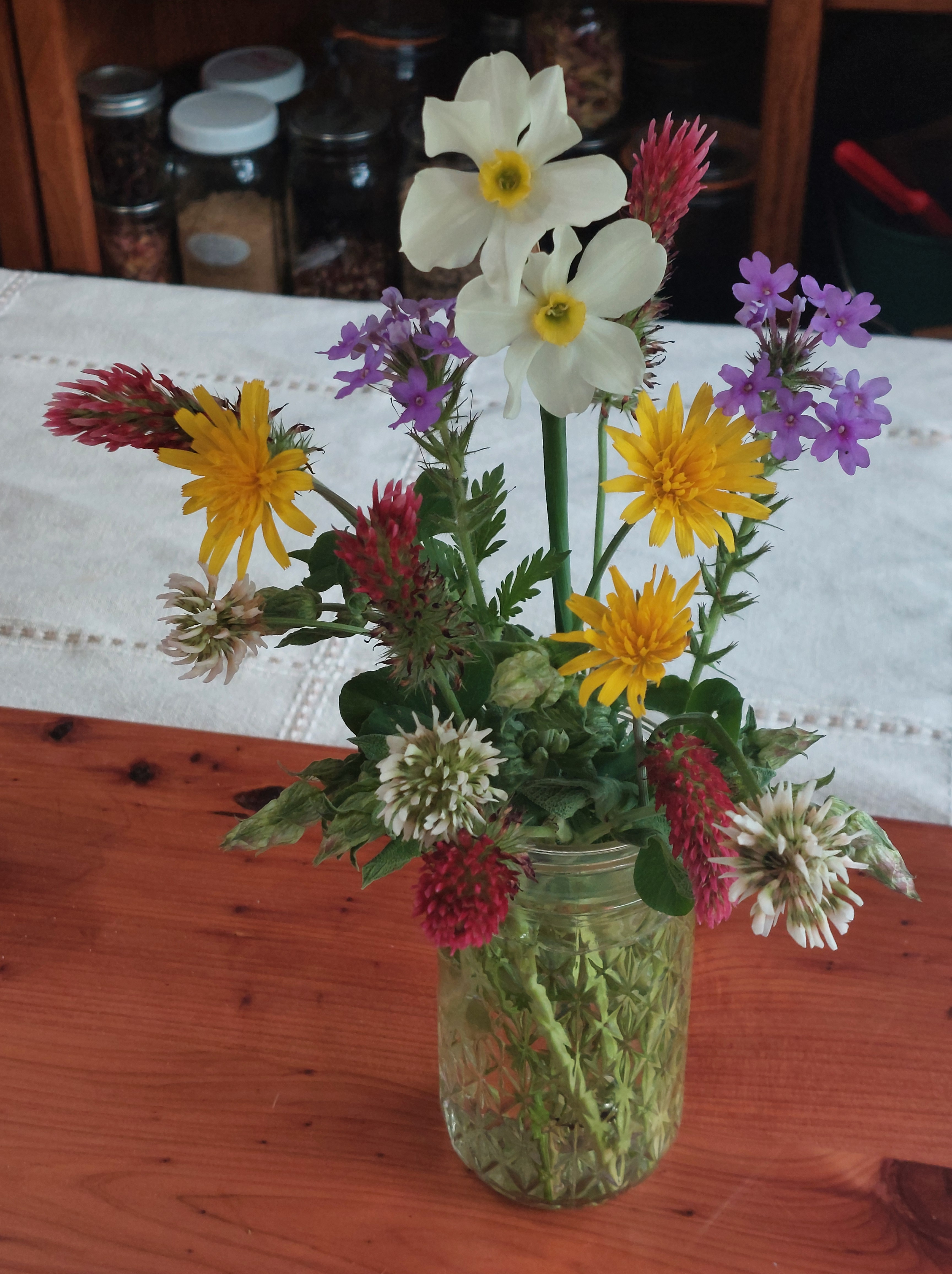
flowers garden
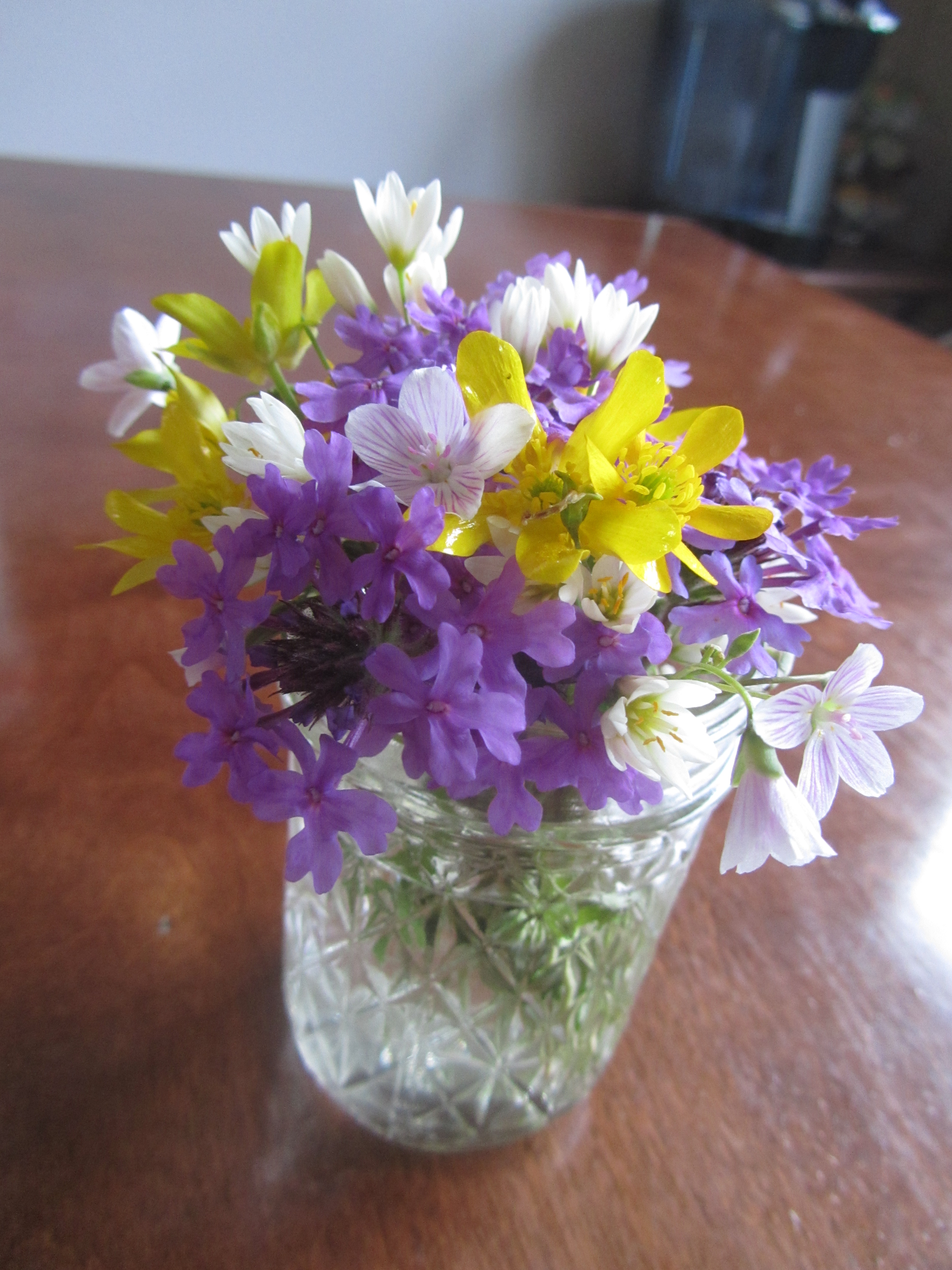
“Found bouquet” Garden sage flowers, crimson clover, white clover, jonquils, phlox.
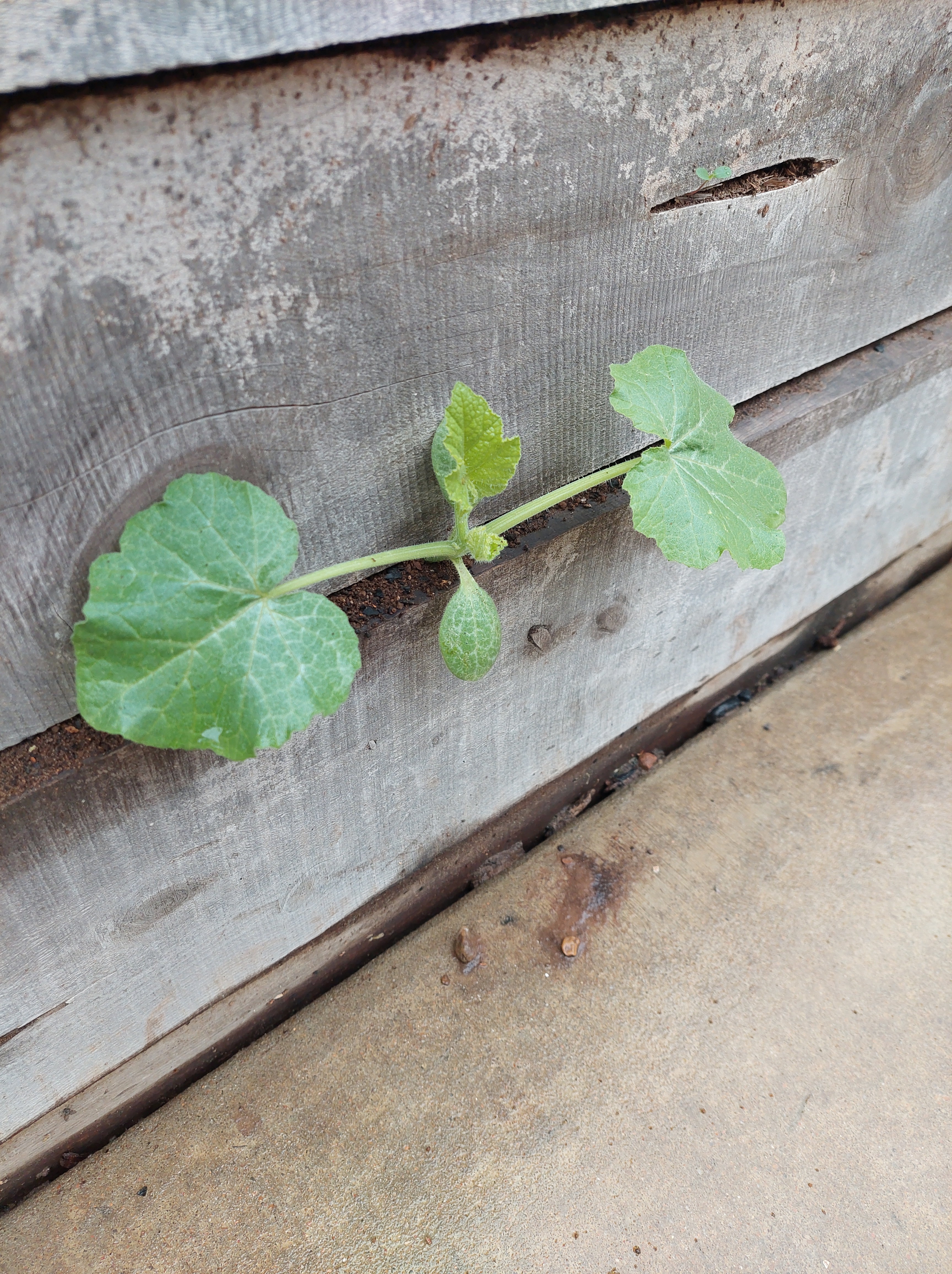
Sometimes volunteer squash grows in interesting places! (It sadly eventually died.)
garden lettuce
Lettuce and marigolds coming up!
Garden starting to look green!
garden trellis peas lettuce
Lettuce and peas on the trellises. Oldest with a scythe in the background.
A turtle!
spring blush peas garden home
Spring blush peas are my favorite–I love the color!
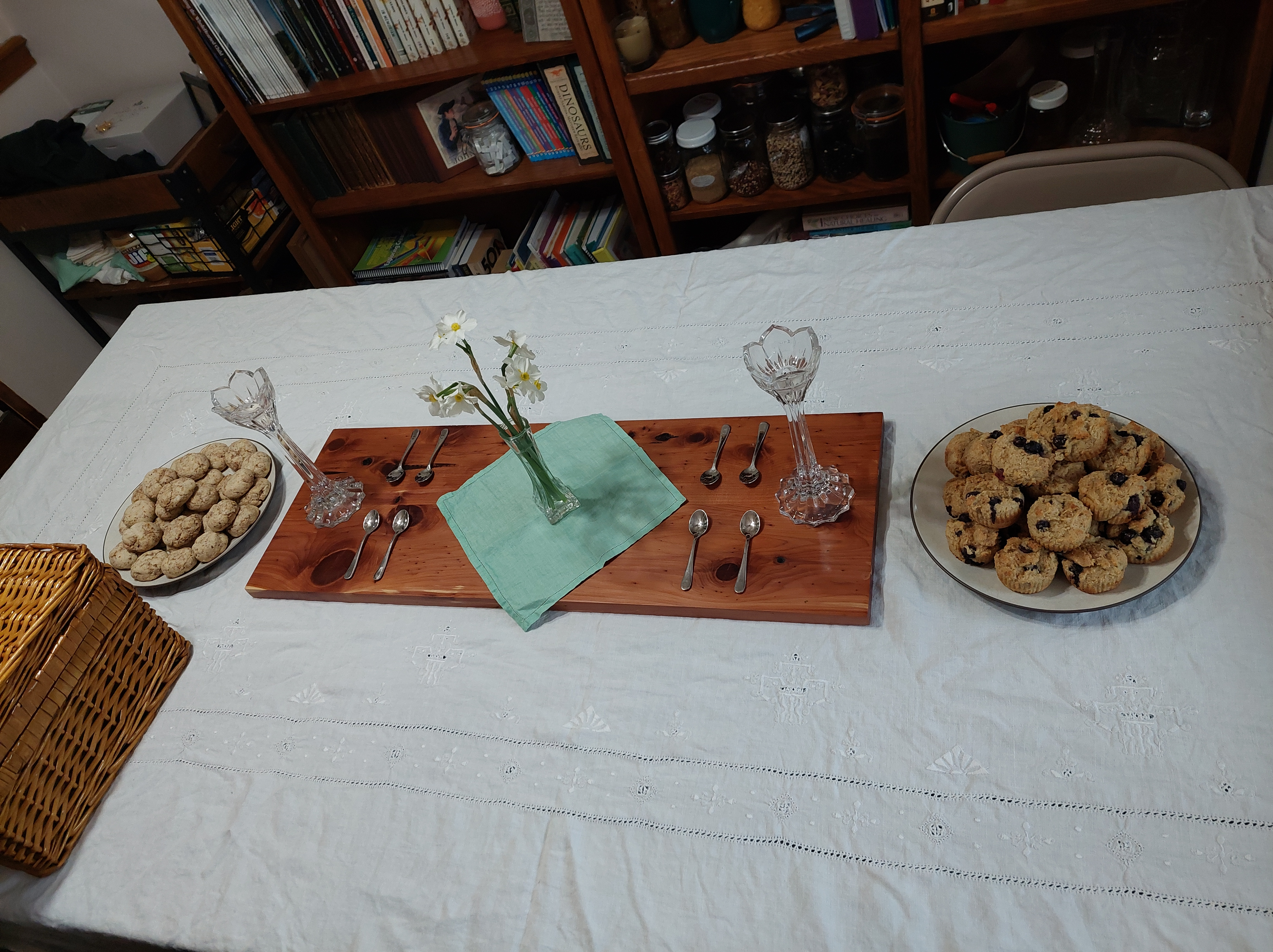
Tea time treats
Table set for tea time discussion of Pride and Prejudice with the big kids at our homeschool co-op!
pride and prejudice tea
Pride and Prejudice over tea. Can’t beat that, right?
garden mint smoothie
Fruit smoothie with garden mint.
garden veggies
Garden strawberries, peppers, and peas.
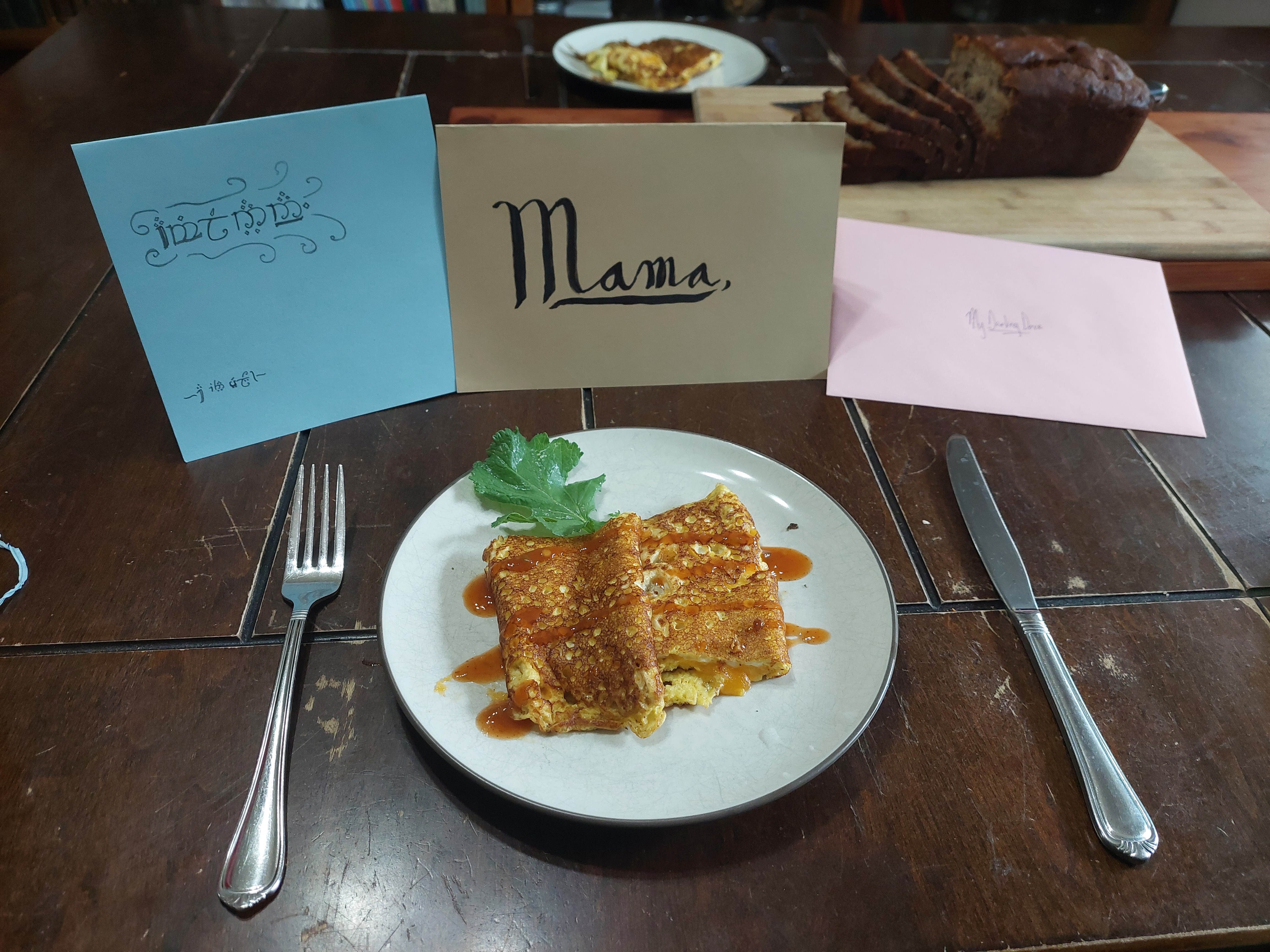
omelet mother's day
Mother’s Day Breakfast. 🙂
garden parsley
Garden parsley ready for the dehydrator.
mullein
Garden mullein for the dehydrator. Excited to have this in the garden this year!
parsley and mullein
Mullein and parsley in the dehydrator. Will cook with the parsley and use the mullein for tea!
Dewberries from along the creek, with whipped cream.
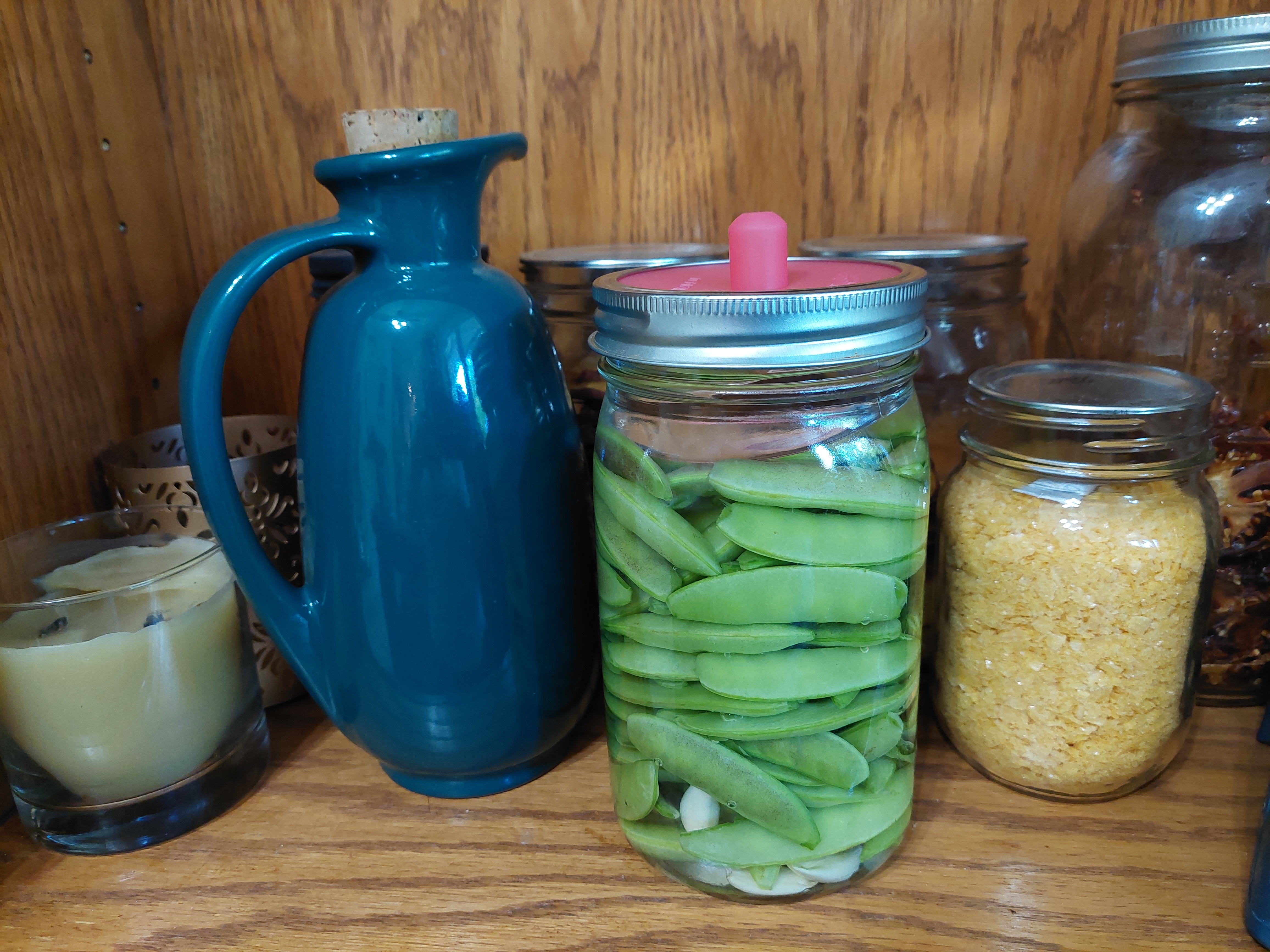
Failed attempt at fermented peas…they grew mold on top. 😦
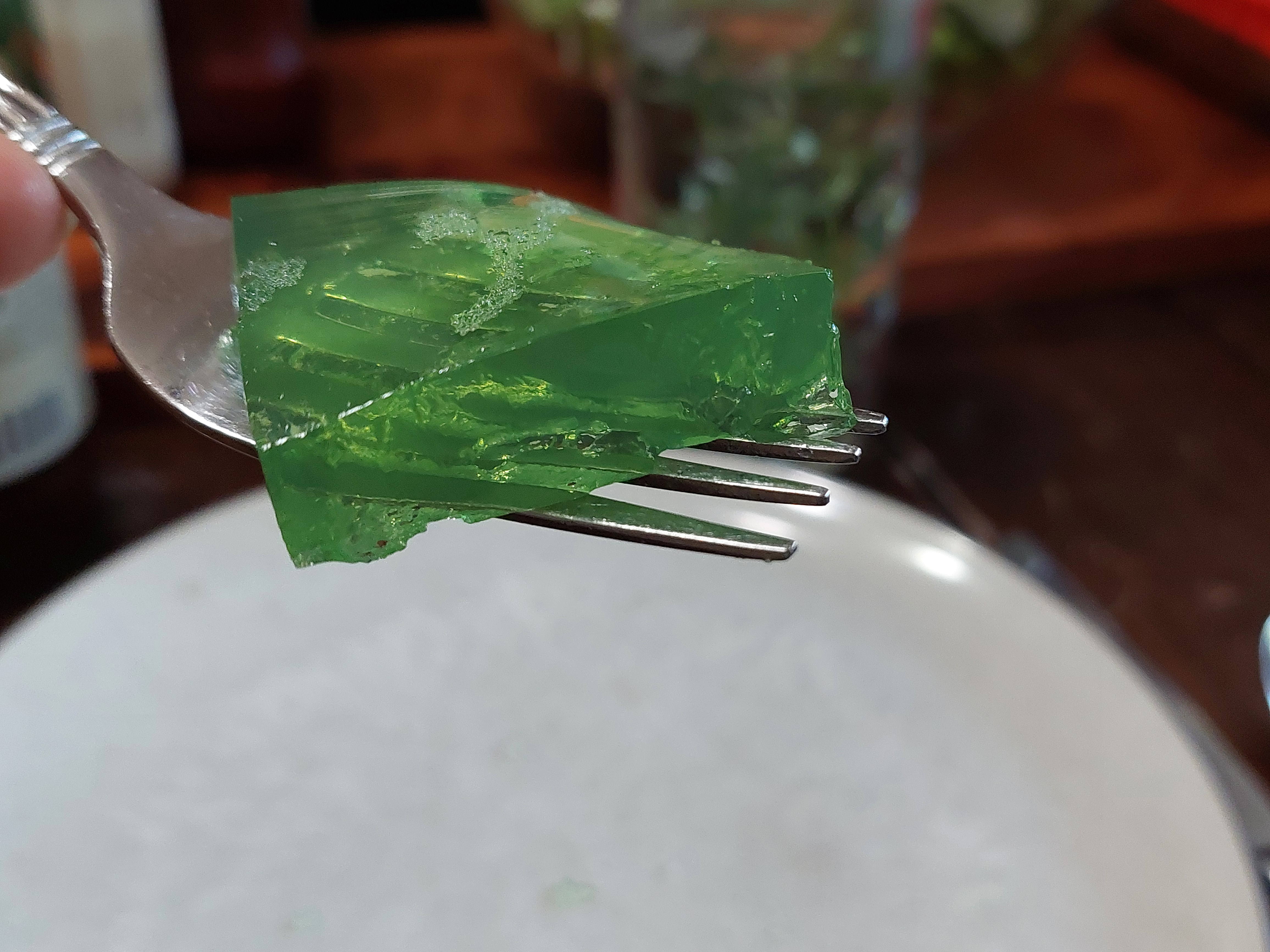
Homemade mint jello made with peppermint from the garden!

It’s good to take stock of the good things that are growing and going on even in the midst of a hard season. God’s abundant goodness can be seen all around us if we look for it in faith.

Have you tried anything new lately?

Book Review: Adorned by Nancy DeMoss Wolgemuth

23 Thursday Nov 2023

Posted by Lauren Scott in Books, Home and Family

≈ 1 Comment

Tags

Christian Women, Home and Family, marriage, motherhood, Titus 2

This post contains affiliate links. If you make a purchase through one of these links, I may make a commission at no additional cost to you. Thank you for supporting my blog!

I just finished listening to this book and wanted to write a review before I forgot what I’d heard!

Adorned: Living Out the Beauty of the Gospel Together by Nancy DeMoss Wolgemuth

My rating: 4 of 5 stars
(More like 3.5 rounded up.)

This was a good and edifying read/listen. Wolgemuth brings much-needed exhortation to women–young and old, married or single–to step up and reach out to make the Titus 2 vision of life-on-life discipleship of Christian women a reality.

This is a pretty thorough treatment of Titus 2:3-5 and the broader context of Paul’s letter to Titus, with an emphasis on adorning the gospel and with plenty of examples and support from other passages of scripture as well. It’s written with a very accessible tone and a heart that clearly loves the Lord Jesus and God’s people.

I thought the chapter on slander was particularly good.

I give this book 4 rather than 5 stars for a few reasons, however.

While the treatment is thorough, it is also pretty wordy. It could have been a shorter book.

The two chapters on sobriety and a sound mind/self-control overlapped a lot, and each felt like an opportunity to spring-board into a laundry list of any and all possible ways a woman might be enslaved to something or be lacking in self-control. One warning area was being overly desirous of sex–even in the proper context of marriage. While this might be a problem in some rare? cases, it seems strange to warn against this but not spend much energy in the rest of the book on promoting the enjoyment of this good gift of God as a part of a healthy marriage. Flirtatious behavior was also in the bad column but not mentioned as a healthy and fun part of marriage. Protecting the purity of your marriage involves fueling the home fires. This was almost entirely neglected.

I’m sure these kinds of practical lists (like the chart on self-control) can be helpful to some readers, but I think they may also be stretching far beyond what Paul had in mind in his letter, not to mention they may be unbalanced or biblically incomplete.

The application of a passage should not be confused for the original intent. I think the author could have clarified the meaning of Paul’s words a bit more before diving into the many possible applications that are a step (or a few!) removed from Paul’s obvious meaning.
For example: “not enslaved to much wine” is pretty self-explanatory, but Wolgemuth begins the chapter on this phrase by talking about all of the secondary applications (basically any form of excess or idolatry). She does get around to dealing with drunkenness/drinking, and she does a good job for the most part, but she doesn’t really ever paint a picture of a godly woman who can enjoy a drink on occasion. The only stories we read of are negative experiences with alcohol or of someone who could righteously enjoy alcohol deciding to give it up for the sake of someone else (which is fine–wonderful even!, but still only shows one side of how godly people could handle it). There are also a ton of questions that lead the reader to question whether it is ever ok to drink. I’m actually not against these questions–they can be good to consider. But lacking a positive example, it feels unbalanced and would likely lead some readers to view those who do drink responsibly with suspicion. The weight of the chapter was just far beyond what Paul’s words to Titus had to say. The author did recommend reading other authors who disagree with her on this point, so I really think she attempted to handle this subject carefully and with all good faith. I respect her convictions and intentions– I’m not too far removed from them myself.

Again, on the whole, this is a very good book. It could be beneficial and edifying for individual study or in a discipleship relationship or small group. BUT when it comes to fleshing out the details, young married women (the target audience of Titus 2:4-5) will need older women who have been married for the long haul to speak more deeply into their lives about (among other things) the good gift of sex in marriage and how to enjoy one another and keep that gift alive–through pregnancies, illnesses, rough seasons, etc.

The strength of this book is that Wolgemuth can speak to a broad range of experience for women–including singles. The weakness is that she has only been married for one year at the time of writing this book, at age 58. And Titus 2:4-5 is directly speaking to young married women. Broadening the focus for all kinds of women means watering down what can be given to that target audience. This doesn’t make this a bad book, it just means it probably shouldn’t be the only book a young woman reads on Titus 2. And it underscores the need for real-life mentorship, which Wolgemuth herself rightly emphasizes over and over.

One last note: since I listened to the audio book, I found the chapter organization to be a bit confusing. I expected (and honestly would have preferred for) the chapter topics to follow the order in which they occurred in Titus 2. But they don’t. They are organized a little differently: A Woman Under God (doctrine and reverence), A Woman Under Control (slander, excess, self-control, purity), and A Woman Under Her Roof (home and family relationships). The rather primary encouragement to younger women to love their husbands and children gets put off until part three. Once I looked up the table of contents, I was fine. But for a while there, I was concerned. Hopefully this note helps anyone who plans to listen to the audiobook rather than read a physical copy.

View all my reviews

Addendum: Another part of the book that lacked much practical application was the area of homemaking. The chapter was good, but it stayed big-picture and didn’t really get into the nitty-gritty details of keeping home. If you’re looking for a book with a biblical view of home that will also show you how to roll up your sleeves and manage it well, check out Mystie Winckler’s new book: Simplified Organization: Learning to Love What Must Be Done. It is FANTASTIC. (See my review of that book on Amazon.)

Have you read Adorned? What were your thoughts? Have you read any other good books on Titus 2 lately?

The Beauty of an Uncut Lawn

26 Friday May 2023

Posted by Lauren Scott in Home and Family

≈ 2 Comments

Tags

beauty, Country Living, Flowers, Home and Family, Homemaking, lawncare, photography, wildflowers

Are you one of those folks who gets the mower out in early April? Do you love a pristine, mono-culture lawn?

Well, we’re not those kinds of folks. While we appreciate the immaculate lawns in town, we like to let our own grass and flowers grow a bit before taking a ride on the mower–and my husband likes to scythe parts of the yard for hay. Crunchy, I know. But when you have a few acres in the country, you can get away with it.

This year, when we were finally ready to take a first pass on cutting the lawn, the mower wouldn’t start. It needed new parts. And my husband was finishing teaching a power systems class for the first time at the local university (in addition to his day job as an engineer). And I was wrapping up my first year of leading a local homeschool co-op.

The lawn had to wait a bit longer than usual. But it didn’t wait begrudgingly.

My friends, we were rewarded with a beautiful show of wildflowers. And lots of frogs hopping all around in the evenings, too. May is a busy month full of end-of-school-year happenings. In the midst of it all, I would like to share a bit of beauty that came from something not happening. Enjoy.

Arkansas wildflowers spring summer bachelor's button blue
Blue Bachelor’s Button
arkansas wildflowers spring summer crimson clover
Crimson Clover in the shade — We planted seeds over a year ago and they’ve come back nicely this year!
Arkansas bee crimson clover lawn unmown
Bee on Crimson Clover in the sun
arkansas wildflowers spring summer potato dandelion
Potato Dandelion
arkansas wildflowers spring summer common purple vetch
Common Purple Vetch
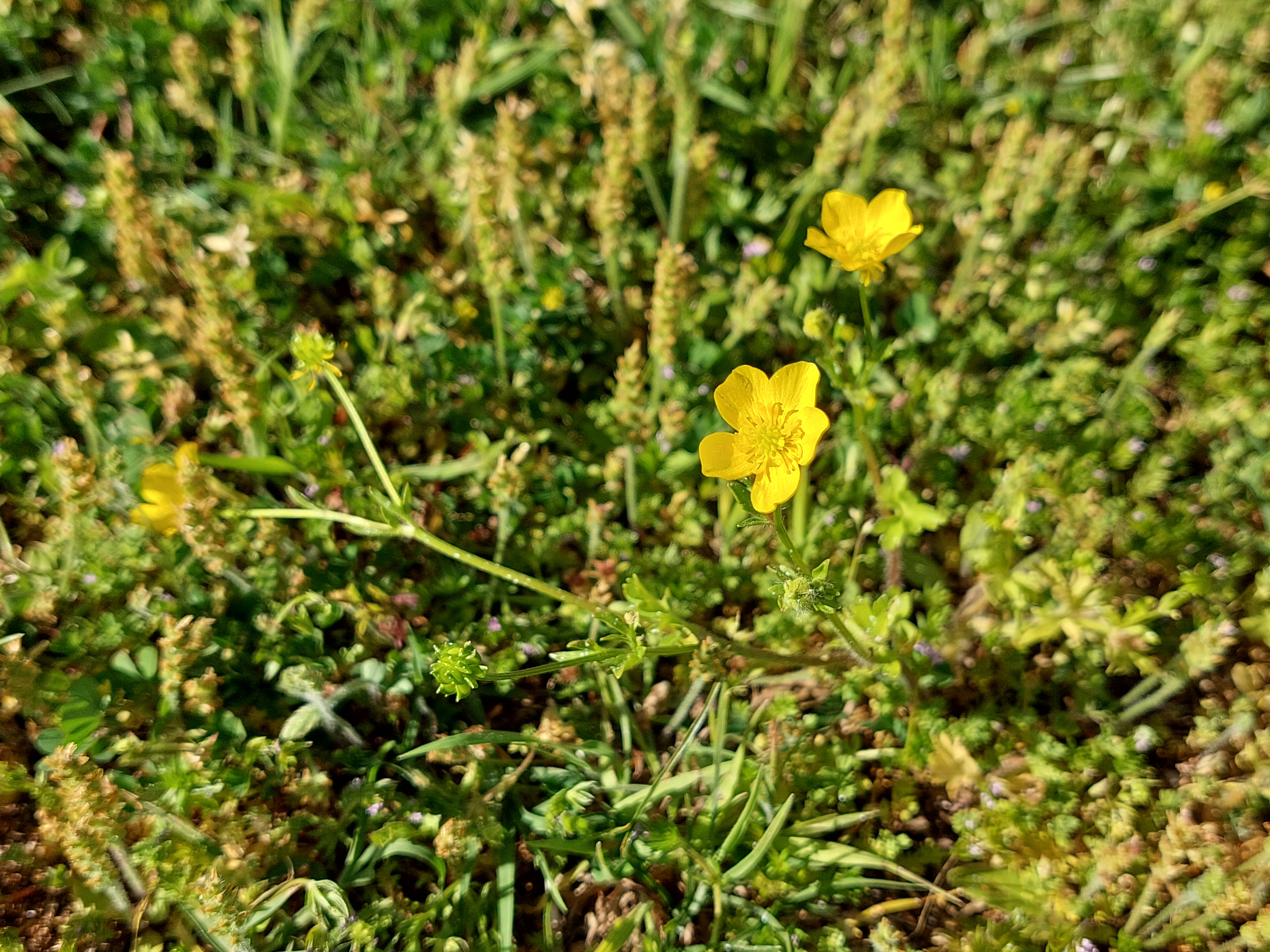
arkansas wildflowers hairy buttercup
Hairy Buttercup
arkansas wildflowers spring summer purple
Venus’ Looking Glass
arkansas wildflowers daisy fleabane
Daisy Fleabane (I’ve always called these asters! I was wrong!)
arkansas wildflowers spring summer lawn rose verbena
Butterfly on Rose Verbena
bee yellow coreopsis arkansas wildflowers
A neighbor’s Honey Bee (and a tiny beetle) on our Lance-Leaved Coreopsis
arkansas wildflowers coreopsis bud yellow
Lance-Leaved Coreopsis with bud in view
wildflowers spring summer lawn five spot
Five Spot flowers and bud
Arkansas wildflowers wild hyacinth
Wild Hyacinth
Arkansas wildflowers spring summer false garlic
False Garlic
Arkansas purple wildflowers spring summer hairy phacelia
Hairy Phacelia (purple) and Corn Salad (white)
Arkansas wildflowers lawn corn salad
More Corn Salad
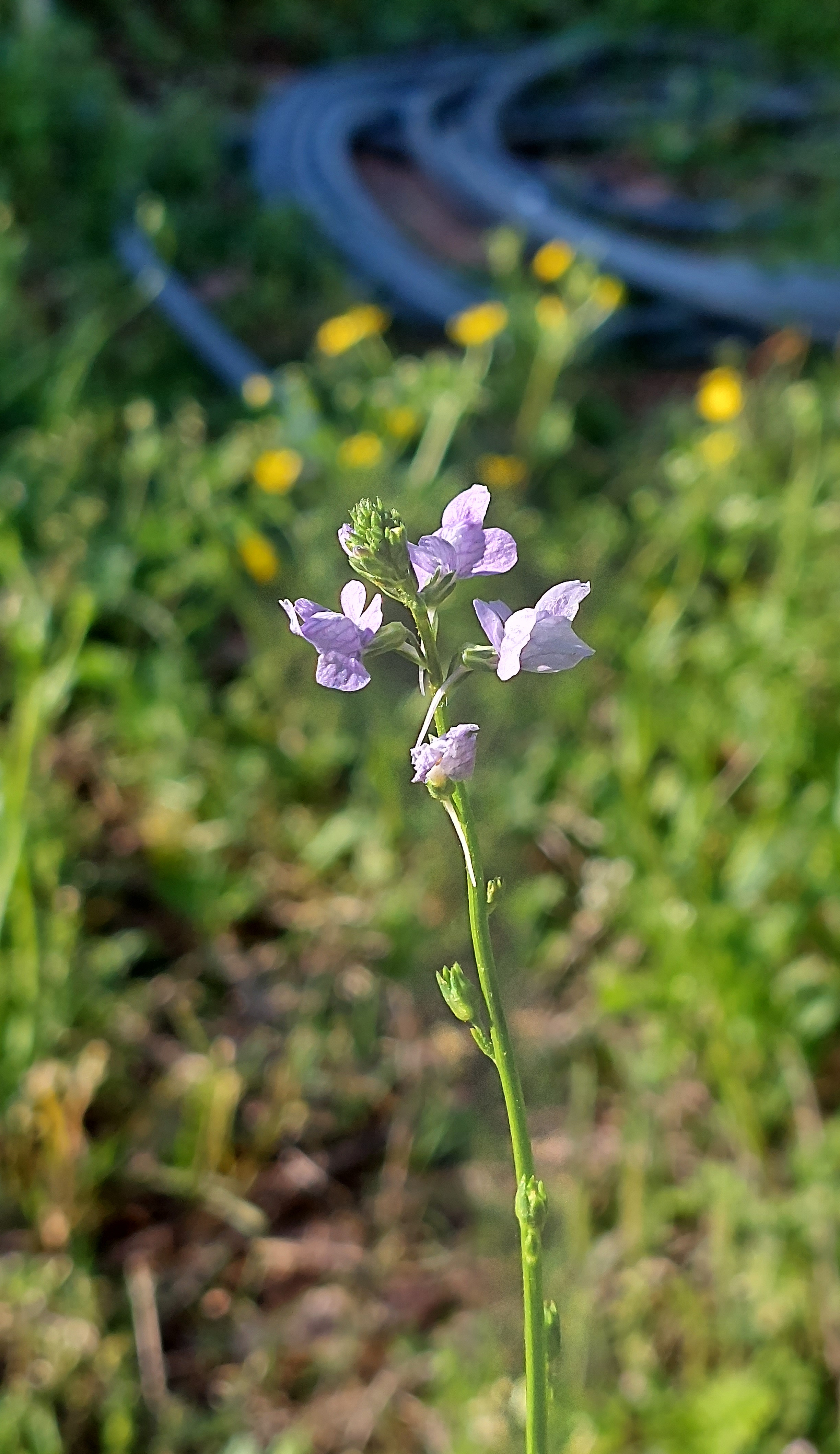
Arkansas wildflowers blue toadflax lawn summer
Blue Toadflax
arkansas wildflowers indian pink red yellow flower
The always-elegant Indian Pink
Arkansas wildflowers spiderwort summer
Spiderwort
Arkansas wildflowers dewberry spring
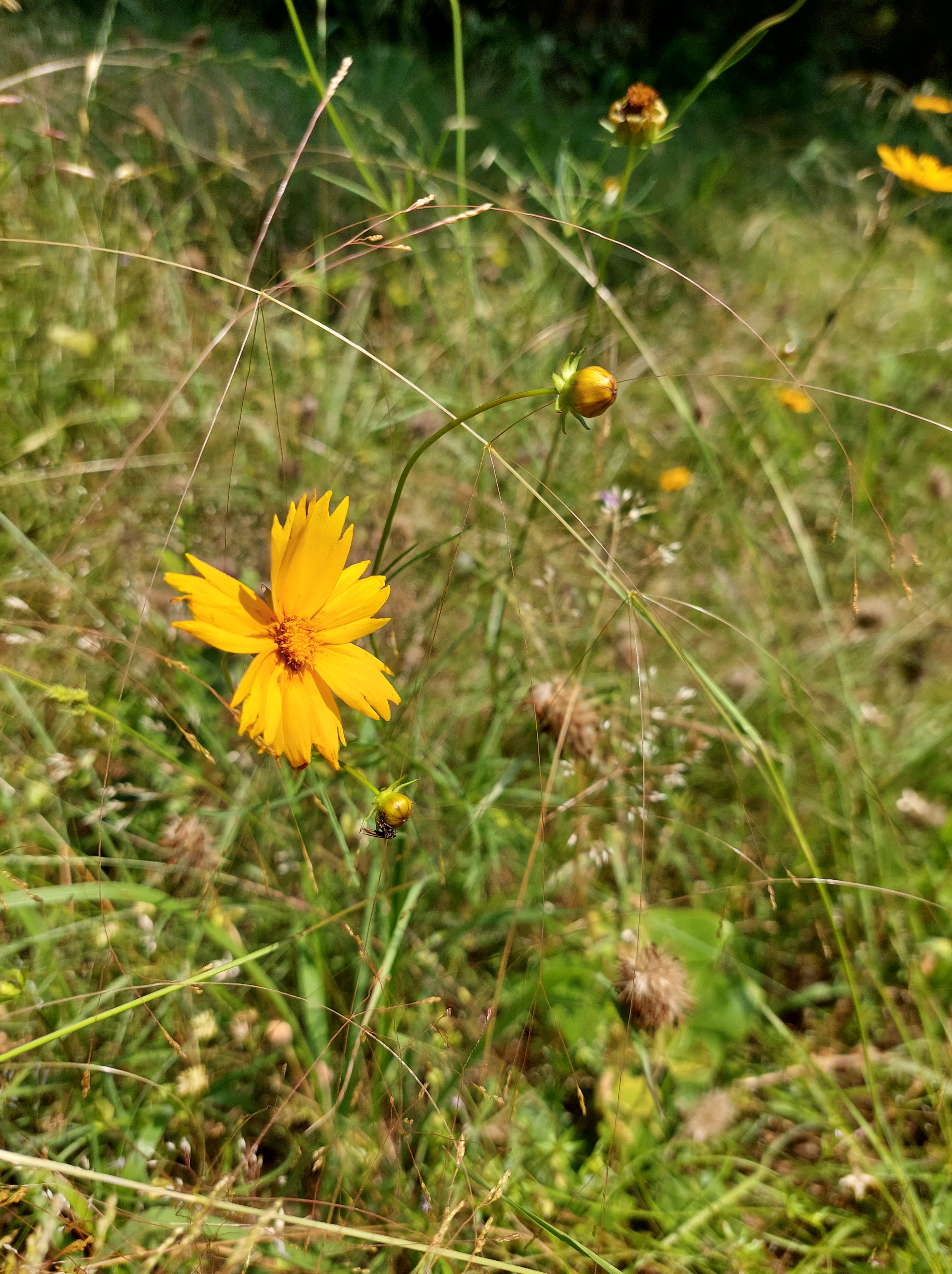
Dewberry Flower (dewberries are like small blackberries–we get a sampling of them every year by our creek)
Arkansas wildflowers dewberries crimson clover rocks
Dewberry Flowers and Crimson Clover by the Creek
Dewberries are about ready now!

The lovely show I’ve captured for you here spans April and May, but not comprehensively. There have been even more flowers beneath our feet–spring beauties, tiny violets, yarrow, and flowers for which I don’t yet know the names. (The ones I do know, I’ve learned mostly from friends or from the book Arkansas Wildflowers, which organizes flowers by color for easy reference.)

The front lawn is mowed now, and we’ve edged around the house. There’s still tall grass and wildflowers out in the side yard, to keep those neighborhood bees happy (yes, we get honey from across the fence–it’s wonderful).

So if your lawn gets a little long and scraggly this summer, and you just can’t get around to mowing it as soon as you’d like, I hope this post will encourage you to find the beauty in it even as you make space in the schedule for your lawn care routine. Enjoy the season.

Consider the lilies of the field, how they grow: they neither toil nor spin, yet I tell you, even Solomon in all his glory was not arrayed like one of these. But if God so clothes the grass of the field, which today is alive and tomorrow is thrown into the oven, will he not much more clothe you, O you of little faith? Therefore do not be anxious, saying, ‘What shall we eat?’ or ‘What shall we drink?’ or ‘What shall we wear?’ For the Gentiles seek after all these things, and your heavenly Father knows that you need them all. But seek first the kingdom of God and his righteousness, and all these things will be added to you.

The words of Jesus, from Matthew 6:28b-33

Titus 2 and the Dunbar Number: Social Limits and Priorities

24 Friday Sep 2021

Posted by Lauren Scott in Home and Family, Living Faith

≈ 4 Comments

Tags

Christian life, Christian Women, Home and Family, Intentional Living, motherhood, priorities, Relationships, Social Connections, social media, The Dunbar Number, Titus 2

I’ve been on a bit of a minimalist kick lately, decluttering my house, my closet, my recipes, my priorities, you name it. While I don’t necessarily hold to minimalism as a whole-life philosophy, I find that it does offer some necessary push-back to our modern tendencies to be “ever expanding,” whether that be in our possessions, resources, opportunities, or social connections.

On that last item, social connections, I recently read an article explaining the theory of what’s called the Dunbar Number. A British anthropologist named Robin Dunbar posited (after some research on primates and combing through human records) that the greatest number of meaningful connections any one person can hold at a given time is about 150.

Titus two dunbar number social connections family

I have to admit I had quite the confirmation bias response to this article, because not too long ago I was explaining to my husband that I have social limits, and I simply cannot keep up with all-the-people, and I certainly don’t have energy for continually adding to the number of all-the-people to whom I feel some measure of social obligation.

With interest and perhaps some of that confirmation bias running through my veins, I decided I’d see where my current number of connections stood. I pulled out my brain dump notebook and began to write down all of the people with whom I have some meaningful or working connection. I started with family. That easily reached over 30 people. Then it was long-standing friends. You know, the people you may or may not see each year but whom you are committed in some way to maintaining for the long haul: again, over 30. Neighbors came to about 20. Homeschool connections almost 30. Church connections (which is small right now because we’re still new at our local church): about 15. And then I listed those who are a bit more distant but still qualify under this idea of meaningful connection: 60 or more. If you just add up the rounded numbers I’ve listed, that makes 185, more than the Dunbar Number (150). No wonder I feel a bit overwhelmed and like I can’t add any more.

But guess what kinds of people I didn’t add to any of those lists of contacts? For the most part, I didn’t include online-only relationships. There are seven ladies who make the cut because they are part of an online stand-up/accountability group. Other than those ladies, every other person on the list has some real-life, meaningful or workable connection (or has had in the past and therefore they are on the list).

What this little exercise demonstrated for me was twofold: One, there isn’t really any room for me to build or even maintain relationships on social media or other online platforms. No wonder I feel a little overwhelmed trying to keep up. Two, even these connections that I wrote down are pushing the limit, and I need to prioritize.

Now, Dunbar’s theory itself has prioritization built in. He suggests that any one person can have only about 5 people in their inner circle—these are loved ones, your most trusted and closest kind of friends (large families can adjust this number accordingly, IMO). Next up are “good friends,” of which you can maintain about 15 (or just ten more than the 5 closest friends we already mentioned). There are about 50 that can be called “friends” in a meaningful way before our own capacity is stretched enough to make the term “friend” less meaningful (I’m looking at you, Facebook). And then the next jump is up to that limit of 150 meaningful contacts. Beyond that, the study claims we could have face-recognition of up to 1500 people–but not meaningful relationships. I can’t say I’ve taken the time to test the limits on that last one.

Now, all of this should be taken with a grain of salt. The Dunbar Number is a theory, not gospel nor scientific law. But it is interesting, isn’t it?

I’ve titled this article “Titus 2 and the Dunbar Number,” so it’s about time I brought this back around. As Christians, we know that the greatest commandments are to love God with all our heart, soul, mind, and strength and to love our neighbor as ourselves. And while Jesus insisted that anyone who we find in need of our help can be considered our neighbor (see the parable of the good Samaritan), in today’s times, we tend to be over-exposed to people and needs via the internet and social media, skewing our sense of responsibility away from our nearest neighbors and toward those far from us.

The impact here is both quantitative in that we’re compelled to give emotional energy toward more people than we have capacity for and qualitative in that we’re tempted to prioritize (at least in the moment) people far away from us, for whom we are not most responsible. The issue here isn’t that caring for people far away is bad (it’s good to be concerned for people in different places than we are), it’s just unnatural to have a constant reminder of them and to be pulled away from the people literally right in front of us or across the street. The combination of those quantitative and qualitative elements makes for a rather big challenge, especially if we take seriously the call to “love our neighbor.” We’re left asking Jesus for clarification, “Who is my neighbor?”

This is where Titus 2 comes in. Some people hate this passage because they see it as limiting women to the home, keeping them barefoot and pregnant, etc. But I think we can see it in a different light. Here it is for your consideration:

Older women likewise are to be reverent in their behavior, not malicious gossips nor enslaved to much wine, teaching what is good, so that they may encourage the young women to love their husbands, to love their children, to be sensible, pure, workers at home, kind, being subject to their own husbands, so that the word of God will not be dishonored.

Titus 2:3-5

If we are to love God and love people, the first place that we ought to practice that God-honoring people-love is within our own households. What Titus 2 (and a few other passages) implies to me is that this temptation to concern and even distract ourselves with people “out there” isn’t something only modern social media mavens have experienced. Even women in the first century needed the reminder that a love that isn’t fulfilling its duty at home first is a hypocritical love that can lead to the gospel being blasphemed, the good news being spoken of as if it’s bad.

Now before anyone throws stones because they think I’m promoting “the patriarchy,” let me be the first to say that this principle holds true for men as well. It’s why elders are supposed to be good managers of their own households before they are recognized as leaders in the church (1 Timothy 3:1-7, Titus 1:5-9). It’s why a man that doesn’t provide for his own is called “worse than an unbeliever” (1 Timothy 5:8). The call to prioritize the people right in front of us is universal. This responsibility to one’s own household is why singleness is, for some, an effective state to be in for the sake of ministry to others: because the man or woman who isn’t tied down has more time and energy to devote to the Lord, which may include serving others beyond the home in a way that the married person simply can’t (1 Corinthians 7:32-35). But that’s more the exception than the norm for believers. Most of us are called to marry and build families to the glory of God.

So the reminder in Titus 2 to love your husband and love your children and focus on the work that must be done to keep the home running well isn’t slavish or limiting. It’s a sane call to put first things first. The calling toward home and family doesn’t necessarily preclude other callings, but it does take precedence over them.

And, if you think about it, all of this makes sense in light of Dunbar’s thoughts on human social capacity. We each may vary in terms of our social capacity, and some of us may need to cut back while others may need to stretch themselves. But at the end of the day, we all have limits. And we all have to choose how we will use the limited resources we’ve been given.

How about you? Do you feel our modern connected world pulls your attention away from the folks that matter most to you?

We may not need to dump online community and resources altogether, but might it be helpful to imagine what our priorities would look like if those things didn’t exist. Join me for a thought experiment?

If the internet didn’t exist, what would you want your family life to look like? How might you prioritize your husband? Your children? If you are in a different stage of life: your roommate, parents or siblings, or extended family?

If the internet didn’t exist, what would you do to get to know your neighbors? To be a blessing to them?

If the internet didn’t exist, what would you do to get to know the people at your church better? How might you reach out to discover needs and meet them? In your church and your local community?

If the internet didn’t exist to make long distance relationships many-and-easy, who would you 100% want to keep in touch with–even if it meant more effort?

Homemaking in 2020 [and 2021!]: Sticking to Calling in a Year of Crisis

01 Wednesday Jul 2020

Posted by Lauren Scott in Home and Family, Living Faith

≈ Leave a comment

Tags

Atmosphere, Attitudes, Home and Family, Homemaking, motherhood, worry

“How’s 2020 been treating you?” It’s a fairly normal question in a normal year. But this year it gets thrown around accompanied by a sinking feeling or an incredulous laugh or the quoting of a meme or two.

Some of us have faced down the loss of a loved one. Some, the loss of a job. Some have found themselves with lots of free time on their hands. Some have found themselves with a call to long hours and high stakes. And some (especially those of us whose work is at home already) have found themselves worried about all these things while simultaneously experiencing “life as usual”—only a little too usual since outside-of-the-home, in-person social interaction has been sadly lacking.

As a homeschooling homemaker married to a man who works from home most days anyway, I have found myself in that “life as usual” category, wondering at times if it’s even right for me to go about my normal routine around here while there is so much wrong in the world out there.

There’s a kind of anxiety that comes from knowing about tragedy and feeling like you can do nothing about it.

So what’s a homemaker to do?

We may be tempted to think that our ordinary work at home matters less because there is so much apparent work to be done in the world beyond our door. But our role as a homemaker is no less important in times of crisis. In fact, unless we are obviously given a public-facing assignment, I contend that our work at home matters even more.

Just because the needs out there become more apparent doesn’t mean that the needs right here have gone away. We all feel the upheaval and uncertainty of our times. And while children may appear to be carefree most of the time, they feel it, too—especially as it effects their parents.

Before I spend too many words on the subject, take a look at this cover art for Blink, an album about motherhood by the Christian musician known as Plumb (Tiffany Arbuckle-Lee).

motherhood storm homemaking crisis 2020 blink plumb

I love the imagery and what it speaks about the role of mothers. Amid the storm, there’s a shelter, there’s light, there’s a smile, there’s wonder, and there’s both space and provision for beautiful things to grow.

Whatever age our children, or whether we have children at home at all, I think this image can be inspiring in our homemaking as well.

We do well to fight the darkness by turning on the light. Not by brooding. Not by worrying. Not by endlessly researching the latest hot-button issue on the internet.

“Who of you by worrying can add a single hour to [her] life span?” our Lord asks. We might also ask if our worry adds to anyone else’s life either.
This isn’t to dismiss or ignore the real challenges facing our world today, nor is it a call to ignore the needs in our communities that we are capable of meeting, but it is to say there is an appropriate way to deal with all these things–and especially the ones that are beyond our reach.

“Cast all your anxiety on [Jesus] because He cares for you.”

The home that our loved ones experience is made up of both our internal attitudes and our practical service. We would do well to look after both—and to see that they often rise and fall together.

Ladies, if we aren’t taking things before the Lord then we’re choosing to bear them ourselves, choosing to be weighed down with cares that He doesn’t intend for us to carry, cares that keep us from joyful service in our homes. And how will we teach children to cast their cares on Jesus if we don’t practice it ourselves? Will we even see that they have cares that need our guidance and prayers?

And this is where I admit that I know these things because I fall prey to them myself. Even personality types that are supposedly led on by facts and logic and reasoning rather than emotions can find themselves in the endless scroll, the incessant trying-to-fix-it—both of which amount to a worrisome attempt to control circumstances that are beyond our control while ignoring our God-given responsibilities and the people we’re most explicitly called to love.

So if we repent of our worry, if we leave it behind and resolve to trust the Lord, what then are the needs in our home?

And here’s where our attitudes and service really rise and fall together. When we’re worried about so many things, we can’t see what’s right in front of us. So the first step in moving forward is to begin to really see our homes and really see the people in them.

That Proverbs 31 woman “looks well to the ways of her household and does not eat the bread of idleness.”

The answer is simple, even if not easy: What we really need is to pay attention and do what we know we ought to do with diligence.

There are a few practical ways this has worked itself out in our family. It’s still a battle to choose joy and to actively resist the temptation to despair, to refuse to bring anxiety about the world into our home environment rather than casting that anxiety on Jesus. But here’s where we have chosen to draw some lines and plant some seeds in our family.

Of course there are the usual chores: keeping the home running and clean, keeping a watch on the budget and food, keeping up with other home projects.

We’ve also committed to sticking to our schedule more than we have in the past. The routine is good for all of us.

We’ve kept up our family bible time. We all need God’s word, all the time.

We’ve focused on our garden. We’ve made space, planted things, and watched them grow. Vegetables, yes. But also flowers. Lots of flowers. Those proverbial roses don’t have to stay proverbial. It’s good to literally stop to smell them, too.

Making space for fun and creativity and good conversation.

Getting outside to enjoy God’s creation and take in visible, tangible signs of beauty and hope. Creation is full of parables.

I took a two-week break from social media to clear my head and my focus. I thoroughly enjoyed it (and I think my family did, too).

We’ve painted as a family. Gone on walks. Read aloud. Caught caterpillars and watched them turn to beautiful butterflies.

We’ve tried to make special days and holidays all-the-more special, not allowing quarantine to keep us from celebrating as a family, from marking times and seasons with thankfulness to God.

Not all of these things are always easy, but they have been good. And this isn’t some checklist or quarantine bucket list. It’s just an encouragement that the ordinary things you do for your home and with your people matter.

And they matter even more in times that are anything but ordinary.

homemaking 2020 crisis ordinary

Fight the good fight to do this work rather than neglect it. And most of all, seek the Lord and see your people. Ask God to help you look into the faces of your family members with love and joy and interest. And ask Him to give you wisdom to know what each one needs.

“Whatever your hand finds to do, do it with all your might.”

When the darkness out there seems to close in all around us, when our hearts are troubled, when we’re cut off from regular fellowship, the tone we choose to set for our homes matters immensely.

I’ll sign off with a few words I shared in an email exchange with another mommy-friend:

Yes, the world is a pretty crazy place. … I’ve wanted to do more to help people during this time, but something to remember is that providing a fun, godly, and secure home for children is foundational to civilization. Your and my role in that cannot be overstated. Sometimes I feel like I’m not really doing anything if I’m not somehow being active or being heard ‘out there.’ But what I’m really called to is to be gladly at work and speaking truth and kindness right here. At home. Making a home. A haven in all the crazy. That is kingdom-building and soul-liberating work.

Soli Deo gloria.

Now to get to that pile of laundry…

On Being “At Home”

02 Monday Mar 2020

Posted by Lauren Scott in Home and Family

≈ 2 Comments

Tags

Body Image, Christian life, Christian Women, Contentment, faith, Gratitude, Heaven, Home and Family, Thankfulness

Some days the house just gets to me. Too many unfinished projects, too much clutter, too much to clean.

Life gets to me. When will I ever find the time or the willpower to drop those 20 pounds and feel strong again?

The temptation to despair of life in this body, in this house, arises from thoughts like these. And that’s ok, right? Because I’m supposed to be looking forward to my eternal home. So this hum-glum existence until then is just par for the course. A right of passage, you might say.

Or is it?

After recently wrestling through such thoughts, I’ve come to see that in order to be actually looking forward to our eternal home, we need to learn to be grateful for the home we’re in now. Let me back up a couple weeks to explain…

learning to be at home warm content

I stand at the window on a crisp, February morning, staring out through two panes of glass into 30-degree weather.

And I am warm.

This is a good house.

It’s a timely reminder that halts the grumbly thoughts in my head, and I take a deep breath. The knots on my forehead begin to unravel.

As I consider the cold that I am not feeling, I begin to notice how my hands are resting firmly–one on the window sill and the other against the corner of the wall, framing the window. I take a moment to really feel that wall.

It’s sturdy. It’s withstood 70-mile-per-hour winds and little boys ramming into it.

This is a good house.

In the midst of the mess and hustle and bustle of a family that lives, learns, and works at home, and especially ten months into a “five-week” exterior remodeling project, it can be hard to enjoy just being at home.

It can be hard to see the beauty in the home that I’m making when unfinished projects crowd my view. But if I take a moment to sit and observe–not with a critical eye and a running to-do list but rather with eyes enlightened by grace–I begin to see not my work nor my lack of work but gifts of God.

I can wonder at how well we are provided for. Not only by my husband but by the mind-blowing development of things like running water, central heating, and washing machines. And the incredible blessing of dirty little hands, red cheeks and noses, and piles of clothes that signify the beautifully rambunctious lives that fill this place.

There’s another temporary house I’ve been given, and sometimes (many times?) I look at it with the same kind of scrutinizing fix-it-up mentality that I use to greet my dirty linoleum-tile kitchen floor.

My body isn’t as young or strong or capable as it once was. My knees give me trouble, and I’m currently four weeks into a bout with some combination of cold, allergies, bronchitis, and asthma. I’m well enough to function, but I’m not functioning well.

While there’s work to be done for my health and strength (and time required for recovery), I’m finding that there’s also a desperate need to learn to rest–not just physically, but to simply be in this body, just as I have to learn to be in my home, dilapidated as each may seem.

Whatever degradation may come, this body has run races and climbed mountains.

This body has carried, birthed, and nursed two sons–not without complications, but still, it has.

This body has given hugs and held hands.

And it still seems to get me from point A to point B pretty effectively.

It can still kneel prayer, sing in worship, and offer hands to serve.

It’s a good body.

It’s a good gift.

If we are to serve the Lord with gladness there is a real sense in which we need to learn to be at home in our houses and in our bodies. Not in some self-exalting or self-excusing way, but in a very real and contented and Christian way. We need to learn to be at home in our houses and bodies because they are the primary places and primary tools we have for worship and service. And they are gifts that the Lord not only gives but also fills.

He’s not afraid of nor ashamed of broken vessels. In fact, He delights to redeem them.

My house, my body–these are places to be filled with the grace and love and Spirit of Christ. They are not forever, of course. They are a mere shadow of things to come. But as we embrace the “homes” that our Father has graciously given now and by faith see how He transforms and fills them, we are in a better position to truly appreciate and anticipate the Kingdom Home He is preparing for us–a new creation and a resurrected body that are both whole and wholly filled with His presence.

Too often we look with discontentment at our earthly state and say with a grumble, “Well, I’m glad I’ll get a new body and a new home someday.”

But the eyes of faith see the good in God’s gifts both now and in eternity–because the eyes of faith focus more on the goodness of God Himself than on the frailty of our here-and-now. We need not spurn His hand in this life in order to treasure it in the next.

May we have such eyes to see and receive God’s gracious provision–to be at home where He has us now, gladly doing His will until He calls us to that better Home in glory.

on being at home christian mom body image homemaking

Love Covers a Multitude of Sins … and Spills?

15 Monday Apr 2019

Posted by Lauren Scott in Home and Family, Living Faith

≈ 1 Comment

Tags

Home and Family, love, Love God, Love Others, motherhood

I don’t know about you, but I’m sure there are moms out there that struggle with the seemingly never-ending task of cleaning up after the members of their household. Let’s at least imagine that you and I are like that. Hypothetically, of course.

It’s a Monday morning, a fresh start, or so it would seem. When you walk into the kitchen you’re actually kind of impressed that the kids managed to clean up as much as they did after making your dinner last night (a lovely assortment of leftovers). They were, after all, blessing your socks off when you were flat-out exhausted.

But then you notice the grease all over the stove, so you grab the washcloth and wipe things down without flinching. You usually do at least one thing to straighten up your kitchen while waiting on your coffee.

But then there are the dirty dishes that didn’t make it into the dishwasher, and the clean ones on the other counter that never got put away. And then you look over at the microwave. That wondrous instrument of quick cooking, the one the kids use the most–and with all the greasy fingers they can muster.


Just touching the buttons sends shivers up your spine.

You grab the washrag yet again, feeling the grumbles heat up inside you as the tap water heats to a similarly scalding level. Somehow you think this is what it takes to get the job done, especially when you see the inside of the microwave.

You begin to murmur to yourself, “This is cutting into my Bible time.”

And then the grace of conviction haults your thoghts. That was mighty self-righteous of you when you could just spend this time with the Lord anyway instead of grumbling.

Once disarmed, your flustered thoughts begin to retreat, making room for a scripture to charge into the battle: Love covers a multitude of sins.

Suddenly you realize that love is patient, and kind, and all that, not because you really have 1 Corinthians 13 running through your head right now, but because you are meditating on love covers a multitude of sins while doling out the elbow grease. I love those little monsters, so I don’t mind cleaning up after them. These messes are evidence that they are loving and growing, too. 

And the Lord is with me whether I’m kneeling in front of my microwave or sitting on the couch with my Bible.

The motto ora et labora–pray and work–comes to mind now, too, and you begin to pray for the members of your household, exchanging drudgery for intercession.

The coffee may be a bit cold, and your Bible might still be waiting for you, but you have indeed had quiet time with the Lord, by His gentle, refining grace.

And the microwave is clean now, so go heat up that coffee and sit down to the Feast. And maybe let the kids join you since they’ll be coming down the stairs any minute now.

Five Things: Hospitality Edition

09 Friday Jun 2017

Posted by Lauren Scott in Home and Family, Living Faith

≈ Leave a comment

Tags

Christian life, Home and Family, hospitality, Loving the Little Years, The Friday Five, The Hospitality Commands

This post contains affiliate links. If you make a purchase through one of these links, I may receive a commission at no additional cost to you. 

013Do you have a vision for hospitality?  Do you use your home as a place to welcome and refresh others?  Here’s some reading material on the subject that I’ve been chewing on lately.  I hope it will be an encouragement to you in this endeavor.

  1. Mystie Winkler has written several articles on homemaking and hospitality lately that I have found quite helpful.  Forget Pinterest or that magazine cover, Mystie’s tips get straight to the heart, encouraging us to be ready to show hospitality toward everyone who enters our home–by practicing on our own family members.  Here’s the most recent article I’ve enjoyed.
  2. Did you know that hospitality is a characteristic required of those in church leadership?  Tim Challies reminds us that the hospitality that elders are to exemplify is to be a characteristic all believers should pursue.
  3. I don’t usually read Christianity Today, but this article came to me recently by recommendation from another blogger.  Have you considered God’s role of “home-making”?  There’s good food for thought here, but I would suggest the conclusion we draw from this shouldn’t stop at awe and consolation for our souls (as wonderful as that is in and of itself!).  We’ve been made in the image of God and we can reflect His care for humanity in our care for our homes–in fact, it’s both explicitly encouraged and commanded.  All the same, if you are in a season in which you are overwhelmed by the mess, wondering if you’ll ever get things under control, take heart.  As the article says, your God has prepared and is preparing a home for you.  And He’s always on top of His game.
  4. My father-in-law recently finished reading Alexander Strauch’s The Hospitality Commands to our church over our fellowship meal on Sunday afternoons.  We took it about a chapter at a time and discussed how we might grow individually and as a church in showing hospitality.  This is a great read if you want to go deeper than a few blog articles will take you. 
  5. As I’ve considered God’s call for His children to practice hospitality, I’ve been reminded of a metaphor from one of my favorite mommy books:  Loving the Little Years by Rachel Jankovic.  The chapter entitled “Heavy Branches” likens our gifts and the things we produce to fruit on a tree.

    In the side yard, right outside my window, were two old apple trees.  And year after year they made apples.  …these trees had been throwing apples on the ground every August for probably ninety years or so.  It is something I love about fruit-bearing trees and bushes–that God told them to make something, and they do it enthusiastically.  They don’t care about what happens to the fruit.  They do not measure their efforts or fuss when no one appreciates it.

    …What happens to all our fruit is not our problem.  That doesn’t mean that we are not to care about the fruit.  While it is on our branches, it is our life work.  It is an offering to God, and we ought to care intensely about the quality of our fruit.  But the branches are our responsibility; the ground is not.

    May we joyfully produce fruit in our homes to bless our families and any who walk through our door–without being discouraged when an apple gets bruised or the beauty we sought to create gets overlooked.  May we not grow weary in doing good–our God is at work in it to accomplish His purposes.

What’s your favorite book on hospitality?  Have you read any good articles on the subject lately?

How have you been blessed by the hospitality of others?

What things get in the way of you opening up your home, and how can you, by God’s grace, overcome those obstacles?

If you’re in a tough season of life, what are some small ways you can show love and welcome to others?

Books Read from July 2012 to June 2013

13 Saturday Dec 2014

Posted by Lauren Scott in Books, Home and Family

≈ Leave a comment

Tags

children, devotional, Home and Family, Jesus, motherhood, parenting, Reading List

I have, for quite some time now, wanted to keep a record of the books I’ve read each year.  What better place than on a blog?  I started keeping track of this in 2012 in my day planner, but now here it is making its debut on the interwebs.

Shepherding a Child’s Heart by Tedd Tripp  Excellent overview of parenting and child-training according to biblical commands and principles.  At the time I had a one- and three-year-old, so it was a good time to take a first pass at this book.

The Autobiography of George Mueller  Incredible testimony to God’s grace and provision, not to mention a great example of faith and prayer.  Must read.

The Hand of God by Alistair Begg  This book was given to me by my youth pastor when I graduated high school.  It’s a look at the life of Joseph, eleventh out of the twelve sons of Jacob (Israel), sold into slavery in Egypt, raised up from the dungeon by God to save his people and declare God’s good purposes in it all.  It’s a Romans 8:28 kind of story.  And one that I’ve read through twice now.

Managing God’s Money by Randy Alcorn  Very thorough look at the Christian view of stewardship.  Challenging our usual perspectives, freeing us to give generously and manage our money well so that we can use it wisely for God’s purposes (because, as the title suggests, it’s all God’s anyway).  I only slightly disagree with the handling of the subject of debt, being that my husband and I have a conviction to never go into debt–even for a house.

Loving the Little Years by Rachel Jankovic I read this little gem of a parenting book twice that year.  Encouraging.  Hilarious.  Spiritual heart-surgery for moms.

Lose Your Mummy Tummy by Julie Tupler  Having a one-year-old at the time and recently discovering that my stomach muscles were not quite where they used to be, I picked up this book and have been doing the exercises (when I think of it) and have indeed significantly improved my condition.

Keep a Quiet Heart by Elisabeth Elliot  One year after giving birth to my second son, I had just gotten off of prednisone, and the darkest year of my life was finally giving way to somewhat brighter days, but the struggle for joy, vision, and stability continued.  Elisabeth Elliot’s words in this devotional pointed me to tough, trusting stability in Christ and in Him alone, helping me to crawl out of my pit of depression.  God bless Elisabeth Elliot.

The Ministry of Motherhood by Sally Clarkson  Dealing with depression you can hardly see straight enough to motivate yourself to do anything, much less inspire your children as you care for and train them.  This book by Sally Clarkson gives fresh perspective on motherhood, encouraging moms to give grace to their children, looking to the life of Jesus as our example.

Eat Fat, Lose Fat by Mary Enig and Sally Fallon  This would be a follow-up to Nourishing Traditions which I must have read the previous year.  They promote properly prepared grains and legumes, whole foods, low sugar, and healthy fats (particularly coconut oil and cod liver oil) to aid weight loss and alleviate health problems.  Good read, but many of the recipes are far fetched for my lifestyle.

Preschoolwise by Gary Ezzo  Love ’em or hate ’em, I have read most of the Babywise books.  I don’t necessarily endorse them, but have found them helpful in establishing order (generally more so with toddlers and older) and especially for the tools I can add to my child training toolbox (blanket time, anyone?).

The Pilgrim’s Regress by C S Lewis  Listened to this as an audiobook.  Fascinating exploration of ideologies that compete with a biblical worldview.  The “regress” section of the book, however, is quite disappointingly short, but that is understandable since Lewis penned this book shortly after becoming a Christian himself.  He couldn’t write what he didn’t yet know.  🙂

Oh, For Real! by Heavenly Homemakers’ Laura Coppinger  This is a cookbook.  And it is a wonderfully practical whole-foods cook book.  Yes, I do read cookbooks.  This one has a great bunch of introductory information and tips.

Made to Crave by Lysa TerKeurst  As you may have noticed, there are a couple of cook books on this list.  So you might safely assume I have a thing for food.  And that explains the need for this book.

Large Family Logistics by Kim Brenneman  I revisit this book regularly.  It’s a great read every time, and a great resource when I need to refocus on one particular area of my life as wife, mom, homemaker–so much is covered in this book.  It is a manual for life.  I believe this was the second time I read it.

Gathering Blue by Lois Lowry  The follow-up distopian novel to Lowry’s The Giver.  Nathaniel and I read this together on a road trip.  I still need to find a copy of The Messenger to complete the series…

The Jesus StoryBook Bible by Sally Lloyd-Jones  I have read this through I don’t know how many times with my boys.  What a joy to cover the stories of the Bible from beginning to end, all with an eye to the main story of redemption through Jesus Christ.  It is beautifully and whimsically illustrated.  While I enjoy this book with my children, I do feel that at times it does a bit more interpretation than I would have liked, especially in the way it puts words into Jesus’ mouth that are not even real paraphrases of things He actually said.  Creative license?  Yes.  Main message remains unchanged?  True.  But it is still an area in which I think we ought to exercise a bit more caution.  That is all.

← Older posts
  • View KeptandKeeping’s profile on Facebook
  • View lauren.keptandkeeping’s profile on Instagram
  • View keptandkeeping’s profile on Pinterest
  • View @laurenscott.keptandkeeping’s profile on YouTube
Lauren Scott

Lauren Scott

Christian. Wife. Mother. Homemaker. Home Educator. Blogger. Book Addict. Outdoorist.

View Full Profile →

Enter your email address to follow Life Meets Jesus and receive notifications of new posts by email.

Affiliate Disclosure

We are a participant in the Amazon Services LLC Associates Program, an affiliate advertising program designed to provide a means for us to earn fees by linking to Amazon.com and affiliated sites.

Hands-on Math Curriculum

RightStart™ Mathematics

Check Out Prodigies Music Curriculum!

music curriculum sale

Quality Video Curriculum

Top Posts & Pages

  • Word of the Year for 2025: STABILITY (and Bible Verses on Stability!)
    Word of the Year for 2025: STABILITY (and Bible Verses on Stability!)
  • Wisdom in the Book of James
    Wisdom in the Book of James
  • Wise Women Build Up, Part One: Godly Wisdom
    Wise Women Build Up, Part One: Godly Wisdom

Advent April Fool's Day April Fools Book Review Books Books Charlotte Mason Charlotte Mason Homeschool children Christian Classical Education Christian Classical Homeschool Christian Homeschool Christian life Christian mom Christian Parenting Christian Women Christmas Classical Education Classical Homeschool devotional education faith Guest Post Home and Family Home Education Homemaking homeschool encouragement homeschooling Jesus Living Books love marriage meditations micro book reviews motherhood Nature Nature Studies parenting poems poetry Practical Atheism Reading List Reflections Relationships trials

A WordPress.com Website.

  • Subscribe Subscribed
    • Kept and Keeping
    • Join 172 other subscribers
    • Already have a WordPress.com account? Log in now.
    • Kept and Keeping
    • Subscribe Subscribed
    • Sign up
    • Log in
    • Report this content
    • View site in Reader
    • Manage subscriptions
    • Collapse this bar
 

Loading Comments...