This post contains an affiliate link. If you make a purchase through that link, I may make a commission at no additional charge to you. Thank you for supporting this blog!
Welcome to the Thought Sampler! These posts are where I share a few edifying, fun, inspiring, or otherwise thought-provoking morsels from my own writing or life and from around the web.
UPDATE: I recently had an article republished in Eternal Perspective Ministries Magazine, a free publication from Christian author Randy Alcorn. It was a privilege to be a part of this magazine and to share some thoughts on keeping the faith in my article: “Processing the Past with Grace.” You can read it in the online version of the Spring/Summer 2025 Issue. Be sure to read the whole magazine–it’s good stuff. You can also subscribe to the EPM Magazine and get future print issues delivered to your door for free.
PRACTICAL THEOLOGY: Here’s a thought-provoking article from my friend, Tabitha Alloway over at The Writer in the Willows: You Can’t Love If You Don’t Hate.
RECIPE: Two friends brought Gluten Free Oreos to events in the past week, sending me home with the leftovers. I have such thoughtful friends. 🙂 But I definitely don’t need to eat all of the Oreos myself! So I just put a batch of this deliciousness in the oven to take to Youth and Families (adapted for a tart pan so that these soon-to-be Oreo Cheesecake bars will kind of resemble an Oreo cheesecake pie). [Edited to Add: This was a big hit! Yum!]
QUOTE on CHURHC LIFE: From a book I recently finished, Gospel-Shaped Womanhood by Sarah Rice.
“Look for the person sitting alone next Sunday morning, and go say hello. Send the text. Take the meal. Open your home and table often. Serve in the nursery. Start the ministry where you see a void. Pray for your brothers and sisters. Commit to your local fellowship, and don’t church hop at the first sign of trouble. Family life in the local church will never be easy or totally fulfilling this side of eternity. But the imperfections don’t change the beautiful reality God has established or make it any less glorious. You were once far off, but Christ has brought you near to God and his people! Joy will come as you participate in that reality.”
REVIEW: I recently wrote a review of Hinds Feet on High Places over at GoodReads. This Christian classic is an encouraging read, but there are some things about it that discerning Christians ought to consider…
How about you? Found anything worth chewing on lately that you’d like to share?
This post contains affiliate links. If you make a purchase through one of these links, I may make a commission at no additional charge to you. Thank you for supporting this blog!
I used to do micro book reviews of every book I read in a year. That worked great at first, but now that I’m reading 35-45 books in a year, it’s a little unwieldy and often simply doesn’t happen. So I’m revising my practices.
Here are my top five reads from the past year, as well as a simple list of the other books I read, mostly without comment. You can follow me on GoodReads to keep up with my book reviews and ratings as I write them throughout the year. Deal?
Top Five Books Read in 2024
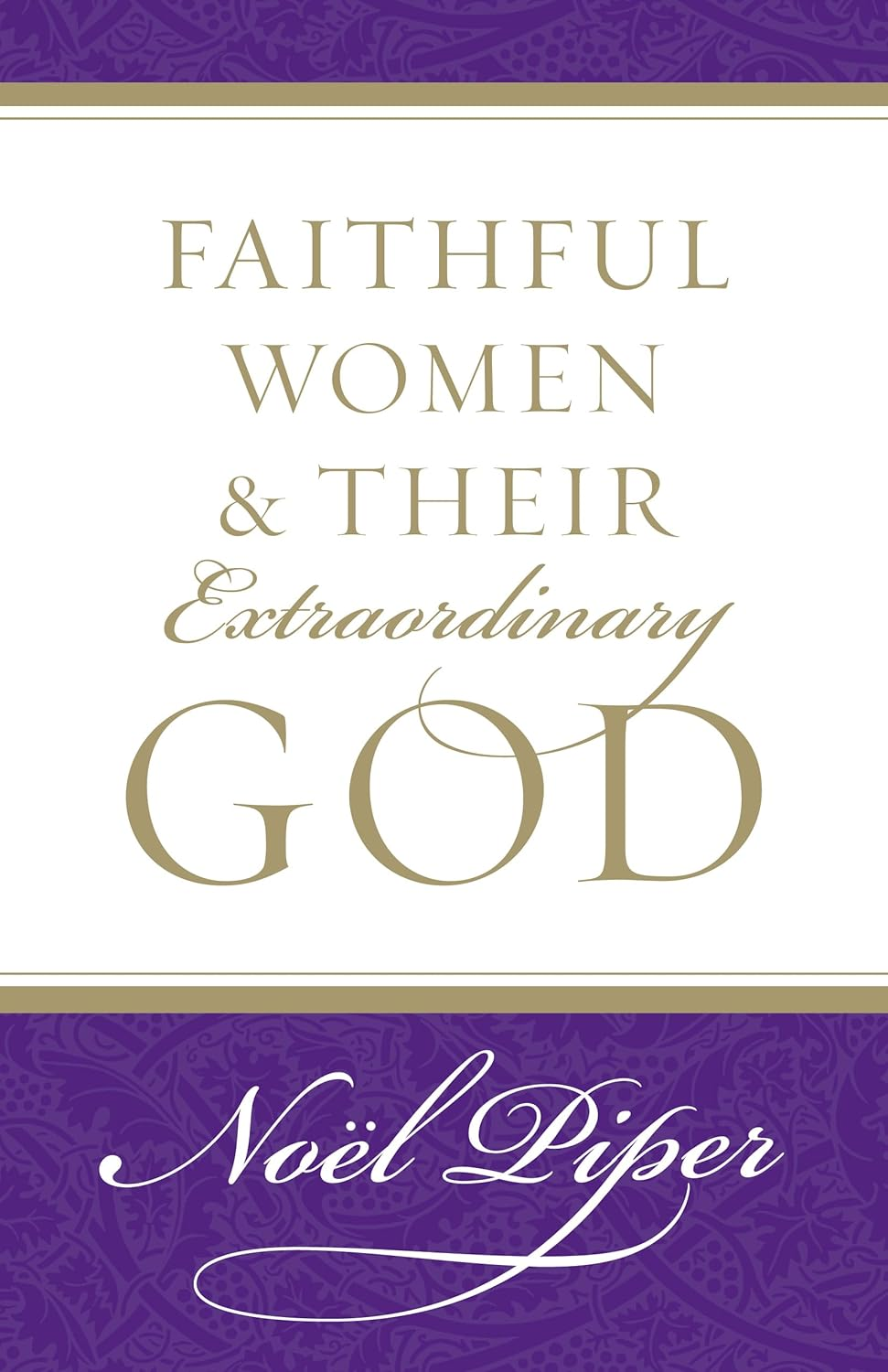
Faithful Women and Their Extraordinary Godby Noel Piper. This was an incredibly encouraging and inspiring read. It’s good to hear of how the Lord has worked through saints who have come before us. And for women of God, it’s good to hear how He has worked particularly through His daughters. Highly recommended. Reviewed on GoodReads.
Leave It to Psmith–first Wodehouse I’ve shared with the boys! So fun! When life gets crazy, I first go to the Word of God. That is foundational. But I also try to work in some P. G. Wodehouse. Laughter is good medicine, and Wodehouse offers a healthy dose of it! Leave It to Psmith doesn’t have any really admirable characters. They’re all a mess. And yet it’s redeeming in a way to see such folly on display and to laugh at it. Wodehouse’s signiture creative word play is delightful, too.
Pride and Prejudice by Jane Austen—It was a joy to reread this long-time favorite along with the tweens and teens in our small homeschool co-op. What better way to enjoy Jane Austen than with tea, snacks, and good conversation?!? I read both Pride and Prejudice and Sense and Sensibility (first time!) this year, and while both get a five-star rating from me in GoodReads, I still come back to Pride and Prejudice as my favorite Jane Austen novel. The Dashwood sisters in Sense and Sensibility are fantastic characters and I loved the lessons learned. But Pride and Prejudice has similar character development—plus humor. The humor apparently makes the difference for me.
Leaf by Niggle by JRR Tolkien—a surprising, short, and sweet read for any creator/writer! Tolkien is known for hating allegory, but it turns out he has played with the genre. Leaf by Niggle is an allegory capturing the struggle of the creative process and the tension between working on your passion project, keeping up with life’s necessities, and giving of your time, energy, and resources to help your neighbor. It’s a delightful and thought-provoking read.
The US Constitution–so good to read and discuss during an election year. I led our co-op class through a reading of the Constitution. Yes, even an 11 year old read the Constitution this year! If he can do it, you can, too! I supplemented my reading with context from one of my college history books: Liberty, Order, and Justice, some of the lectures from the free Constitution 101 course from Hillsdale, and Kahn Academy’s discussion videos covering each article of the Constitution. I also read the Articles of Confederation and the Declaration of Independence and a few of the Federalist Papers. These ought to be read by every American citizen.
Here are the other books I read in 2024, with star ***** ratings.
The Art of War by Sun Tzu **** Listened to the audiobook.
12 Rules for Life: An Antidote to Chaos by Jordan Peterson **** Listened to the audiobook. Don’t go to Jordan Peterson for your theology. He doesn’t handle scripture well. But there are some very practical helps in this book. I can see why he’s a big deal. Sometimes the book droned on a bit, like JP was showing off his knowledge more than helping his reader. LOL
Know and Tell: The Art of Narration by Karen Glass *** This is admittedly a book on educational philosophy and practice, but that’s a kind of leadership, isn’t it? I honestly feel bad for not liking this book more than I do. I love Karen Glass, this is just not my favorite of her books. Review HERE
[Life is busy [track season, ongoing home remodel, etc], so I’m not giving every link possible on the following books. If you are interested in one of them, and you want to purchase it through one of my affiliate links to support this blog, please simply click on one of the Amazon links above and then search for the title in question. 🙂 Thank you for your support!]
Books I read on Government:
Are We Good Enough for Liberty? by Lawrence W. Reed ****
Thomas Sewell: Self-Made Man by Sean B. Dickson **** Read aloud to the boys, picture book.
The Law by Frederic Bastiat *****
The Declaration of Independence *****
The Constitution of the United States *****
The Articles of Confederation ***
Books I read on Biblical Studies/Counseling:
Prayer: The Church’s Great Need by Jesse Hamilton
The Fruit of Her Hands: Respect and the Christian Woman by Nancy Wilson ***** Listened to the audiobook.
Faithful Women and Their Extraordinary God by Noel Piper ***** Listened to the audiobook. Review HERE
The Enneagram and the Biblical Counselor by Rhenn Cherry *** Review HERE
Grace Is Free: One Woman’s Journey from Fundamentalism to Failure to Faith by Marci M. Preheim ** I don’t recommend this book. See my review on GoodReads where I explain why.
Mama Bear Apologetics: Empowering Your Kids to Challenge Cultural Lies by Hillary Morgan Ferrer **** Not bad, but it misses some very important things. Review HERE
Eve in Exile and the Restoration of Femininity by Rebekah Merkle ***** Excellent. This was my second time reading this book.
What’s the Difference? A Study of Important Biblical Distinctions by William MacDonald ***
The Marvelous Pigness of Pigs: Respecting and Caring for All God’s Creation by Joel Salatin ***** Listened to the audiobook. This could easily fall under “Home Management” with other homesteading books in that category, but this one is special–Joel looks at things from a biblical lens, writing to a more narrow audience than most of his other books: to his fellow Christian believers.
Becoming Free Indeed: My Story of Disentangling Faith from Fear by Jinger Dugger Vuolo **** Listened to the audiobook. This is a much better read than the Grace Is Free book listed above. Jinger untangles her past with a lot more biblical discernment and fidelity.
The Good Portion – Scripture: Delighting in the Doctrine of Scripture by Keri Folmar ****
Everyday Gospel Christmas Devotional by Paul David Tripp *** This was ok. Edifying but needed a better editor.
The Quest for Meekness and Quietness of Spirit by Matthew Henry **** Listened to the audiobook.
Literature/Fiction Books I read:
Leave It to Psmith by P. G. Wodehouse *****
Pride and Prejudice by Jane Austen *****
Joy in the Morning by P. G. Wodehouse *****
The Horse and His Boy by C. S. Lewis ****
Sense and Sensibility by Jane Austen *****
Der Struwwelpeter by Heinrich Hoffmann **** This is a classic German picture book that we found at an estate sale. My husband used AI to translate the German into English. The stories are funny, dated, and often a bit morbid.
Homestead Living I got this magazine for the year and have enjoyed a few issues. I cancelled going forward just because I have plenty to catch up on already without new magazines coming in the mailbox!
This post contains affiliate links. If you make a purchase through one of these links, I may make a commission at no additional cost to you. Thank you for supporting my blog.
Here’s another installment of my micro book reviews for 2022. In my last post, I shared the books I read for our homeschool. This time around, I’ve collected my 2022 reads on Christian Thought as well as Life Management (and a bonus category Just For Fun).
Christian Books on Theology, Practice, Philosophy, or Education
On Christian Teaching by Augustine This was probably the oldest work I read last year, aside from Plutarch and the Bible. Writing in the fourth century, Augustine lays out some important guidelines and considerations for teaching–with applications for education in general and for the study and teaching of the Scriptures. Augustine’s ordering of loves (ordo amoris) is incredibly edifying, explaining how all earthly loves can and ought to be turned into the stream of love that we have for God most of all. He also addresses some classical education practices and suggests how Christians ought to approach them. I found reading Augustine to be more approachable and edifying than I had anticipated. I can see why his writing has stood the test of time.
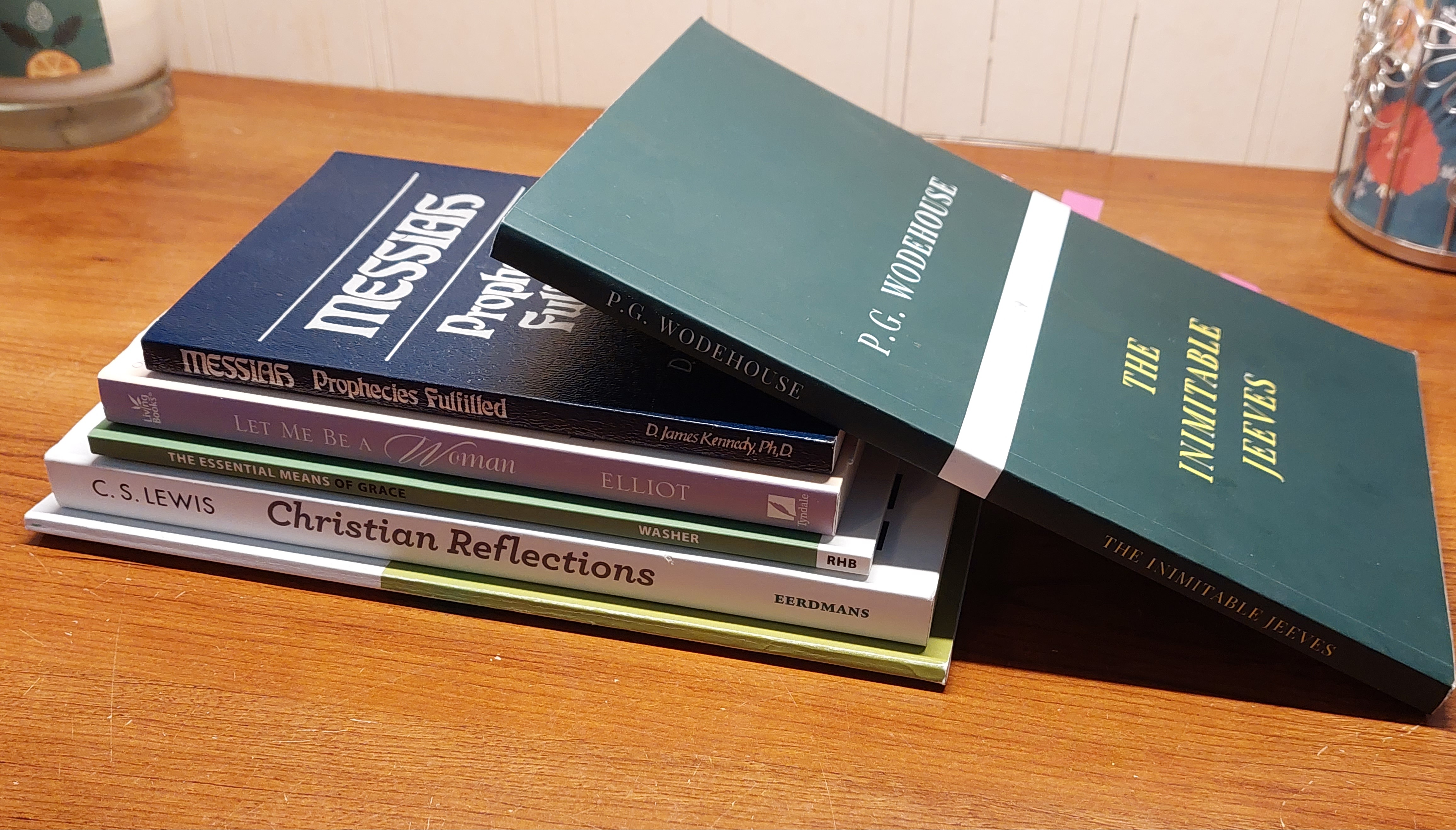
Let Me be a Woman by Elisabeth Elliot This was a re-read of a beloved book. Elisabeth Elliot is one of my all-time favorite authors. Given the crazy confusion of our time, it was good to be immersed in a book that celebrates being a woman—and being a godly woman at that. Let Me be a Woman is a collection of short chapters written to Elliot’s daughter, making her prose both warm and candid. Here’s a particularly poignant quote about worldly attitudes toward women:
Women’s work, particularly the task assigned by Creation exclusively to women, that of bearing and nurturing children, is regarded not only as of lesser value but even degrading and “animal-like.” This is a hideous distortion of the truth, and an attempt to judge women by the criteria of men, to force them into an alien mold, to rob them of the very gifts that make them what they were meant to be. To subject femininity to the criteria of masculinity is as foolish as it would be to judge meat by the standards of potatoes. Meat would fail every test. For women to assume an esatz [or artificial] masculinity means that they will always lose.
Let Me Be a Woman, P. 151
Turns out women also lose when men assume an “esatz” femininity. But I digress…
Christian Reflections (essays) by C. S. Lewis I have to say, Lewis is right up there with Elisabeth Elliot as one of my favorite authors. I bought this book initially for Lewis’ essay on “Historicism,” which I very much enjoyed. I’ve read many of his books: The Chronicles of Narnia(series), The Screwtape Letters, Mere Christianity, A Grief Observed, The Great Divorce, The Four Loves, The Abolition of Man, and That Hideous Strength. But this is my first read through a collection of his essays. Lewis has an incredible ability to evaluate the past and see where things are headed in days to come. I don’t always agree with his take on everything (his essay on “Church Music” being a good example), but he sure does make me think. Here are some of my favorite essays from this collection: “The Poison of Subjectivism,” “Historicism,” “The Psalms,” “The Language of Religion,” and “Modern Theology and Biblical Criticism.” So many of the problems we see today are the fall-out of ideas that Lewis confronted in his day. I think this makes his writing essential reading. Start with Narnia (at least The Lion, the Witch, and the Wardrobe) and Mere Christianity, especially if you need to strengthen your reading muscles. But do work your way “further up and further in.” You will be rewarded for doing so.
First Principles: Becoming a Disciple by Geoff Reed My husband and I hosted an outreach Bible study last year using this first book in the First Principles series. We covered the gospel, baptism, and the call to renew our minds in God’s truth, which stands in stark contrast to the ideas and values of the world. It was a great study, digging into one Bible passage for each lesson, as well as offering discussion questions and commentary. One thing that sets this book apart from other Bible studies is the heavy emphasis on both discussion and follow-through. The questions make you think and examine the Scriptures without feeling like an exercise out of an academic textbook. There is ample room for taking your own notes and recording your own questions to bring to discussion. And the sixth and final lesson in the book asks you to look back over the first five lessons to restate what you’ve learned, ground it in the Scriptures, pick a verse or passage to memorize, and set some goal or intention for your life going forward. A lot of studies have little assignments with each lesson and then just plow ahead. This one makes you sit with what you’ve covered a bit more–and challenges you to really apply it before moving on. Because simply gaining academic knowledge of God’s word isn’t what we’re after–we want to respond to it properly, applying it to our lives with the help of the Holy Spirit and in fellowship with other believers who can hold us accountable.
The Essential Means of Grace by Paul Washer I have appreciated the teaching of Paul Washer since my college days, but this is the first book I’ve read by him. It was a short but meaty and refreshing read, covering our relationship to God through the Scriptures, prayer, repentance and confession, and the local church. Highly recommended. Only 71 pages.
Messiah: Prophecies Fulfilled by D. James Kennedy My husband read this to us in December as our Advent devotional. It was a good overview of Old Testament prophecies about Jesus Christ, the Son of God. My boys are in 7th and 5th grade, and it was a good fit for our family, though there was a reference to infant baptism, which we do not practice, so we simply and briefly discussed that with our kids. (Links are to a newer version of the book than we own.)
Life Skills/Management
Do More Better by Tim Challies I started 2022 off listening to this audiobook. Challies has some good principles for productivity that were helpful to me, and for a season I tried his process for managing tasks in ToDoist. I fell off of that specific application, but together with the books listed below, I think this has been a help to my focus and life management this past year.
Essentialism by Gregg McKeown This was recommended by a friend last spring and I snagged it on Audible. I wish I had a hard copy, because I think there are some diagrams that would be helpful, especially to review. At any rate, I loved this book. It urges you to really ask the important questions—what matters most? What is most essential? And then it challenges you to live by that. It’s not a Christian book, but it is Christian-friendly.
Effortless by Gregg McKeown This is the follow-up book to Essentialism. I’m not sure “effortless” is really what you get out of it, but the author does help you think through applying the principles of essentialism more thoroughly to your life. It was a good listen (again, audiobook). I will probably revisit both of these books sometime soon—maybe even this year. I think they’ve helped me a lot.
Cozy Minimalist Home by Myquillyn Smith I found this delightful book at an “extras” bookstore on our long drive home from a trip to Florida. Why have I never read a book on decorating before? I’ve been a homemaker for fifteen years, for crying out loud! Anyway, I’m glad I read this and glad to have some principles and guidelines for making décor decisions for my home. Cozy + minimalist is really a great combination, putting people above stuff, but also not putting bare minimalism over people. The author is apparently a Christian, so the decorating advice is well-ordered and not at all about putting on a show or keeping up with the Joneses.
Don’t Overthink It by Anne Bogel This was a fairly helpful book. As I listened to the audiobook, I kept finding myself wishing that the author would have dealt with the spiritual side of worry/overthinking. Instead all she did was give positive tips and tricks. All of which are helpful, but it’s just not the complete picture, and I had hoped for better from an author who is a professing Christian. Tips and tricks don’t fix my trust-in-God issues. All that to say, this was a profitable listen, but not nearly so much as it could have been. This is a your-best-life-now kind of book, and needs to be balanced by biblical truth.
Ploductivity by Doug Wilson Speaking of biblical truth, there’s a lot of it in this little book (again, for me, audiobook). I was surprised to find a lot of discussion on technology—even a theology of technology. This book was far less about tips and tricks and processes and far more about our assumptions and beliefs about technology, work, etc. A very good read, especially after having finished Don’t Overthink It and finding it wanting in the theological department. That said, I don’t share Doug Wilson’s Presbyterian eschatology, which does come out in the book; but that is a small part of the whole, and it was interesting and edifying to listen to nonetheless.
Just for Fun
The Inimitable Jeeves by P. G. Wodehouse This was my second-ever Wodehouse read. I liked The Code of the Woosters better, but this book was fun, too. I read it at the beginning of 2022 and can hardly remember what happened in the story…Bertie gets himself in trouble and Jeeves has to help him out of it, but some of that trouble is caused this time by his even-more-pathetic friend, Bingo. This one is more serial while all of Code of the Woosters unfolds from Bertie’s accidental pinching of a cow creamer. It’s hard to beat a cow creamer for ridiculous and memorable comedy. So if you want to enjoy some good laughs and British humor, you know which one I’d recommend.
That’s a wrap for today! What are your favorite Christian theology or Christian living books? What books have helped you to manage life well? I don’t seem to make much space for fun, comedic reading, but I find it refreshing when I do–what about you?
For more Books Read in 2022: For Homeschooling On Marxism and Black Christian Perspective (coming soon!)
This post contains affiliate links. If you make a purchase through one of these links I may make a commission at no additional cost to you.
I recently started logging my reading on Goodreads. You can follow me there to see what I’m currently reading and to catch new reviews that I write.
This is the second review I’ve written. I had my oldest son read John Bunyan’s autobiography this year for school, alongside Pilgrim’s Progress. I enjoyed (well, mostly enjoyed) listening to the book so that I could be ready to discuss it with my son. Here’s my review, originally posted on Goodreads:
I’m giving John Bunyan’s autobiography 4 stars simply because it is a bit difficult to enjoy at times–partly due to the older language but mostly due to the fact that as you hear Bunyan detail his struggles against temptation, doubt, and despair, you keep longing for him to come to a final resolution. But for Bunyan, this resolution takes a long time in coming, with many, many ups and downs. Over half the book seems to stay in this back-and-forth state–Will he ultimately be condemned? Or is the Lord’s saving of him sure? Has he committed the unpardonable sin? Is the love of God in Christ still his?
I’ve heard that CS Lewis called Bunyan’s autobiography something like a trip to an asylum. And for half the book, I can feel why.
Bunyan took his own sin and temptation very seriously. One might like to say he at times took it too seriously, but Bunyan seems to conclude that he took the accusations of the enemy of his soul too seriously and did not readily enough approach the throne of grace for help in time of need. This is quite instructive to modern readers: take sin seriously, but take grace seriously, too.
It is the grace of God and the righteousness of Christ that at last secures Bunyan’s hope. But, in God’s providence, his struggles for assurance up to that point of clarity seem to have given him a humility that prepared him for ministry and a depth of understanding of both theology and the human condition that enabled him to pen the classic Pilgrim’s Progress. What a gift to the church!
In contrast to the shiny, suave image that a lot of celebrity pastors put forth today, Bunyan the tinker invites us to know the deep struggles of his soul for assurance before God, which he could only ultimately find in the righteousness of Christ and in the faithful love of God. Reading his autobiography is an encouragement that God can and does use those tender hearts (perhaps sometimes too tender?) who mourn their sin and love their Savior.
If you want an interesting pairing, try reading this book alongside John Owen’s Indwelling Sin in Believers. Owen was a contemporary of Bunyan and reportedly admired him. The Lord used Bunyan outside of the Church of England (and even while imprisoned by it), and He used Owen within it. Both had a great understanding of the fight against sin (Owen more so theologically and Bunyan more so experientially). Both men’s writings are a gift to believers for which we can thank God.
This post contains affiliate links. If you make a purchase through one of these links, I may receive a commission at no additional cost to you.
Scroll to the bottom for quick-reference information on the book!
A friend of mine lent me It’s a Numberful World by Eddie Woo a couple of years ago in case I might want to share some of it with my boys in our homeschool.
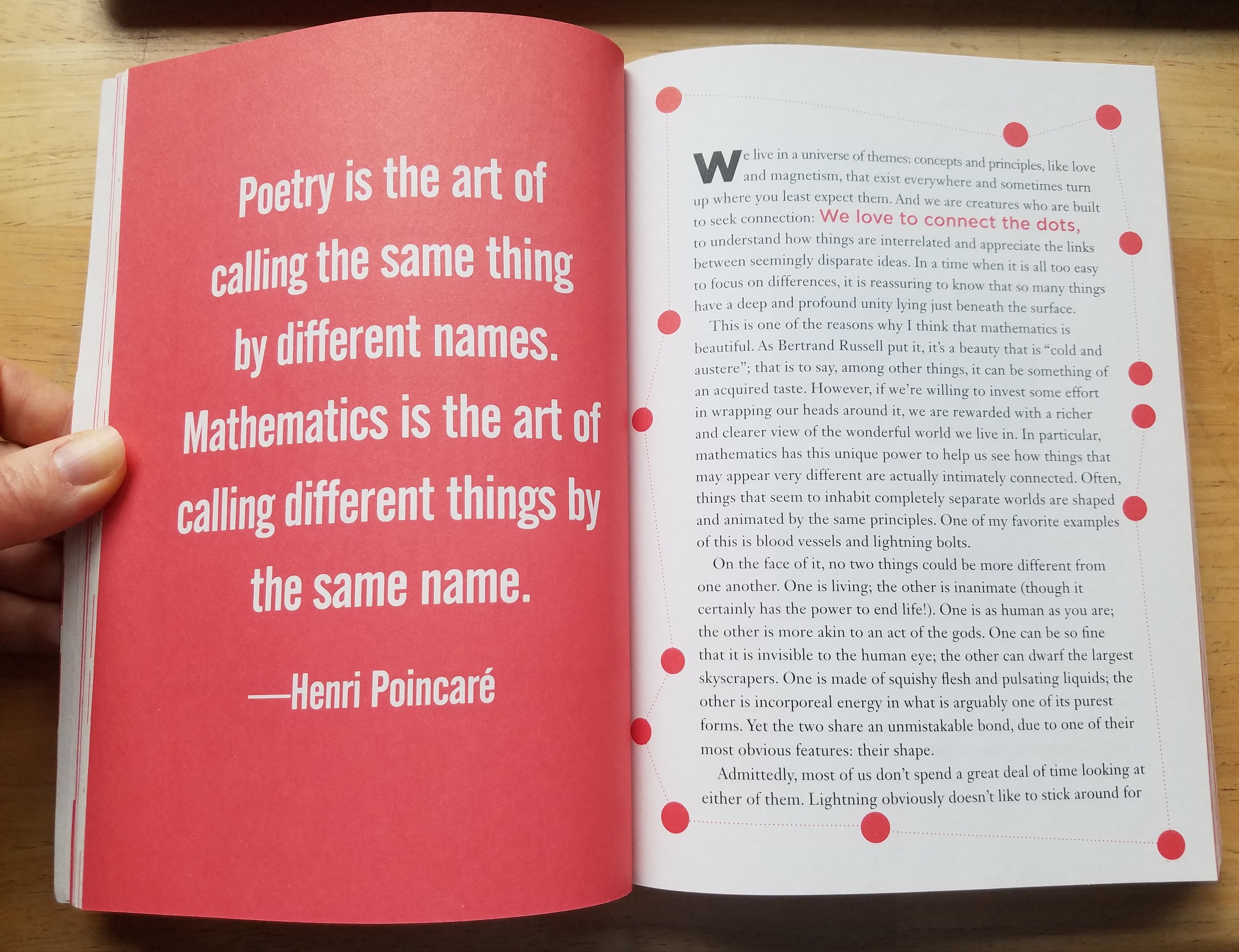
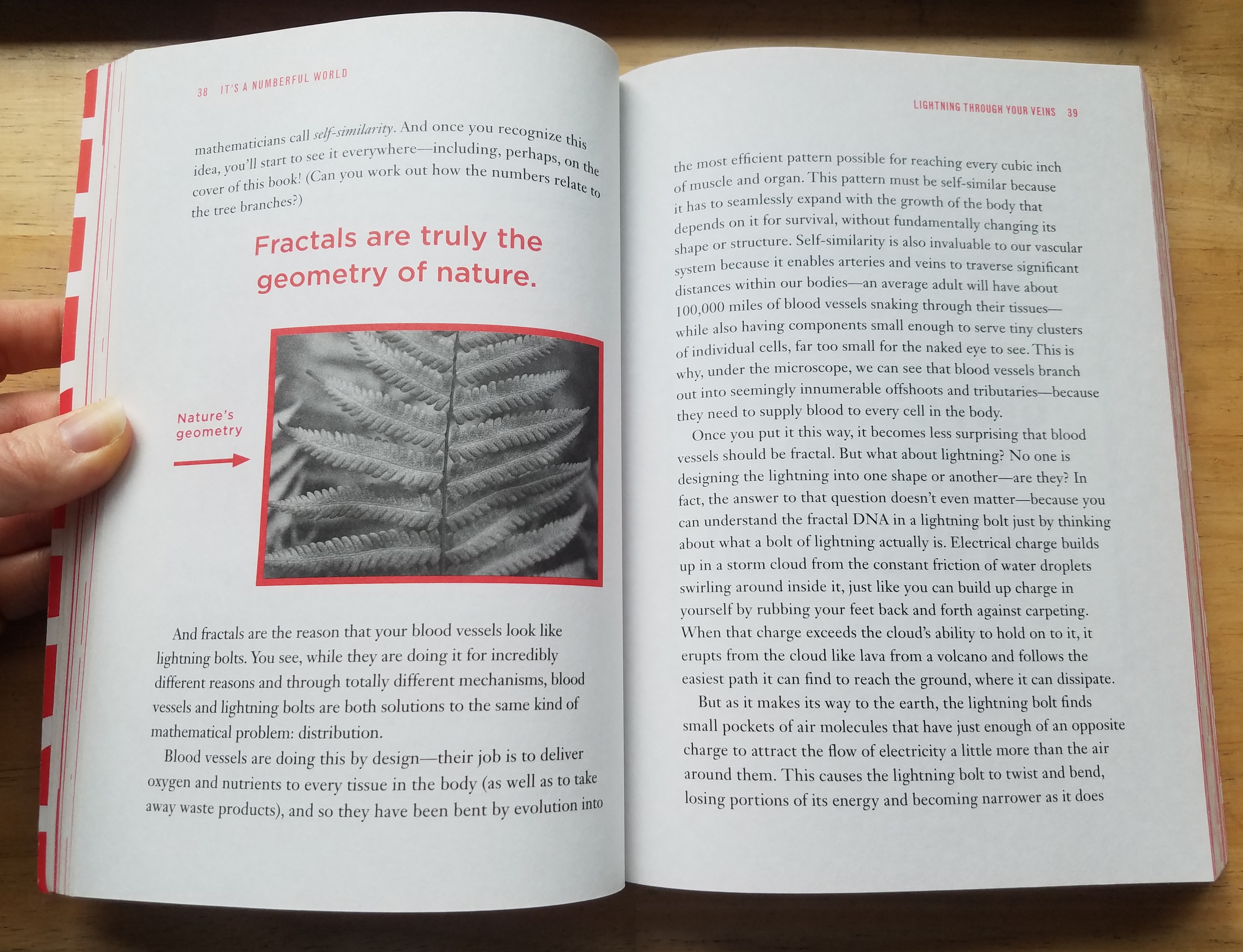
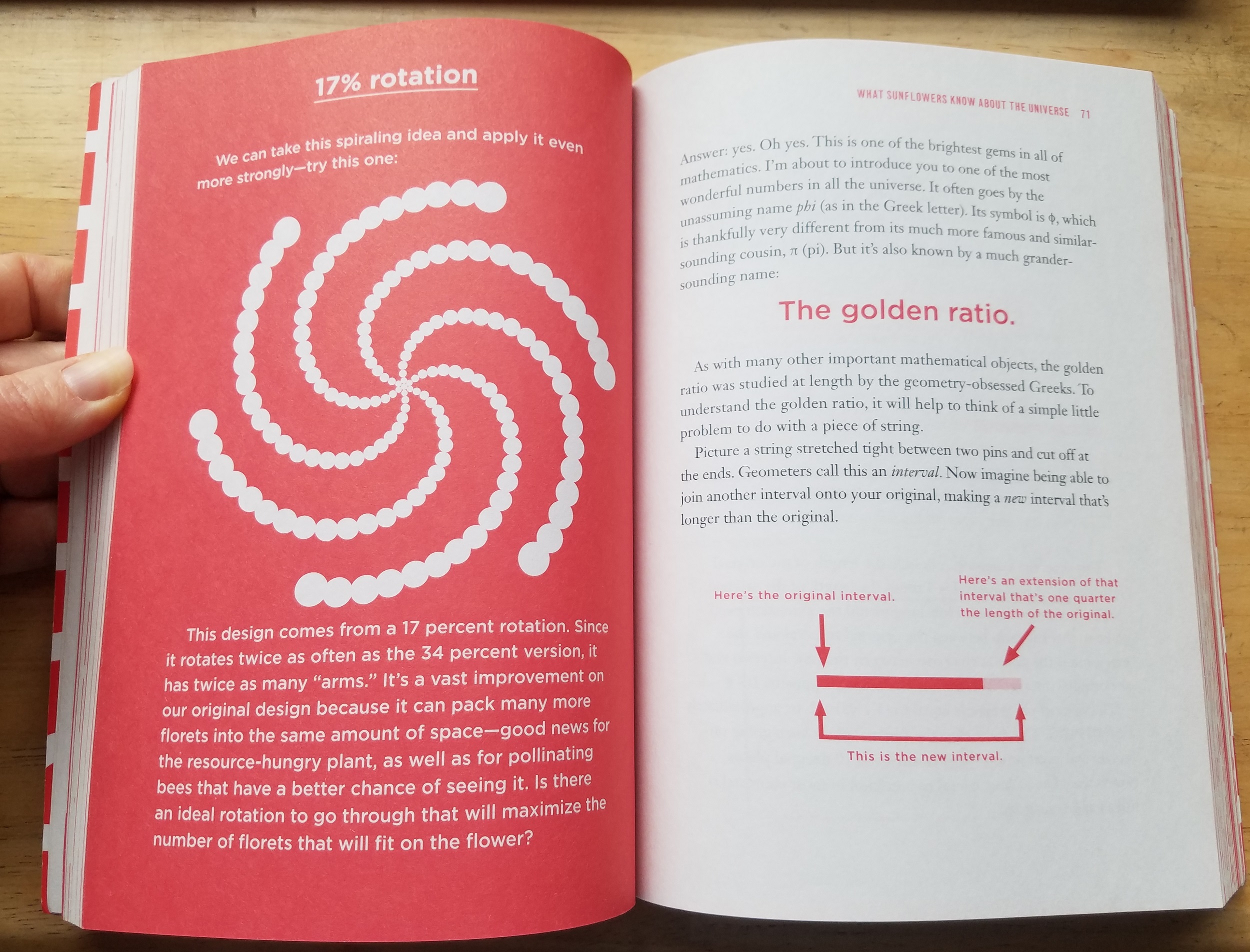
It’s a modern book with modern appeal, and that makes it a fun and very approachable read. Famed Australian math teacher Eddie Woo pulls from all over math history and modern technology while approaching subjects topically–finding math all around us and applying it to all kinds of situations and phenomena. Woo does a great job of communicating his wonder both at the beauty of mathematical patterns and at the way math works, striking an engaging balance between awe and practicality. Here are a few samples page spreads:
For Eddie Woo, the wonder is inextricably linked to his Christian faith. The book is “Dedicated to the Author of Life” and quotes Galileo on the dedication page: “Mathematics is the language with which God has written the universe.” While Woo’s faith comes out in his dedication, the book itself stays very safely within the realm of secular discussions of mathematics.
I really enjoyed the book, but I think I would have enjoyed it a lot more if the wonder at God’s handiwork hadn’t been limited to one page. I’d love to hear more of Woo’s awe of God directly connected with mathematics, as he is quoted in this article:
We talk about the fact that the universe is designed in this way and you can find all of these patterns; do you think that that’s a coincidence? One of the things I love to point out is we call the universe the cosmos which means ordered and structured and designed, as opposed to chaos, and the reason why we can find these mathematical principles is because there was a designer. We didn’t just spring into being. It has immense beauty.
I mean, how can it be that mathematicians and physicians – secular ones – all agree that one of the primary criteria for judging whether something is mathematically true or not is whether the equations are beautiful. Why on earth should the equations of the earth be beautiful? And the answer is we have a beautiful designer who designs things beautifully. So for me it’s a source of marvelling [sic] at the way that God crafted the Universe.
While I would have liked to see more of that godly awe, It’s a Numberful World was a really fun read. I appreciated the invitation to take a multi-disciplinary exploration of mathematics–and to play with it along the way. I haven’t really used it in our homeschool, but that’s partly because we already have so many interesting things (Fibonacci sequence, tessellations, using drawing tools, etc) that we’re exploring in our Right Start Math lessons. Wonder and play with math are already part of what we do. I might keep Woo’s book in mind for when we hit high school math, however. And I’m very interested in exploring his teaching videos on YouTube or …wait for it… WooTube.
Recommended for: High School to Adult Uses: Supplement to math curriculum, enjoyable math reading. Consideration: Chapter 25 “Why Aren’t Left-Handers Extinct?” refers to Darwinian evolution, specifically the theory of natural selection, as the author mathematically explores why certain traits persist.






 Kept and Keeping