
• Home
  • About
  • Living Faith
  • Home and Family
  • Home Education
  • Books
  • Recommended Resources
  • Media

Kept and Keeping

~ Rest in Grace, Labor in Love

Kept and Keeping

Tag Archives: American History

When the World Breaks

11 Thursday Sep 2025

Posted by Lauren Scott in Home and Family, Living Faith

≈ 2 Comments

Tags

9.11, 9/11, American History, Charlie Kirk, Christian life, Christian Martyrs, christianity, Columbine Massacre, Columbine Shooting, Courage, faith, god, History, Jesus, Martyrdom, motherhood, parenting, Political Assassination, trials, World Trade Center

I was in 8th grade when I found out the world was broken. The Columbine High School Massacre shook a nation, and it shook me, too.

Sure, growing up in Texas, I had been vaguely aware of the 1993 Waco Siege and a bit more aware of the Oklahoma City Bombing since it provoked a moment of silence before one of my 10U softball games.

But when you’re 14 and your conversion to Christ is less than a year old, the martyrdom of would-be peers like Cassie Bernall and Rachel Scott tends to leave an imprint.

“Do you believe in God?”

“Yes, I do.”

Bang.

Just a few years later, the world broke again.

It was September 11, 2001, and I had just walked into my Junior English class. There was a bit of a commotion and a student turned on the TV in the upper corner of the room, opposite the door, so I had a perfect view as I walked in. There was a tall building with smoke coming out of it. We watched with confusion, incredulity, and horror as a second plane ran into the other tower on live TV.

A girl in one of my classes shrieked that her dad was flying that day. She was a wreck until she found out he wasn’t on one of those planes.

Our US government test was canceled that afternoon. Instead, we watched and discussed history in the making, with room for questions, grief, and silence.

Just as my 14 year old self took courage from the stories of students who lost their lives at Columbine, I also followed stories of heroism from 9/11. Of particular note was Christian husband and father Tod Beamer. He was one of the men who left the illusory safety of his passenger seat to fight his plane’s hijacker. This is the plane that crashed in a field rather than, say, the White House. His widowed wife tells the story in the book Let’s Roll.

These are the moments and stories we never forget.

You remember the images. You remember where you were standing when the news broke and your world broke with it.

Today’s remembrance of 9/11 follows in the fresh wake of another world-breaking moment.

I won’t soon forget where I was standing yesterday afternoon when Charlie Kirk was murdered. I was in the kitchen, about to process some chicken and prepare enchiladas for our church’s youth who would arrive at our house in a few hours. I picked up my phone to check Instagram, and at the top of my feed was a simple text post from Allie Beth Stuckey announcing the shooting and pleading for prayer.

My first thought was, “Oh, God. Not Charlie Kirk.” You might have expected political violence against some of the more abrasive and loud-mouthed conservative figures. But Charlie was a devout Christian, outspoken but incredibly patient and willing to engage in dialog with anyone. “Not Charlie.”

Tears and many prayers followed.

Prayers and tears while cooking taco meat and rolling enchiladas. I asked the boys to put on a good album of Christian music while they cleaned and I cooked. I hadn’t told them yet. Still processing the event and food and prayer after prayer after prayer.

But when the report came out that Charlie had died, and the boys could likely see that something had been eating at me or at least had me distracted, I finally told them. Right there in the kitchen, standing next to the kitchen table.

The words didn’t come easily. But they came. So did the stunned faces, the look of shock and sadness.

Yesterday my 8th grader found out the world was broken, if he didn’t know that already.

Because yesterday a good man got shot for speaking truth. It’s the same thing that happened to Cassie Bernall and Rachel Scott, just on a grander and more sophisticated scale.

Promote free speech and civil discourse by living it.

Clearly articulate conservative moral and political views.

Speak up for the unborn.

Promote biblical marriage and family life.

Unashamedly proclaim the gospel.

Bang.

A young woman widowed. Two precious children left without a father. A nation of young people touched by the violence against a man who touched their lives.

What are we to do? There’s anger, there’s grief. What does the Scripture say?

Be angry and yet do not sin.

Weep with those who weep.

Pray for the widow and orphan.

Pray for those who persecute you.

Speak the truth in love.

Do not be ashamed of the gospel: the world is broken, and we know the only Healer.

Yes, we can do that. By the grace of God, we can do all of that. I can encourage my sons in that.

But I’m also thankful that I had responsibilities to feed other people yesterday evening. To pull me away from the news updates, the doom scrolling, the negative spiral and back into the physical world of embodied service and life in community.

We welcomed our friends last night, shared a meal, read and reflected on the Sermon on the Mount, prayed with our teens, and then as parents and leaders, prayed for our teens. What a healing balm on such a tragic day. We just did the usual thing, nothing loud and fancy—we gathered as believers in Christ, practicing the ordinary means of grace.

And I think that’s where I’ll leave this. Where do we go from here? We go to the Word and all of the most basic Christian disciplines—both in our solitude and in community. We run to Jesus, pleading that He might produce the fruit of His Spirit in us. And we go about our ordinary, everyday obedience to Christ, rolling up our sleeves and our enchiladas, refusing to abandon our post, refusing to shy away from the hard conversations, refusing to compromise the truth, prayerful and Christ-exalting in all of it.

And maybe, just maybe, instead of being more afraid because of yesterday’s events, we’ll do it all with even more courage and boldness because of Charlie Kirk’s example.

“The blood of the martyrs is the seed of the church.” —Tertullian

Some are called to serve Christ on the front lines by reaching young people on college campuses. And some of us are called to serve Christ on the front lines by raising our own young people before they land on a college campus.

So to the mamas out there: Hold the line. Make that meal. Arrange those flowers. Love your husband. Love your children. Call that friend. Provide the physical sustenance that brings people together for fellowship around the spiritual sustenance of the Word of God.

And pray for Erika Kirk as she seeks to do the same—without Charlie by her side.
Thanksgiving: A Holiday Made for Unsettling Times

24 Tuesday Nov 2020

Posted by Lauren Scott in Living Faith

≈ 1 Comment

Tags

American History, Giving Thanks, Gratitude, History of Thanksgiving, Lincoln's Proclamation of Thanksgiving, Thanksgiving, Thanksgiving 2020, Thanksgiving History, Thanksgiving Holiday, The First Thanksgiving

We’re all familiar with the modern traditions surrounding Thanksgiving in America: parade, family, turkey, football, pumpkin pie, and …shopping like maniacs the following day.

We may even take a few moments to give thanks or remember that iconic feast shared by the Pilgrims and American Indians nearly 400 years ago.

But for most of us, our understanding of the holiday doesn’t go much deeper than that.

And now it’s 2020 2021 2022.

We’re living in a pandemic, watching tensions mount between different groups of Americans, and trying to see straight in the aftermath of a vicious and confusing presidential election. [As for 2022, we’re living in a post-pandemic, highly-inflated world and have just come out of yet another vitriolic-though-midterm election season.]

For some of us, this Thanksgiving may look like holidays-as-usual. We’ll gather with all the family, thankful for our health and thankful that our state hasn’t locked us down again.

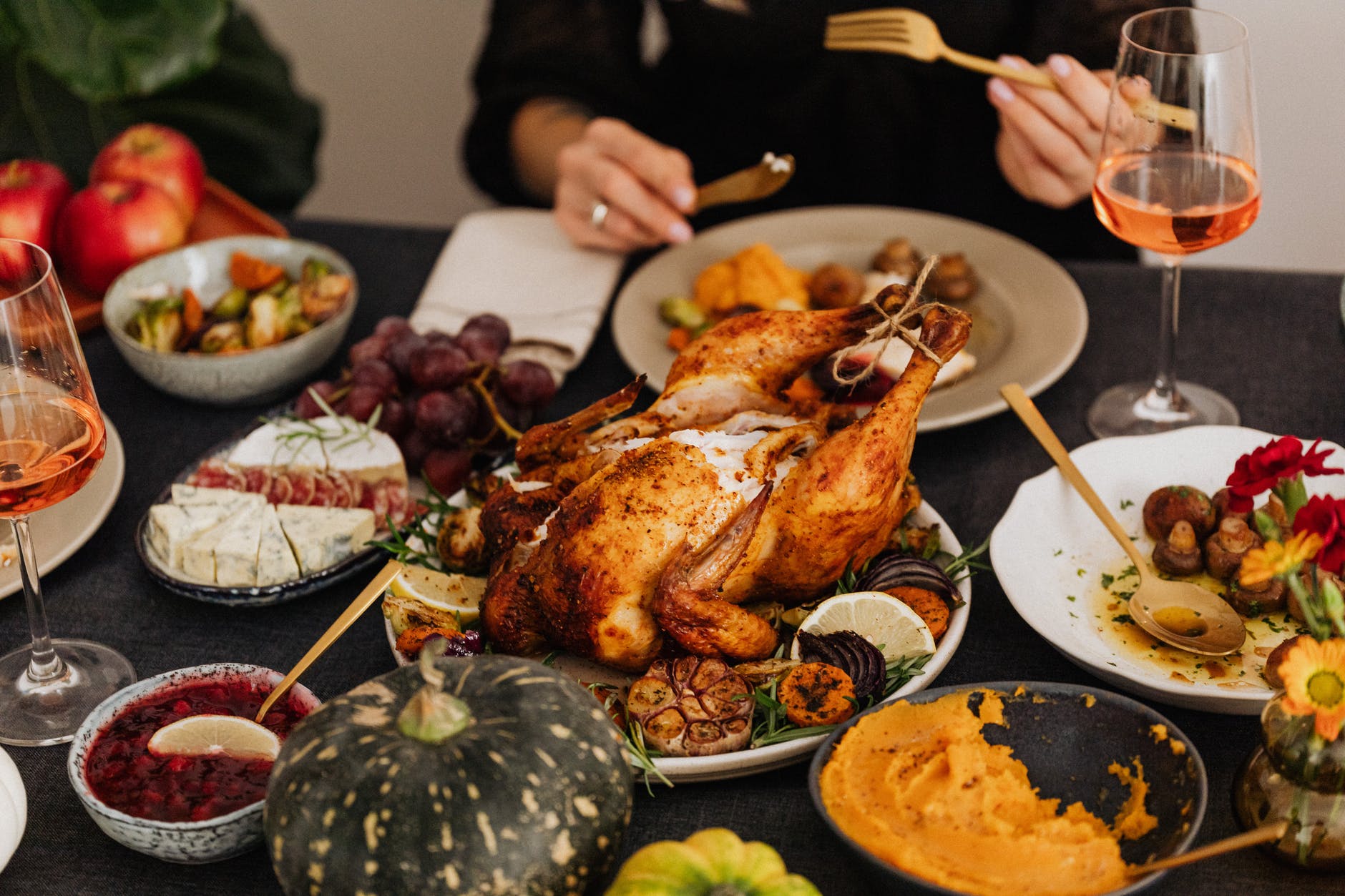
Photo by Karolina Grabowska on Pexels.com

For others, we may begrudge the restrictions in place that cramp our traditions–or maybe we’ll voluntarily cancel trips and gatherings.

For still others, there’ll be at least one empty chair at the table. A chair that was warm just last week.

We Americans have some common experiences this year [and the past few years] in that we’re seeing history unfold before our eyes more than we usually care to.

In light of this, I’d like to share a peek into the past that I have found encouraging. Thanksgiving is indeed a holiday made for unsettling times. There are three key moments in Thanksgiving history that can help us to understand both the holiday and our place in the story today: the colonial period, the founding of our nation, and the Civil War.

Thanksgiving in the Colonial Period

The colonial period of American history involves a complex interplay of different people groups and different motivations. The Native Americans consisted of various different tribes and customs while the Europeans likewise were represented by explorers and settlers from Spain, France, England, and Holland.

There could be peace or war in any and all directions.

There could be prosperity or famine and plague.

There could be–and there was–kidnapping of Native American youth to be sold as slaves in Europe.

Against this tumultuous backdrop, the coming of the English Pilgrims and their warm and life-saving reception by Squanto and the Wampanoag Indians radiates hope for peace and provision in the midst of very uncertain times.

It’s also an incredible picture of forgiveness: Squanto was one of those youths stolen from his home and sold as a slave in Europe. He escaped to England and eventually made it home to find that his people had been wiped out by plague. What had been done to him was terribly wrong and deplorable. But in the process, he acquired the English language and faith in Christ.

What was the Pilgrim’s response to this incredible provision of practical help and a mediator with the native people? They set aside time to celebrate a harvest feast, giving thanks to God for His protection and provision–even after nearly half of their company had died in the previous year. Their neighbors, the Indians whom God had used to preserve them, joined them in the feast.

Giving Thanks for a New Nation

Let’s fast-forward 160 years to the first proclamation of a national “day of public thanksgiving and prayer” in 1789. The fledgling United States of America had won their independence from Britain just a few years earlier in 1783, the Constitution had just been peacefully ratified in 1787, and President George Washington, with a nudge from both houses of Congress, saw fit to give thanks.

Washington’s three-paragraph proclamation begins by recognizing “the duty of all Nations to acknowledge the providence of Almighty God, to obey his will, to be grateful for his benefits, and humbly to implore his protection and favor.” He continues to summarize reasons for a day of thanksgiving and prayer before dedicating the remaining two paragraphs to 1) a call to thanksgiving and 2) a call to prayer. I highly recommend you take the time to read Washington’s address in its entirety here.

As you read, you’ll find an aim at uniting as a people around both thanksgiving and prayer. You might be surprised to find no reference to the pilgrims. And you might also be surprised to find that the call to prayer includes a call to plead for forgiveness:

…that we may then unite in most humbly offering our prayers and supplications to the great Lord and Ruler of Nations and beseech him to pardon our national and other transgressions…

There’s a lot more food for thought here than “pilgrims” and “family” and “football.”

Before we jump ahead in time, I think it’s important to recognize that the Pilgrims and George Washington alike were not perfect people, nor were they living in perfect times. The early days of our American republic set the stage for the drama that we’re about to discuss–by raising the standard of liberty while simultaneously failing to fully apply its ideals. While their blind spots are tragic (just as our own are today), they gave us the language with which we have continued to pursue liberty and justice for all throughout the following two centuries. To mock at their ideals and their giving of thanks is to cut ourselves off from the very things we ought to bring forward.

With that in mind, let’s look at the third moment of Thanksgiving history for our consideration today: the Civil War.

Thanks and Praise in the Midst of War

While Washington made the first presidential proclamation of thanksgiving, and while pockets of Americans (particularly in New England) celebrated a thanksgiving feast from year to year, President Abraham Lincoln’s proclamation in 1863 was the first in what would become a continuous string of thanksgiving proclamations by US presidents up until our times.

Sarah Josepha Hale, best known for writing “Mary had a Little Lamb,” had been writing to presidents for decades, pleading with them to create a national thanksgiving holiday; and for decades she was ignored. When she sent a letter to President Lincoln, however, she found a listening ear.

Within a week Lincoln issued the Proclamation of Thanksgiving–nine months after issuing the Emancipation Proclamation and one month before delivering his Gettysburg Address–and smack in the middle of a war that would become a five-year scar on the face of American history.

Lincoln’s proclamation (actually written by his Secretary of State, William Seward), contains only one substantial paragraph, weaving back and forth between poetic consideration of blessings from “the ever watchful providence of Almighty God” and the context of “a civil war of unequaled magnitude and severity.”

Of the blessings listed he declares: “They are all the gracious gifts of the Most High God, who, while dealing with us in anger for our sins, hath nevertheless remembered mercy.”

Like Washington’s proclamation 74 years earlier, Lincoln’s call to thanksgiving and prayer is not without reference to sin. In fact, after inviting all Americans to unite for this purpose on the last Thursday of November, he continues:

 …I recommend to them that while offering up the ascriptions justly due to Him for such singular deliverances and blessings, they do also, with humble penitence for our national perverseness and disobedience, commend to His tender care all those who have become widows, orphans, mourners or sufferers in the lamentable civil strife in which we are unavoidably engaged, and fervently implore the interposition of the Almighty Hand to heal the wounds of the nation and to restore it as soon as may be consistent with the Divine purposes to the full enjoyment of peace, harmony, tranquillity [sic] and Union.

The Civil War saw more American casualties than all other wars combined up until the Vietnam War about a century later. The need to remember “widows, orphans, mourners or sufferers” was palpable.

And while there is always more than one motivation at play on either side of such a conflict, it is undeniable that the continued enslavement of Africans and black Americans played a central role. It’s not at all a stretch to read this cause into “our national perverseness and disobedience,” and Lincoln’s Second Inaugural Address makes this soberingly clear.

It would be nice to be able to tie this up with a pretty bow. To demonstrate that changed laws and a presidential proclamation of thanks, prayer, repentance, and a call to unity could indeed make all things right.

But Lincoln was shot. And his expressed desire for repentance and healing left unrealized.

And there’s no reason to believe that had Lincoln lived to serve his second term repentance and healing would have come any more easily. These kinds of changes start in hearts not heads of state.

Bringing it Home

So here we are now. Twenty-twenty (and ‘twenty-one…and ‘twenty-two) has been quite a year. But we aren’t alone in facing “unprecedented times.” These are the things history is made of.

I believe we can better find our place in that story if we remember where we’ve come from, if we remember that what is true and good is worth pursuing in any age, and if we repudiate the cynicism and resentment that work against these ends.

In a holiday season thrown off balance and stripped of some of its usual charm, may we look back to find our bearings and the traditions that are most important.

In the face of a pandemic and its associated isolation, may we remember “widows, orphans, mourners [and] sufferers.”

In a social climate rife with vitriol, may we “fervently implore the interposition of the Almighty Hand to heal the wounds of the nation.”

In the fierce clamor for control of the political sphere, may we seek the “humble penitence for our national perverseness and disobedience” that comes from the work of God in the hearts of individuals who look to Providence more than presidents.

What human beings on this continent have needed in 1621 and 1789 and 1863 is the same as what we need today: hearts humble before God and man, hearts that are quick to repent of sin–in all its forms–and do what is necessary to truly love our neighbor. Our Thanksgiving holiday, both in history and today, is an invitation to practice that humility and cultivate that love.

Happy Thanksgiving.

Sources to explore:

https://www.history.com/topics/thanksgiving/history-of-thanksgiving

https://www.mountvernon.org/education/primary-sources-2/article/thanksgiving-proclamation-of-1789/

https://www.history.com/this-day-in-history/lincoln-proclaims-official-thanksgiving-holiday

https://www.history.com/news/abraham-lincoln-and-the-mother-of-thanksgiving

http://www.abrahamlincolnonline.org/lincoln/speeches/thanks.htm

https://www.battlefields.org/learn/articles/civil-war-casualties

Further reading on this blog:

The Poverty of Pragmatic Gratitude and the Riches of True Thanksgiving

Remember and Rejoice: Thanksgiving Meditations from the Book of Deuteronomy

  • View KeptandKeeping’s profile on Facebook
  • View lauren.keptandkeeping’s profile on Instagram
  • View keptandkeeping’s profile on Pinterest
  • View @laurenscott.keptandkeeping’s profile on YouTube
Lauren Scott

Lauren Scott

Christian. Wife. Mother. Homemaker. Home Educator. Blogger. Book Addict. Outdoorist.

View Full Profile →

Enter your email address to follow Life Meets Jesus and receive notifications of new posts by email.

Affiliate Disclosure

We are a participant in the Amazon Services LLC Associates Program, an affiliate advertising program designed to provide a means for us to earn fees by linking to Amazon.com and affiliated sites.

Hands-on Math Curriculum

RightStart™ Mathematics

Check Out Prodigies Music Curriculum!

music curriculum sale

Quality Video Curriculum

Top Posts & Pages

  • Five Refreshing Scriptures for Finishing Strong when You Feel Weak and Weary
    Five Refreshing Scriptures for Finishing Strong when You Feel Weak and Weary
  • Wisdom in the Book of James
    Wisdom in the Book of James
  • 30 Day Dress Challenge Recap
    30 Day Dress Challenge Recap

Advent April Fool's Day April Fools Book Review Books Books Charlotte Mason Charlotte Mason Homeschool children Christian Classical Education Christian Classical Homeschool Christian Homeschool Christian life Christian mom Christian Parenting Christian Women Christmas Classical Education Classical Homeschool devotional education faith Guest Post Home and Family Home Education Homemaking homeschool encouragement homeschooling Jesus Living Books love marriage meditations micro book reviews motherhood Nature Nature Studies parenting poems poetry Practical Atheism Reading List Reflections Relationships trials

A WordPress.com Website.

  • Subscribe Subscribed
    • Kept and Keeping
    • Join 171 other subscribers
    • Already have a WordPress.com account? Log in now.
    • Kept and Keeping
    • Subscribe Subscribed
    • Sign up
    • Log in
    • Report this content
    • View site in Reader
    • Manage subscriptions
    • Collapse this bar
 

Loading Comments...