
Tags
Bible Reading, Bible Reading Plan, Bible Study, Christian Classical Education, Christian Classical Homeschool, Christian Parenting, devotional, family bible time, Family Worship, Home Education, Homeschool Bible, Homeschooling Middle School, Spiritual Disciplines
Amazon links are affiliate links. If you make a purchase through one of these links, I may receive a commission at no additional cost to you.
I’ve written in the past about how our family covers “Bible” in our homeschool, which is to say, I’ve written about how we don’t consider it a subject in school so much as a part of life. You can read that article here, especially if you have little ones or are just getting started reading the Bible together as a family.
The following article is actually a guest post from my husband, as he reflects on what we have done differently in our family Bible time this year–instead of reading a chapter aloud at the kitchen table, we’re reading independently and discussing it together over a meal.
I hope my husband’s words are an encouragement to you to see how family bible time can grow and mature as you and your children grow and mature together. If you don’t have kids, I hope these meditations on reading the Scriptures and the resources listed might encourage you in your own pursuit of God through His Word.
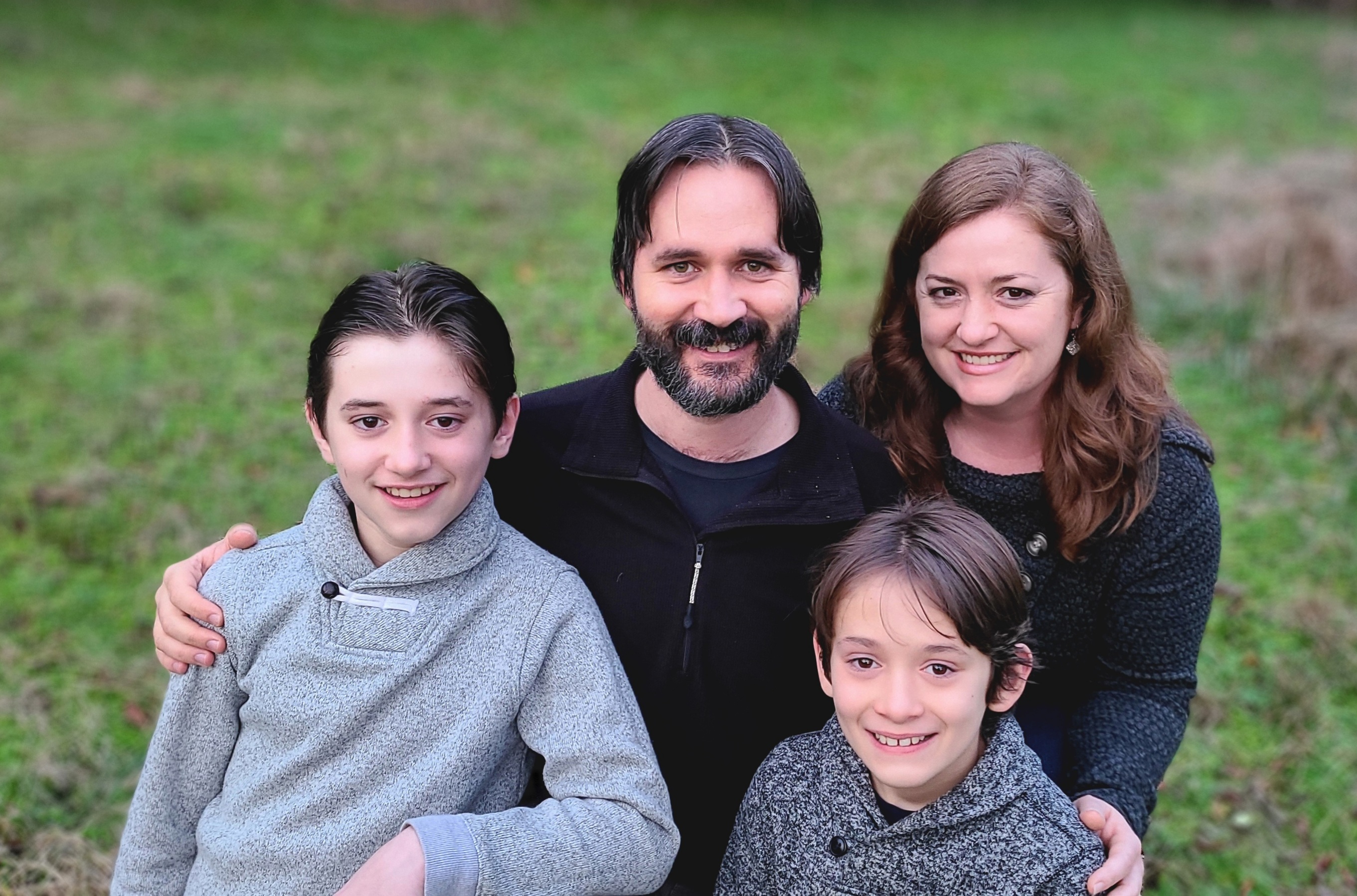
For reference, our boys are turning 14 and 12 this calendar year. So the following practice reflects what is possible with fairly strong readers, ages 11 and up.
Here’s Nathaniel:
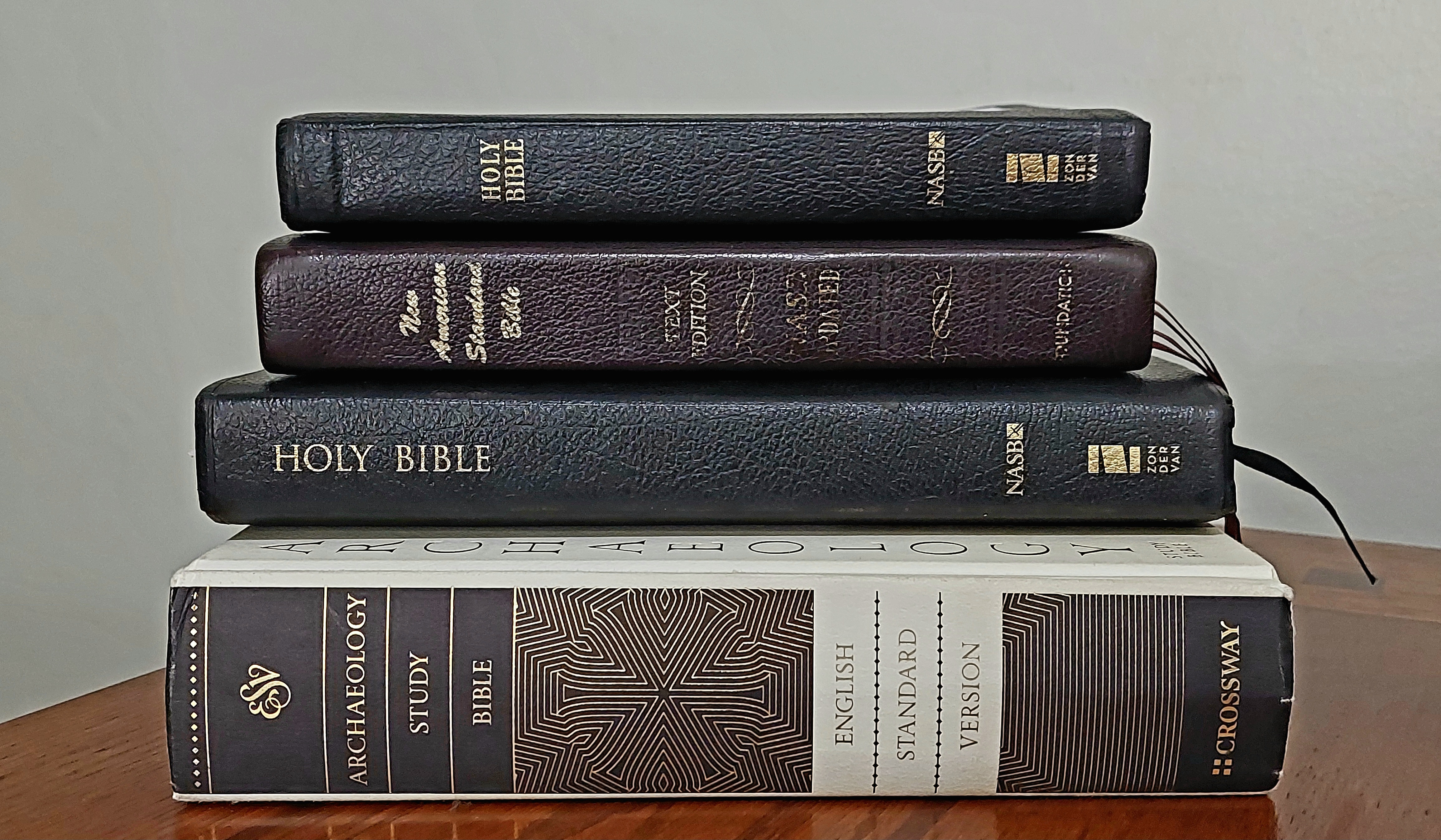
This year we changed up how we do family Bible time. We decided to read through the Bible in a year by having each person read on their own. Then we discuss over a meal every day. It has been incredibly rewarding for the whole family. Today we finished our last reading in the Old Testament, and I want to share some things that have made it rewarding so far:
1) A primary intention was to read the Bible as literature. Not as “mere literature”, but as literature nonetheless. We wanted to see the overall story arcs and major themes, to enjoy each genre, and to see how it all worked together.
2) We followed a reading plan that is based on the book order of the Hebrew Bible, which would have been the order in Jesus’ day. It has some nice advantages, particularly in that the prophets follow immediately after the books of Kings. For example, I have long enjoyed the poetry and imagery of Isaiah, but had a hard time understanding to whom he’s talking, particularly when he’s cursing neighboring nations. I thought I needed to find a good commentary to provide all the historical background. Turns out, the book of 2 Kings is a good commentary to provide the historical background! When these books are read quickly and close together, I can remember who these neighboring nations are and why they are being cursed.
3) The reading plan we’re using also has us read a Psalm every day. I have been amazed at how often the Psalms connect with the historical reading. It’s much easier now to see the role of the Psalms as the hymnbook of ancient Israel and to see the value of the imprecatory prayers in the context of national turmoil and destruction.
4) I read the ESV Archaeology Study Bible. It was phenomenally helpful to fill in the gaps of historical details and to better understand the world and worldview of the Ancient Near East. It has lots of maps (!!!) and some helpful historical explanation.

Today, I read in 2 Chronicles 35 of King Josiah going to an ill-advised battle with Pharaoh Neco, who’s just passing through on his way to fight someone else. The scripture doesn’t explain who that someone else is, because it’s concerned with Josiah, not with world history. But the study Bible commentary (a portion is pictured below) explained that Neco was allied with the Assyrians and on his way to battle the newly-resurrected Babylonian empire. Neco and Assyria are defeated, and 2 Chronicles 36 picks up a few years later as Babylon sweeps in and attacks Jerusalem.

5) I appreciated that the commentary in this study bible is primarily observation-level commentary. It’s not about digging out deep theological interpretations, it’s more about understanding the historical and literary context of the Scripture. Which really helped in seeing the literary flow of the Bible.
6) We also have watched the Bible Project summary videos of each book. I know that in some theological camps there is some controversy around the Bible Project, and I certainly don’t agree with all of their systematic theology, but I think they do a great job aiding a literary reading of scripture with their compelling outlines and summaries of each book of the Bible in their Read Scripture series.
7) The pattern in our family time this year is for our youngest son to narrate the day’s reading and for our oldest to read his written one-sentence summaries of each chapter. Then I will share my observations, Lauren will chime in, and we generally have an enthusiastic discussion.
The boys have enjoyed it, too. They have established a great habit of daily bible reading as soon as they get up. Without being reminded, they are committed to it and haven’t missed a day all year. Prior to this, our youngest was about halfway through reading the entire bible on his own. But he says this group discussion approach has helped him understand it much better. It is my prayer that this year will provide a great foundation for a lifetime of rewarding Bible reading for my sons.
When we started this plan, I mentioned it offhand to a father at church who is some years my elder. He mentioned that a read-the-Bible-in-a-year plan really makes you appreciate the New Testament when you finally get to it. I don’t think I have ever enjoyed reading the Old Testament as much as this year — even Leviticus and Zechariah — but I believe he’s right: The Old Testament has clearly demonstrated humanity’s sinfulness and persistent rebellion against all that is holy and good and right. Against God Himself. Over and over again, God creates good things, and men reject His leading and ruin everything, resulting in tragic consequences. Even as the Jews return from exile in Babylon, they still can’t get it right. And those of us outside the Jewish nation are even worse off, without the scriptures! We need light to break through our darkness. We need new hearts, with God’s law written on them. We need an anointed King of a transformed people to spread His kingdom of love, peace, and righteousness all over the earth.
I’m ready for Jesus!
Back to Lauren:
Amen! I’m eager to see Jesus enter into our needy world, “in the fullness of time”, as we begin our readings in the New Testament–tomorrow!
To wrap up, here’s a quick summary of our family Bible time practice for this year:
- Follow the Bible reading plan from the Bible Project, each of us doing our daily reading independently.
- Discuss as a family, usually at breakfast:
Youngest son gives an oral narration (or retelling) of our reading;
Oldest son shares his short, written summary (usually 1-2 sentences per chapter);
Nathaniel guides discussion and shares from his findings in the ESV Archaeology Study Bible;
Lauren shares her insights (sometimes drawing from Words of Delight by Leland Ryken) and asks a guiding question on occasion. - At the start of a new book, watch the corresponding Bible Project video(s).
- We have also added some side studies on the Code of Hammurabi and the Canaanite god Ba’al (among others) to broaden our understanding of biblical and ancient history and to be aware of the way that some critics and liberal theologians will use such sources and subjects to undermine divine inspiration and biblical historicity. It’s been a fascinating study that has made for great discussions. Keep in mind: this level of study is best undertaken when the kids already have a good grasp of history and the parents are solid in the faith and have at least some knowledge of how to interact with historical source material, able to ask good questions of a text or artifact and able to separate what’s actually there from a scholar’s speculative commentary.
Where are you in your own Bible reading journey? (Hint: It’s ok for it to look different in your home!)
Do you have a habit of reading and/or discussing the Bible with your family? What does that look like in your current stage of life?
If you’re just getting started, don’t be intimidated. Just take the next right step. And be sure to check out this post for what we’ve done in younger years.
May you and yours be built up in the Lord as you feast upon (or are just acquainting yourselves with) His word.



































 Kept and Keeping