• Home
  • About
  • Living Faith
  • Home and Family
  • Home Education
  • Books
  • Recommended Resources
  • Media

Kept and Keeping

~ Rest in Grace, Labor in Love

Kept and Keeping

Category Archives: Guest Posts

Reflections on The Iliad, Part 4: Glory, Honor, Immortality, and the Folly of the Gospel

12 Monday Aug 2024

Posted by Lauren Scott in Books, Guest Posts, Home and Family, Home Education

≈ Leave a comment

Tags

Books, Christian Classical Education, Christian Classical Homeschool, Classical Education, Classical Homeschool, Home Education, Homer, homeschooling, reading the classics, The Iliad

This post contains affiliate links. If you make a purchase through one of these links, I may make a commission at no additional cost to you. Thank you for supporting my blog!

This is a guest post from my good friend, Tabitha Alloway. We both have high schoolers this year, and they’re both going to read some Homer. While I’ve read The Iliad and The Odyssey recently so that I can be in conversation with my son about what he is reading, Tabitha has gone a step further and actually written out her thoughts, which I have found both interesting and helpful! I hope you will, too. Check out Part 1, Part 2, and Part 3 if you haven’t already. Here’s Tabitha with Part 4:

iliad greek epic glory homer homeschool

“The Greeks seek after wisdom: But we preach Christ crucified… unto the Greeks foolishness” (see 1
Corinthians 1:17-31
).

The Greeks had no shortage of bizarre and outlandish tales about their gods.
But Christ astonished them.

He died for mankind.
Their gods could not die—and certainly wouldn’t for anything so insignificant as a mortal.

He forgave man’s sins.
Their gods were quick to mete out justice and retribution, but slower to show mercy. Forgiveness was not a well-developed concept in Greek culture.

He conquered death.
A general resurrection of the dead? This was an outrageous thought—something beyond the Greeks’
wildest dreams. It just couldn’t be.

It was the teaching of the resurrection that divided the Greeks who heard Paul preach at Mars Hill. Some mocked. Others were willing to hear him again. A few believed.

To most, the gospel appeared weak and foolish. Their heroes smashed their enemies—they didn’t die for them! The Greeks could not understand a God who would suffer for mortals, just as the Jews, who were looking for a mighty conqueror to save them, did not recognize their humble Messiah who came to serve, rather than be served. And perhaps more than anything, the Greeks couldn’t fathom eternal life in immortal bodies—something they could only envy the gods for possessing. Or else, like Plato, found ridiculous and even undesirable.

Early Church Father Justin Martyr appealed to the Greeks’ understanding of the gods’ immortality to
explain the resurrection: “And when we say also that…Jesus Christ, our Teacher, was crucified and
died, and rose again, and ascended into heaven, we propound nothing different from what you believe
regarding those whom you esteem sons of Jupiter [Zeus]” (1 Apol. 21).

The gospel was the power of God to salvation for everyone who believed, and God added both Jew and
Greek to his church, washing away strife, envy, wrath, and hatred through the Lamb who conquered sin, death, and the grave.

Christ is not only the Lamb of God. He is also the Lion of the Tribe of Judah. He did not suffer for suffering’s own sake; he did it for the joy set before him. He came to rescue a people for himself. He earned a name above every name. Glory. Honor.

In contrast to the Greeks, many today may be more comfortable with a God who is kind, forgiving, suffers without returning insult for insult, and mingles with the lowly, yet struggle with aspects of his justice that might not have been so difficult for the Greeks to understand.

A Servant who girds himself to wash his disciples’ feet is a comforting picture. Is he equally accepted as a King who will return to require worship—and destroy those who do not give it (Psalm 2)? A Lord who will rule with a rod of iron and smash his enemies to pieces (Revelation 2:27, 19:11-16)? A Lawgiver who will break the teeth of the wicked (Psalm 3:7/58:6-8)? An Avenger who “reserveth wrath for his enemies”
(Nahum 1:2) and is “angry with the wicked every day” (Psalm 7:11)? A God who tramples the wicked in fury until their blood is splattered all over his garments, and feeds their carcasses to the animals (see Isaiah 63:1-10, Revelation 19:11-18)?

“Kiss the son [signifying worship], lest he be angry, and ye perish from the way, when his wrath is kindled but a little. Blessed are all they that put their trust in him” (Psalm 2:12).

This picture of God may be a far less comfortable one for modern sensibilities, but it puts the cross into perspective. It tells us just how offensive we are to a righteous Sovereign.

Mercy only means something in the presence of true justice.

Christ came to reconcile us to God and deliver us from his anger. But the day of mercy will not last forever. When the door of the ark closes, only those found in Christ will be able to safely ride out the flood of
God’s wrath. Unlike the Greeks and their petty gods, God’s wrath is holy and justified.

The cross was not the end, but a means to an end: to redeem a people for God’s own glory and possession.
Both divine justice and mercy were displayed at the cross. God has linked our good and his glory together.

The God of the Bible is not about foregoing glory. We may be less comfortable with the concept of seeking personal glory (while in the pursuit of God’s glory) than the biblical writers are.

But Paul puts the idea of seeking glory, honor, and immortality for oneself in a good light (the full
context of Romans 1-5, of course, is an argument against trusting in works for salvation, and the need
to find it—this glory, honor, and immortality—by faith in the finished work of Christ). He motivates believers with the promise of glory, praise, and reward awaiting them, and warns them not to look for this from man on earth. (See John 5:44, Matthew 25:21, 23, 1 Corinthians 4:5, 2 Corinthians 10:17-18, Romans 2:6-7, 29, 8:16-17, 30, 2 Thessalonians 1:11-12, Galatians 1:10, Matthew 6:1-6 Colossians 3:23-24, James 1:12, Matthew 5:11-12, Ephesians 6:8, Hebrews 11:6, Revelation 22:12, 1 Corinthians 3:8-15, etc, etc.)

The question is not whether it is a moral thing to seek glory, honor, and immortality for oneself. That is
a given in Scripture. It is moral for God to seek his own glory, and it is moral for us to seek both his and our own (these are tied together for the Christian). But how and where are we looking to find it? Vainglory is empty, vapid, invaluable. It is the kind of glory most men seek, and it falls far short of the glory awaiting the believer.

C. S. Lewis wrote in The Weight of Glory,

“When I began to look into this matter I was shocked to find such different Christians…taking heavenly
glory quite frankly in the sense of fame or good report. But not fame conferred by our fellow creatures
—fame with God or (I might say) ‘appreciation’ by God. And then, when I had thought it over, I saw that this view was scriptural; nothing can eliminate from the parable the divine accolade, ‘Well done, thou good and faithful servant’.”

Striving for reward is a concept that would have been very familiar to the Greeks. In fact, Paul uses the
picture of running for a prize or competing in athletic games to illustrate the Christian life (1 Corinthians 9:24-27, Hebrews 12:1-3, Philippians 3:13-14, 2 Timothy 4:7-8). Earning prizes and glory is something his Gentile audience would have easily understood.

So there are aspects of our God that the Greeks probably could have understood, to some degree, even better than we might today. And yet, he was still so different from their own gods, from anything they had conceived in their own minds.

They may have been able to appreciate God’s demand for worship and his promise of personal glory and reward for his followers. But the idea of taking up one’s cross and being willing to relinquish temporal life to save one’s eternal soul (Matthew 16:24-25) might have been less tasteful.

They might have been able to identify with Christ as a conquering King and hero. But His life as a suffering Servant to mortals would have been more difficult to understand.

They may have been able to recognize a God of justice. But a God of mercy and forgiveness who reached out in love to those who were his enemies would have been harder to comprehend.

“Among the gods there is none like unto thee, O Lord, neither are there any works like unto thy works… thou art God alone” (Psalm 86:8, 10).

The Greeks valued glory, honor, wisdom, and longingly wished for immortality, a resurrection of the body. Those among them who believed found all these things in Christ—and more. They were freed from wrath, pride, envy, and the sins that so easily beset men. Finding peace with God, they experienced it with their fellow man and strife was “able to die”—a thing Achilles fruitlessly sighed for. They became heirs of a lively hope, an inheritance incorruptible and undefiled. They enjoyed the hospitality and fellowship of the house of God.

While the gospel appeared foolish to the rest of their countrymen, to those who believed, Christ was
made the wisdom and power of God… a power not even their greatest heroes could boast.

More in this series:

Reflections on The Iliad, Part 1: “Rage”

Reflections on The Iliad, Part 2: Humanity and Hospitality

Reflections on The Iliad, Part 3: Some Thoughts on Greek Thought

Other posts with Tabitha:
No Story is the Same, No Pain Ever Wasted
Introducing the Living Books Consortium

Reflections on The Iliad, Part 3: Some Thoughts on Greek Thought

09 Friday Aug 2024

Posted by Lauren Scott in Books, Guest Posts, Home and Family, Home Education

≈ 2 Comments

Tags

Books, Christian Classical Education, Christian Classical Homeschool, Classical Education, Classical Homeschool, Home Education, Homer, homeschooling, reading the classics, The Iliad

This post contains affiliate links. If you make a purchase through one of these links, I may make a commission at no additional cost to you. Thank you for supporting my blog!

This is a guest post from my good friend, Tabitha Alloway. We both have high schoolers this year, and they’re both going to read some Homer. While I’ve read The Iliad and The Odyssey recently so that I can be in conversation with my son about what he is reading, Tabitha has gone a step further and actually written out her thoughts, which I have found both interesting and helpful! I hope you will, too. Check out Part 1 and Part 2 if you haven’t already. Here’s Tabitha with Part 3:

Unless both of your parents were gods, you could expect a rather bleak and meaningless existence
after death.

The Underworld, ruled by the god Hades, was split into three parts: Tartarus (where the evil went), Asphodel meadows (essentially purgatory for all the souls of those who were not particularly good, evil, or noteworthy—this is where Achilles descends to), and the Elysium fields (for good men and great warriors/leaders). The Greeks had a sturdy sense of their own mortality. As Achilles acknowledges, “The grave…hugs the
strongest man alive.”

Radcliffe Edmonds III writes,

“The Homeric epics present a mixed picture of what happens to an individual after death… [The] bleak
vision of death and afterlife is fundamental to the Homeric idea of the hero’s choice – only in life is
there any meaningful existence, so the hero is the one who, like Achilles, chooses to do glorious deeds.
Since death is inevitable, Sarpedon points out, the hero should not try to avoid it but go out into the front of battle and win honor and glory. Such glory is the only thing that really is imperishable, the only meaningful form of immortality, since the persistence of the soul after death is so unappealing.
“As powerful as this grim vision of the afterlife is in the Homeric epics, commentators since antiquity have noticed that this uniformly dreary life for the senseless, strengthless dead is not the only vision of
afterlife presented in the Homeric poems.”
(A Lively Afterlife and Beyond: The Soul in Plato, Homer, and the Orphica)

There are times in Homer’s works in which the dead experience feelings and emotions and have memories of their former lives. Sometimes they even interfere in the world of human affairs.

But for the most part, Homer presents an existence in the House of Hades as empty, mindless, meaningless. When Odysseus speaks to the spirit of dead Achilles in The Odyssey, Achilles moans,

“By god, I’d rather slave on earth for another man—
some dirt-poor tenant farmer who scrapes to keep alive
than rule down here over all the breathless dead.”

There was little hope of joy in the afterlife. No general resurrection of the dead. This was reserved for only a small handful of privileged individuals—perhaps a mortal whose parentage included at least one god or goddess and who had done great deeds (such as Hercules, who was promoted to immortality). Or a man or woman who was very great and good might possibly be reincarnated up to three times, after which the soul could travel to the Blessed Isles and enjoy a happy existence.

The desire for a happier ending in the afterlife led some Greeks to turn to Middle Eastern mystery
religions. The Eleusis mysteries promised that those who lived a virtuous life and performed certain
religious rituals would experience a blessed afterlife. The Orphic cult assured followers that through special rites and initiation into secret knowledge they could escape the fate of most men and find the path to a better place in the afterlife. Members were buried with esoteric inscriptions on thin gold sheets that would guide the deceased through the Underworld.

Greek culture focused on glory. Eternity would probably be bleak, but if you could win a name for yourself, you would at least be remembered and praised after your death. Feats of courage and strength were applauded; cowardice and weakness, despised. This created a highly competitive culture that, arguably, was responsible for much of the country’s rise in the world.

Leaving behind great deeds was a way of becoming immortal, in a sense: the Greeks could not be reunited with their bodies, but they could be memorialized.

Avoiding bodily decay after death was a big deal: if a warrior did not receive a proper burial, his spirit was doomed to forever wander along the riverbank Styx. It could not properly rest in the house of the dead. This is why Achilles is desperate to recover the body of his friend Patroclus and see it gets an honorable burial—and to desecrate the body of Hector, his enemy.

While the Greeks valued life—the physical body and the material world—Plato would later (about 300 years after Homer’s time) present a different conception of life and death, meaning and purpose. He saw the body as something to one day happily put off, so that one’s soul might be set free from a prison that prevents a person from reaching true knowledge, True Being—the Beatific Vision. The physical and material were inferior to the spiritual and mystical. The body was a tomb to be cast off in order that one might become “other-worldly.” Plato spurned the idea of resurrection—for anyone. The Gnostics drew from his teachings.

True immortality for the Greeks meant the body must be resurrected and eternally united with the soul. All the immortal gods engaged in physical activities—eating, drinking, sleeping, having marital relations. Unless you were of the Platonian persuasion, it was a state much to be desired, but one which few, even among their best, could ever hope to attain.

The light of the Christian resurrection would one day pierce the darkness of this fear of death—and divide the Greeks at Mars Hill…

Lauren’s Note:

In reading The Republic, it’s so interesting to me that Plato didn’t want people to read/listen to Homer (though he acknowledges that Homer was pretty much the source of philosophical education for the Greeks in his day). Plato wanted gods that were far better examples than they were in Homer’s telling. He idealized and wanted a truly just and honorable God, and the truly just man according to Plato would be just even when not recognized as such, even when treated as though he were unjust, even to the point of …wait for it… crucifixion! What Plato longed for in a God, in a just man…he didn’t find it in Homer. But he was on to something.

Plato also didn’t like poetry. 😆 He was a “give it to me straight” kind of guy.
More in the series:

Reflections on The Iliad, Part 1: “Rage”

Reflections on The Iliad, Part 2: Humanity and Hospitality

Reflections on The Iliad, Part 4: Glory, Honor, Immortality, and the Folly of the Gospel

Other posts with Tabitha:
No Story is the Same, No Pain Ever Wasted
Introducing the Living Books Consortium

Reflections on The Iliad, Part 2: Humanity and Hospitality

07 Wednesday Aug 2024

Posted by Lauren Scott in Books, Guest Posts, Home and Family, Home Education

≈ 2 Comments

Tags

Books, Christian Classical Education, Christian Classical Homeschool, Classical Education, Classical Homeschool, Home Education, Homer, homeschooling, reading the classics, The Iliad

This post contains affiliate links. If you make a purchase through one of these links, I may make a commission at no additional cost to you. Thank you for supporting my blog!

This is a guest post from my good friend, Tabitha Alloway. We both have high schoolers this year, and they’re both going to read some Homer. While I’ve read The Iliad and The Odyssey recently so that I can be in conversation with my son about what he is reading, Tabitha has gone a step further and actually written out her thoughts, which I have found both interesting and helpful! I hope you will, too. Read Part 1 if you haven’t already. Here’s Tabitha with Part 2:

The characters of The Iliad are often arrogant, petty, and easily angered—much like their gods. The Greek
deities bicker and quarrel throughout the story, employ deception, fight one another, and alternately wreck havoc on the defenders and attackers of Troy, their only guide their own whims, unconstrained by moral considerations. Capricious and fickle, they often behave like spoiled children.

Achilles is described throughout the epic as “god-like.” But perhaps their gods were more “man-like” than anything: except for their immortality and power, the deities resembled man all too much in their thoughts and vices.

The concept of forgiveness and mercy was not really an intrinsic part of Greek culture. David J. Leigh writes,

“A study of the earliest Greek literature and philosophy indicates that the Greeks developed a strong
sense of justice and law as related to both gods and humans, but did not develop a concept of forgiveness and mercy. The closest they came to the latter concept was the practice of legal leniency and the notion of ‘pity’… Neither the gods nor human beings in early Greece were seen as ‘forgiving’ people their injustices or offenses… Because the Greeks lacked a divine or messianic example of unconditional forgiveness, they did not feel a religious compulsion to forgive other persons… At most, these hints of the rising importance of pity in the Greek world might suggest some readiness for the reception of the Christian teachings on the divine forgiveness of sins and the human need to forgive one another.” (Forgiveness, Pity, and Ultimacy in Ancient
Greek Culture
)

Over time, “emergence of something beyond strict justice” did make its way into Greek thinking. And even Homer shows the characters acting, at times, with a compassion borne of pity. Homer presents these as admirable virtues, as part of what makes us truly human. He occasionally gives us a glimpse of man at his worst. And yet, woven throughout the tragedy, acts of kindness, mercy, justice, courage, friendship, loyalty, and honor are displayed.

Even by Achilles.

After killing Hector, Achilles drags the body behind his chariot, dishonoring him in one of the worst ways a man could be dishonored in the ancient world: he intends to let his corpse rot without burial.

But King Priam, Hector’s father, sneaks into the Greek camp and approaches Achilles, begging him to have pity on a grieving old man who has lost his sons. He reminds him how Achilles’s father would grieve were he to lose him. He asks to be given the body of Hector that he might bury it honorably.

It is human feeling that suddenly causes a change of heart in Achilles. Achilles the beast becomes a man again. He weeps for his own father, knowing he (Achilles) will soon die. Pity, compassion, even
gentleness overtake him.

He grants Priam his wish, even offering him food and a place to spend the night.

Another shocking turn takes place in the poem when Diomedes and Glaucus meet on the battlefield. Both men are seething with hate and ready to kill when Diomedes calls out to Glaucus, asking who he is. Glaucus proceeds to give him his family lineage. Suddenly, Diomedes plunges his spear into the ground and joyfully tells Glaucus they cannot be enemies.

“…Splendid—you are my friend,
my guest from the days of our grandfathers long ago!
Noble Oeneus hosted your brave Bellerophon once,
he held him there in his halls, twenty whole days,
and they gave each other handsome gifts of friendship.”

The two soldiers immediately make a pact of friendship, based on the fact that the ancestor of one had entertained the ancestor of the other. In one moment, hate melts into love and goodwill.

This seems strange—until one understands the significance of hospitality in the ancient Greek culture. Hospitality, or philoxenia (“loving the stranger”), was considered a sacred duty. Turning a stranger away
was an ill-advised act, for it might be a god in disguise, testing the host to see if he would practice proper hospitality. (There’s a rather interesting Christian corollary in Hebrews 13:2: “Be not forgetful to entertain strangers: for thereby some have entertained angels unawares.”)

It didn’t matter who came to your door—they must be fed, entertained, and given a parting gift. This
important ritual usually signified friendship for life. This is why, even generations removed from the
original act of hospitality, Diomedes and Glaucus instantly reconcile.

And this is the reason Paris’s treachery was so heinous to the Greeks. When Paris visited King
Menelaus’s home, he took advantage of his host’s hospitality to woo Menelaus’s wife, Helen, away.
By this act, he violated a sacred code of Greek ethics—xenia (“guest-friendship” or “ritualized friendship”), returning evil for hospitality.

Philonexia/philoxenia and philoxenos (Strong’s Greek #5381 and #5382) are found a total of five times
in the New Testament: in Hebrews 13:2 (as mentioned above), Romans 12:13 (when Paul admonishes the believers of Rome to be “given to hospitality”), 1 Timothy 3:2/Titus 1:8 (a requirement for an elder
is that he be a “lover of hospitality” and “given” to it), and 1 Peter 4:9 (“Use hospitality one to another
without grudging”).

Both the Greeks, and later the Christians, would highly value the practice of hospitality, but there are some key differences:

The Greeks practiced hospitality out of duty, fearing retribution of the gods.
The Christian practices hospitality out of love, for God’s glory and Christ’s reward.

The Greeks expected the good they did to be returned to them by their guest (if opportunity arose).
The Christian only looks to God for reward, not expecting man to pay him in kind.

The Greeks were not allowed to turn a stranger away.
Christians are actually commanded to turn some men away, and to withhold fellowship from others.
“If there come any unto you, and bring not this doctrine, receive him not into your house, neither bid
him God speed: For he that biddeth him God speed is partaker of his evil deeds” (2 John 1:10-11).
“I wrote unto you in an epistle not to company with fornicators… But now I have written unto you not
to keep company, if any man that is called a brother be a fornicator, or covetous, or an idolater, or a railer, or a drunkard, or an extortioner; with such an one no not to eat” (1 Corinthians 5:9, 11).

Peace was made between two soldiers because of an old act of hospitality. Sharing one’s home and table in the ancient world was a symbol of friendship and goodwill. This also carried great significance for new Jewish converts, who, prior to Christianity, physically separated themselves from the Gentiles.

“Ye know how that it is an unlawful thing for a man that is a Jew to keep company, or come unto one of
another nation,” said Peter to the Gentile Cornelius as he stood in his home. He continued, “But God hath shewed me that I should not call any man common or unclean” (Acts 10:28).

The gospel shattered the barrier walls between Jew and Gentile. Both were invited to the future marriage supper of the Lamb—and both could now practice hospitality with one another. Homes and hearts opened. Tables accepted guests previously shunned. When Peter cowardly went back on this and stopped eating with the Gentiles, Paul rebuked him to his face (see Galatians 2:11-13).

Dining together and practicing hospitality were important rituals in the ancient world. At least eighteen scenes of hospitality are said to be found in Homer’s works. To share a table was to share more than food. It was an acknowledgment of shared humanity. This kindness marked good men—virtuous men.
Paris is thus a true villain, lacking the humane instinct to gratefully return the good he has received. His
treachery brings strife and death to both Greeks and Trojans.

Lauren’s Note:

It is striking when reading Plato’s Republic, that in all of his discussion of justice and virtue, love is not really a part of the discussion. This is why Faith, Hope, and Love are called the “Christian virtues”. While the concepts existed, they were not held up as ideals by the Greeks in the way that Christians exalted them.

For a great podcast listen on the topic of Christian hospitality, check out: Cultivating Biblical Hospitality in Your Home and Life over at Thankful Homemaker. You can also get a hold of Rosaria Butterfield’s excellent book, The Gospel Comes with a Housekey.

Coming soon:

Reflections on The Iliad, Part 1: “Rage”

Reflections on The Iliad, Part 3: Some Thoughts on Greek Thought

Reflections on The Iliad, Part 4: Glory, Honor, Immortality, and the Folly of the Gospel

Other posts with Tabitha:
No Story is the Same, No Pain Ever Wasted
Introducing the Living Books Consortium

Family Bible Time Grows with the Kids!

23 Wednesday Aug 2023

Posted by Lauren Scott in Guest Posts, Home and Family, Home Education, Living Faith

≈ Leave a comment

Tags

Bible Reading, Bible Reading Plan, Bible Study, Christian Classical Education, Christian Classical Homeschool, Christian Parenting, devotional, family bible time, Family Worship, Home Education, Homeschool Bible, Homeschooling Middle School, Spiritual Disciplines

Amazon links are affiliate links. If you make a purchase through one of these links, I may receive a commission at no additional cost to you.

I’ve written in the past about how our family covers “Bible” in our homeschool, which is to say, I’ve written about how we don’t consider it a subject in school so much as a part of life. You can read that article here, especially if you have little ones or are just getting started reading the Bible together as a family.

The following article is actually a guest post from my husband, as he reflects on what we have done differently in our family Bible time this year–instead of reading a chapter aloud at the kitchen table, we’re reading independently and discussing it together over a meal.

I hope my husband’s words are an encouragement to you to see how family bible time can grow and mature as you and your children grow and mature together. If you don’t have kids, I hope these meditations on reading the Scriptures and the resources listed might encourage you in your own pursuit of God through His Word.

For reference, our boys are turning 14 and 12 this calendar year. So the following practice reflects what is possible with fairly strong readers, ages 11 and up.

Here’s Nathaniel:

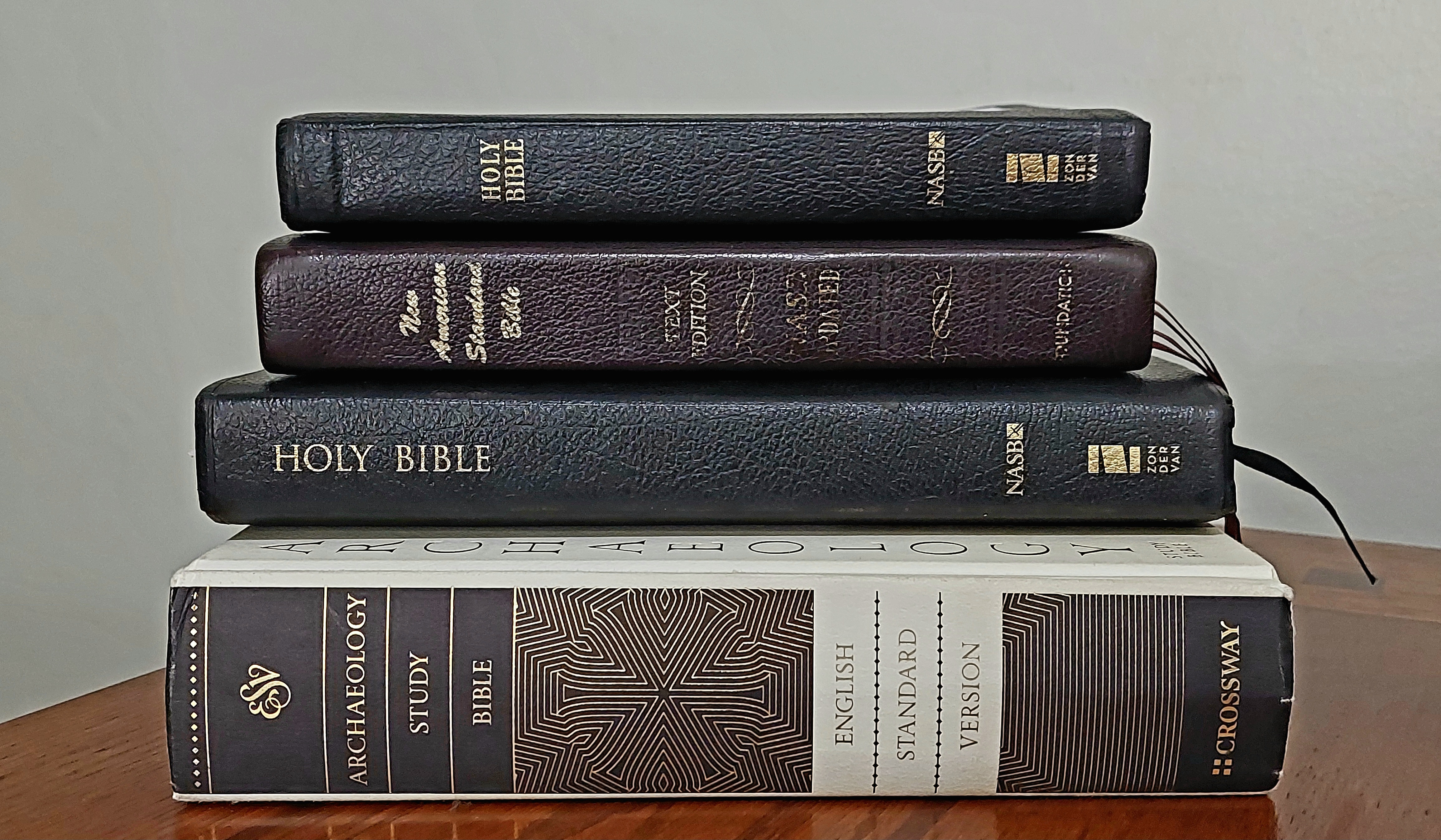
bibles stack bible reading ESV NASB

This year we changed up how we do family Bible time. We decided to read through the Bible in a year by having each person read on their own. Then we discuss over a meal every day. It has been incredibly rewarding for the whole family. Today we finished our last reading in the Old Testament, and I want to share some things that have made it rewarding so far:

1) A primary intention was to read the Bible as literature. Not as “mere literature”, but as literature nonetheless. We wanted to see the overall story arcs and major themes, to enjoy each genre, and to see how it all worked together.

2) We followed a reading plan that is based on the book order of the Hebrew Bible, which would have been the order in Jesus’ day. It has some nice advantages, particularly in that the prophets follow immediately after the books of Kings. For example, I have long enjoyed the poetry and imagery of Isaiah, but had a hard time understanding to whom he’s talking, particularly when he’s cursing neighboring nations. I thought I needed to find a good commentary to provide all the historical background. Turns out, the book of 2 Kings is a good commentary to provide the historical background! When these books are read quickly and close together, I can remember who these neighboring nations are and why they are being cursed.

3) The reading plan we’re using also has us read a Psalm every day. I have been amazed at how often the Psalms connect with the historical reading. It’s much easier now to see the role of the Psalms as the hymnbook of ancient Israel and to see the value of the imprecatory prayers in the context of national turmoil and destruction.

4) I read the ESV Archaeology Study Bible. It was phenomenally helpful to fill in the gaps of historical details and to better understand the world and worldview of the Ancient Near East. It has lots of maps (!!!) and some helpful historical explanation.

ESV Archeology Study Bible Map Genesis
Here’s an example spread from Genesis.

Today, I read in 2 Chronicles 35 of King Josiah going to an ill-advised battle with Pharaoh Neco, who’s just passing through on his way to fight someone else. The scripture doesn’t explain who that someone else is, because it’s concerned with Josiah, not with world history. But the study Bible commentary (a portion is pictured below) explained that Neco was allied with the Assyrians and on his way to battle the newly-resurrected Babylonian empire. Neco and Assyria are defeated, and 2 Chronicles 36 picks up a few years later as Babylon sweeps in and attacks Jerusalem.

ESV Archeology Study Bible

5) I appreciated that the commentary in this study bible is primarily observation-level commentary. It’s not about digging out deep theological interpretations, it’s more about understanding the historical and literary context of the Scripture. Which really helped in seeing the literary flow of the Bible.

6) We also have watched the Bible Project summary videos of each book. I know that in some theological camps there is some controversy around the Bible Project, and I certainly don’t agree with all of their systematic theology, but I think they do a great job aiding a literary reading of scripture with their compelling outlines and summaries of each book of the Bible in their Read Scripture series.

7) The pattern in our family time this year is for our youngest son to narrate the day’s reading and for our oldest to read his written one-sentence summaries of each chapter. Then I will share my observations, Lauren will chime in, and we generally have an enthusiastic discussion.

The boys have enjoyed it, too. They have established a great habit of daily bible reading as soon as they get up. Without being reminded, they are committed to it and haven’t missed a day all year. Prior to this, our youngest was about halfway through reading the entire bible on his own. But he says this group discussion approach has helped him understand it much better. It is my prayer that this year will provide a great foundation for a lifetime of rewarding Bible reading for my sons.

When we started this plan, I mentioned it offhand to a father at church who is some years my elder. He mentioned that a read-the-Bible-in-a-year plan really makes you appreciate the New Testament when you finally get to it. I don’t think I have ever enjoyed reading the Old Testament as much as this year — even Leviticus and Zechariah — but I believe he’s right: The Old Testament has clearly demonstrated humanity’s sinfulness and persistent rebellion against all that is holy and good and right. Against God Himself. Over and over again, God creates good things, and men reject His leading and ruin everything, resulting in tragic consequences. Even as the Jews return from exile in Babylon, they still can’t get it right. And those of us outside the Jewish nation are even worse off, without the scriptures! We need light to break through our darkness. We need new hearts, with God’s law written on them. We need an anointed King of a transformed people to spread His kingdom of love, peace, and righteousness all over the earth.

I’m ready for Jesus!

Back to Lauren:

Amen! I’m eager to see Jesus enter into our needy world, “in the fullness of time”, as we begin our readings in the New Testament–tomorrow!

To wrap up, here’s a quick summary of our family Bible time practice for this year:

  • Follow the Bible reading plan from the Bible Project, each of us doing our daily reading independently.
  • Discuss as a family, usually at breakfast:
    Youngest son gives an oral narration (or retelling) of our reading;
    Oldest son shares his short, written summary (usually 1-2 sentences per chapter);
    Nathaniel guides discussion and shares from his findings in the ESV Archaeology Study Bible;
    Lauren shares her insights (sometimes drawing from Words of Delight by Leland Ryken) and asks a guiding question on occasion.
  • At the start of a new book, watch the corresponding Bible Project video(s).
  • We have also added some side studies on the Code of Hammurabi and the Canaanite god Ba’al (among others) to broaden our understanding of biblical and ancient history and to be aware of the way that some critics and liberal theologians will use such sources and subjects to undermine divine inspiration and biblical historicity. It’s been a fascinating study that has made for great discussions. Keep in mind: this level of study is best undertaken when the kids already have a good grasp of history and the parents are solid in the faith and have at least some knowledge of how to interact with historical source material, able to ask good questions of a text or artifact and able to separate what’s actually there from a scholar’s speculative commentary.

Where are you in your own Bible reading journey? (Hint: It’s ok for it to look different in your home!)

Do you have a habit of reading and/or discussing the Bible with your family? What does that look like in your current stage of life?

If you’re just getting started, don’t be intimidated. Just take the next right step. And be sure to check out this post for what we’ve done in younger years.

May you and yours be built up in the Lord as you feast upon (or are just acquainting yourselves with) His word.

In a Vision, I Walked… — A Poem on Isaiah

28 Wednesday Feb 2018

Posted by Lauren Scott in Guest Posts, Living Faith

≈ Leave a comment

Tags

Guest Post, Isaiah, poems, poetry

Here’s a guest post from my thoughtful and thought-provoking sister-in-law Abigail Scott. She’s been writing tight poems for a couple decades now (yes, she started quite early). I find this one of hers, inspired by the book of Isaiah, to be particularly moving.  Enjoy.

isaiah poem time past future

In a vision, I walked through the annals of time
And the past and the future all merged in one line
With the threads of the nations’ existence entwined
Like the strings of an instrument God had designed.
I saw many powers who reigned on the earth.
They were arrogant, loudly proclaiming their worth.
Yet they rose and they fell, like the swells of the tide
Each self-proclaimed lord overthrown in his pride.
Man repeatedly sought for a warrior to reign
To unite all the earth in one glorious name,
And they worshipped themselves and the work of their hands
So the Sovereign God wasted their works and their lands.
Yet the whispered refrain, resonating through space:
A call to the humble to worship by grace
And a promise that Yahweh would sovereignly raise
A Prince to bring peace, who is ancient of days.

Then I saw through the struggle, the war and the loot
From a root that was withered, God raised up a shoot.
While the world, in each palace, sought humanly might
The eternal King came among cattle at night.
For pride wages war and it antetypes trust
Which worships the God who has made us from dust.
The Creator thus came, weak and helpless on earth
Despised and rejected and lowly of birth.
In the suffering flesh, He came to us humble
And this was the form that caused proud men to stumble
For Greeks search for wisdom, Jews ask for a sign
But eternity’s King laid aside the sublime.
No sign did He offer, but three days of death
And the wisdom that yields up immortal God’s breath.
So the rulers of earth found Him quiet and still
Yet they never imagined the Sovereign God’s will
For they missed the refrain, resonating through space:
A call to the humble to worship by grace
And a promise that Yahweh would sovereignly raise
A Prince to bring peace as the ancient of days.
As a servant, He claimed what was His from the start:
The birthright to reign as the King in each heart.

Ah, but time leads the way to a permanent reign
That fulfills all the thrills of the whispered refrain.

And I saw, in my vision, the scope of all history
Not a line, but a circle, eternity’s mystery.
The Alpha, beginning, the ancient of days,
Once born as a man and thus knowing our ways,
A King who is gentle, and humble, a lamb
Will return as a lion, a sword in His hand
To execute justice and overthrow pride
Of the kingdoms that rise and that fall like the tide.
The beginning and end both meet in one place
In the person and work of the God of all grace
Who touched time in humility, born of the dust
To bow every knee to a King we can trust.
His reign is eternal, His crown won’t rescind
For the annals of time will conclude with this end:
The refrain, a crescendo that overturns space,
When the whole world will worship, forever, His grace,
His Sovereign compelling our eternal praise
For the Prince who brings peace as the ancient of days.

No Story is the Same, No Pain Ever Wasted

08 Friday Dec 2017

Posted by Lauren Scott in Guest Posts, Living Faith

≈ 3 Comments

Tags

Christian life, Guest Post, poems, poetry, suffering, trials

Here’s a guest post from my friend Tabitha Alloway who writes at Pursuing Logos.  Tabitha is a fellow homemaking, homeschooling wife, mother, and electrician–well, we don’t have that LAST part in common!  She’s also a long-time family friend.  Enjoy!

old-books-436498_1920.jpg

Have you ever started into a set of books by a particular author and found that before long you could predict the entire plot before you’d even cracked the next book open?

I remember a set like this from my teen years.  I fell in love with the G. A. Henty historical fiction series, and for a while I devoured every book I could get.

But slowly I realized my interest was fading.  Every book seemed to have the same plot; only the names, faces and times changed: Boy goes on adventures.  Boy goes to war.  Boy is captured.  Boy escapes.  Boy becomes hero.  Boy meets girl.  Boy settles down and lives happily ever after.

Sigh.  Very idyllic.

And so predictably formulaic.

Now I’m not knocking the series—I still like the books and I’m looking forward to the day my kids can enjoy them.  But it’s sometimes amusing (or annoying) to see an author embrace a seemingly one-track plot.  A good writer is able to spin each story in such a way that, while it will always reflect their own unique style and voice, the story itself is fresh and new.

I think of God as a Master Writer, scripting the days and circumstances of our lives, inscribing our stories page by page.  He’s the Master Composer, ordering the “rhythm and rhyme” of our lives as an ode of praise.  He is the Potter who shapes our lives for our good and His glory.

While certain themes shine through every story He writes—goodness, mercy, grace, redemption or justice—each one is uniquely different.

Have you ever been tempted to question or wonder what God is doing in your life when you find yourself in difficult circumstances and trying times?  Or even perhaps to envy the way God is working in the lives and circumstances of those around you, rather than humbly accepting what the Potter is doing in and with your life (see Jeremiah 18:1-6)?

I have.  I’ve been tempted many times, when finding myself in less-than-ideal circumstances, to compare my lot with that of others and to envy God’s plan for and ordering of the lives of those around me.

One morning a couple of months back, feeling burdened and discouraged by the weight of recent trials, I poured my heart out to the Lord about it all.  I opened the Word and my attention was drawn to the passages that spoke of giving thanksgiving, honor, worship, and praise to God; of investing our trust in Him because He is good.   Not exactly the typical comforting passages you might expect.  These precious words comforted by lifting my eyes.

I began to think of the stories of the saints of the Bible as well as the experiences of modern-day saints.  No two are exactly the same!  God works in such a wide variety of circumstances and ways to accomplish His will in each of His children’s lives.

Look at Hannah.  She prayed for a child, and God blessed her with one.  Yet many Christian wives through the ages have prayed with the same desperate desire for children and have been told “No.”

Jabez prayed that God would bless him and keep him from harm and pain.  God granted His wish.  Yet Job was permitted to experience unimaginable grief and pain in his lifetime.

Daniel was saved from the lions’ mouths.  But many believers in the early centuries of the church were torn apart and eaten by wild beasts.

Under the reigns of David and Solomon, the saints and prophets rejoiced with gladness and singing.  Under the reigns of Ahab and Manasseh, the saints and prophets suffered, and served their God in hard times and discouraging circumstances.

The apostle John lived a long life in service to Christ while Abel’s life was cut off prematurely.

Paul could have been tempted to envy the many believers around him who experienced miraculous, physical healings, while he himself was given a thorn in the flesh and denied its removal.

So many people.  So many stories.  All of them different.

Had God denied Hannah her wish, or Jabez his, would He still have been good?  Would His people have continued to trust in Him?  Was God’s work in the lives of Hannah, Daniel, and Jabez better, more kind, or wiser than in the lives of Job, or Jeremiah, or Paul?

According to Hebrews 11 we see that trust in God is not (and cannot be) rooted in our personal circumstances, but rather in the character of a faithful God Who is working in His children that which pleases Him, as He orders our lives for our good and His glory (see Romans 8).

The Word tells us elsewhere: “He is the Rock, His work is perfect: for all His ways are judgment: a God of truth and without iniquity: just and right is He” (Deuteronomy 32:4).  The Psalmist reminds us that “The Lord is righteous in all His ways, and holy in all His works” (Psalm 145:17).

In declaring his trust in the Lord, the prophet Habakkuk indicated it was not contingent on any circumstances: “Although the fig tree shall not blossom, neither shall fruit be in the vines; the labour of the olive shall fail, and the fields shall yield no meat; the flock shall be cut off from the fold, and there shall be no herd in the stalls: Yet I will rejoice in the Lord, I will joy in the God of my salvation.  The Lord God is my strength…” (Habakkuk 3:17-19).

We often see both Old and New Testament saints giving thanks to God even in the middle of painful circumstances.  While the personal testimonies and experiences are different, I imagine they would share one common sentiment: God is good.

20171201_080359

Photo Credit: Tabitha Alloway

One of my favorite hymns is Day by Day.  The first verse goes:

Day by day, and with each passing moment

Strength I find to meet my trials here;

Trusting in my Father’s wise bestowment,

I’ve no cause for worry or for fear.

He whose heart is kind beyond all measure

Gives unto each day what He deems best—

Lovingly, its part of pain and pleasure,

Mingling toil with peace and rest.

Some of the most precious portions of Scripture to me are those in which God reveals His own heart of compassion toward His people.  It’s the theme that brightens even the darkest story.  We’re all familiar with the passage in Lamentations that speaks of the faithfulness, mercy, and compassion of the Lord.  Then Jeremiah goes on to say, “But though He cause grief, yet will He have compassion according to the multitude of His mercies.  For He doth not afflict willingly nor grieve the children of men”.

God does not cause pain or withhold desire for no good purpose.

Isaiah breaks out in thanksgiving: “I will mention the lovingkindnesses of the Lord, and the praises of the Lord, according to all that the Lord hath bestowed on us…For He said, surely they are my people…In all their affliction He was afflicted…in His love and in His pity He redeemed them…” (Isaiah 63:7-9).

God sorrows in our sorrow; He is afflicted in our affliction.  We do not have a High Priest who   is insulated from our pain; He experiences it with us and has compassion on our weaknesses.

It is this God of love, kindness, and wisdom who composes my story and your story.  Do we trust Him to do what He deems best?  Are we content in His provision for and ordering of our life?

The Master Writer is weaving the days and circumstances of our lives into one story for His glory.  Every daily page whispers His goodness, and even the darkest chapters are traced with hope, pointing to the beauty of His eternal purpose.

And that eternal purpose hints at the fact that the Author’s story doesn’t end with us, with this life.  There is a “happily ever after” that’s already written, just awaiting publication.  If you know Jesus, aren’t you looking forward to reading that story?


Had You not granted Hannah’s wish

And given her a child…

Had You let Jabez feel anguish,

Not blessed with life so mild…


Had You not shut the lions’ mouths

When Daniel prayed to You…

Did You not save his friends, when, roused,

A despot gave death cue…


Had solitude been David’s lot

Instead of throne and crown…

Had Jacob not grasped riches sought,

Nor prosperity had found…


Had Hannah lifted empty arms

In worship to Your Name…

Had Jabez met some earthly harm

In showing forth Your fame…


Had Daniel died a martyr’s death

In service to his Lord…

Had fire snatched the faithful’s breath,

And death been their reward…


Had David sung in open fields

Instead of regal courts…

Had flocks and fields returned no yields

While Jacob sought the Source…


Your faithfulness would be the same,

Your goodness ever new,

Your mercy rich exalt Your Name,

And saints would hide in You.


You are the God of grieving Job,

Of joyful, dancing David.

Your ways and works across the globe

Will always be redemptive.


The God of weeping prophets and

The God of singing saints;

All things lie open in Your hand—

From You derive their fate.


You are the source of grace for Paul

When thorn afflicts him sore.

You save the cripple from a fall

And his weak legs restore.


You’re the God of brave queen Esther,

The God of humble Ruth;

To each his lot, Dispenser,

The One Source of all Truth.


In pain and gain, our love and loss

You are the Sovereign One;

You knew real sorrow at the cross

Now-risen, conquering Son.


You walked on earth in mankind’s shoes

You know heart’s deepest throb;

Appointing things as You so choose,

You hear the smallest sob.


You’ve cried and wept with broken heart,

Felt agony of pain;

When on the earth You shared our part,

Your loss became our gain.


To come to You a man must trust

You are the great I AM;

Your works are true and right and just,

And You reward the man.


Your ways are far past finding out,

No finite mind can see

Exactly what you are about—

Your great Eternity.


You are our life, our love, our light,

Our hope, our help, our haven,

Our Rock, Redeemer and our Right—

Praise God of highest heaven!

Of Atheism and Fools, Part Four

10 Monday Apr 2017

Posted by Lauren Scott in Guest Posts, Living Faith

≈ Leave a comment

Tags

April Fool's Day, April Fools, Gospel-Grounded Godliness, of atheism and fools, Practical Atheism, Psalm 14, repentance, Romans 3, The fool has said in his heart, ungodliness

This is the conclusion of Nathaniel’s series on Practical Atheism from Psalm 14.  In case you missed them, here are Part One, Part Two, and Part Three. 

DSC_0002

“Christian Loses his Burden” Etching by William Strang found in Bunyan’s Pilgrim’s Progress

So can a christian even seek after God at all?  Are we pursuing the unattainable?  Well, yes and yes.  Part of seeking God is accepting what He says, even if it makes you feel bad about yourself.  Only when we admit the rottenness of our condition can we see our need for His salvation and begin to seek Him, to value what He values, and to hate what He hates.

A Call to Repentance

The late great DC Talk opened their hauntingly poignant song “What If I Stumble” on the double-platinum selling album Jesus Freak with this quote from the admittedly controversial Brennan Manning:

The single greatest cause of atheism in the world today is Christians who acknowledge Jesus with their lips, then walk out the door and deny Him by their lifestyles. That is what an unbelieving world simply finds unbelievable.

It is worth pausing a moment to consider whether or not we live like those who believe.

Be careful with your cream pies.  We shouldn’t mock the philosophical atheist.  Of course, neither should we defend him.  Instead, we should beg him to join us in deep contrition and earnest repentance for our failure to acknowledge God in how we live our every moment.

We may be shocked by the revelation of the waywardness of our own hearts, but is God surprised by our frequent disregard of Him?  No, He’s used to it.

Before Paul used this Psalm in Romans 3 to illustrate mankind’s universal need for salvation in Christ, before David wrote Psalm 14, before the nation of Israel had driven their enemies out of the Promised Land, God told the Israelites through Moses that they were not being given the land because of their righteousness, but because of His covenant with their forefathers, and because of the exceeding wickedness of the natives of the land.  Check out Deuteronomy 9 for more details.  Here’s verse 6:

‘Know, then, it is not because of your righteousness that the LORD your God is giving you this good land to possess, for you are a stubborn people.’

And while Moses communicated to the people all of God’s marvelous works, all of the promises of blessing, and all of the warnings of consequences should they become unfaithful to their covenant with God, the LORD tells Moses at the end of Deuteronomy that soon after he dies, they will forget their God.

He wasn’t surprised then.  He isn’t surprised now.  But He continues to graciously call us to repentance.

The Antidote to Practical Atheism:  Gospel-Grounded Godliness

As Christians, we are no more deserving of God’s grace than the oft-forgetful Israelites–or the most flagrant atheists around us.  At best, we are more aware of the depths of our own depravity and our desperate need for God in every moment of every day.  If we truly understand this, we will be ever more grateful for the means of salvation that He has provided through faith in Jesus Christ!

That salvation is really the key to all of this.  All I am suggesting is that we live our lives as Christians in the light of the same good news that brought us to God in the first place: that Jesus died for wretched sinners like me.

I am a wretched sinner, I have disregarded God—His will, His glory, and my need for Him—pursuing instead my own agenda.  I must repent of this disregard of God, this practical atheism.  I must trust in the Lord Jesus Christ: for forgiveness of my sins, and for direction and power to live my life according to His word and purpose.

And I must do this not only in the initial moment of my conversion, but in every moment thereafter, so that the Holy Spirit can make me more like Him until He takes me home to be with Him.

I can’t fix the philosophical atheists.  I can’t fix you.  But I can attend to me.  I am very cognizant of the tendencies in my own heart and life to both philosophical atheism and practical atheism.  I must repent.  I must continue to remind myself of the gospel of grace in Christ Jesus.  I must seek more and deeper awareness of the presence, work, and will of God in my life.

After condemning ungodliness, Jerry Bridges explains the goal of pursuing godliness in every aspect of our lives:

Our goal in the pursuit of godliness should be to grow more in our conscious awareness that every moment of our lives is lived in the presence of God; that we are responsible to Him and dependent on Him.  This goal would include a growing desire to please Him and glorify Him in the most ordinary activities of life.

And again:

Above all, pray that God will make you more conscious of the fact that you live every moment of every day under His all-seeing eye.  While you may not be mindful of Him, He is certainly aware of you and sees every deed you do, hears every word you say, and knows every thought you think (see Psalm 139:1-4).  Beyond that, He even searches out your motives.  Let us then seek to be as mindful of Him as He is of us.

May we be mindful of His presence, knowledge, power, wisdom, goodness, holiness, grace, truth, justice, mercy, faithfulness, and tender love for those who are His.  And may we repent when we lose sight of Him.

Dear Father!  How far short of Your glory I fall!  Please sober me under this Psalm that teaches that no one, especially not I, does good, or seeks You as You deserve. Please confront me with my sin, and help me to trust in You, in Your forgiveness of my sin, and in Your work to cleanse me from it.  Make me more like Jesus, in whose name I pray.  Amen

Of Atheism and Fools, Part Three

06 Thursday Apr 2017

Posted by Lauren Scott in Guest Posts, Living Faith

≈ Leave a comment

Tags

April first, April Fool's Day, April Fools, Guest Post, of atheism and fools, Practical Atheism, Psalm 14, The fool has said in his heart, ungodliness, what is sin

Here is the third installment of my husband Nathaniel’s series on Practical Atheism from Psalm 14.  If you missed them, check out Part One and Part Two. 

DSC_0005.JPGHow Bad is it Really?

So the scriptures are clear.  There is no one who does good, not even one.  We are all corrupted, which according to Adam Clarke, cited in Spurgeon’s Treasury of David, is a picturesque and vivid “metaphor taken from milk that has fermented and turned sour, rancid and worthless.”  Does this match our experience?  Am I really as nasty as rancid milk?  That is a pretty hard statement to swallow…

And here’s the other quandary… on the one hand this Psalm is telling me that we are ALL corrupt, practical atheists who do abominable deeds instead of what is good, but it’s pretty hard for me to get that concerned about it if everyone else is doing it too.  But on the other hand, I can look around at everyone else, and I actually feel pretty good about myself.  I’m not nearly as corrupt as some of them are… especially those nasty atheist fools!

The problem here is my standard of measure.  I am comparing myself to other people.  The result is that I either think, “Hey, I’m not that bad!” or “Hey, we’re not that bad!”  But when the Lord Himself looks down from heaven in Psalm 14:2, He’s not grading us on a sliding scale.  He is comparing us to His standard of perfection, and not only moral perfection, but perfect devotedness to Himself.  And His conclusion?  “There is no one who seeks after God.”  That is the root of everything else wrong in the world.

If we really sought after God, if we valued what He values and hated what He hates, if we weren’t so inclined to neglect Him to pursue our own agendas, then moral perfection would be possible.  But there is not one of us that can dodge that label of “practical atheist” and therefore not one of us that can attain that moral perfection.  And it is repulsive, like rancid milk, to our Holy God.  We must face up to the fact that the root of all our sin, even as Christians, is practical atheism.

Jerry Bridges, in his excellent book Respectable Sins, confronts the many abominable deeds which Christians are inclined to tolerate in themselves, because “they aren’t the heinous sins of unbelievers”.  The book tears down the Us Versus Them mentality, and reminds us again and again that we have all sinned and fall short of the glory of God.  One of the first sins that Bridges addresses is Ungodliness.  He contends that Ungodliness, rather than Pride, is the root of all sin.  He explains:

Contrary to what we normally think, ungodliness and wickedness are not the same … Ungodliness may be defined as living one’s everyday life with little or no thought of God, or of God’s will, or of God’s glory, or of one’s dependence on God.

 Oh that cuts deep!  How rarely are my thoughts on God, His will, His glory, or my need for Him!  How rarely do I consider my actions in the light of His character, His word, His purpose in the world.  I am such a fool!  Back to the NET Bible’s note:

This practical atheism — living as if there is no God who will hold them accountable for their actions — makes them fools, for one of the earmarks of folly is to fail to anticipate the long range consequences of one’s behavior.

If we deny the applicability of Psalm 14 to our own lives, or refuse to admit our own practical atheism, we can turn aside into some dangerous places!  I have been studying the Psalms in tandem with the life of David.  In one of David’s crowning moments of godliness described in 1 Samuel 24 he spares the life of King Saul, the man who is unjustly pursuing him to death.  Saul abandons his hunt for David, and David has some room to breathe.  But in the very next chapter, David interacts with an evil man named Nabal whose name is the very same word for “fool” that is used in Psalm 14. When David allows himself to scorn Nabal from the moral high-ground of having just spared King Saul’s life, he foolishly decides to slay Nabal and all his servants!  Thankfully a wise woman interposes herself into the pending deadly confrontation and in 1 Samuel 25:23-31 Abigail reminds David of God’s promises to him, of God’s will for him, and of the danger that shedding blood without cause brings both to his relationship with God and to his coming kingdom.  She delicately confronts David with his own foolishness, his own failure to anticipate the consequences of his behavior, and his own practical atheism.  David, the man after God’s own heart, was about to commit mass murder because of a verbal insult.

Brothers and sisters, fellow Christians: if you really believe that God will hold you accountable for your actions, that there are long range consequences for your behavior, how differently should you live?  I have already quoted in passing Romans 3:23 twice in this article.  We must face up to this reality daily, before we can daily move past it to our calling in Christ.  All have sinned, and beyond that, all fall short of God’s glory!  He deserves our full attention, our full submission, our deepest love, and our highest worship.

And we all fall so short.

And then, instead of seeking His mercy and grace (which ought to be the most natural response for those who have already tasted it), we look for someone who is even worse than us, and we mock the philosophical atheists so that we can avoid feeling so bad over our own practical atheism.  This blame shifting hearkens back to Adam’s response to God’s first confrontation of his sin, reflecting the very opposite of the trust and repentance that should characterize our walk with Christ just as much as it did the initial moment of our salvation.

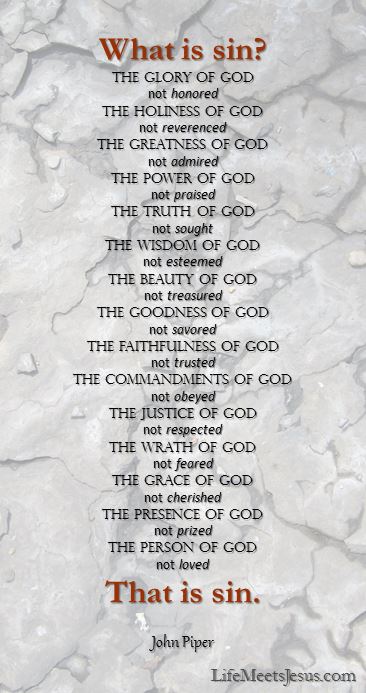
What is Sin

Check out Part Four for the conclusion of this series. 

Of Atheism and Fools, Part Two

03 Monday Apr 2017

Posted by Lauren Scott in Guest Posts, Living Faith

≈ Leave a comment

Tags

April first, April Fool's Day, April Fools, Guest Post, Practical Atheism, Psalm 14, Romans 3

In part one Nathaniel challenged us to see ourselves in the fool of Psalm 14 rather than merely pinning the title on the nearest atheist. 

The_Cap_of_a_Fool_fits_the_Head_of_a_Dunce.png

You can’t get out of this!

“But really!  This psalm can’t be about me!  I’m a Christian—I do believe in God!  I do seek after Him!  I do good things!”

I hear you, I hear you, and I am in no position to argue with you.  I get defensive when I read this Psalm too!  But as much as I wish it did, I don’t think the scriptures allow us to exempt ourselves from the condemnation of this passage.  Bear with me as I make the case that we all play the fool–not from my own opinion–but from the passage itself and the apostle Paul’s use of it in the epistle to the Romans.

The Internal Case

Psalm 14 is full of strong statements.  Not only is the charge laid out that the practical atheist is a fool, but along with that come moral judgments–and every one of these has a universal application.  Twice David says, “There is no one who does good,” and the second time, as if anticipating our objections, he continues emphatically, “not even one.”

Spurgeon explains:

But are there no special cases, are all men sinful? ‘Yes,’ says the Psalmist, in a manner not to be mistaken, ‘they are.’ He has put it positively, he repeats it negatively, ‘There is none that doeth good, no, not one.’ The Hebrew phrase is an utter denial concerning any mere man that he of himself doeth good. What can be more sweeping? This is the verdict of the all-seeing Jehovah, who cannot exaggerate or mistake. As if no hope of finding a solitary specimen of a good man among the unrenewed human family might be harboured for an instant. The Holy Spirit is not content with saying all and altogether, but adds the crushing threefold negative, ‘none, no, not one.’

And this judgment is not the opinion of David.  As we see in verse two, “The LORD [YHWH] has looked down from heaven upon the sons of men”–it is the result of an investigation conducted by Yahweh, God Himself!

“But what about the fact that the second half of the passage seems to be talking about the victims of the corrupt individuals called out in the first half?  Surely there is an ‘us versus them’ scenario in mind there!”

We certainly can’t avoid wrestling with the latter half of Psalm 14, especially the statement that the LORD is the refuge of the afflicted righteous in verses five and six.  How do we make sense of this?

In my efforts to exempt the “righteous” (and myself with them) from the sweeping condemnation in verse one,  I took a closer look at the investigation performed by God Himself in verses two and three.  Remembering that sometimes a biblical phrase is used that implies a certain group distinct from another group (e.g. “nations” in the scriptures always means Gentiles distinct from Jews), I thought to check in on the phrase “sons of men”. Could it be used to designate a certain subset of the human population, while excluding the rest of us who actually do seek after God?

It turns out the phrase “sons of men” is literally “sons of Adam” or “people/descendants of Adam.  Think about that for a minute…  It would be hard to come up with a more inclusive term for all of humanity.

No, you really can’t get out of this.

The External Case

If you are still inclined to exempt yourself from the condemnation of practical atheism in this psalm, consider the fact that there’s a remix: Psalm 53.  This Psalm is only slightly different from Psalm 14.  The Hebrew scribes were far too meticulous to have accidentally duplicated the psalm, so the only feasible explanation is that David rewrote the psalm with a few variations because it was such an important message as to deserve restatement.

And, as if that were not enough, the Apostle Paul makes the application abundantly clear in Romans chapter 3.  After spending the previous two chapters demonstrating that Gentles are guilty before God because they have violated the laws that He has written in their hearts, and Jews are guilty before God because they have violated the law of Moses, he uses Psalm 14 to tie these arguments together and prove that “all have sinned and fall short of the glory of God”.  Take a look at Romans 3:9-12:

What then? Are we better than they? Not at all; for we have already charged that both Jews and Greeks are all under sin;  as it is written, ‘There is none righteous, not even one; there is none who understands, there is none who seeks for God;  all have turned aside, together they have become useless; there is none who does good, there is not even one.’

So tell me, do you find yourself anywhere outside of the categories of Jew + Gentile?  Are you “better than they”?

No, you really can’t get out of this.

It would seem the fool’s hat fits all of us.  But since we’re all equal in this regard, does it really matter?  Just how big of a deal is this?  Check out Part Three for the answer.

Of Atheism and Fools, Part One

01 Saturday Apr 2017

Posted by Lauren Scott in Guest Posts, Living Faith

≈ Leave a comment

Tags

April first, April Fool's Day, April Fools, Guest Post, International Atheist's Day, Joke's on us, Practical Atheism, Psalm 14, The fool has said in his heart

This post contains affiliate links. If you purchase something through one of these links, I may receive a commission at no extra charge to you.

I’m happy to introduce this guest post as the first in a series by none other than my husband, Nathaniel Scott.  He’s been studying and teaching through the Psalms and the life of David in our church for the past five years.  In this introductory post, he invites us to take another look at the oft-quoted early verses of Psalm 14. 


wp-1491013694888.jpg

Whose Day is It?

There is a running joke on the Christian interwebs that April 1st is “International Atheist’s Day”–a pointed jab based on the opening line of Psalm 14: “The fool has said in his heart, ‘There is no God.’”  While I don’t question the validity of this application, I would suggest that we Christians often fail to recognize when the joke is on us.

Atheism has two dominions.  That of philosophical atheism is the mind.  It is here that the famous atheists dwell, building arguments and spewing hatred against a Being whose very existence they deny, but who has managed nonetheless to get them rather perturbed.  The occupants of this realm make up a relatively small percentage of the human population.

The second dominion of atheism is the heart and the actions.  This we call practical atheism.  This dominion is occupied not only by the famous atheists, but by the men, women, and children throughout history who disregard God and His will and pursue their own ways.  This describes all of humanity.

So today, amidst the cream pies that are being thrown at Richard Dawkins, Voltaire, and Christopher Hitchens, we as Christians need to consider Psalm 14 as a call to check our own God delusions.

Here’s the full text to get us started:

The fool has said in his heart, ‘There is no God.’
They are corrupt, they have committed abominable deeds;
There is no one who does good.
The LORD has looked down from heaven upon the sons of men
To see if there are any who understand,
Who seek after God.
They have all turned aside, together they have become corrupt;
There is no one who does good, not even one.
Do all the workers of wickedness not know,
Who eat up my people as they eat bread,
And do not call upon the Lord?
There they are in great dread,
For God is with the righteous generation.
You would put to shame the counsel of the afflicted,
But the LORD is his refuge.
Oh, that the salvation of Israel would come out of Zion!
When the LORD restores His captive people,
Jacob will rejoice, Israel will be glad.

The NET Bible, in one of its characteristically succinct and profound Translators’ Notes, says of the Psalm’s opening line:

‘There is no God.’ The statement is probably not a philosophical assertion that God does not exist, but rather a confident affirmation that God is unconcerned about how men live morally and ethically.

This practical atheism — living as if there is no God who will hold them accountable for their actions — makes them fools, for one of the earmarks of folly is to fail to anticipate the long range consequences of one’s behavior.

How many of us, as Christians, live as if there is no God who will hold us accountable for our actions?  How many of us fail to anticipate the long range consequences of our behavior?  We ourselves are under a delusion.  As we contend for the existence of God in the public square of cyberspace, let’s check our hearts and our lives to make sure we are living in the light of that existence.

Us Versus Them?

Using this Psalm as an insult against philosophical atheism is not new.  The meme goes back for generations.  In Charles Spurgeon’s Treasury of David you can find a collection of many writers over many eras barbecuing the atheist with a myriad of insulting terms.  These writers differentiate strongly between themselves and the atheist, much like the Christian internet warriors of today.

But there are a few writers in Spurgeon’s compendium who see the fool as representing the practical atheism of which we are all guilty.  These writers are much more gentle, and while clearly condemning the error of the fool’s ways, they do so with more humility.  They cautiously look to themselves lest they too be caught in foolishness.

As we dig deeper into Psalm 14, let’s follow their example.

Let’s not draw too sharp of a distinction between “us” and “them”.  To do so would be an attempt to write ourselves out of the line “They have all turned aside, together they have become corrupt; There is no one who does good, not even one.”

And if you go on to Part Two, you’ll see why doing so would be quite problematic.

  • View KeptandKeeping’s profile on Facebook
  • View lauren.keptandkeeping’s profile on Instagram
  • View keptandkeeping’s profile on Pinterest
  • View @laurenscott.keptandkeeping’s profile on YouTube
Lauren Scott

Lauren Scott

Christian. Wife. Mother. Homemaker. Home Educator. Blogger. Book Addict. Outdoorist.

View Full Profile →

Enter your email address to follow Life Meets Jesus and receive notifications of new posts by email.

Affiliate Disclosure

We are a participant in the Amazon Services LLC Associates Program, an affiliate advertising program designed to provide a means for us to earn fees by linking to Amazon.com and affiliated sites.

Hands-on Math Curriculum

RightStart™ Mathematics

Check Out Prodigies Music Curriculum!

music curriculum sale

Quality Video Curriculum

Top Posts & Pages

  • Five Refreshing Scriptures for Finishing Strong when You Feel Weak and Weary
    Five Refreshing Scriptures for Finishing Strong when You Feel Weak and Weary
  • Wisdom in the Book of James
    Wisdom in the Book of James
  • 30 Day Dress Challenge Recap
    30 Day Dress Challenge Recap

Advent April Fool's Day April Fools Book Review Books Books Charlotte Mason Charlotte Mason Homeschool children Christian Classical Education Christian Classical Homeschool Christian Homeschool Christian life Christian mom Christian Parenting Christian Women Christmas Classical Education Classical Homeschool devotional education faith Guest Post Home and Family Home Education Homemaking homeschool encouragement homeschooling Jesus Living Books love marriage meditations micro book reviews motherhood Nature Nature Studies parenting poems poetry Practical Atheism Reading List Reflections Relationships trials

A WordPress.com Website.

  • Subscribe Subscribed
    • Kept and Keeping
    • Join 171 other subscribers
    • Already have a WordPress.com account? Log in now.
    • Kept and Keeping
    • Subscribe Subscribed
    • Sign up
    • Log in
    • Report this content
    • View site in Reader
    • Manage subscriptions
    • Collapse this bar
 

Loading Comments...