Tags
5th grade, 7th grade, Books, Charlotte Mason Homeschool, Classical Homeschool, Home Education, Homeschool Planning, Homeschool plans, homeschooling
This post contains affiliate links. If you make a purchase through one of these links, I may make a commission at no additional cost to you.
My oldest is now a teenager and has just finished the 7th grade. My baby is 11 and has wrapped up 5th grade. It’s amazing how the time flies. Here are the plans I had for my boys for this school year and how we did implementing them.
Math
This year my 7th grader (a good but not-very-mathy student) worked independently through Saxon Math 8/7 with PreAlgebra. He will be heading into Algebra 1 next year in 8th grade.


My very-mathy 5th grader worked through Saxon Math 7/6. He will be doing the 8/7 with PreAlgebra book next year in 6th grade.


We have used the same independent-work routine for a couple years now: They each do the facts practice, read the lesson, do the practice problems, and then do either the even or odd numbers from the problem set. Each boy then corrects his own daily work using the solutions manual, identifying any mistakes made (as either arithmetic errors, understanding errors, copying errors, or neatness errors), and showing those corrections to me before recording how he did and moving on with his day. When it comes to tests, I do the grading, so my boys know that it’s in their best interest to be honest with how they handle their daily work. This has not been a problem. We’ve all learned over the years that mistakes on daily work are just part of the learning process. The opportunity to show mastery, especially in the Saxon program, comes on the tests.
Writing / Language Arts
My boys aren’t crazy about writing assignments, but they do like to write. I try to keep a balance between assigned writing (because it builds character to submit to something someone else has chosen for you) and having time in the schedule for them to work on their quarterly neighborhood newspaper, the historical fiction novel or a script my oldest has started, or one of my youngest’s silly stories. Our goal is that they write every day (ideally at least one page front and back), that I read and constructively correct their writing, and that they learn from correcting their mistakes and from my coaching to be better writers.
This past year, this has generally looked like one day of copywork, a day or two of free writing (usually one on the computer), at least one day of written narration, an occasional book report when finishing a school book, and some poetry writing days and studied dictation thrown in the mix. Toward the end of the year, I have given my boys some writing prompts to get them thinking more deeply about what they have read this year. This is sort of like a Charlotte Mason end-of-term exam (a practice I am trying to get better at actually doing). When I tried this a time or two in our first semester, my boys struggled and pushed back a bit–especially the 13 year-old since he’s reading heftier books. Now, at the end of the year, they are both willing to do the work of thinking and writing, and I’m especially enjoying the depth I’ve seen from said 13 year-old. That’s the kind of growth we’re looking for!
My oldest also did a lengthy report on soundtrack composer John Williams for our local Discovery Fair event. He won first place for his age group and best in show. His younger brother did a report on the infamous Karl Marx–he at first suggested this topic as a joke, but I told him it would probably make for a great project. And it did. He won second place behind his brother.


I had planned for my 7th grader to finish up Grammar of Poetry (which we began in 6th grade), and then work through Nancy Wilson’s Our Mother Tongue. But the poetry thing fizzled out in the fall and we were so busy in the spring that I didn’t even try to make OMT happen. He enjoys writing poetry already. And we get so much grammar from our Visual Latin lessons and practical English grammar from me correcting his writing that he’ll probably do fine if he never works through a grammar program. I will keep Our Mother Tongue waiting in the wings if it looks like he’d benefit from it, but I may just pull a little from it here and there so we get some practice diagraming sentences and call that good.
Reading (and History and Literature and Science and…)
We cover most school subjects through reading living books. In years past, instead of reading from multiple subjects in one day, my kids have mostly just sat down with one book on a given day, immersing themselves in it. This year I did a bit more of a schedule, often with two readings per day. For the fall, I attempted to schedule reading certain types of books a certain number of times per week. But I didn’t divide things out thoroughly and the reading was more for time than a set number of pages. By the end of the semester, both of my sons had read almost 33% less than I had intended for them, so the read-for-time honors system wasn’t working that well.
Granted, we also were preparing for a backpacking trip across the Grand Canyon, went on said trip in September…

…and then needed to catch up on the rest of life once we got home, so some of the reading deficit came from full days on which my boys asked if they could read for less time and I granted it. They just got accustomed to those “less time” days and didn’t revert back to normal on their own.
So, for the spring semester I scheduled out their readings by page numbers–a set amount of reading for a set amount of time. And, guess what! It has worked really well. And I think I have grown in my ability to manage details in a lot of areas for having done the work to manage their reading on a more detailed level.
Book List for 7th Grade
Our goals for 7th grade reading: Enjoying Regional and State History; Revisiting Fairy Tales; Filling Science Gaps; and Beginning Studies of Government and Economics. I also had my 13 year-old read a few great books, tracing the idea of knights and chivalry up to the cowboy days. The following books are organized by general subject matter.
Devotional/Theological: Regular independent Bible reading, family Bible time, and began attending our church’s weekly men’s bible study with his papa. Plus:
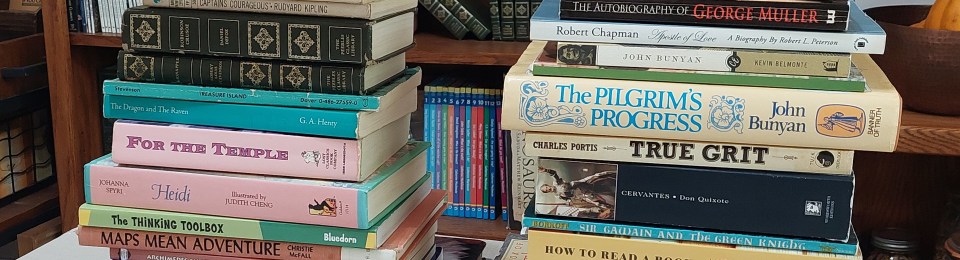
Pilgrim’s Progress by John Bunyan
Insights into Bible Themes and Customs by G. Christian Weiss

Biographies and Autobiographies to accompany Devotional Studies:
Grace Abounding to the Chief of Sinners by John Bunyan (find my review here)
John Bunyan by Kevin Belmonte
Robert Chapman, Apostle of Love by Robert L. Peterson
The Autobiography of George Muller (Chapman and Muller were contemporaries)
Arkansas and Regional History and Historical Fiction:


An Arkansas History for Young People (my son’s first experience with a traditional history text book–he’s not a huge fan, LOL. Even so, he simply read and narrated it, skipping the busy work)


Cotton in my Sack by Lois Lenski


Bass Reeves by Gary Paulsen


“The Big Bear of Arkansas,” a short story by Thomas Bangs Thorpe (also added Thorpe’s “A Piano in Arkansas”), both found in the book Humor of the Old Southwest, which I found at my local library. We also enjoyed listening to the Bear Grease podcasts on “The Big Bear” and on “The Arkansaw Image”.


Rifles for Watie by Harold Keith


It Happened in Texas by James A. Crutchfield to cover some history from my beloved home state (picked this one up at Palo Duro Canyon State Park–warning, there are some disturbing stories, especially the chapter titled “Mass Murder”).
Following the themes of Knights to Cowboys:

Sir Gawain and the Green Knight (this, in addition to poems covered at co-op, makes up his study of poetry for the year)
Don Quixote by Miguel Cervantes (yes, the whole thing–he thought it was hilarious)
True Grit by Arkansan Charles Portis
Government/Economics:


Whatever Happened to Penny Candy? (reviewed in this post)


Whatever Happened to Justice? by Richard J. Maybury
Tales:

D’Aulaire’s Book of Norse Myths
Uncle Remus by Joel Chandler Harris (the tales, not all of the poems; contains some language)
Grimm’s Fairy Tales (selections; I reviewed the book in this post)
Science:

Exploring Creation with Human Anatomy by Apologia
Logic/Other:

How to Read a Book by Mortimer Adler (Part 1, first 55 pages–this book will be spread over the next few years)
Free Reads: Life of Fred: Fractions, Viking Quest series by Lois Walfrid Johnson (Christian historical fiction), The Land by Mildred D. Taylor, Let the Circle be Unbroken by Mildred D. Taylor, and Re-reads: The Ikabog by J. K. Rolling, The Hobbit by J. R. R. Tolkein, and various other titles I can’t remember or keep track of.
Book List for 5th Grade
My 11 year-old had a slight focus on Scottish history and literature this year. He’s not as fast a reader as his brother, so a lot of his reading time was simply getting in some of the great classic children’s books.
Devotional: This year he has simply done his own Bible reading and participated in family Bible time.
History/Biography/Historical Fiction:

Scotland’s Story by H. E. Marshall
Amos Fortune, Free Man by Elizabeth Yates
Star of Light by Patricia St. John
The Hawk that Dare Not Hunt by Day by Scott O’Dell (historical fiction story around William Tyndale)
Literature:
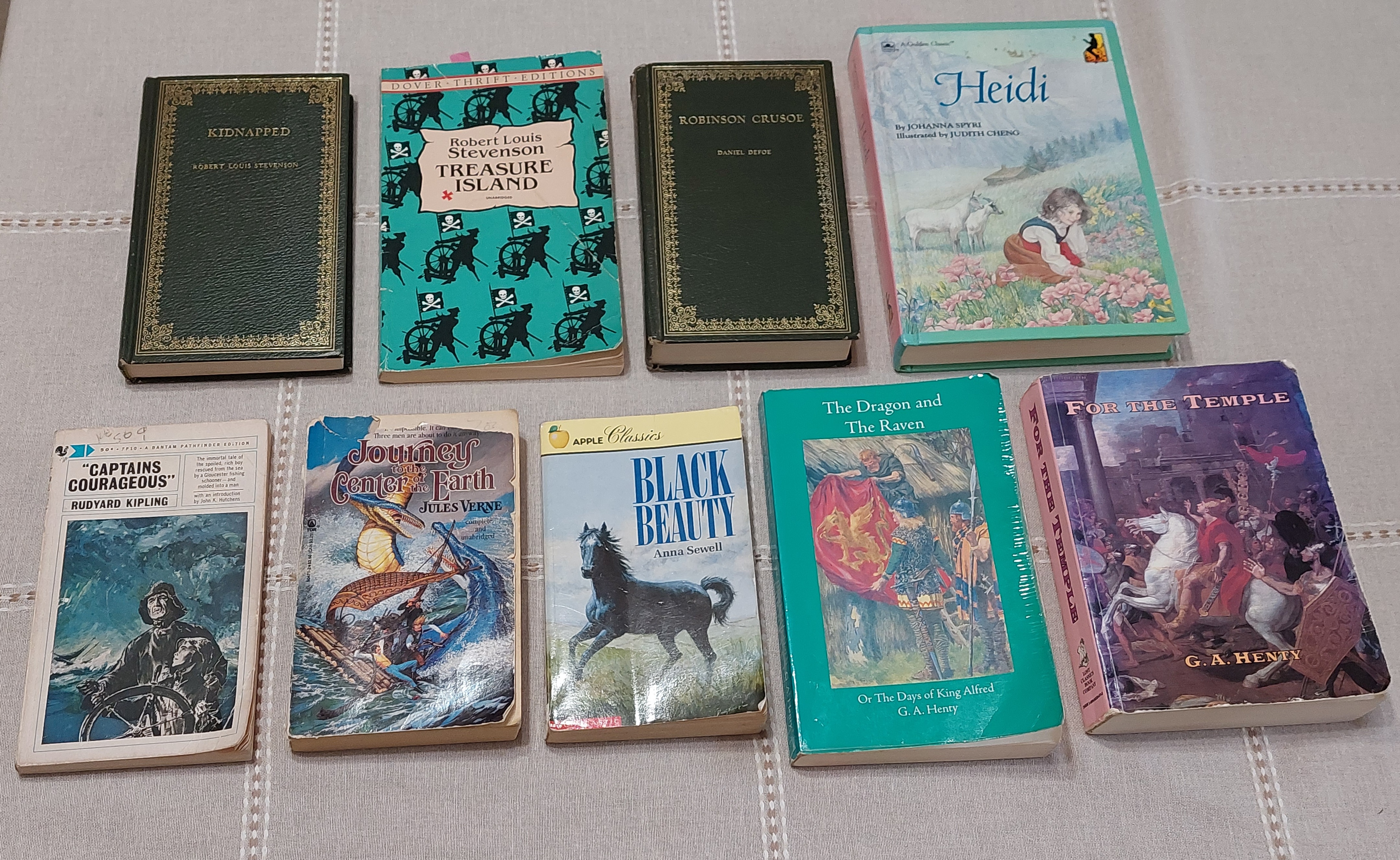
Kidnapped! by Robert Louis Stevenson
Treasure Island by Robert Louis Stevenson
Robinson Crusoe by Daniel Defoe
Heidi by Johanna Spyri
Captains Courageous by Rudyard Kipling
Journey to the Center of the Earth by Jules Verne
Black Beauty by Anna Sewell
The Dragon and the Raven by G. A. Henty
For the Temple by G. A. Henty
Geography:

Maps Mean Adventure by Christie McFall
Logic:
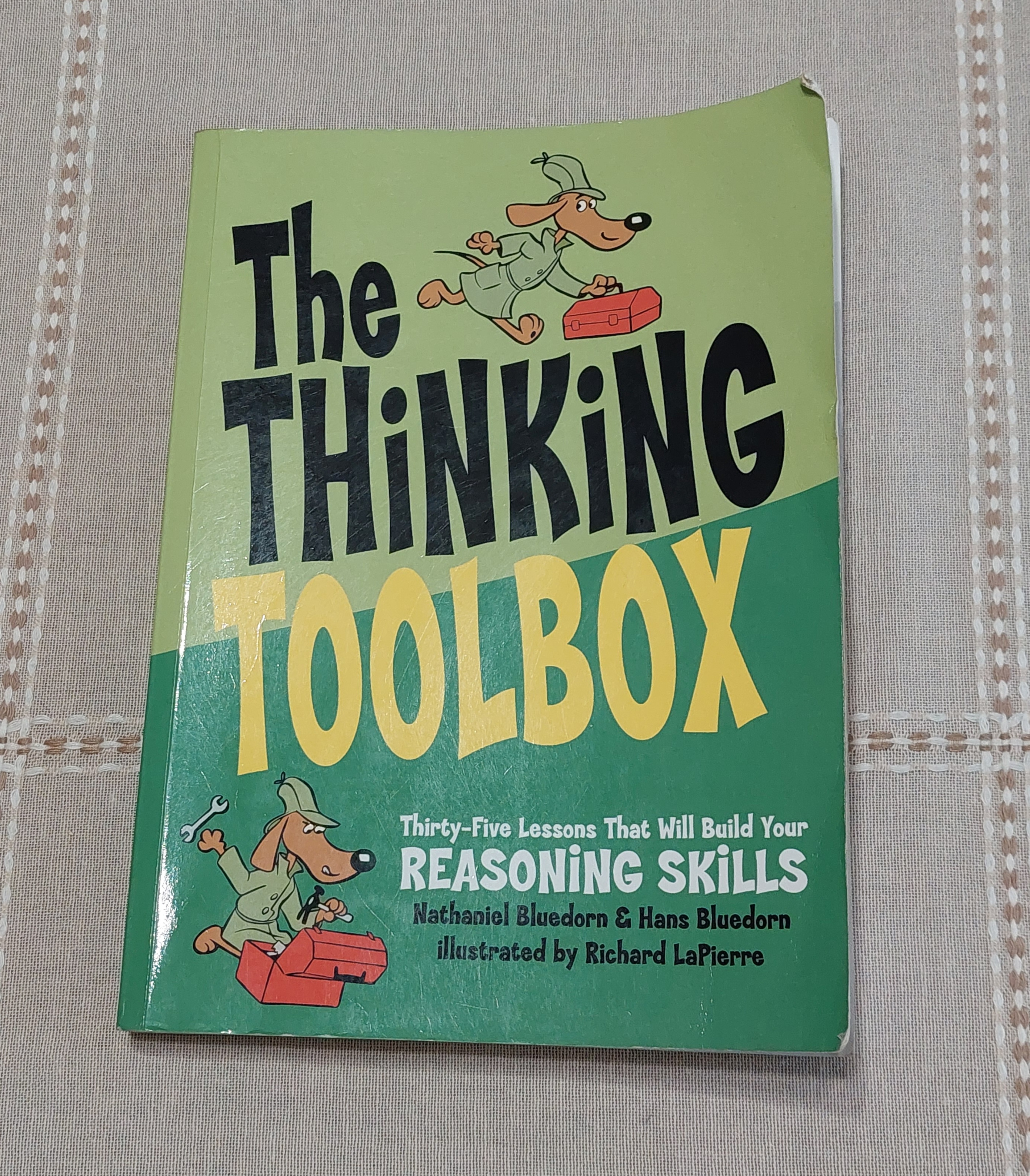
The Thinking Toolbox by Nathaniel and Hans Bluedorn
Science:

A Drop of Water by Walter Wick
Apologia Flying Creatures of the 5th Day
Archimedes and the Door of Science by Jeanne Bendick
Galen and the Gateway to Medicine by Jeanne Bendick
Along Came Galileo by Jeanne Bendick
The Ocean of Truth by Joyce McPherson (a Christian biography of Isaac Newton)
This boy read several of the same free reads as his brother, as well as numerous others I didn’t keep track of!
Beyond Independent Learning
As for things we studied together as a family, you can read about my Morning Time plans for this year here. In addition to those plans, we also enjoyed exploring topics on YouTube from time to time, kept a family read aloud going in the evenings, and participated in various other activities (such as choir, piano, backpacking, gardening, and pick-up games of frisbee and baseball).
This year, the boys also took up playing recorder, did lots of creative work in the garden, fixed bikes, built steps, dug holes, sewed costumes, learned calligraphy, wrote messages with Anglo-Saxon/Middle Earth runes, and cooked things like acorn pancakes (and regular pancakes, too). These are the kinds of things I don’t plan–other than to leave space for them and make sure the kids are well-supplied.
There you have it. 7th and 5th grades in the books. Over half of my oldest son’s homeschool years are behind us now, and the same will be true of my youngest by the end of next year. That’s pretty crazy to think about, but it’s also pretty exciting to watch my boys grow and take on each next thing. Onward and upward!
Want to know more about how and why we homeschool? Here’s our why. And here’s our how (on an over-arching philosophical level).
 Kept and Keeping